Abstract:
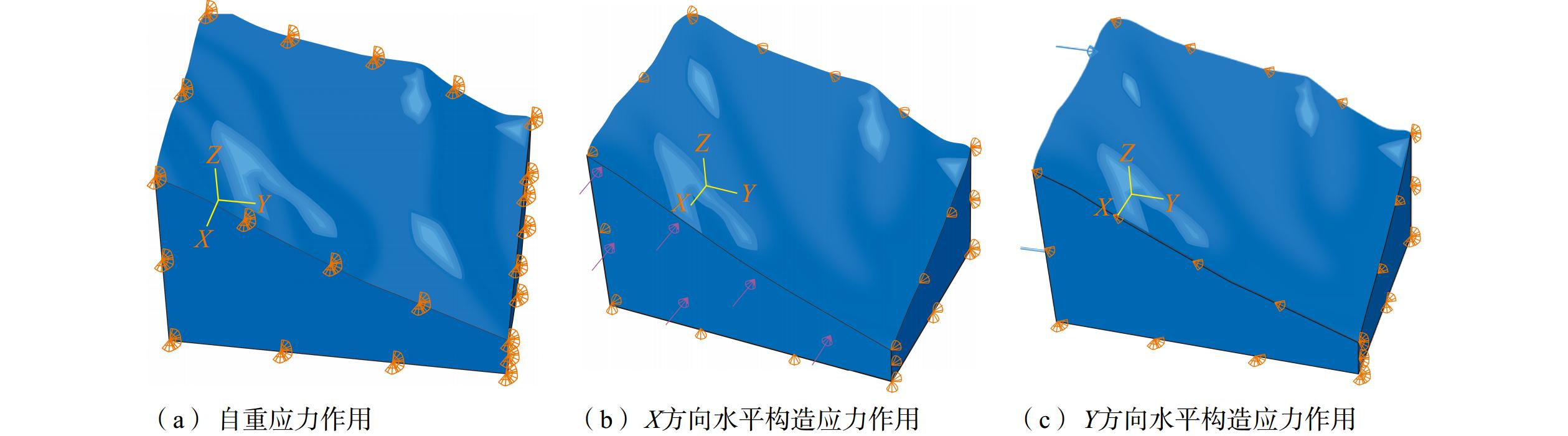
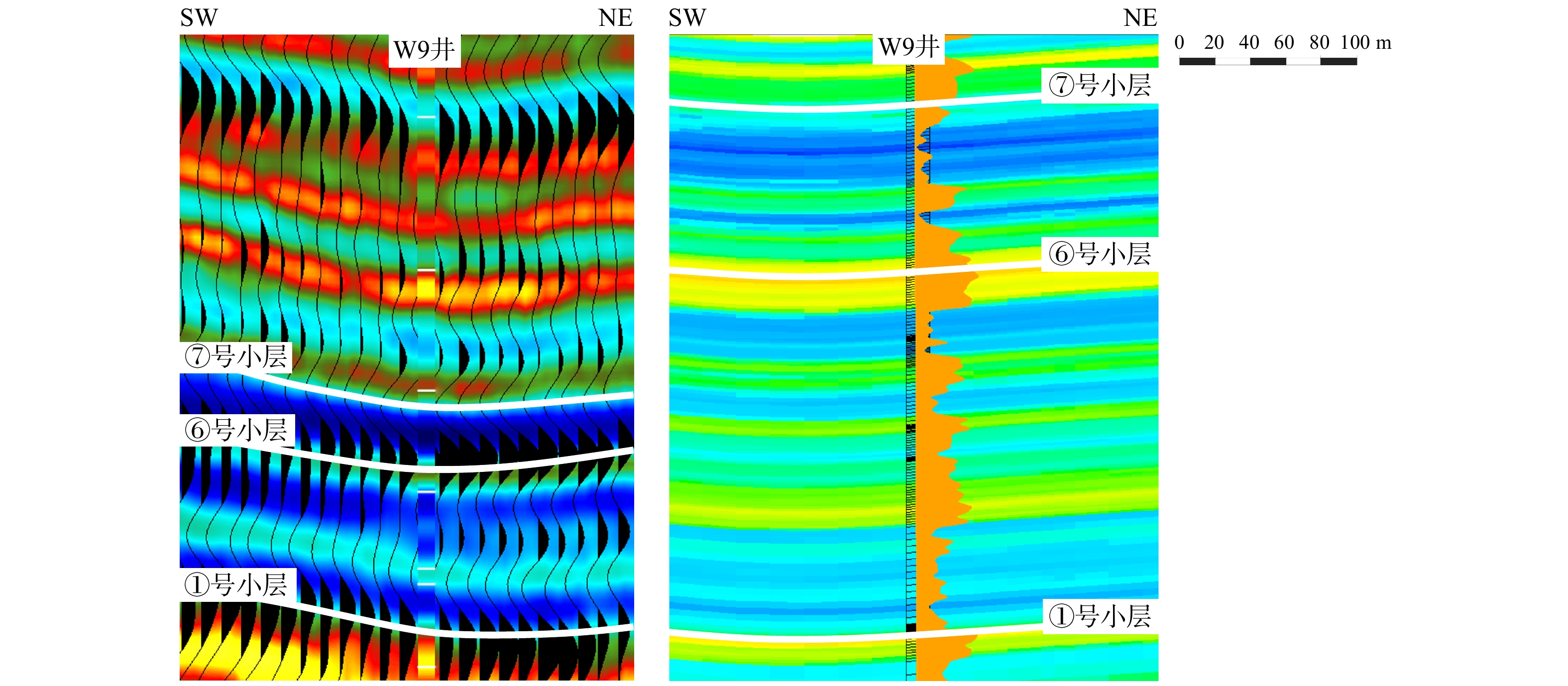
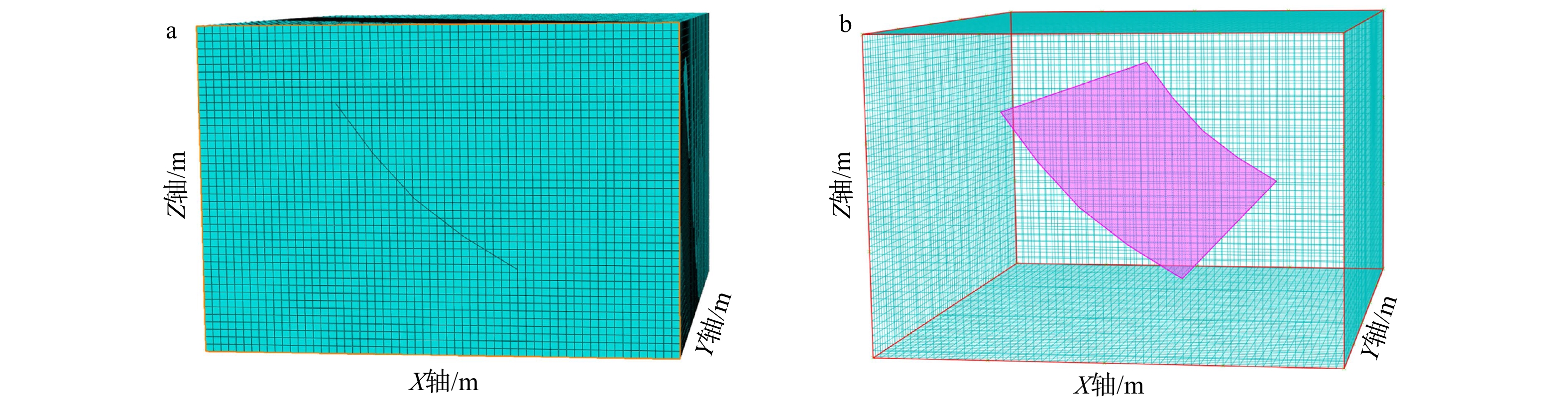
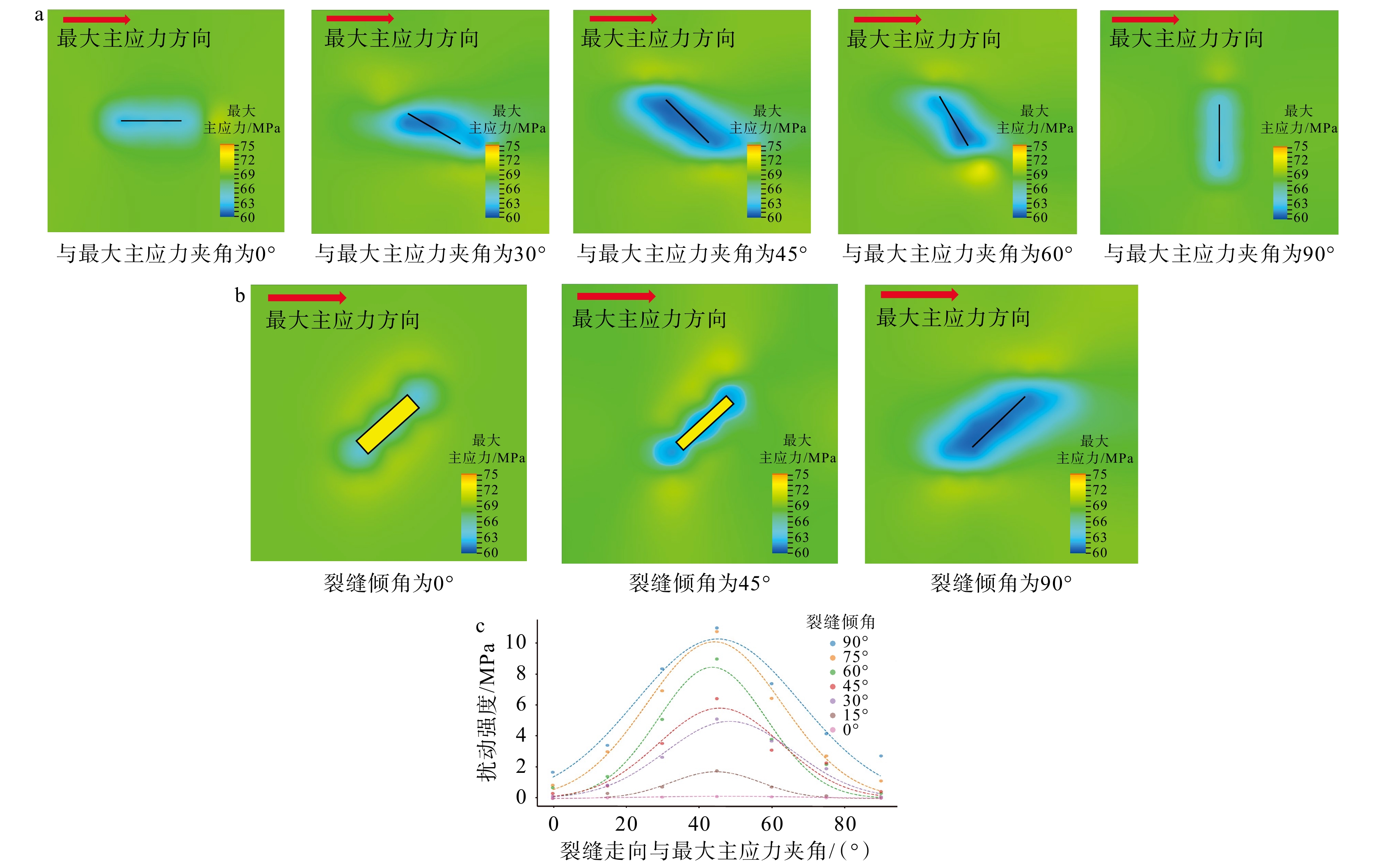
Objective Continental shale oil reservoirs show rapid lithological variations, abundant laminae and interbeds, and strong heterogeneity, so that conventional regional geomechanical models with coarse grids, originally developed for relatively homogeneous deep marine shale gas reservoirs, cannot finely characterize vertical stress partitioning or capture local stress perturbations around wells. In the Jurassic Lianggaoshan Formation of the Fuxing area in the southeastern Sichuan Basin, the lack of high-resolution near-wellbore stress characterization and of a clear understanding of how faults and natural fractures disturb the in-situ stress field limits the design of horizontal well trajectories and hydraulic fracturing schemes. This study aims to establish a refined near-wellbore geomechanical modeling and in-situ stress simulation workflow for strongly heterogeneous continental shale reservoirs and to clarify the vertical and planar in-situ stress characteristics of the Lianggaoshan Formation, thereby identifying favorable landing intervals and azimuths for horizontal wells. Methods Focusing on a near-wellbore area with a radius of about 4 km, a refined geological grid model with a vertical resolution of 0.5–2.0 m was constructed and combined with high-resolution seismic inversion trend volumes to perform trend-constrained co-simulation of well-log-derived mechanical parameters, thus generating a high-precision three-dimensional geomechanical property model. On this basis, a nested finite element modeling strategy was adopted: a regional model provided the six-component background in-situ stress field, which was used as the initial stress condition in the near-wellbore model, where the effects of faults and fractures represented by an extended finite element method-based fracture–stress coupling scheme were simulated to predict near-wellbore stress distributions and local stress disturbances. Results (1) The refined near-wellbore geomechanical model significantly improves the vertical resolution and reliability of stress prediction in continental shale reservoirs: compared with directly assigning seismic inversion results to finite element grids, trend-constrained co-simulation yields mechanical property models that better honor lithologic layering and well-log measurements and that reduce noise in the predicted minimum principal stress. (2) For the Lianggaoshan Formation in the Fuxing area, the modeling results show that high-stress sandstone layers are developed at the top and base of the target sub-member ⑥, where the minimum principal stress is about 10–13 MPa higher than in the internal mudstone, forming vertical stress barriers that hinder the upward and downward propagation of hydraulic fractures; in contrast, the stress inside sub-member ⑥ is relatively uniform, with vertical stress differences generally less than 5 MPa, providing a continuous interval suitable for horizontal well landing. (3) Parametric simulations of single fractures at a burial depth of about 2800 m indicate that local stress disturbances around a fracture are strongly controlled by fracture orientation: for vertical fractures, the maximum stress disturbance is obtained when the fracture strike forms an angle of approximately 45° with the maximum horizontal principal stress; as the fracture strike tends to be parallel or perpendicular to the maximum horizontal stress, the disturbance decreases, and for a given strike angle, the disturbance increases with fracture dip and reaches its maximum at a dip of 90°, reflecting the stress-shadow effect of fractures. (4) Near-wellbore fracture–stress coupling simulations around representative wells confirm that the development of faults and fracture swarms causes local rotation and reduction of the horizontal principal stresses relative to the regional NE–SW maximum horizontal stress direction, and that hydraulic fractures preferentially propagate along low-stress corridors created by these fracture zones, thereby explaining the observed spatial distribution of stimulation in the Fuxing area. Conclusion The proposed workflow, which combines trend-constrained co-simulation of mechanical parameters with regional–local nested finite element stress modeling and fracture–stress coupling analysis, can effectively capture multi-scale heterogeneity and near-wellbore stress perturbations in continental shale reservoirs and provides a more realistic prediction of vertical stress partitioning and local stress disturbances than conventional regional models; for the Lianggaoshan Formation, the results demonstrate that high-stress sandstone layers at the top and base of sub-member ⑥ have a non-negligible impact on the vertical extension of hydraulic fractures, whereas the relatively uniform stress within the interior of sub-member ⑥ makes its middle part the optimal interval for horizontal well landing, while in the plane, natural fracture zones cause local rotation of the maximum horizontal stress direction and reduce stress magnitudes, which can either promote or limit the growth and complexity of hydraulic fractures depending on their strike and intensity. Significance This study develops a practical fine near-wellbore geomechanical modeling and stress simulation technology suitable for strongly heterogeneous continental shale reservoirs, clarifies the vertical and planar in-situ stress characteristics and their controlling mechanisms in the Lianggaoshan continental shale of the Fuxing area, and provides an important scientific basis for optimizing horizontal well landing intervals, wellbore azimuths, and fracturing design in similar continental shale oil and gas plays.
XIONG C H,LIU X J,ZHOU J H,et al.,2025. Fine geomechanics modeling and in-situ stress simulation around the well[J]. Journal of Geomechanics,31(6):1268−1281. doi: 10.12090/j.issn.1006-6616.2025097.