


Research on high-precision one-dimensional geomechanical modeling of shale oil reservoirs
-
摘要: 页岩油储层甜点段纵向变化快,具有厘米级薄互层和层理发育的特征,且各向异性强。传统各向同性模型难以满足精细的地质力学建模与表征需求,给油气藏改造与压裂方案设计等带来了挑战。地质力学是实现复杂地质特征油气田效益开发的关键。为了获得高精度一维地质力学模型,开展了页岩油储层各向异性室内实验,同时结合测井数据进行一维地质力学建模,分析地质力学特征。通过各向异性实验,系统获得了页岩各向异性岩石力学参数。基于实验结果及各向异性模型,利用声波测井资料等构建了沿地层深度方向的各向异性刚度矩阵,获得了杨氏模量、泊松比的各向异性表征及抗压强度等力学参数。根据声波、密度曲线确定了研究区块的卸载特征,采用Bowers卸载理论计算孔隙压力,并通过现场模块化动态地层测试数据进行校准。在此基础上,结合高精度各向异性岩石力学模型和孔隙压力,应用各向异性弹性模型求取了更高精度的两向水平主应力,最终构建了高精度的一维各向异性地质力学模型,其精度较各向同性模型大幅提高。该模型通过了井史资料等现场数据的验证,揭示了沿井筒的各向异性地质力学参数及原位地应力展布特点。研究成果为油气地质−工程一体化奠定了基础,并为油气藏的改造与压裂方案设计提供了理论依据与技术支撑。Abstract:
Objective The sweet spot intervals of shale oil reservoirs exhibit rapid vertical variations, centimeter-scale thin interbeds, well-developed bedding planes and strong anisotropy. Therefore, traditional isotropic models are inadequate for detailed geomechanical modeling and characterization, posing significant challenges for reservoir stimulation and hydraulic fracturing design. Methods Geomechanics is key to the cost-effective development of oil and gas reservoirs with complex geological features. To establish a high-precision 1D geomechanical model, anisotropy experiments were conducted on shale oil reservoirs in the laboratory, and well log data were then used to extract geomechanical parameters for subsequent modeling. Results The anisotropic rock mechanical parameters of shale were systematically obtained. Based on the rock mechanics experimental results and the anisotropic model, the depth-wise anisotropic stiffness matrix of the formation was derived from acoustic logging data, yielding anisotropic characterizations of mechanical parameters such as Young’s modulus, Poisson’s ratio, and compressive strength. Based on the acoustic-density log curves, the unloading characteristics of the study block were identified. Pore pressure was calculated using the Bowers unloading theory and calibrated with field Modular Formation Dynamics Tester data. By integrating a high-precision anisotropic rock mechanics model with pore pressure data, a higher-accuracy two-way horizontal principal stress field was derived using an anisotropic elastic model. This enabled the construction of a high-precision 1D anisotropic geomechanical model, which demonstrated significantly improved accuracy compared to the isotropic model. Conclusions This study established an anisotropic 1D geomechanical modeling workflow that provides a theoretical basis and technical support for reservoir stimulation and fracturing program design. The model's precision was improved by approximately 7% compared to the isotropic model. Validation against field data (e.g., well history records) revealed the distribution characteristics of anisotropic geomechanical parameters and in-situ stress along the wellbore. [ Significance ] The research findings serve as a foundational basis for geo-engineering integration, providing theoretical guidance and technical support for reservoir stimulation and hydraulic fracturing design. -
Key words:
- shale oil reservoir /
- rock mechanics /
- geomechanics /
- anisotropic /
- 1D geomechanical modeling
-
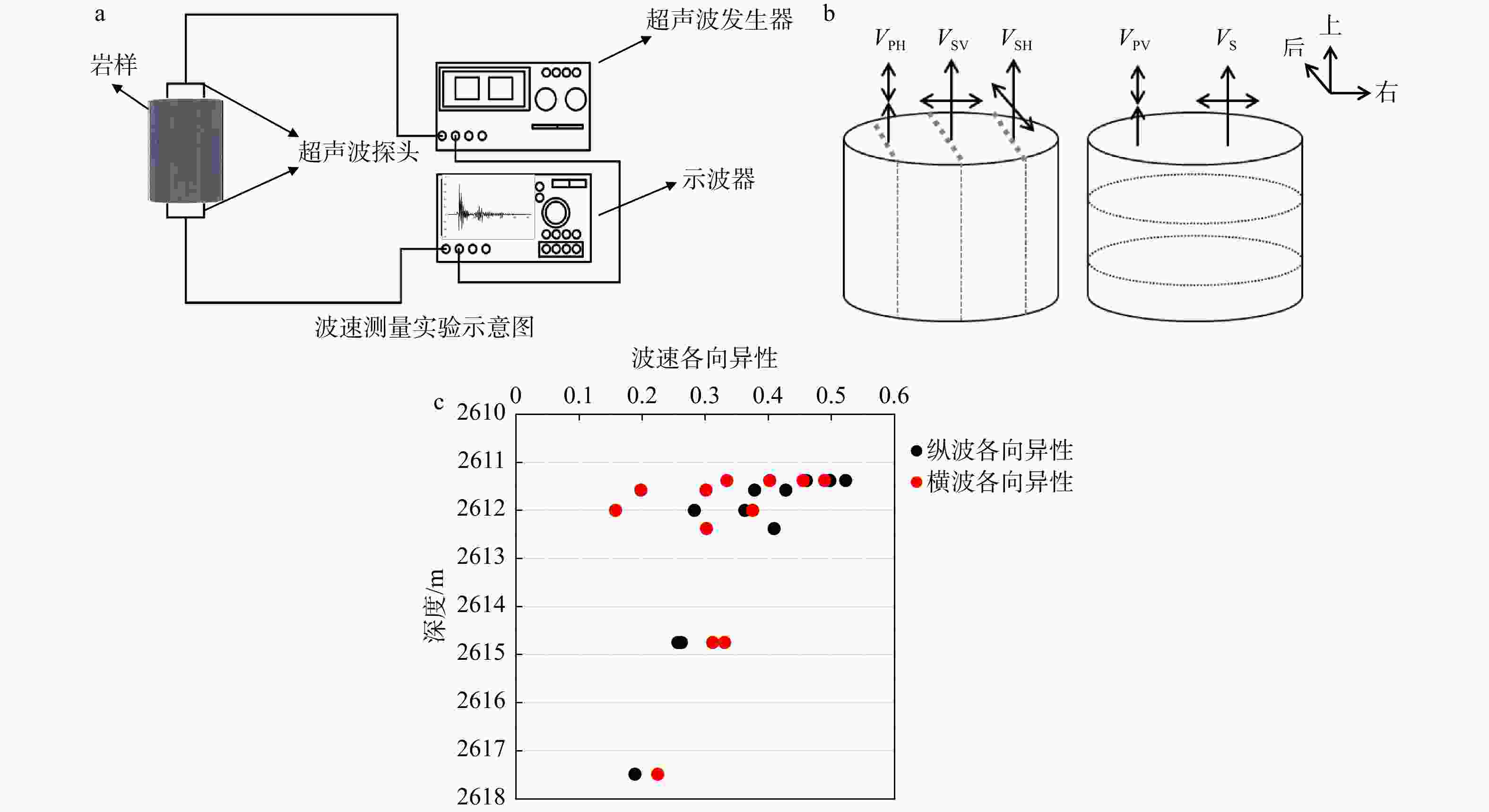
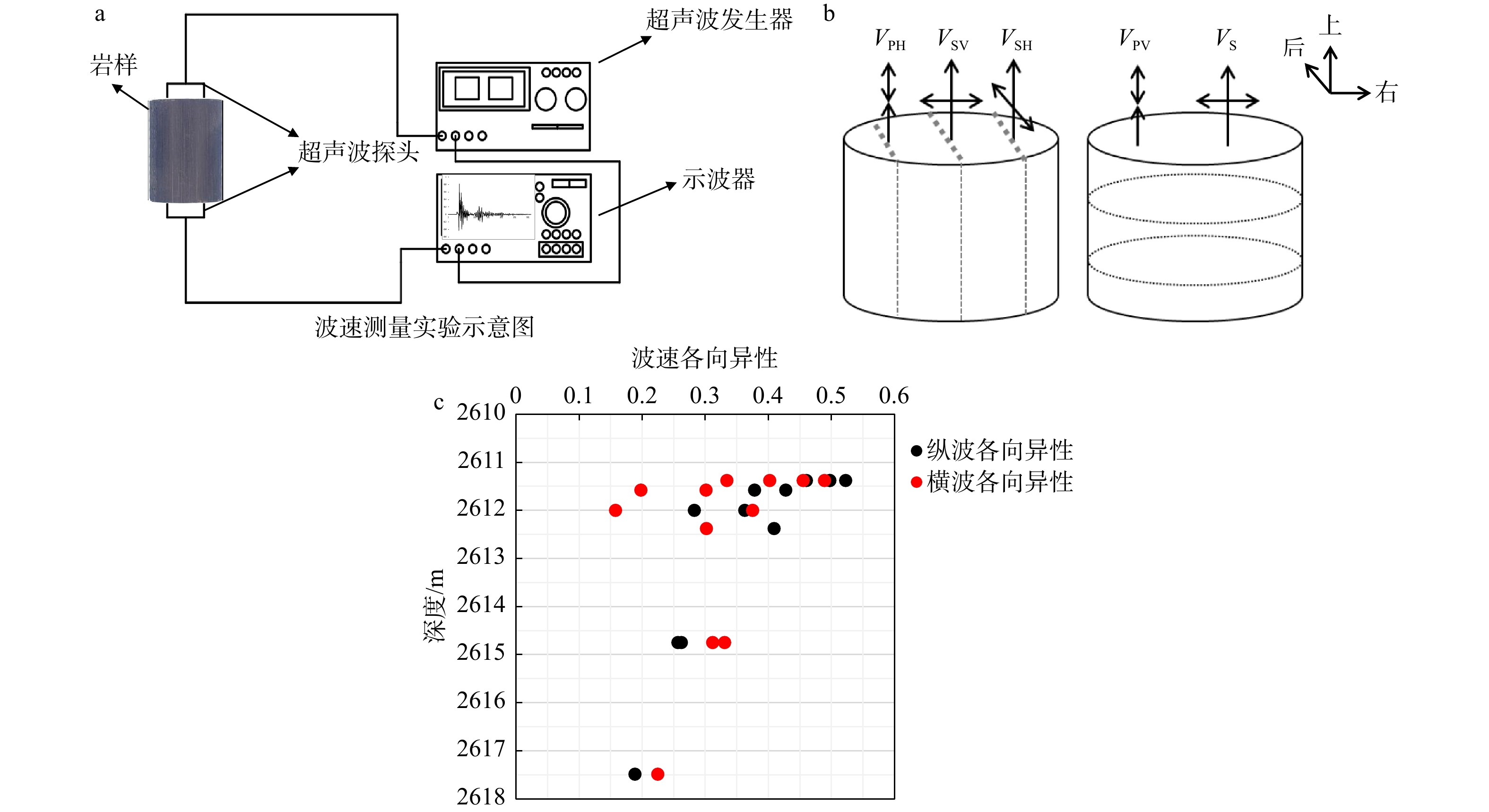
图 1 波速各向异性实验测量及结果图
a—超声波测试实验示意图;b—样品波速测量示意图;c—纵、横波波速各向异性统计图
Figure 1. Experimental measurement results of wave velocity anisotropy
(a) Schematic of ultrasonic velocity testing; (b) Schematic of wave velocity measurement of samples; (c) Statistical chart of P-wave and S-wave velocity anisotropy
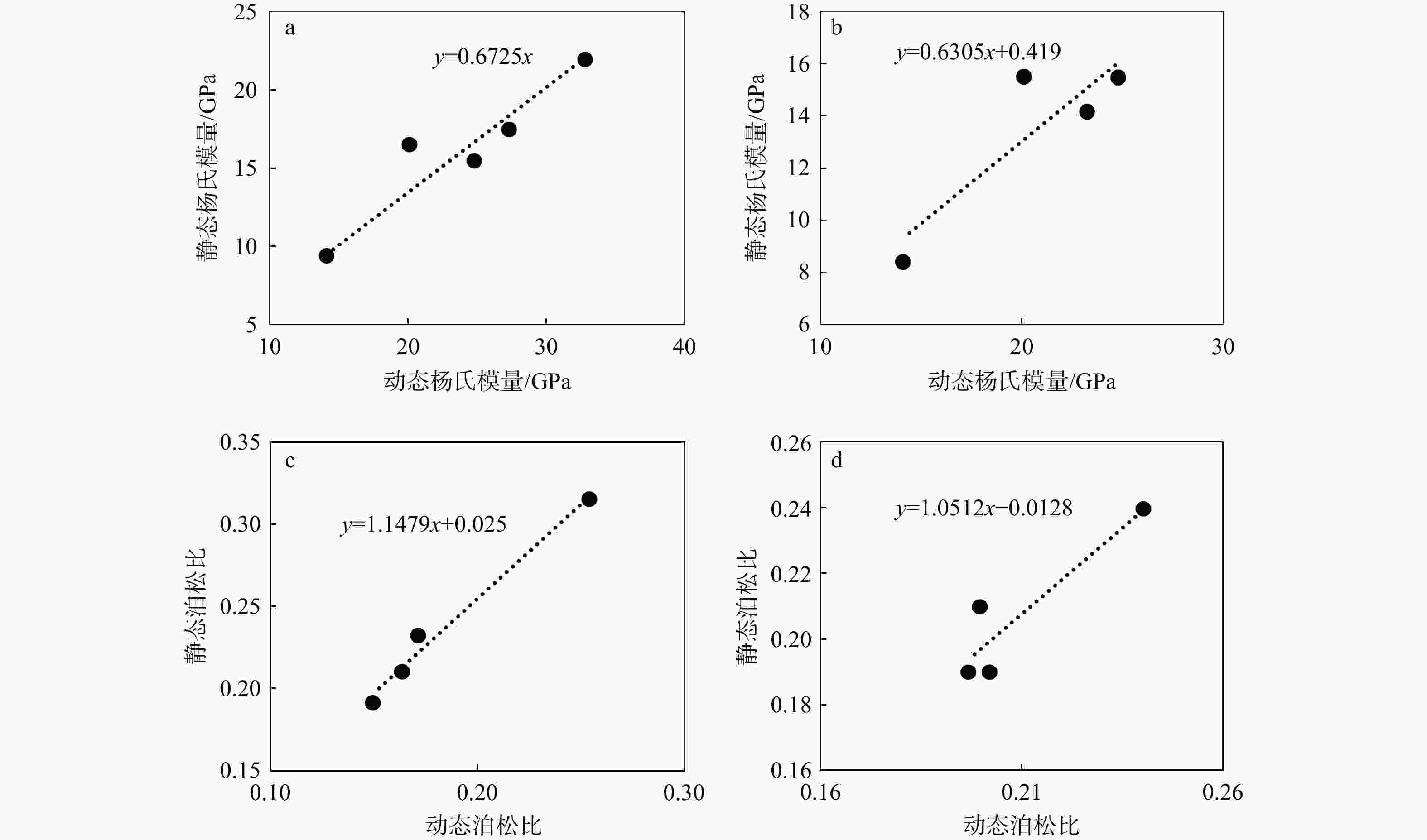
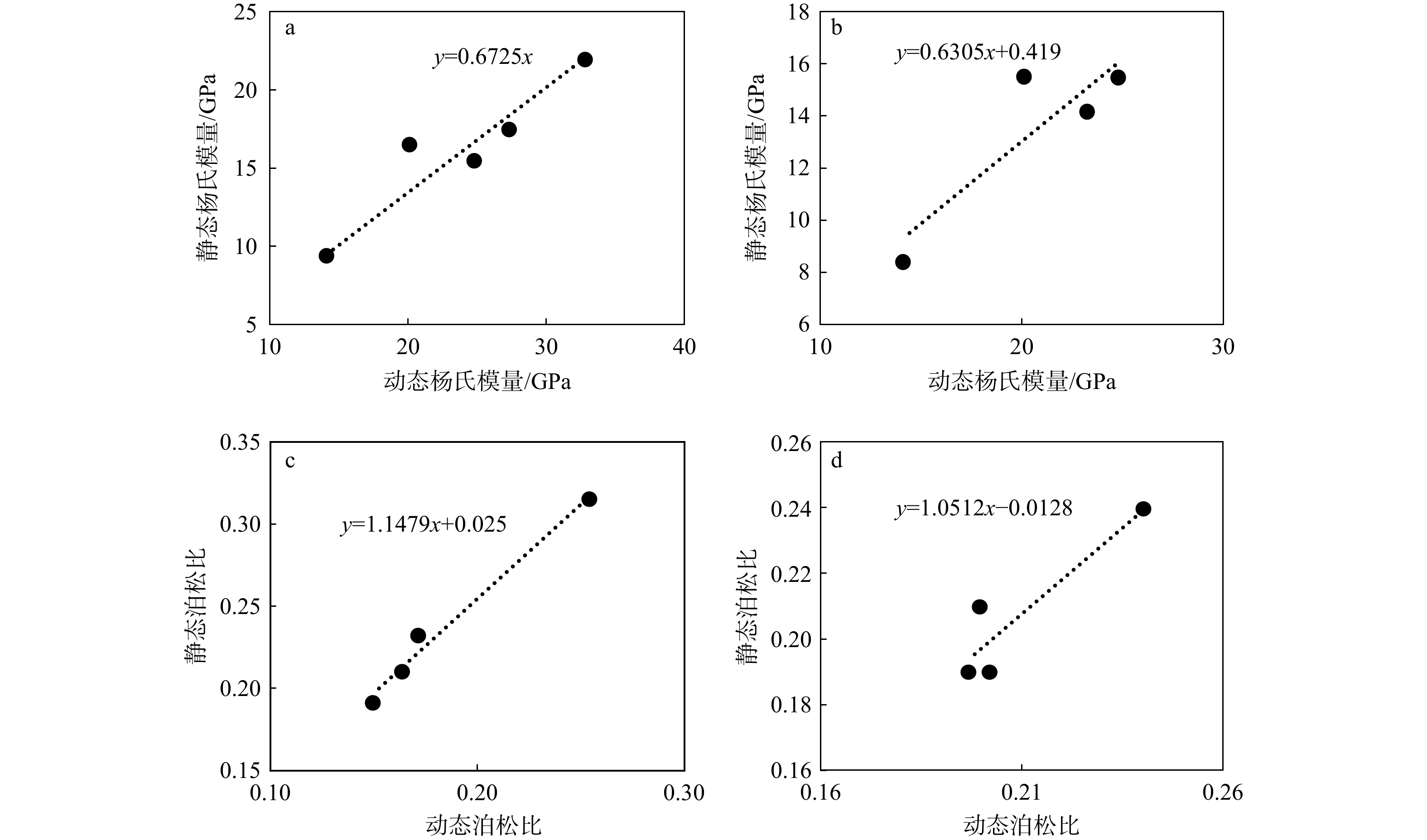
图 2 动、静态杨氏模量及泊松比转换关系图
a—横向动、静态杨氏模量转换关系;b—纵向动、静态杨氏模量转换关系;c—横向动、静态泊松比转换关系;d—纵向动、静态泊松比转换关系
Figure 2. Dynamic-static conversion of Young's modulus and Poisson's ratio
(a) Horizontal dynamic-static Young's modulus conversion; (b) Vertical dynamic-static Young's modulus conversion; (c) Horizontal dynamic-static Poisson's ratio conversion; (d) Vertical dynamic-static Poisson's ratio conversion
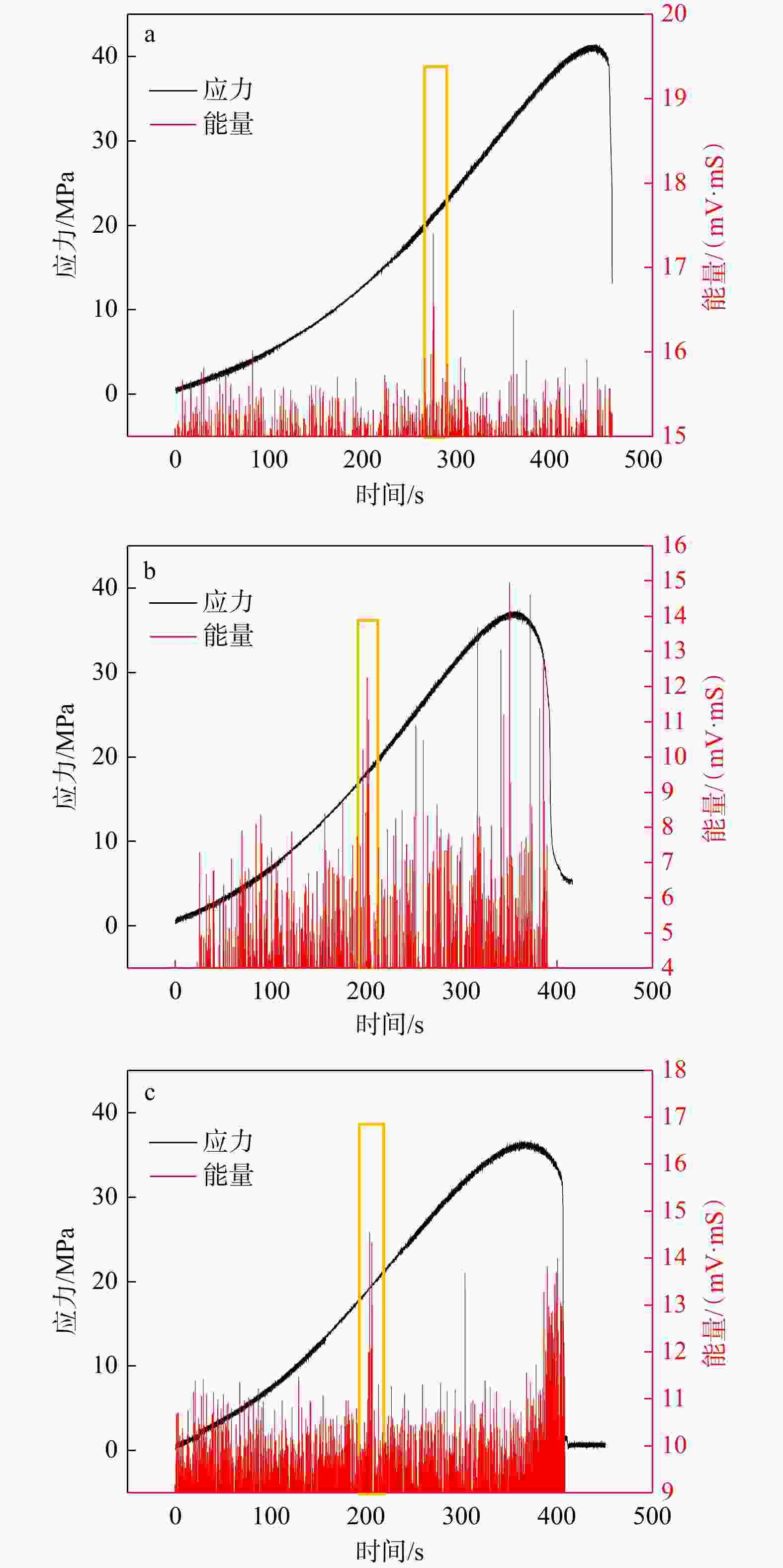
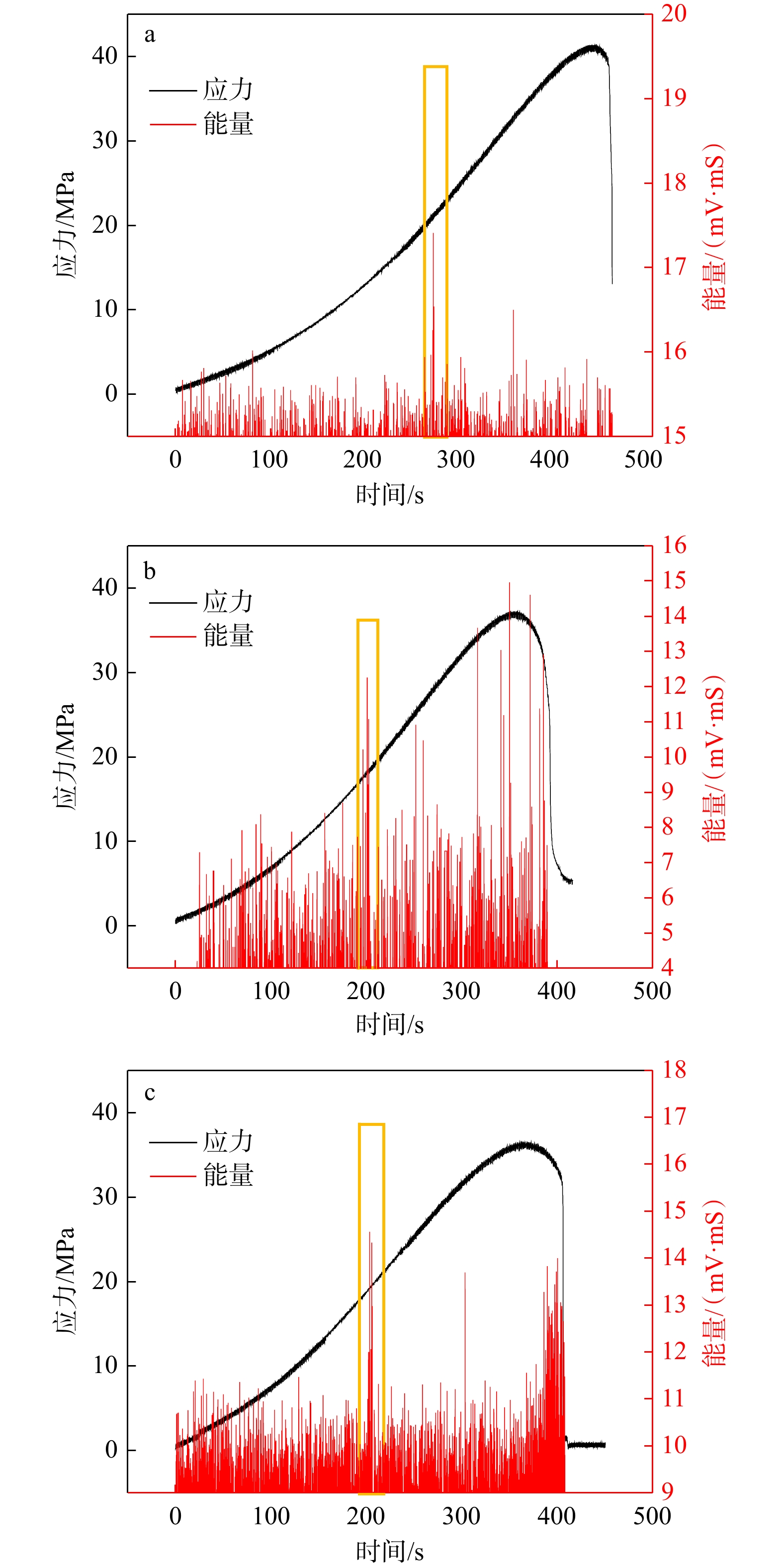
图 3 声发射实验结果
黄色方框为Kaiser效应点a—0°样品声发射实验结果;b—45°样品声发射实验结果;c—90°样品声发射实验结果
Figure 3. Acoustic emission test results
(a) Acoustic emission results for 0° sample; (b) Acoustic emission results for 45° sample; (c) Acoustic emission results for 90° sample The yellow rectangles mark the Kaiser Effect Point.
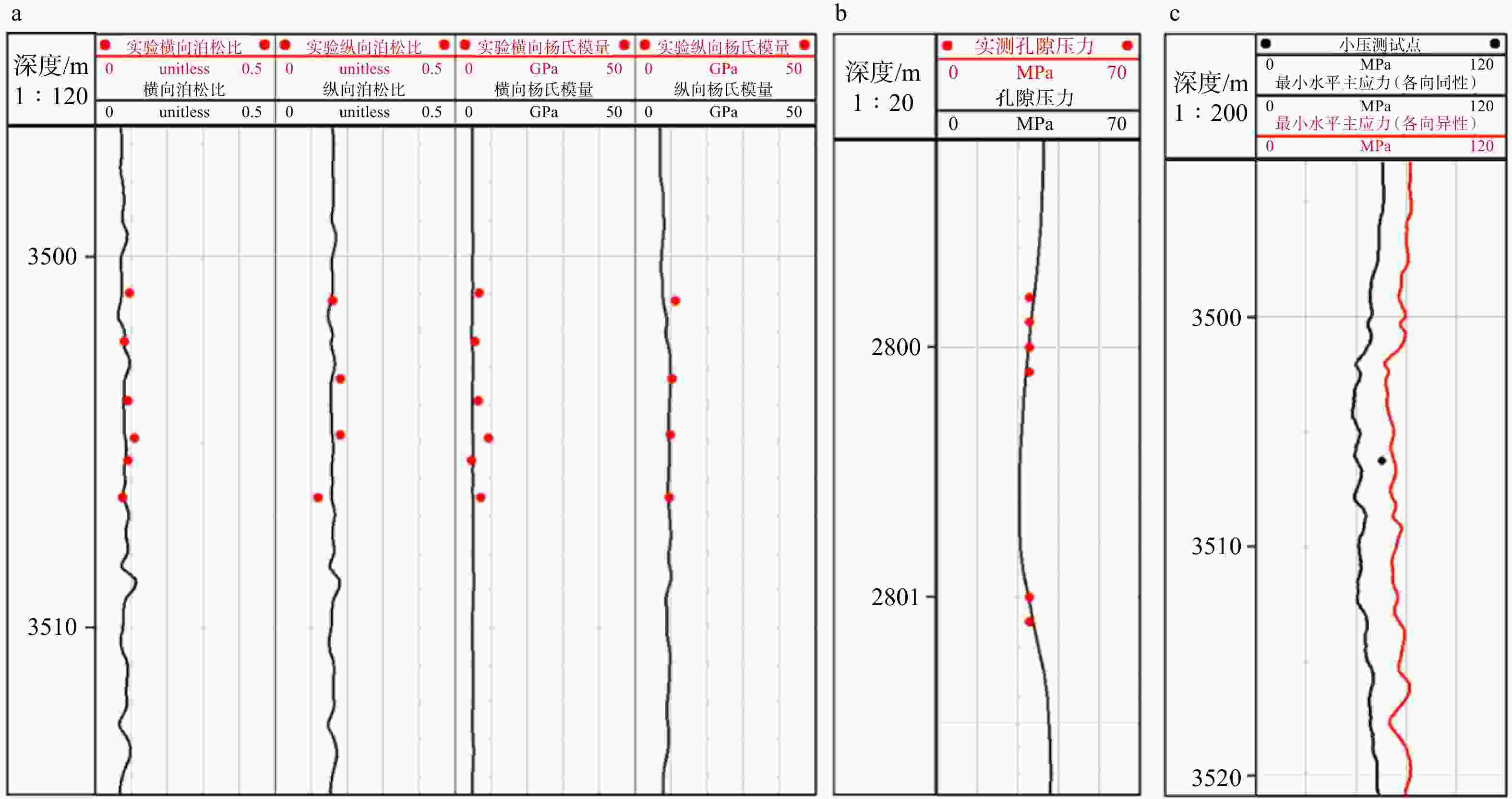
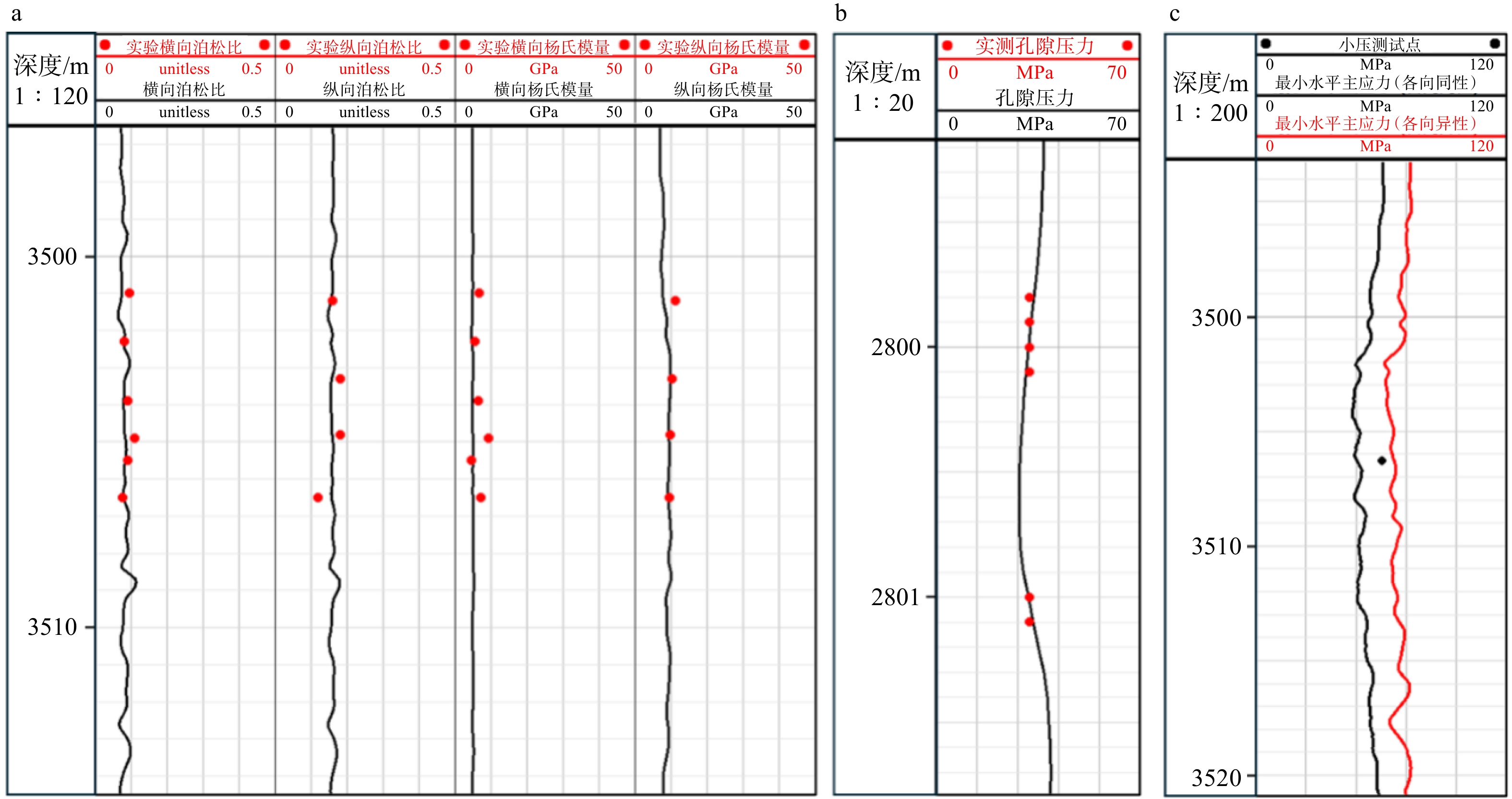
图 5 地质力学典型参数校核图
a—岩石力学参数; b—地层孔隙压力; c—研究区块典型井小压测试
Figure 5. Verification diagram of typical geomechanical parameters
(a) Rock mechanical parameters; (b) Formation pore pressure; (c) Mini-frac test of a typical well in the study area
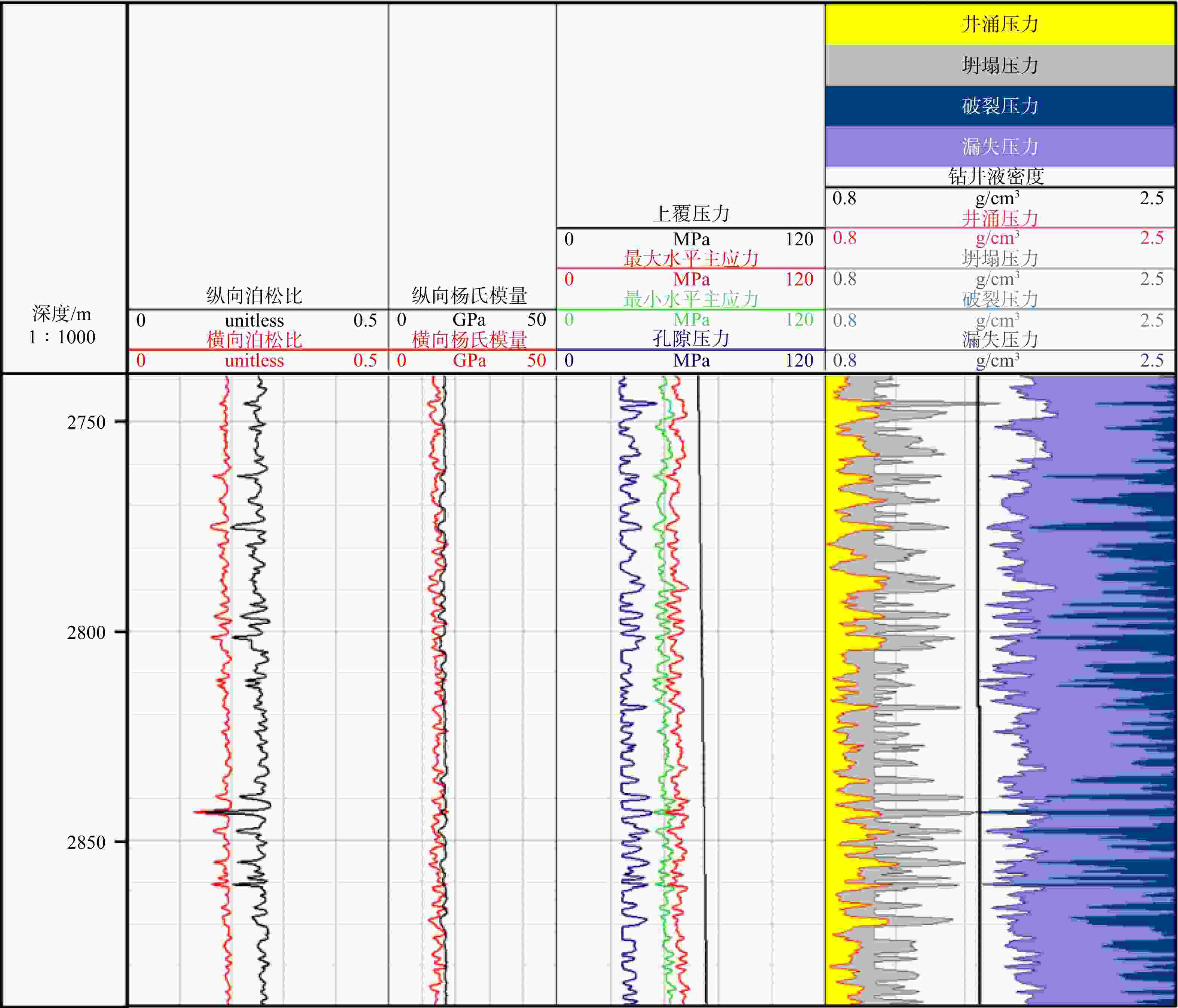
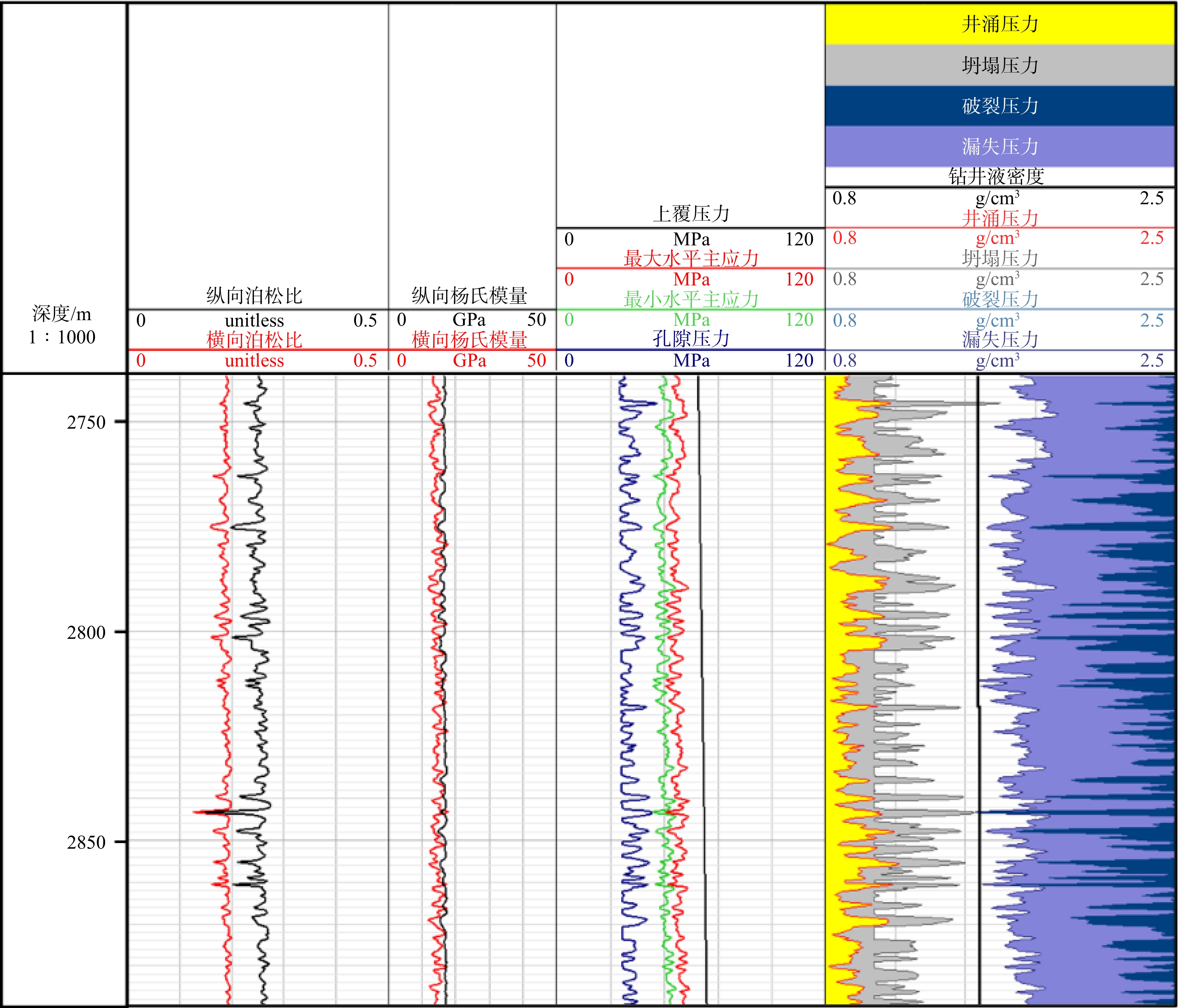
图 6 典型井的一维地质力学模型及井壁稳定性分析
Figure 6. 1D geomechanical model and wellbore stability analysis for a typical well
表 1 基于声发射Kaiser效应的地应力测试实验结果表
Table 1. Experimental results for in-situ stress measurement using the acoustic emission kaiser effect
取样方向 Kaiser点对应的
应力值/ MPa最大水平主
应力/MPa最小水平主
应力/ MPa0° 21.00 51.13 49.07 45° 18.00 90° 19.20  下载: 导出CSV
表 2 计算孔隙压力与实测孔隙压力对比结果
Table 2. Comparison of calculated and measured pore pressure
深度/m 孔隙压力/MPa 实测孔隙压力/MPa 误差分析/% 2799.80 33.56 32.16 4.33 2799.90 32.54 32.16 1.17 2800.00 31.71 32.16 1.41 2800.10 30.85 32.16 4.08 2801.00 31.71 32.17 1.42 2801.10 33.29 32.17 3.49
下载: 导出CSV
-
[1] BOWERS G L, 1994. Pore pressure estimation from velocity data: accounting from overpressure mechanisms besides undercompaction: Proceedings of the IADC/SPE drilling conference, Dallas, 1994, (IADC/SPE), 1994, pp 515–530[J]. International Journal of Rock Mechanics and Mining Sciences & Geomechanics Abstracts, 31(6): 276. [2] CAO H, ZHAO Y, SHUAI D, et al., 2024. Using 3D seismic data to estimate stress based on seismic curvature attribute of HTI medium: application to the Weiyuan, southern Sichuan Basin, China[J]. Chinese Journal of Geophysics, 67(5): 1970-1986. (in Chinese with English abstract) [3] FAN H H, 2001. New methods for prediction and evaluation of formation pore pressure[D]. Beijing: China University of Petroleum: 92-99. (in Chinese) [4] FENG S K, XIONG L, DONG X X, et al., 2025. Quantitative evaluation of Young’s modulus and Poisson’s ratio for deep shale gas reservoirs[J]. Natural Gas Exploration and Development, 48(3): 64-75. (in Chinese with English abstract) [5] HE X, LI W G, DANG L R, et al., 2021. Key technological challenges and research directions of deep shale gas development[J]. Natural Gas Industry, 41(1): 118-124. (in Chinese with English abstract) [6] HENG S, YANG C H, ZHANG B P, et al., 2015. Experimental research on anisotropic properties of shale[J]. Rock and Soil Mechanics, 36(3): 609-616. (in Chinese with English abstract) doi: 10.56952/arma-2023-0128 [7] HONG Y, YAN J P, GUO W, et al., 2025. Mechanical parameters and anisotropy of deep shale-gas reservoir rocks, southern Sichuan Basin[J]. Natural Gas Exploration and Development, 48(1): 30-39. (in Chinese with English abstract) [8] HU S Y, BAI B, TAO S Z, et al., 2022. Heterogeneous geological conditions and differential enrichment of medium and high maturity continental shale oil in China[J]. Petroleum Exploration and Development, 49(2): 224-237. (in Chinese with English abstract) doi: 10.46427/gold2020.106 [9] LI Q H, LI S X, LIU W Z, 2021. Rock mechanical properties of deep shale gas reservoirs and their influence on fracturing stimulation[J]. Special Oil & Gas Reservoirs, 28(3): 130-138. (in Chinese with English abstract) [10] LIU W H, WANG Y, CHEN Z Q, et al., 2025. Anisotropic dynamic-static elastic parameter correlations for Jurassic lacustrine shales[J]. Chinese Journal of Geophysics, 68(1): 213-228. (in Chinese with English abstract) [11] MA Y S, CAI X Y, ZHAO P R, et al., 2022. Geological characteristics and exploration practices of continental shale oil in China[J]. Acta Geologica Sinica, 96(1): 155-171. (in Chinese with English abstract) [12] SCHOENBERG M, MUIR F, SAYERS C M, 1996. Introducing ANNIE: a simple three-parameter anisotropic velocity model for shales[J]. Journal of Seismic Exploration, 5(1): 35-49. [13] SHAD S, KOLAHKAJ P, ZIVAR D, 2023. Geomechanical analysis of an oil field: numerical study of wellbore stability and reservoir subsidence[J]. Petroleum Research, 8(3): 350-359. doi: 10.1016/j.ptlrs.2022.08.002 [14] SHU H L, QIU K B, LI Q F, et al., 2021. A method for evaluating the geomechanical characteristics of shale gas: the geomechanical characteristics of the mountain shale in the intensively reworked marine area of South China[J]. Natural Gas Industry, 41(S1): 1-13. (in Chinese with English abstract) [15] SUAREZ-RIVERA R, HANDWERGER D, HERRERA A R, et al., 2013. Development of a heterogeneous earth model in unconventional reservoirs, for early assessment of reservoir potential[C]//47th U. S. rock mechanics/geomechanics symposium. San Francisco: ARMA. [16] SUN D S, LI A W, YANG Y H, et al., 2025. Research progress and prospects of deep stress measurement technology[J]. Journal of Geomechanics, 31(6): 1111-1126. (in Chinese with English abstract) doi: 10.12090/j.issn.1006-6616.2025089 [17] TANG H M, TANG Y, ZHENG M J, et al., 2022. An experimental study on lamina and fracture mode of shale[J]. Journal of Southwest Petroleum University (Science & Technology Edition), 44(4): 51-61. (in Chinese with English abstract) [18] THOMSEN L, 1986. Weak elastic anisotropy[J]. Geophysics, 51(10): 1954-1966. doi: 10.1190/1.1442051 [19] VERNIK L, LIU X Z, 1997. Velocity anisotropy in shales: a petrophysical study[J]. Geophysics, 62(2): 521-532. doi: 10.1190/1.1444162 [20] VERNIK L, NUR A, 1992. Ultrasonic velocity and anisotropy of hydrocarbon source rocks[J]. Geophysics, 57(5): 727-735. doi: 10.1190/1.1443286 [21] WANG K, DAI J S, FENG J W, et al., 2014. Research on reservoir rock mechanical parameters of Keshen foreland thrust belt in Tarim Basin[J]. Journal of China University of Petroleum (Edition of Natural Science), 38(5): 25-33. (in Chinese with English abstract) [22] WANG X Q, GE H K, SONG L L, et al., 2011. Experimental study of two types of rock sample acoustic emission events and Kaiser effect point recognition approach[J]. Chinese Journal of Rock Mechanics and Engineering, 30(3): 580-588. (in Chinese with English abstract) [23] WANG X Q, GE H K, WANG W W, et al., 2021. Experimental study on stress-related and matrix-related anisotropy in tight reservoirs[J]. Chinese Journal of Geophysics, 64(12): 4239-4251. (in Chinese with English abstract) [24] WANG X Q, ZHONG Y, HOU S Y et al., 2025. The experimental study of shale laminae influence on the mechanical properties and brittle failure of shale oil reservoirs[J]. Physics of Fluids, 37(5): 056623. doi: 10.1063/5.0268210 [25] WANG X Q, ZHONG Y, WAN Y Y, et al., 2025. Influence of laminae on mechanical properties and its implications for hydraulic fracturing of shale oil reservoirs[J]. Journal of China University of Petroleum (Edition of Natural Science), 49(1): 92-100. (in Chinese with English abstract) [26] XIAN C G, ZHANG J H, CHEN X, et al., 2017. Application of geomechanics in geology-engineering integration[J]. China Petroleum Exploration, 22(1): 75-88. (in Chinese with English abstract) [27] YANG Y H, SUN D S, MA X D, et al., 2025. A total system stiffness approach for determining shut-in pressure in hydraulic fracturing stress measurements[J]. International Journal of Rock Mechanics and Mining Sciences, 192: 106160. (in Chinese with English abstract) doi: 10.1016/j.ijrmms.2025.106160 [28] YANG Y H, SUN D S, WU B C, et al., 2025. Determination of hydraulic fracture closure pressure based on total system stiffness method: Case studies[J]. Journal of Geomechanics, 31(6): 1168-1176. (in Chinese with English abstract) [29] YONG S H, ZHANG C M, GAO C Q, et al., 1996. Logging data processing and comprehensive interpretation[M]. Dongying: China University of Petroleum Press: 120-348. (in Chinese) [30] ZHANG J L, GE H K, ZHANG Y J, et al., 2023. Experimental evaluation on EOR medium grading of shale in Jimusaer Oilfield[J]. Oil Drilling & Production Technology, 45(2): 244-250, 258. (in Chinese with English abstract) [31] ZHANG S L, YAN J P, GUO W, et al., 2023. Logging evaluation method of geological-engineering sweet spot parameters for deep shale gas based on petrophysical facies: a case study of the Wufeng-Longmaxi Formation in LZ block of Sichuan Basin[J]. Oil Geophysical Prospecting, 58(1): 214-227. (in Chinese with English abstract) [32] ZHAO W Z, ZHU R K, ZHANG J Y, et al., 2023. Classification, exploration and development status and development trend of continental shale oil in China[J]. China Petroleum Exploration, 28(4): 1-13. (in Chinese with English abstract) [33] ZOBACK M D, KOHLI A H, 2019. Unconventional reservoir geomechanics[M]. Cambridge: Cambridge University Press. [34] ZOU C N, ZHU R K, WU S T, et al., 2012. Types, characteristics, genesis and prospects of conventional and unconventional hydrocarbon accumulations: taking tight oil and tight gas in China as an instance[J]. Acta Petrolei Sinica, 33(2): 173-187. (in Chinese with English abstract) [35] ZOU X J, CHEN Y L, 2018. Geostress logging evaluation method of Longmaxi Formation shale in Fuling area based on transversely isotropic model, Sichuan Basin[J]. Natural Gas Geoscience, 29(12): 1775-1780, 1808. (in Chinese with English abstract) [36] 曹欢, 赵杨, 帅达, 等, 2024. 基于HTI介质地震曲率属性的地应力估算方法及其在威远地区的应用[J]. 地球物理学报, 67(5): 1970-1986. doi: 10.6038/cjg2023Q0791 [37] 樊洪海, 2001. 地层孔隙压力预测检测新方法研究与应用[D]. 北京: 石油大学: 92-99. [38] 冯少柯, 熊亮, 董晓霞, 等, 2025. 深层页岩气储层杨氏模量、泊松比定量评价[J]. 天然气勘探与开发, 48(3): 64-75. doi: 10.12055/gaskk.issn.1673-3177.2025.03.007 [39] 何骁, 李武广, 党录瑞, 等, 2021. 深层页岩气开发关键技术难点与攻关方向[J]. 天然气工业, 41(1): 118-124. doi: 10.3787/j.issn.1000-0976.2021.01.010 [40] 衡帅, 杨春和, 张保平, 等, 2015. 页岩各向异性特征的试验研究[J]. 岩土力学, 36(3): 609-616. doi: 10.16285/j.rsm.2015.03.001 [41] 洪宇, 闫建平, 郭伟, 等, 2025. 川南深层页岩气储层岩石力学参数及各向异性特征[J]. 天然气勘探与开发, 48(1): 30-39. [42] 胡素云, 白斌, 陶士振, 等, 2022. 中国陆相中高成熟度页岩油非均质地质条件与差异富集特征[J]. 石油勘探与开发, 49(2): 224-237. [43] 李庆辉, 李少轩, 刘伟洲, 2021. 深层页岩气储层岩石力学特性及对压裂改造的影响[J]. 特种油气藏, 28(3): 130-138. [44] 刘卫华, 王洋, 陈祖庆, 等, 2025. 侏罗系陆相页岩各向异性动静态弹性参数建模[J]. 地球物理学报, 2025, 68(1): 213-228. [45] 马永生, 蔡勋育, 赵培荣, 等, 2022. 中国陆相页岩油地质特征与勘探实践[J]. 地质学报, 96(1): 155-171. doi: 10.3969/j.issn.0001-5717.2022.01.013 [46] 孙东生, 李阿伟, 杨跃辉, 等, 2025. 深部应力测量技术研发进展与展望[J]. 地质力学学报, 31(6): 1111-1126 doi: 10.12090/j.issn.1006-6616.2025089 [47] 舒红林, 仇凯斌, 李庆飞, 等, 2021. 页岩气地质力学特征评价方法: 中国南方海相强改造区山地页岩地质力学特征[J]. 天然气工业, 41(S1): 1-13. [48] 唐洪明, 唐园, 郑马嘉, 等, 2022. 页岩纹层与破裂方式实验研究[J]. 西南石油大学学报(自然科学版), 44(4): 51-61. doi: 10.11885/j.issn.1674-5086.2020.10.08.02 [49] 王珂, 戴俊生, 冯建伟, 等, 2014. 塔里木盆地克深前陆冲断带储层岩石力学参数研究[J]. 中国石油大学学报(自然科学版), 38(5): 25-33. doi: 10.3969/j.issn.1673-5005.2014.05.004 [50] 王小琼, 葛洪魁, 宋丽莉, 等, 2011. 两类岩石声发射事件与Kaiser效应点识别方法的试验研究[J]. 岩石力学与工程学报, 30(3): 580-588. [51] 王小琼, 葛洪魁, 王文文, 等, 2021. 致密储层岩石应力各向异性与材料各向异性的实验研究[J]. 地球物理学报, 64(12): 4239-4251. doi: 10.6038/cjg2021P0040 [52] 王小琼, 钟毅, 万有余, 等, 2025. 纹层对页岩力学性质的影响及其对水力压裂的启示[J]. 中国石油大学学报(自然科学版), 49(1): 92-100. doi: 10.3969/j.issn.1673-5005.2025.01.009 [53] 鲜成钢, 张介辉, 陈欣, 等, 2017. 地质力学在地质工程一体化中的应用[J]. 中国石油勘探, 22(1): 75-88. doi: 10.3969/j.issn.1672-7703.2017.01.010 [54] 杨跃辉, 孙东生, 吴邦宸, 等, 2025. 总系统刚度法在水力裂缝闭合压力测定中的应用[J]. 地质力学学报, 31(6): 1168-1176 doi: 10.12090/j.issn.1006-6616.2025099 [55] 雍世和, 张超谟, 高楚桥, 等, 1996. 测井数据处理与综合解释[M]. 东营: 中国石油大学出版社: 120-348. [56] 张佳亮, 葛洪魁, 张衍君, 等, 2023. 吉木萨尔页岩油注入介质梯级提采实验评价[J]. 石油钻采工艺, 45(2): 244-250, 258. [57] 张少龙, 闫建平, 郭伟, 等, 2023. 基于岩石物理相的深层页岩气地质—工程甜点参数测井评价方法: 以四川盆地LZ区块五峰组—龙马溪组为例[J]. 石油地球物理勘探, 58(1): 214-227. doi: 10.13810/j.cnki.issn.1000-7210.2023.01.023 [58] 赵文智, 朱如凯, 张婧雅, 等, 2023. 中国陆相页岩油类型、勘探开发现状与发展趋势[J]. 中国石油勘探, 28(4): 1-13. doi: 10.3969/j.issn.1672-7703.2023.04.001 [59] 邹才能, 朱如凯, 吴松涛, 等, 2012. 常规与非常规油气聚集类型、特征、机理及展望: 以中国致密油和致密气为例[J]. 石油学报, 33(2): 173-187. [60] 邹贤军, 陈亚琳, 2018. 四川盆地涪陵地区龙马溪组页岩横向各向同性地应力测井评价方法[J]. 天然气地球科学, 29(12): 1775-1780, 1808. doi: 10.11764/j.issn.1672-1926.2018.10.017 -

 下载:
下载:

计量
- 文章访问数: 719
- HTML全文浏览量: 192
- PDF下载量: 157
- 被引次数: 0
