


Governing factors and mechanisms of CO2 microscale sweep efficiency in shale reservoirs based on causal machine learning
-
摘要: 在废弃油气藏或咸水层注入CO2后,CO2−水−岩反应会改变储层孔喉物性参数,进而通过影响毛细管作用影响CO2微观波及效率。由于页岩岩芯孔喉结构复杂,不同结构的孔喉内CO2微观波及效率难以准确量化,制约了CO2注入方案的有针对性调整,进而影响了CO2地质封存的效果。通过构建多离子浓度场动态变化的格子玻尔兹曼模型,模拟不同物性储层中CO2−水−岩反应和CO2微观波及过程,形成了不同物性储层的CO2−水−岩反应数据集。在此基础上,基于双重机器学习框架,构建了CO2微观波及效率的因果学习模型,并引入随机森林算法,以CO2−水−岩反应时间作为连续型处理变量,系统量化了孔隙度、润湿性与平均孔径等关键孔喉物性参数对储层孔喉内CO2微观波及效率的影响权重。研究结果表明,高碳酸盐岩矿物(方解石)占比储层整体呈现更大的CO2微观波及效率,CO2−水−岩反应引发方解石溶解形成优势流动通道,同时亲油性方解石次生沉淀引发局部润湿性改变。“溶解−次生沉淀”动态过程通过改变储层孔喉结构及物性,从而影响毛细管作用,最终改变CO2流体的微观波及范围。然而,在相同矿物比例下,各样本的CO2微观波及效率存在差异,且方解石占比越大个体样本CO2微观波及效率极差越大,说明不同储层样本的物性差异显著影响CO2微观波及效率。结合因果学习识别影响CO2微观波及效率的关键孔喉物性参数,结果表明储层润湿性对于CO2波及的影响最为显著,中性偏水湿的储层孔喉中CO2的微观波及效率最高。通过构建CO2−水−岩反应格子玻尔兹曼模型并量化关键物性参数影响,为针对性调整CO2注入方案、增强CO2地质封存效果提供了参考与借鉴。Abstract:
Objective During CO2 fluid injection into oil reservoirs or saline aquifers, CO2-water-rock interactions can alter porous media properties, thereby influencing the CO2 microscale sweep efficiency, primarily due to capillary effects. Laboratory experiments and micro/nanoscale numerical simulations often struggle to isolate the specific contributions of individual pore properties, limiting targeted injection optimization for maximizing geological storage potential. Methods To investigate the dynamic evolution of pore structures and properties during multi-mineral competitive dissolution-precipitation reactions under CO2 injection, we developed a lattice Boltzmann method (LBM). This method made it possible to simulate CO2-water-rock interactions in shale oil reservoirs and to analyze pore properties (e.g., average wettability, roughness, porosity) and CO2 microscale sweep efficiency. The LBM simulations generated a dataset covering various pore property scenarios to support causal machine learning. Using a double machine learning framework with a random forest algorithm, a causal inference prediction model was built for CO2 microscale sweep efficiency, treating reaction time as a continuous treatment variable. Results This model quantified the relative importance of key pore parameters—porosity, wettability, and mean pore diameter—on sweep efficiency within the pore network. Its results indicate that reservoirs with higher proportions of carbonate minerals (calcite) exhibit greater CO2 microscale sweep efficiency. The CO2-water-rock reaction triggers calcite dissolution, forming preferential flow paths, while the secondary precipitation of oil-wet calcite induces localized wettability alteration. This dynamic "dissolution–secondary precipitation" process modifies capillary forces by altering the structure and physical properties of pore-throats, thereby influencing the microscale sweep range of CO2 fluids. However, under identical mineral proportions, CO2 sweep efficiency varies among samples, with higher calcite proportions correlating with broader variation in sweep performance. Conclusions These findings underscore the crucial role of physical pore properties, beyond mineral composition alone, in governing sweep efficiency. Causal learning identified key pore-throat parameters that control CO2 microscale sweep behavior, with wettability emerging as the most influential factor. Neutrally water-wet pore-throats exhibited the highest CO2 sweep efficiency. [Significance] By constructing a Lattice Boltzmann model for CO2-water-rock interactions and quantifying the impact of key physical parameters, this study provides a reference and guidance for the targeted adjustment of CO2 injection strategies and the enhancement of the geological CO2 storage effectiveness. -
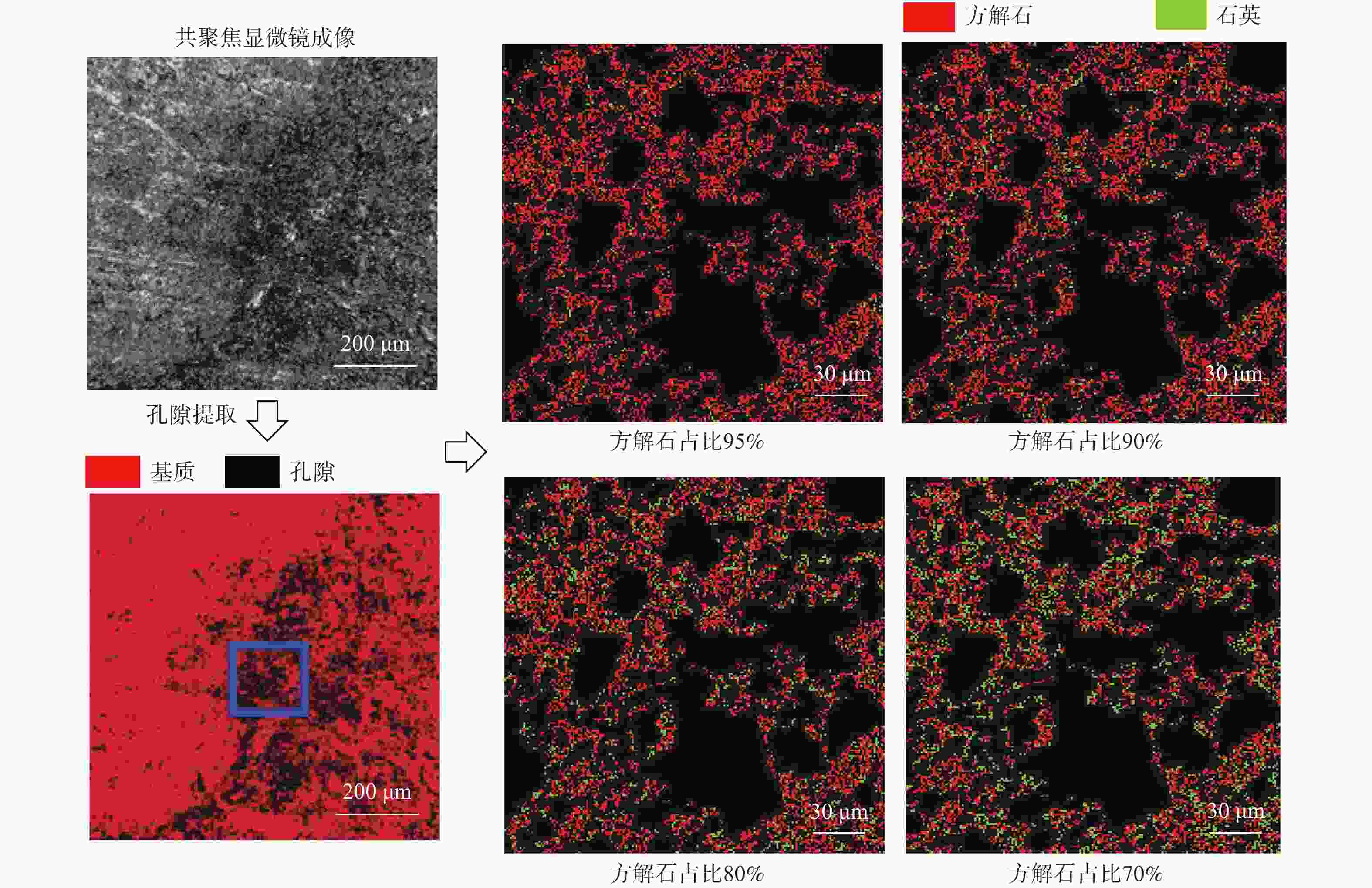
图 1 LBM模型中不同方解石占比的储层岩石骨架构建示意图
Figure 1. Reservoir rock skeleton with different proportions of calcite in the LBM Model
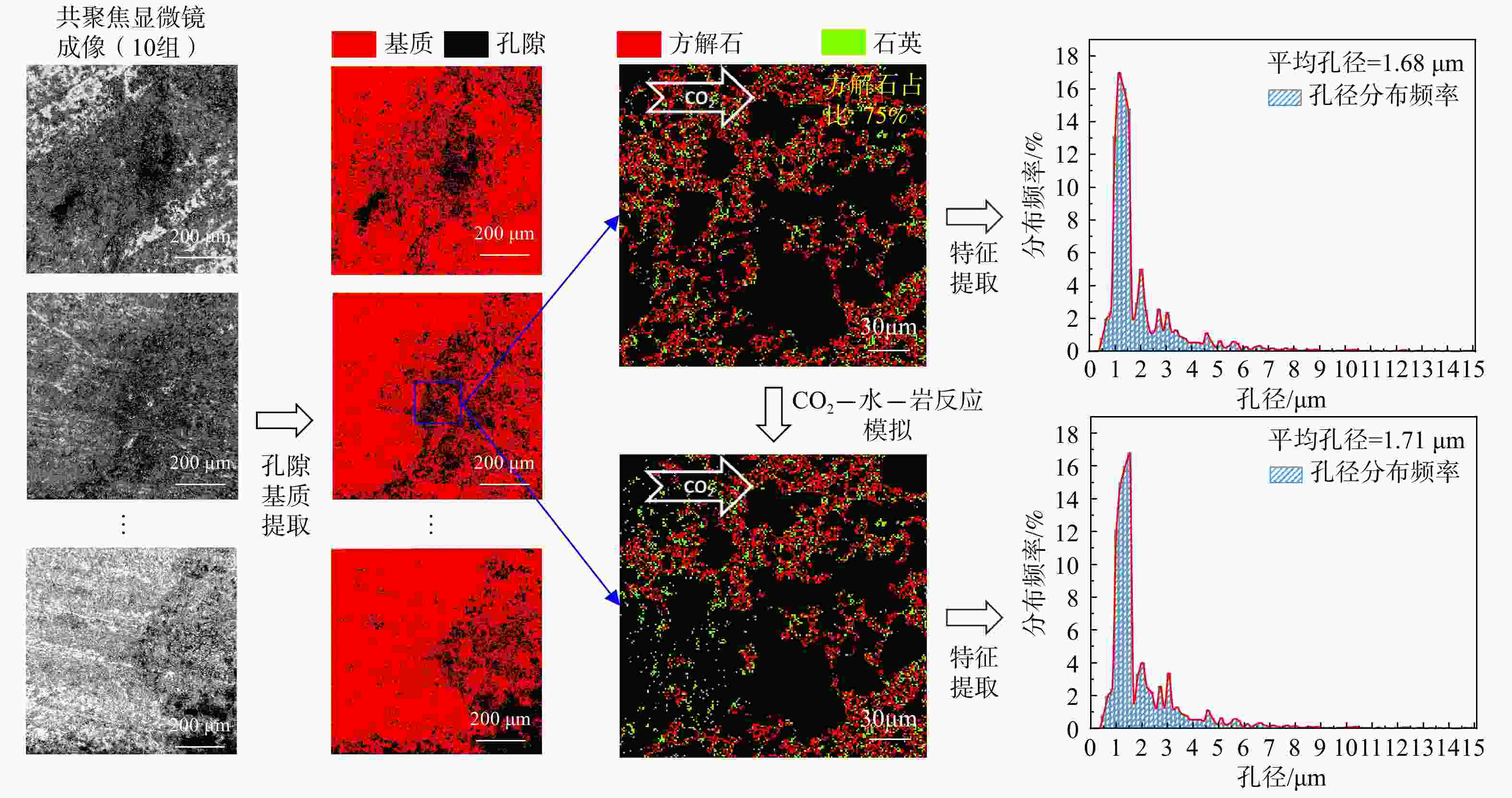
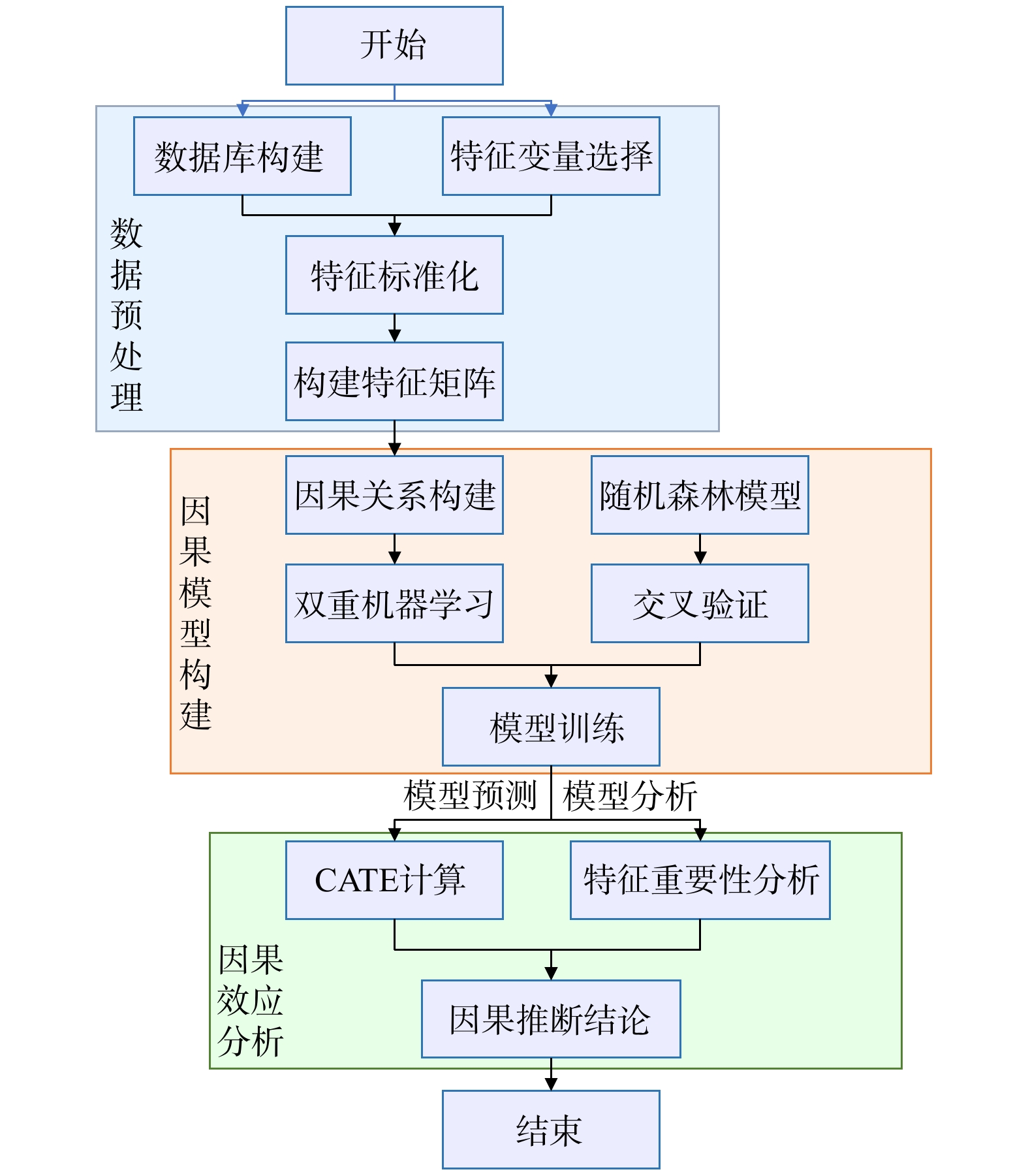
图 2 CO2−水−岩反应LBM模型特征提取思路
Figure 2. Validation ideas for CO2–water–rock reaction LBM Model
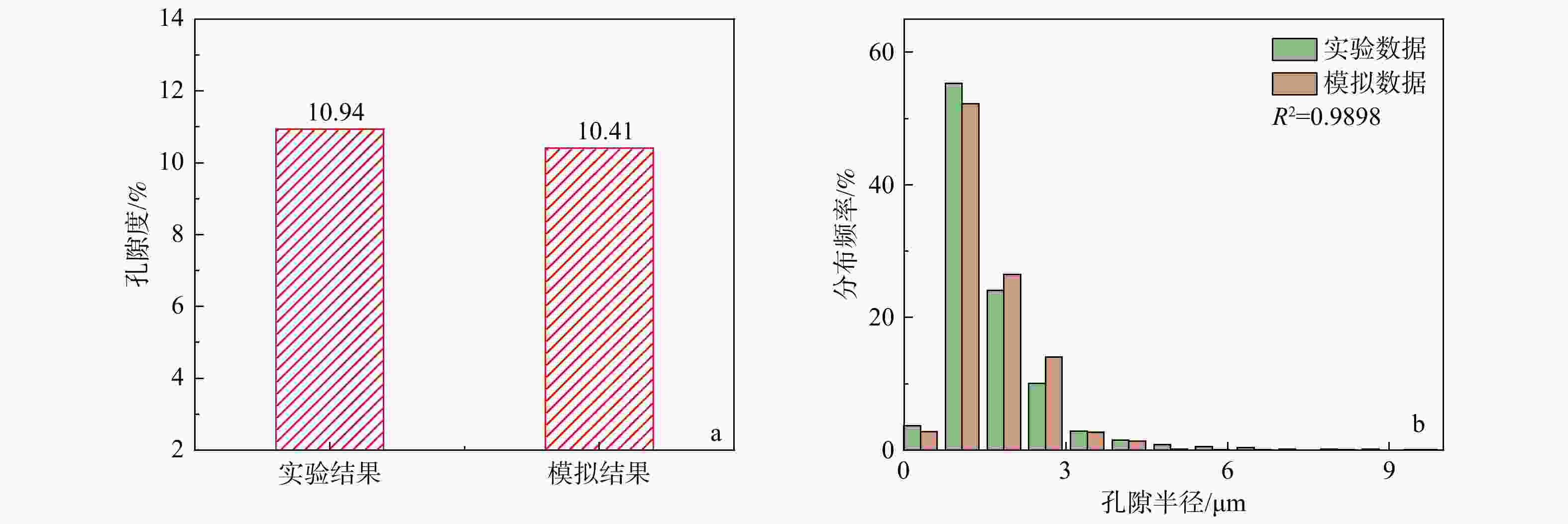
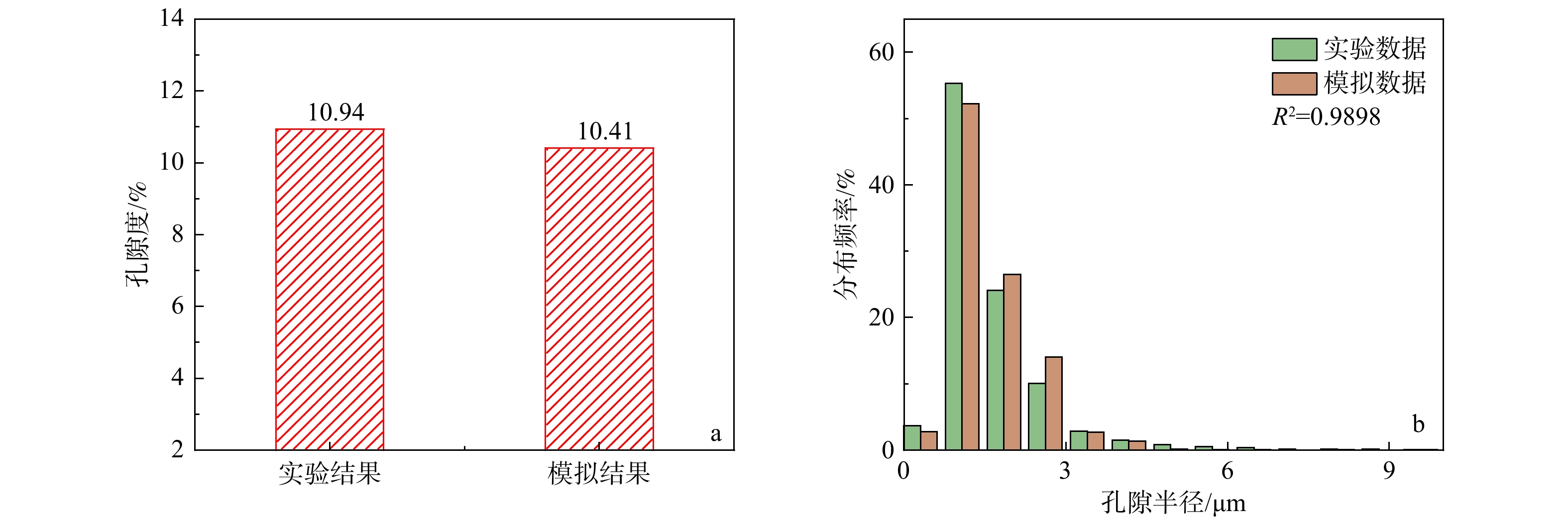
图 3 室内CO2−水−岩实验后与CO2−水−岩反应LBM模拟的验证指标对比
室内实验及LBM模拟中方解石占比均为75%a—室内实验与LBM模拟的岩芯孔隙度对比;b—室内实验与LBM模拟的岩芯孔隙半径分布对比
Figure 3. Comparison of validation indicators between laboratory CO2–water–rock experiments and CO2–water–rock reaction LBM Model
(a) Comparison of porosity between experiments and simulations; (b) Comparison of pore radius distribution between experiments and simulations The proportions of calcite in both the experiment and the LBM Model are 75%.
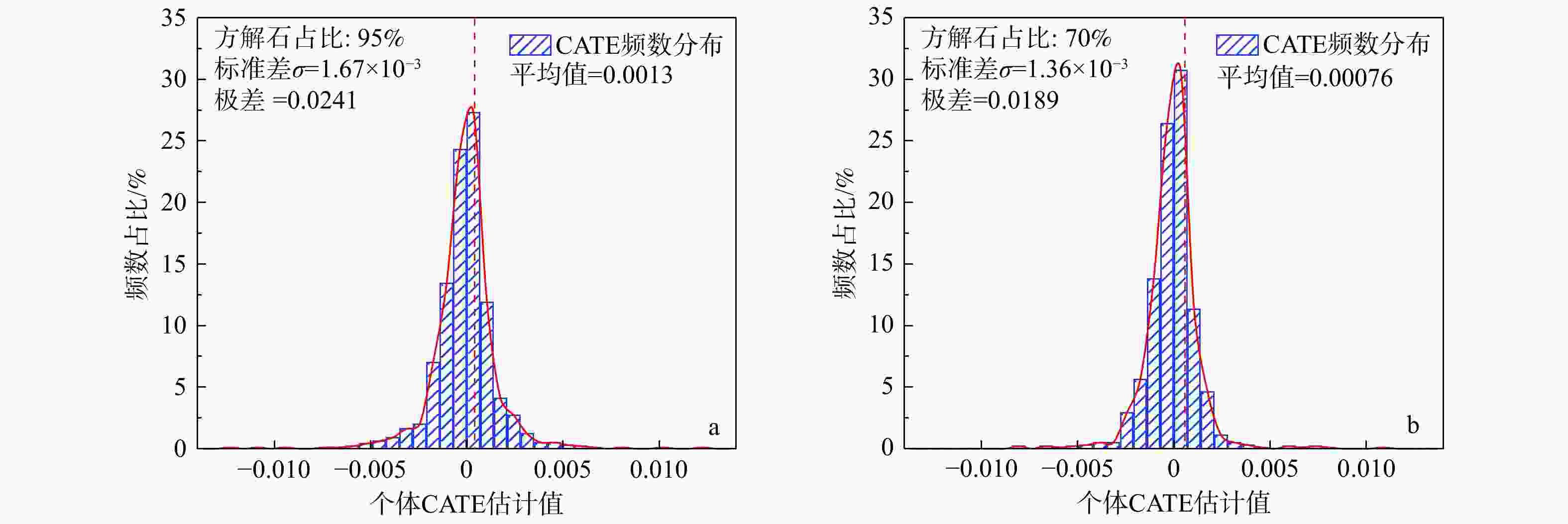
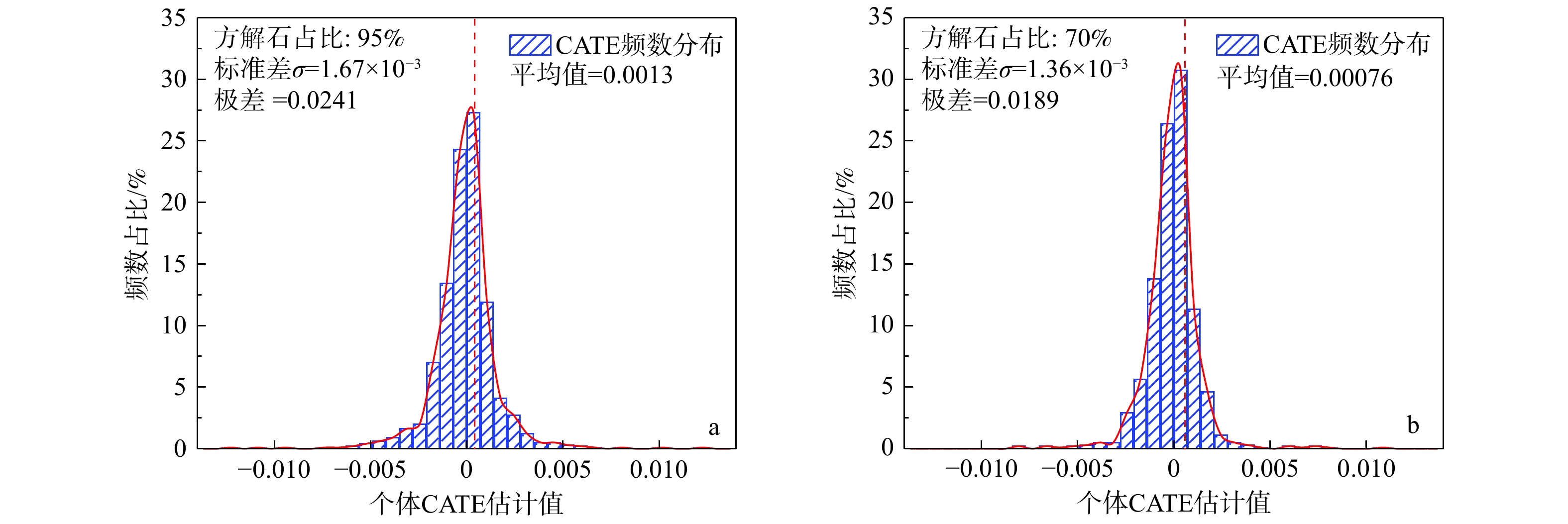
图 6 延长单位CO2停留时间对不同矿物比例储层中CO2微观波及效率的影响程度
a — 方解石占比为95%的储层;b — 方解石占比为70%的储层
Figure 6. The impact of extending the unit CO2 residence time on the microscale sweep efficiency of CO2 in reservoirs with different mineral ratios
(a) Reservoir with 95% calcite; (b) Reservoir with 70% calcite
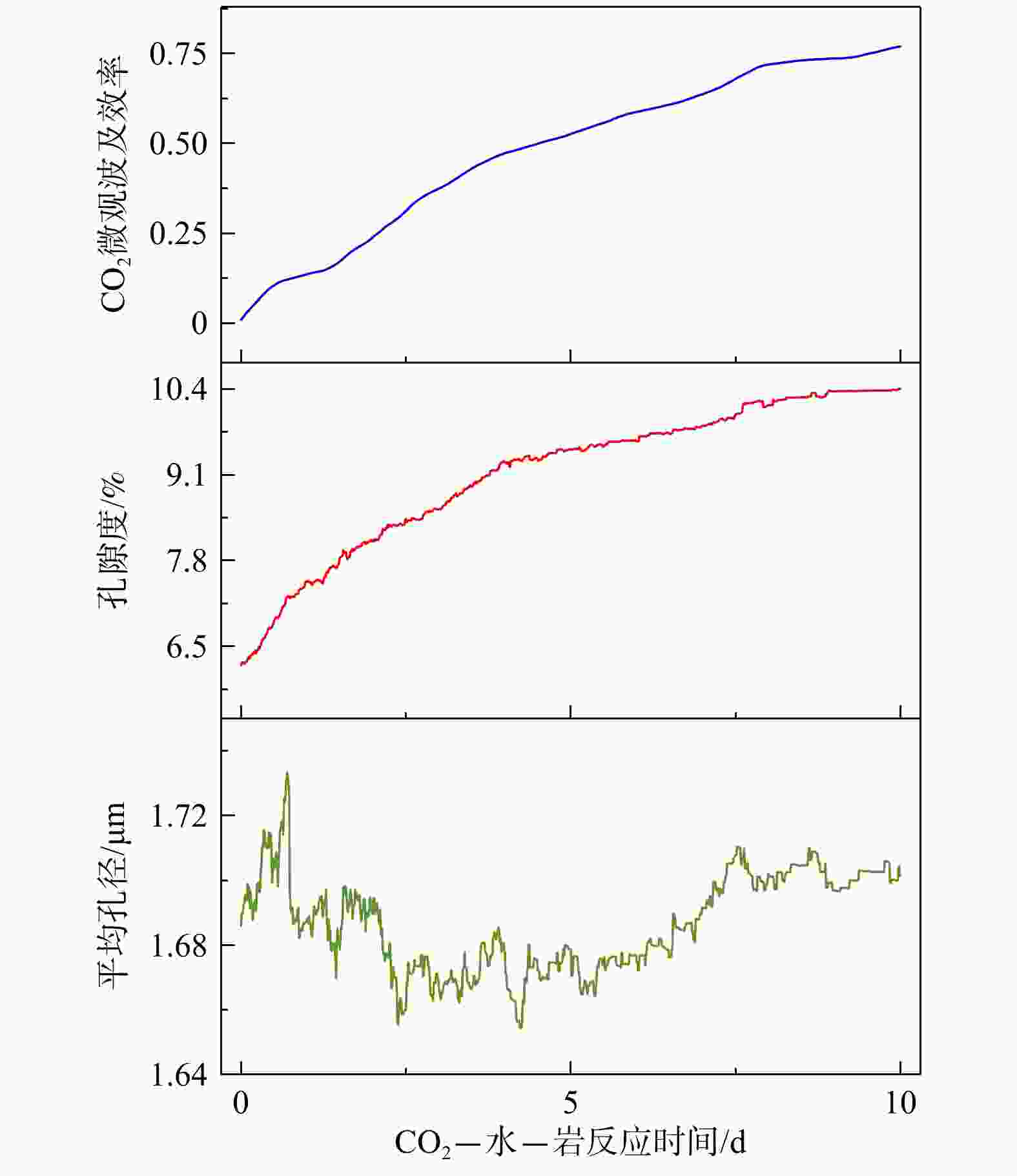
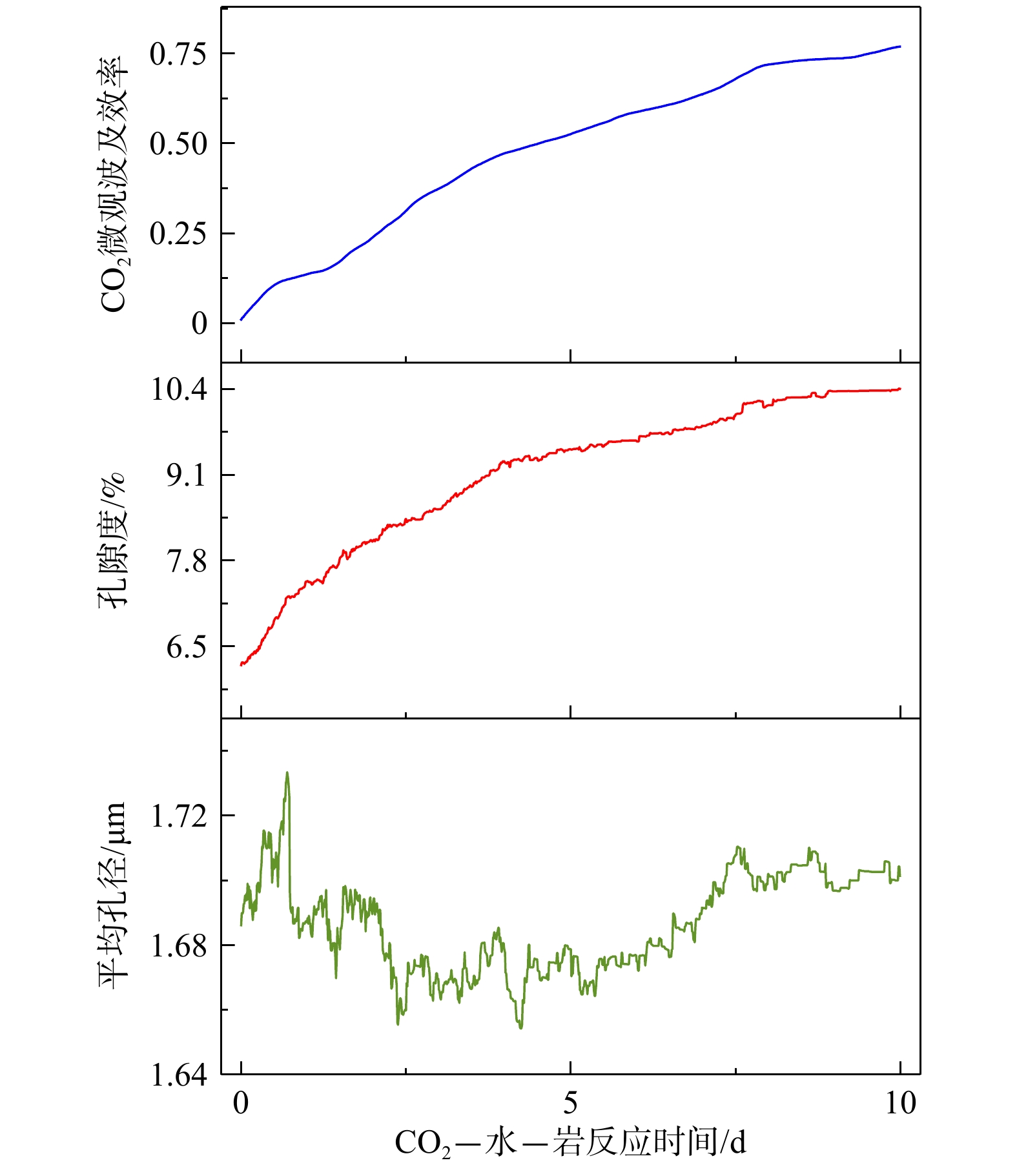
图 7 CO2−水−岩反应过程中储层孔喉物性参数变化曲线
a — CO2微观波及效率变化;b — 波及孔喉孔隙度变化;c — 平均孔径变化
Figure 7. Curves showing changes in the physical parameters of reservoir pore throats during CO2–water–rock reactions
(a) Changes in CO2 microscale sweep efficiency; (b) Changes in pore throat porosity; (c) Changes in average pore size
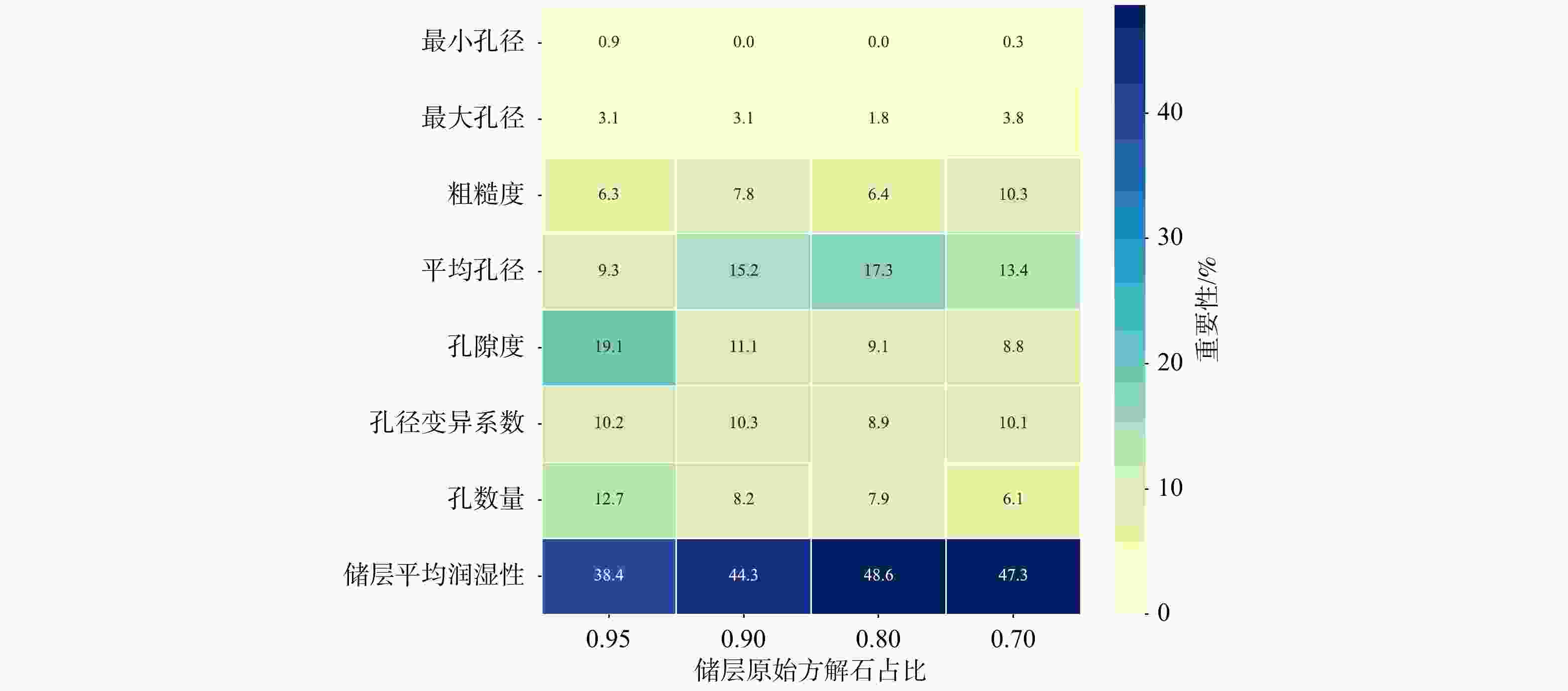
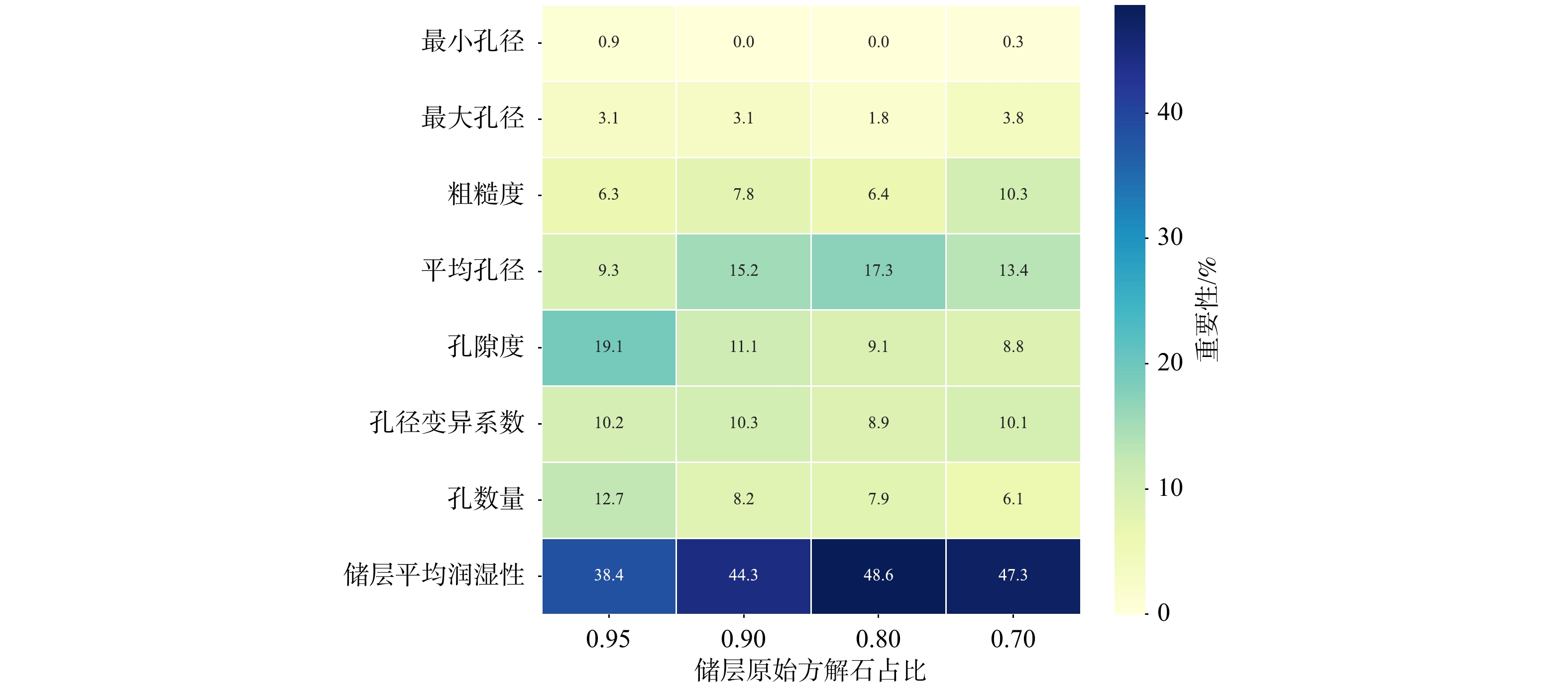
图 8 相同CO2停留时间内各孔喉物性参数影响CO2微观波及效率的权重分布图
Figure 8. Weight distribution of the influence of pore throat physical parameters on the CO2 microscale sweep efficiency within the same CO2 residence time
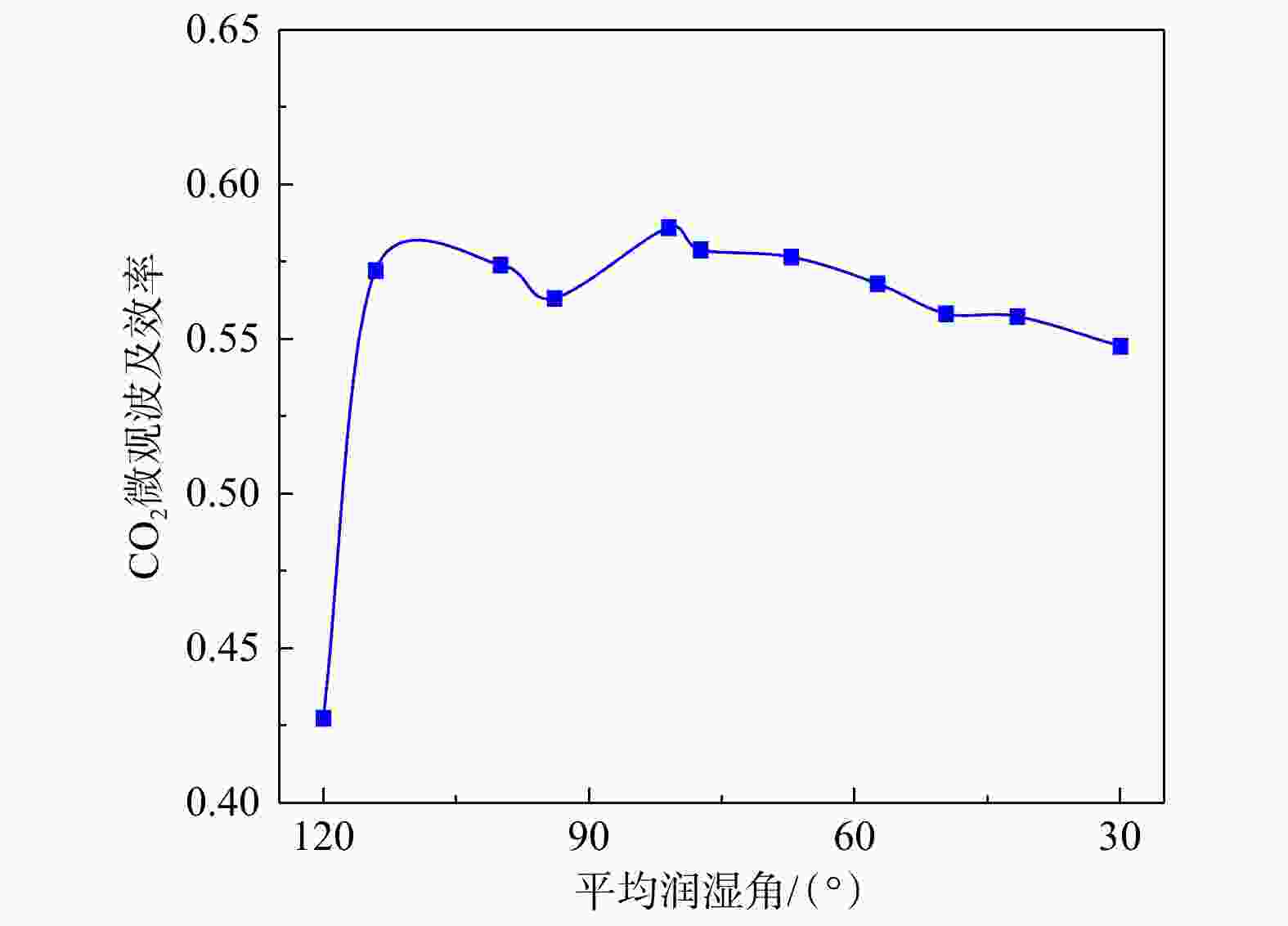
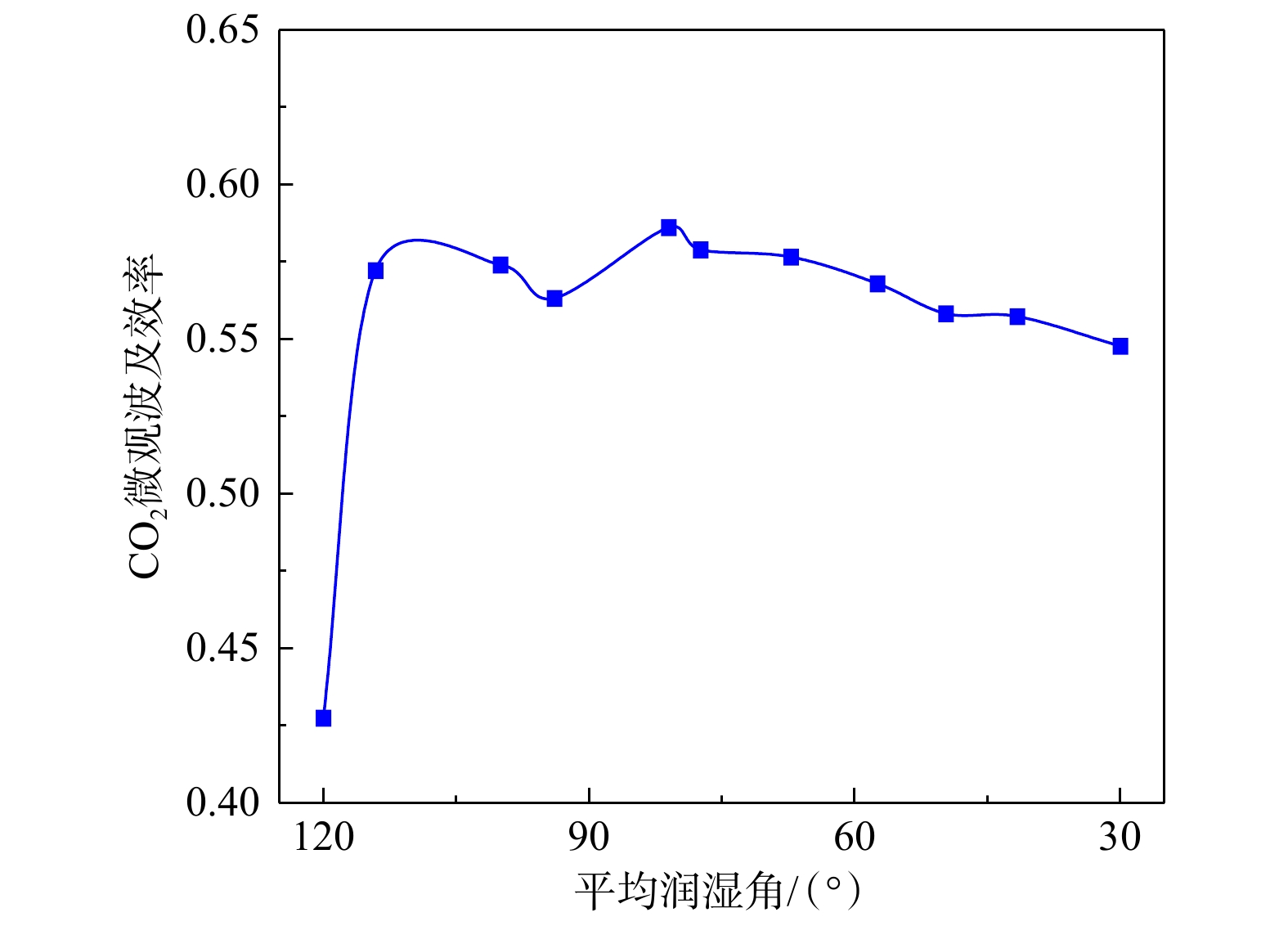
图 9 不同平均润湿性影响的储层孔喉内CO2微观波及效率对比
Figure 9. Comparison of CO2 microscale sweep efficiency in reservoir pores and throats influenced by different average wettability
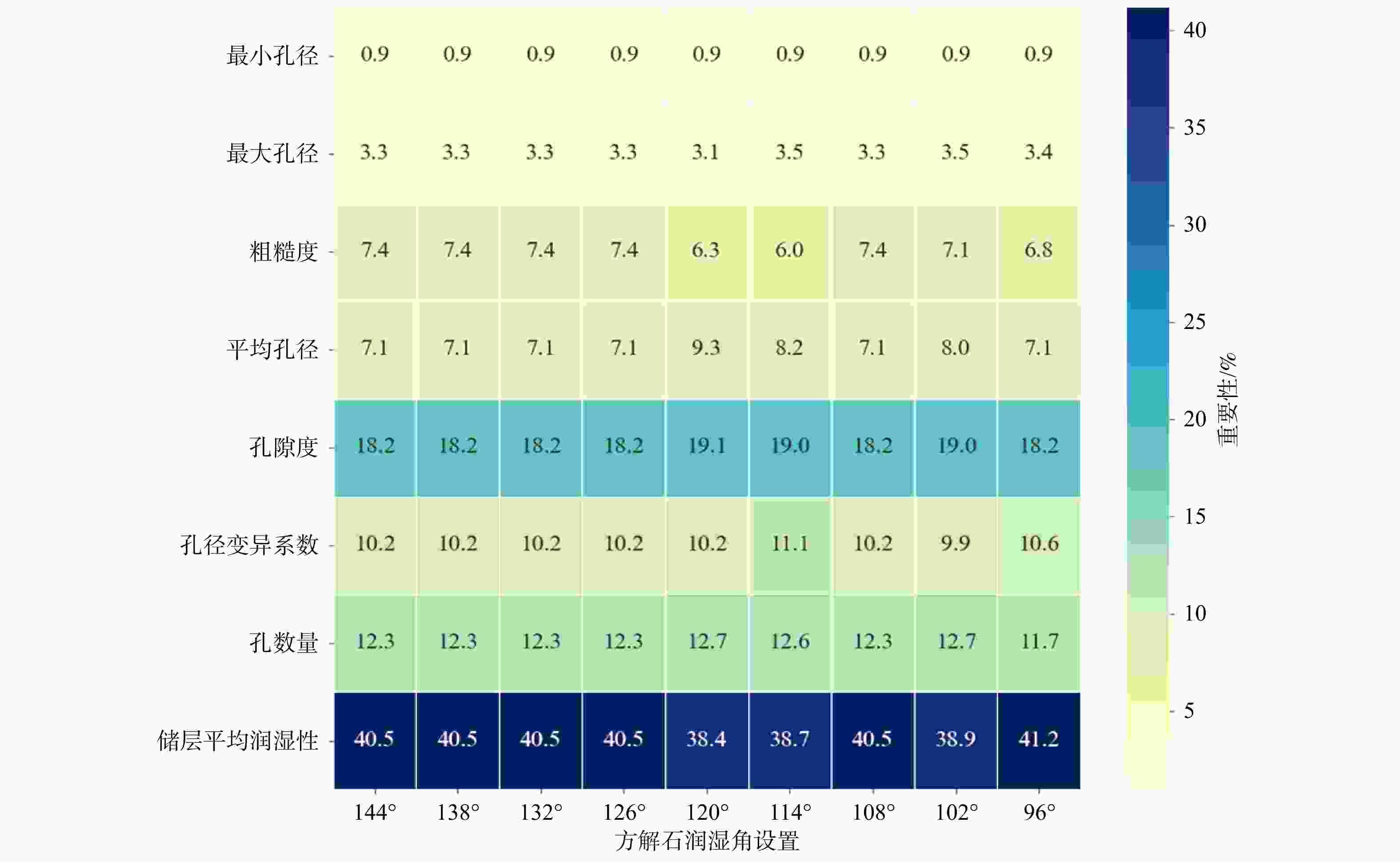
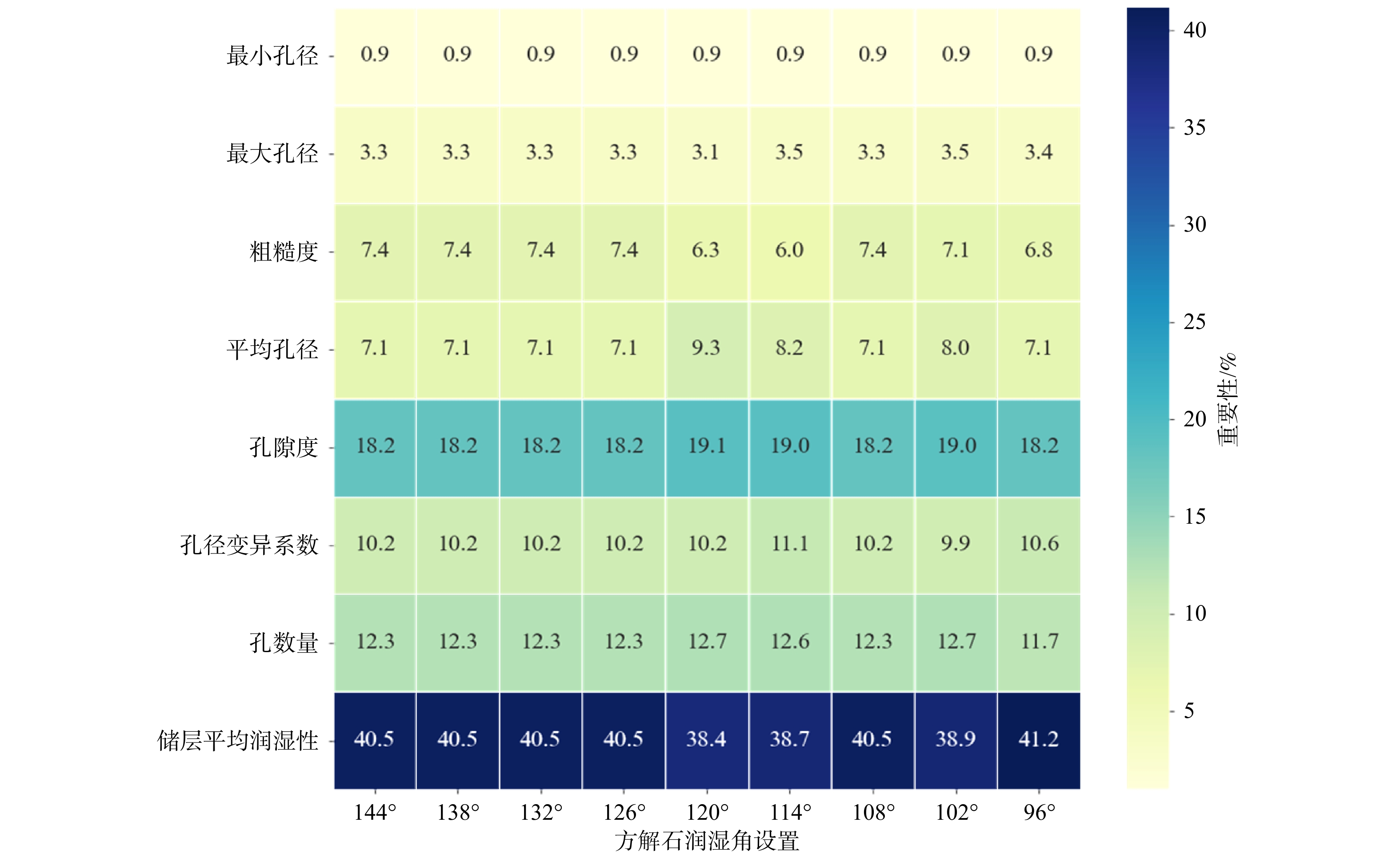
图 10 不同润湿角设置下的各因子影响CO2微观波及效率的权重分布图
Figure 10. Weight distribution of various factors affecting CO2 microscale sweep efficiency under different contact angle settings
表 1 CO2−水−岩反应实验参数设置
Table 1. Experimental parameters for CO2–water–rock reaction
实验参数 设置值 实验组数 5 温度 80 ℃ 压力 25 MPa 水岩反应时间 10 d CLSM物镜倍数 10  下载: 导出CSV
表 2 随机森林模型超参数取值表
Table 2. Table of hyperparameter values for the random forest model
超参数名称 取值 选择依据 决策树数量 100 基于计算效率与性能平衡的经验值 样本分割比例 1∶4 参考已有文献(Chernozhukov et al.,2018) 随机种子 42 确保模拟结果的可重复 分裂准则 均方误差 保证模型收敛 树的最大深度 无 不限制深度以获得更好拟合 内部节点最小分裂样本数 2 最大化单个树的拟合能力 叶节点所需最小样本数 1 避免模型出现过拟合 特征抽样比例 1.0 增强模型泛化性能
下载: 导出CSV
-
[1] BOCKEL-RICKERMANN C, VANDERSCHUEREN T, VERDONCK T, et al. , 2025. Sources of gain: decomposing performance in conditional average dose response estimation[C]//The thirteenth international conference on learning representations. Singapore: OpenReview. net: 1-25. [2] CHAI R, MA Q, GOODARZI S, et al., 2025. Multiphase Reactive Flow During CO2 Storage in Sandstone[J]. Engineering, 48: 81-91. doi: 10.1016/j.eng.2025.01.016 [3] CHEN D Z, QIAN Y X, 2017. Deep or super-deep dolostone reservoirs: opportunities and challenges[J]. Journal of Palaeogeography, 19(2): 187-196. (in Chinese with English abstract) [4] CHEN L, KANG Q J, VISWANATHAN H S, et al., 2014. Pore‐scale study of dissolution‐induced changes in hydrologic properties of rocks with binary minerals[J]. Water Resources Research, 50(12): 9343-9365. doi: 10.1002/2014WR015646 [5] CHEN L, KANG Q J, TANG Q, et al., 2015. Pore-scale simulation of multicomponent multiphase reactive transport with dissolution and precipitation[J]. International Journal of Heat and Mass Transfer, 85: 935-949. doi: 10.1016/j.ijheatmasstransfer.2015.02.035 [6] CHERNOZHUKOV V, CHETVERIKOV D, DEMIRER M, et al., 2018. Double/debiased machine learning for treatment and structural parameters[J]. The Econometrics Journal, 21(1): C1-C68. doi: 10.1111/ectj.12097 [7] CHOU L, GARRELS R M, WOLLAST R, 1989. Comparative study of the kinetics and mechanisms of dissolution of carbonate minerals[J]. Chemical Geology, 78(3-4): 269-282. doi: 10.1016/0009-2541(89)90063-6 [8] CUI G D, YANG L H, FANG J C, et al., 2021. Geochemical reactions and their influence on petrophysical properties of ultra-low permeability oil reservoirs during water and CO2 flooding[J]. Journal of Petroleum Science and Engineering, 203: 108672. doi: 10.1016/j.petrol.2021.108672 [9] DENG H, FITTS J P, CRANDALL D, et al., 2015. Alterations of fractures in carbonate rocks by CO2-acidified brines[J]. Environmental Science & Technology, 49(16): 10226-10234. doi: 10.1021/acs.est.5b01980 [10] DING Q, WANG J B, YANG L L, et al., 2023. Exploring the mineral dissolution-precipitation processes in fracture-fluid-rock systems based on simulation experiments[J]. Oil Gas Geology, 44(1): 164-177. (in Chinese with English abstract) [11] DURBIN R P, 1975. Letter: acid secretion by gastric mucous membrane[J]. American Journal of Physiology-Legacy Content, 229(6): 1726. [12] GLENN J K, GOLDMAN J, 1976. Task delegation to physician extenders--some comparisons[J]. American Journal of Public Health, 66(1): 64-66. [13] GUO Y L, XU Y S, WANG H J, et al., 2023. Experimental investigation of water-rock reaction for the reinjection of sandstone geothermal reservoirs: a case from Neogene Guantao Formation in Tianjin[J]. Renewable Energy, 210: 203-214. doi: 10.1016/j.renene.2023.04.057 [14] HU Y L, HAO M Q, CHEN G L, et al., 2019. Technologies and practice of CO2 flooding and sequestration in China[J]. Petroleum Exploration and Development, 46(4): 716-727. (in Chinese with English abstract) [15] JI J Y, SONG X Z, YI J L, et al., 2024. Study of the effect of water-rock reaction on reservoir pore-permeability evolution during exploitation of karst geothermal resources[J]. Petroleum Science Bulletin, 9(5): 737-749. (in Chinese with English abstract) [16] LASAGA A C, 2014. Kinetic theory in the earth sciences[M]. Princeton: Princeton University Press. [17] LI J N, XIONG R B, LAN Y Y, et al., 2023. Overview of the frontier progress of causal machine learning[J]. Journal of Computer Research and Development, 60(1): 59-84. (in Chinese with English abstract) [18] LI Y, MA H S, LI H T, et al., 2023. Dissolution of supercritical CO2 on carbonate reservoirs[J]. Reservoir Evaluation and Development, 13(3): 288-295. (in Chinese with English abstract) [19] LIANG J T, WEN H G, LI X T, et al., 2023. Research progress of burial dissolution and modification of carbonate reservoirs and fluid-rock simulation experiments[J]. Earth Science, 48(2): 814-834. (in Chinese with English abstract) [20] LIU Y H, QIANG W, DANG X, et al., 2025. Study on the pore structure characteristics of interbedded shale oil and formation mechanisms of high-quality shale oil reservoirs in the Chang 7 Member, Yanchang Formation, Ansai Oilfield[J]. Journal of Geomechanics, 31(3): 506-521. (in Chinese with English abstract) [21] LONG X F, LI S B, ZHANG Y Z, et al., 2024. Overview of causal learning techniques and applications[J]. Computer Engineering and Applications, 60(24): 1-19. (in Chinese with English abstract) [22] MACHEL H G., 2004. Concepts and models of dolomitization: a critical reappraisal[J]. Geological Society, London, Special Publications, 235(1): 7-63. doi: 10.1144/GSL.SP.2004.235.01.02 [23] MIN C, WEN G Q, GOU L J, et al., 2023. Interpretability and causal discovery of the machine learning models to predict the production of CBM wells after hydraulic fracturing[J]. Energy, 285: 129211. doi: 10.1016/j.energy.2023.129211 [24] MIN C, WEN G Q, LI X G, et al., 2024. Research progress and application prospect of interpretable machine learning in artificial intelligence of oil and gas industry[J]. Natural Gas Industry, 44(9): 114-126. (in Chinese with English abstract) [25] NOIRIEL C, LUQUOT L, MADÉ B, et al., 2009. Changes in reactive surface area during limestone dissolution: an experimental and modelling study[J]. Chemical Geology, 265(1-2): 160-170. doi: 10.1016/j.chemgeo.2009.01.032 [26] PEARL J, 2019. The seven tools of causal inference, with reflections on machine learning[J]. Communications of the ACM, 62(3): 54-60. doi: 10.1145/3241036 [27] PLUMMER L N, WIGLEY T M L, PARKHURST D L. 1978. The kinetics of calcite dissolution in CO2-water systems at 5 degrees to 60 degrees C and 0.0 to 1.0 atm CO2[J]. American Journal of Science, 278(2): 179-216. [28] RAISSI M, PERDIKARIS P, KARNIADAKIS G E, 2019. Physics-informed neural networks: a deep learning framework for solving forward and inverse problems involving nonlinear partial differential equations[J]. Journal of Computational Physics, 378: 686-707. doi: 10.1016/j.jcp.2018.10.045 [29] SUN Z Q, LIU D L, ZHENG D S, et al., 2001. CO2 Release and Quantitative Calculation of Metamorphosed Carbonates under Contact Metamorphism: Example from Shuangshan, Feidong, South Tan-Lu Fault Zone[J]. Journal of Geomechanics, 7(2): 144-150. (in Chinese with English abstract) [30] TAN Q G, PENG H P, TIAN J, et al., 2025. A review on mechanisms of CO2-fluid-rock interaction during CO2 injection into carbonate reservoirs[J]. Geoenergy Science and Engineering, 249: 213773. doi: 10.1016/j.geoen.2025.213773 [31] WANG B, LUO Y, LI X, et al., 2024. Water-rock reactions in the acid leaching of Uranium: hydrochemical characteristics and reaction mechanisms[J]. Journal of Hydrology, 636: 131798. doi: 10.1016/j.jhydrol.2024.131798 [32] WANG H Z, SHEN Z H, LI G S, 2011. Feasibility analysis on shale gas exploitation with supercritical CO2[J]. Petroleum Drilling Techniques, 39(3): 30-35. (in Chinese with English abstract) doi: 10.1080/15567036.2010.529570 [33] WANG L H, GUAN X P, YANG N, et al., 2023. Preparation of nano-calcium carbonate intensified by CO2 micro bubble and transfer-reaction analysis[J]. Journal of Process Engineering, 23(9): 1313-1324. (in Chinese with English abstract) [34] WANG X, ZENG J H, JIA K K, et al., 2023. Evolutionary process of the wettability of low-permeability sandstone reservoirs under the control of diagenesis and its mechanism: A case study of the Dongying Sag, Bohai Bay Basin[J]. Oil & Gas Geology, 44(5): 1308-1320. (in Chinese with English abstract) [35] WANG Z, CHEN L, WEI H K, et al., 2022. Pore-scale study of mineral dissolution in heterogeneous structures and deep learning prediction of permeability[J]. Physics of Fluids, 34(11): 116609. doi: 10.1063/5.0123966 [36] WANG Z D, DING K L, LIU T Y, et al., 2023. Minireview of microscopic CO2 interactions with fluids and minerals in shale: advances and outlook[J]. Energy & Fuels, 37(14): 9895-9913. doi: 10.1021/acs.energyfuels.3c00798 [37] WU X, LIU R C, et al., 2025. Characteristics of Physical Properties and Pore-Throat Structure Changes in Carbonate Rocks under CO2 Action[J]. Reservoir Evaluation and Development, 15(4): 571-578. (in Chinese with English abstract) [38] XIE Q H, WANG W D, SU Y L, et al., 2023. Pore-scale study of calcite dissolution during CO2-saturated brine injection for sequestration in carbonate aquifers[J]. Gas Science and Engineering, 114: 204978. doi: 10.1016/j.jgsce.2023.204978 [39] YANG S Q, LIU J H, YANG Y H, et al., 2024. Reverse equilibrium simulation of mineral dissolution and precipitation during CO2+O2 in-situ leaching of uranium[J]. Atomic Energy Science and Technology, 58(11): 2278-2289. (in Chinese with English abstract) [40] YUE M, DAI Q Q, LIAO H Y, et al., 2024. Prediction of ORF for optimized CO2 flooding in fractured tight oil reservoirs via machine learning[J]. Energies, 17(6): 1303. doi: 10.3390/en17061303 [41] ZHANG C, ZHU P Y, HUANG T J, et al., 2025. Study on the influence of CO2-water-rock reactions under reservoir conditions on geochemical properties of sandstone reservoirs[J]. Petroleum Reservoir Evaluation and Development, 15(4): 545-553. (in Chinese with English abstract) [42] ZHANG G M, SUN X X, CHEN B B, et al., 2016. Edge detection algorithm combining fractional order derivative and Canny operator[J]. Journal of Image and Graphics, 21(8): 1028-1038. (in Chinese with English abstract) [43] ZHANG Y S, LIU G Q, YUAN C, et al., 2025. Quantitative identification of shale oil lithofacies and optimization of favorable lithofacies by combining macro-structure and mineral component analyses[J]. Acta Petrolei Sinica, 46(2): 372-388. (in Chinese with English abstract) [44] ZHU Z H, LI M Y, LIN M Q, et al., 2011. Review of the CO2-water-rock interaction in reservoir[J]. Bulletin of Mineralogy, Petrology and Geochemistry, 30(1): 104-112. (in Chinese with English abstract) [45] ZOU C N, ZHU R K, DONG D Z, et al., 2022. Scientific and technological progress, development strategy and policy suggestion regarding shale oil and gas[J]. Acta Petrolei Sinica, 43(12): 1675-1686. (in Chinese with English abstract) [46] 陈代钊, 钱一雄, 2017. 深层-超深层白云岩储集层: 机遇与挑战[J]. 古地理学报, 19(2): 187-196. doi: 10.7605/gdlxb.2017.02.015 [47] 丁茜, 王静彬, 杨磊磊, 等, 2023. 基于模拟实验探讨断裂-流体-岩石体系中的矿物溶解-沉淀过程[J]. 石油与天然气地质, 44(1): 164-177. doi: 10.11743/ogg20230113 [48] 胡永乐, 郝明强, 陈国利, 等, 2019. 中国CO2驱油与埋存技术及实践[J]. 石油勘探与开发, 46(4): 716-727. [49] 姬佳炎, 宋先知, 易俊琳, 等, 2024. 岩溶型地热资源开采过程水岩反应对储层孔渗演变影响研究[J]. 石油科学通报, 9(5): 737-749. doi: 10.3969/j.issn.2096-1693.2024.05.056 [50] 李家宁, 熊睿彬, 兰艳艳, 等, 2023. 因果机器学习的前沿进展综述[J]. 计算机研究与发展, 60(1): 59-84. doi: 10.7544/issn1000-1239.202110780 [51] 李颖, 马寒松, 李海涛, 等, 2023. 超临界CO2对碳酸盐岩储层的溶蚀作用研究[J]. 油气藏评价与开发, 13(3): 288-295. doi: 10.13809/j.cnki.cn32-1825/te.2023.03.003 [52] 梁金同, 文华国, 李笑天, 等, 2023. 碳酸盐岩储层埋藏溶蚀改造与水岩模拟实验研究进展[J]. 地球科学, 48(2): 814-834. [53] 刘雨航, 强微, 党鑫, 等, 2025. 安塞油田延长组7段夹层型页岩油储层孔隙结构特征及优质储层成因机制研究[J]. 地质力学学报, 31(3): 506-521. doi: 10.12090/j.issn.1006-6616.2025011 [54] 龙享福, 李少波, 张仪宗, 等, 2024. 因果学习方法和应用概述[J]. 计算机工程与应用, 60(24): 1-19. doi: 10.3778/j.issn.1002-8331.2405-0407 [55] 闵超, 文国权, 李小刚, 等, 2024. 可解释机器学习在油气领域人工智能中的研究进展与应用展望[J]. 天然气工业, 44(9): 114-126. doi: 10.3787/j.issn.1000-0976.2024.09.011 [56] 孙占强, 刘德良, 郑德山, 等, 2001. 接触变质条件下变碳酸岩CO2释放与定量计算: 以郯庐断裂南段肥东县双山为例[J]. 地质力学学报, 7(2): 144-150. doi: 10.3969/j.issn.1006-6616.2001.02.008 [57] 王海柱, 沈忠厚, 李根生, 2011. 超临界CO2开发页岩气技术[J]. 石油钻探技术, 39(3): 30-35. [58] 王立恒, 管小平, 杨宁, 等, 2023. CO2微气泡强化纳米碳酸钙的制备及传递-反应分析[J]. 过程工程学报, 23(9): 1313-1324. doi: 10.12034/j.issn.1009-606X.222450 [59] 王鑫, 曾溅辉, 贾昆昆, 等, 2023. 成岩作用控制下低渗透砂岩润湿性演化过程及机制: 以渤海湾盆地东营凹陷为例[J]. 石油与天然气地质, 44(5): 1308-1320. doi: 10.11743/ogg20230519 [60] 吴潇, 刘润昌, 2025. CO2作用下碳酸盐岩物性及孔喉结构变化特征[J]. 油气藏评价与开发, 15(4): 571-578. doi: 10.13809/j.cnki.cn32-1825/te.2025.04.005 [61] 杨诗琪, 刘金辉, 阳奕汉, 等, 2024. CO2+O2浸铀过程中矿物溶解量与沉淀量的逆向平衡模拟[J]. 原子能科学技术, 58(11): 2278-2289. doi: 10.7538/yzk.2023.youxian.0870 [62] 张超, 朱鹏宇, 黄天镜, 等, 2025. 储层条件下CO2-水岩反应对砂岩储层地化性质影响研究[J]. 油气藏评价与开发, 15(4): 545-553. doi: 10.13809/j.cnki.cn32-1825/te.2025.04.002 [63] 张桂梅, 孙晓旭, 陈彬彬, 等, 2016. 结合分数阶微分和Canny算子的边缘检测[J]. 中国图象图形学报, 21(8): 1028-1038. doi: 10.11834/jig.20160807 [64] 张永庶, 刘国强, 袁超, 等, 2025. 融合宏观结构与矿物组分分析的页岩油岩相量化识别与有利岩相优选方法[J]. 石油学报, 46(2): 372-388. doi: 10.7623/syxb202502006 [65] 朱子涵, 李明远, 林梅钦, 等, 2011. 储层中CO2-水-岩石相互作用研究进展[J]. 矿物岩石地球化学通报, 30(1): 104-112. doi: 10.3969/j.issn.1007-2802.2011.01.015 [66] 邹才能, 朱如凯, 董大忠, 等, 2022. 页岩油气科技进步、发展战略及政策建议[J]. 石油学报, 43(12): 1675-1686. -

 下载:
下载:




计量
- 文章访问数: 1716
- HTML全文浏览量: 179
- PDF下载量: 165
- 被引次数: 0
