


Assessment of shale gas enrichment factors and delineation of favorable exploration zones in the first submember of the first member of the Longmaxi Formation, Tiangongtang area, southwestern Sichuan
-
摘要: 川西南天宫堂地区龙马溪组一段页岩气储层具有显著的非均质性特征。为了探明影响川西南页岩气富集条件的因素,文章基于钻井岩芯、地球化学测试、矿物组分分析及测井资料,综合地质学、地球化学与测井解释等多学科研究方法,系统分析了该区页岩气富集条件及勘探潜力。结果表明,龙一段1亚段发育一套厚度25~60 m的连续稳定富有机质页岩,TOC含量1.0%~4.0%(平均3.19%),纵向上下部龙一段1亚段①~③小层TOC含量显著高于上部层段;Ro值2.58%~3.16%,表明处于过成熟阶段。矿物组成以石英(35%~45%)、黏土矿物(25%~35%)和碳酸盐矿物(15%~25%)为主,脆性指数大于60%,具备良好可压性。储集空间包括有机孔(孔径0.02~0.9 μm)、无机孔(粒内溶蚀孔、粒间孔等)及多尺度裂缝系统(构造缝、非构造缝和微裂缝),孔隙度3.0%~6.0%(平均4.2%),渗透率0.0003~0.2352 mD(2.96×10⁻⁷~2.32×10⁻⁴ μm2),纵向呈“顶底低渗、中部高渗”特征。构造保存条件分析表明,宽缓背斜和单斜构造区保存条件较好,而高陡断裂带附近气体散失严重;地层压力系数与产量呈正相关,当压力系数>1.4时单井日产量普遍突破20×104 m3/d(如Y203井36.26×104 m3/d)。通过建立综合评价指标体系,将天宫堂地区划分为Ⅰ类(TOC>2.4%、脆性指数>65%、孔隙度>4.5%、优质页岩厚度>35 m、埋深3000~4000 m、压力系数>1.4)和Ⅱ类有利区,为天宫堂地区页岩气勘探开发提供了科学依据。研究成果揭示了复杂构造背景下页岩气富集的主控因素,对川西南地区页岩气高效开发具有指导意义。Abstract:
Objective The shale gas reservoir in the First Member of the Longmaxi Formation in the Tiangongtang area of southwestern Sichuan exhibits significant heterogeneity. To investigate the factors influencing shale gas enrichment, this study systematically analyzed the enrichment conditions and exploration potential in southwestern Sichuan. Methods This was achieved through an interdisciplinary approach incorporating core analysis, geochemical analysis, mineralogical characterization, and well-logging interpretation. Results The first sub-member (Long 1-1) contains continuous organic-rich shale with a thickness of 25–60 m, featuring a TOC content of 1.0%–4.0% (average 3.19%). The lower intervals (Long 1-1-1 to Long 1-1-3) show significantly higher TOC values than the upper intervals. With Ro values ranging from 2.58% to 3.16%, the shale is in an overmature stage. The mineral composition is dominated by quartz (35%–45%),clay minerals (25%–35%), and carbonate minerals (15%–25%). Brittle mineral content exceeding 59% and brittleness indices of 60.3%–71% indicate favorable fracability. The reservoir space comprises organic pores (0.02–0.9 μm in diameter), inorganic pores (including intragranular dissolution pores and intergranular pores), and a multi-scale fracture system (including structural fractures, non-structural fractures, and microfractures). The porosity ranges from 3.0% to 6.0% (average 4.2%), while the permeability varies between 0.0003 and 0.2352 mD(2.96×10⁻⁷–2.32×10⁻⁴μm2), exhibiting a vertical permeability profile with low values at the top and bottom and high values in the middle. Analysis of structural preservation conditions reveals that gentle anticlines and monoclinal structures provide better preservation conditions, whereas areas near steep fault zones experience significant gas dissipation. Formation pressure coefficients show a positive correlation with production, and wells with a pressure coefficient exceeding 1.4 typically achieve daily production rates above 2.0×10⁴ m3/d (e.g., Well Y203 at 3.626×10⁴ m3/d). Conclusion Through establishing a comprehensive evaluation index system, the study area was subdivided into favorable zones of Class I (TOC > 2.4%, brittleness index > 65%, porosity > 4.5%, high-quality shale thickness > 35 m, burial depth 3000–4000 m, pressure coefficient > 1.4) and Class II, providing a scientific basis for shale gas exploration and development in the Tiangongtang area. [Significance] The research findings elucidate the key factors that control shale gas enrichment in complex structural settings and offer guidance for efficient shale gas development in southwestern Sichuan. -
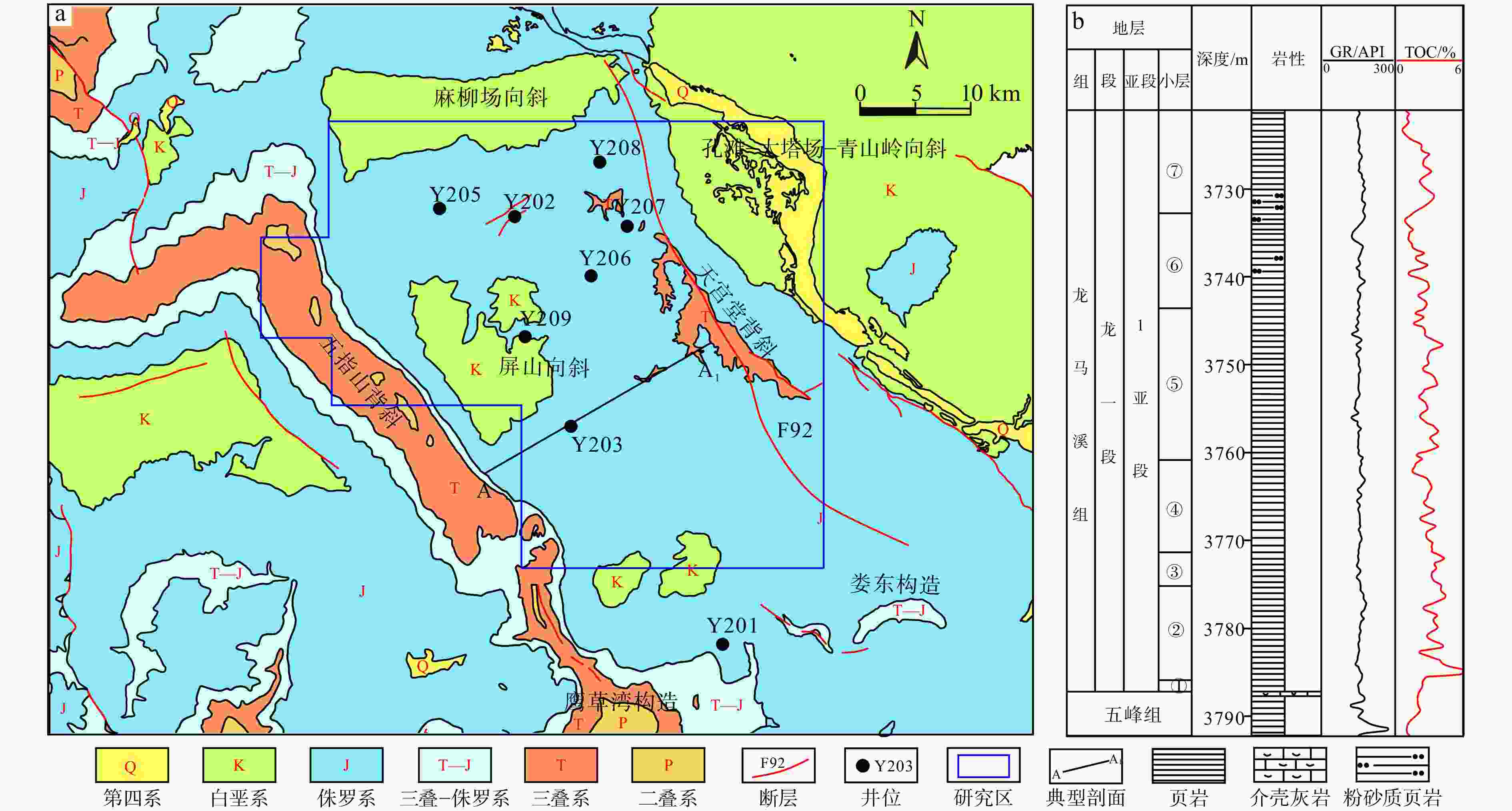
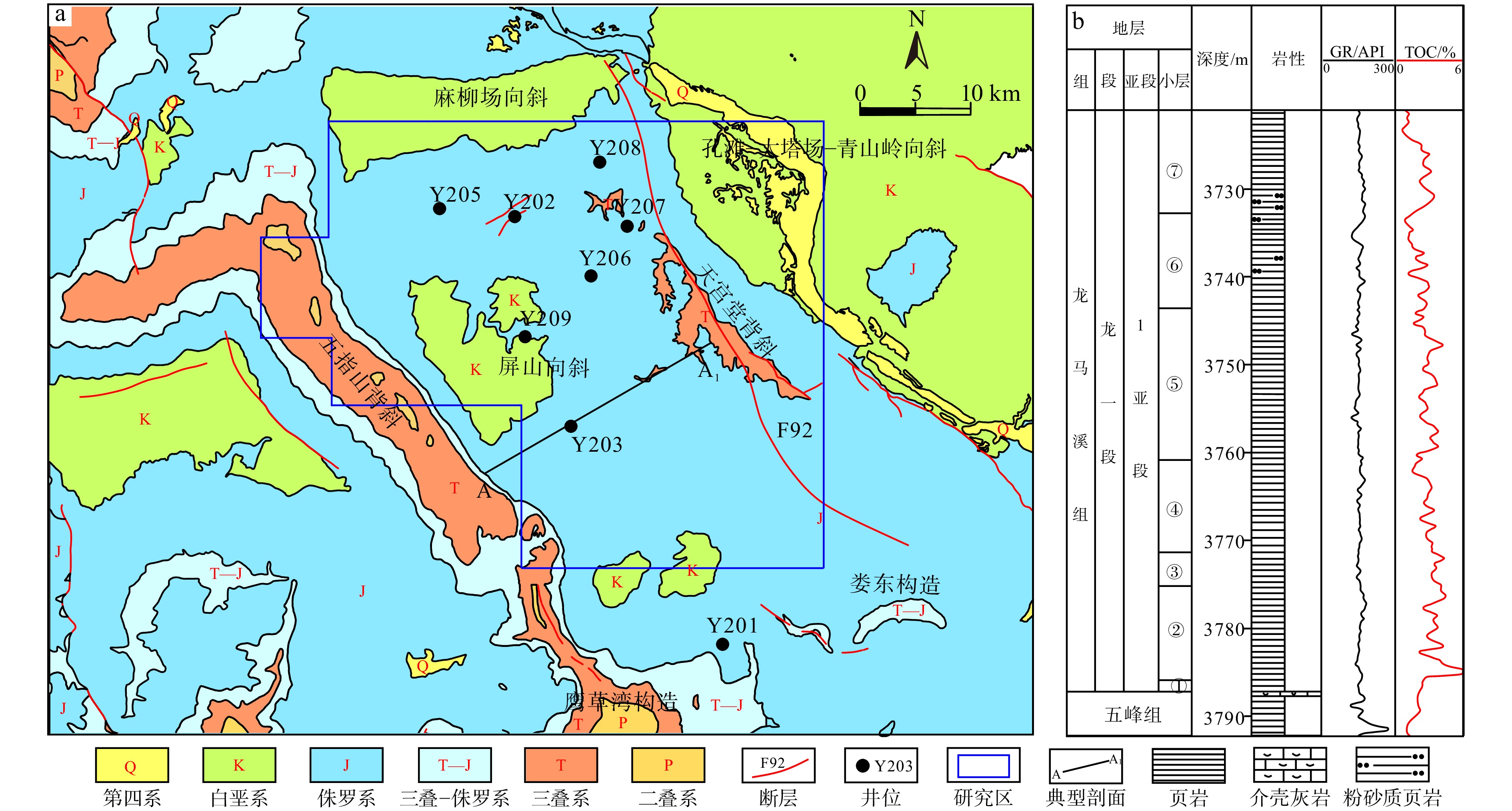
图 1 天宫堂地区构造地质图及典型井龙一段1亚段地层柱状图
GR—自然伽马,TOC—总有机碳含量a—天宫堂地区构造地质图;b—典型井龙一段1亚段地层柱状图
Figure 1. Structural geological map of the Tiangongtang area and shale gas exploration-oriented stratigraphic column of the Long 1-1 submember of the Longmaxi Formation in typical wells
(a) Structural geological map of the Tiangongtang area; (b) Shale gas exploration-oriented stratigraphic column of the Long 1-1 submember of the Longmaxi Formation in typical wellsGR stands for natural gamma ray, and TOC stands for total organic carbon content.
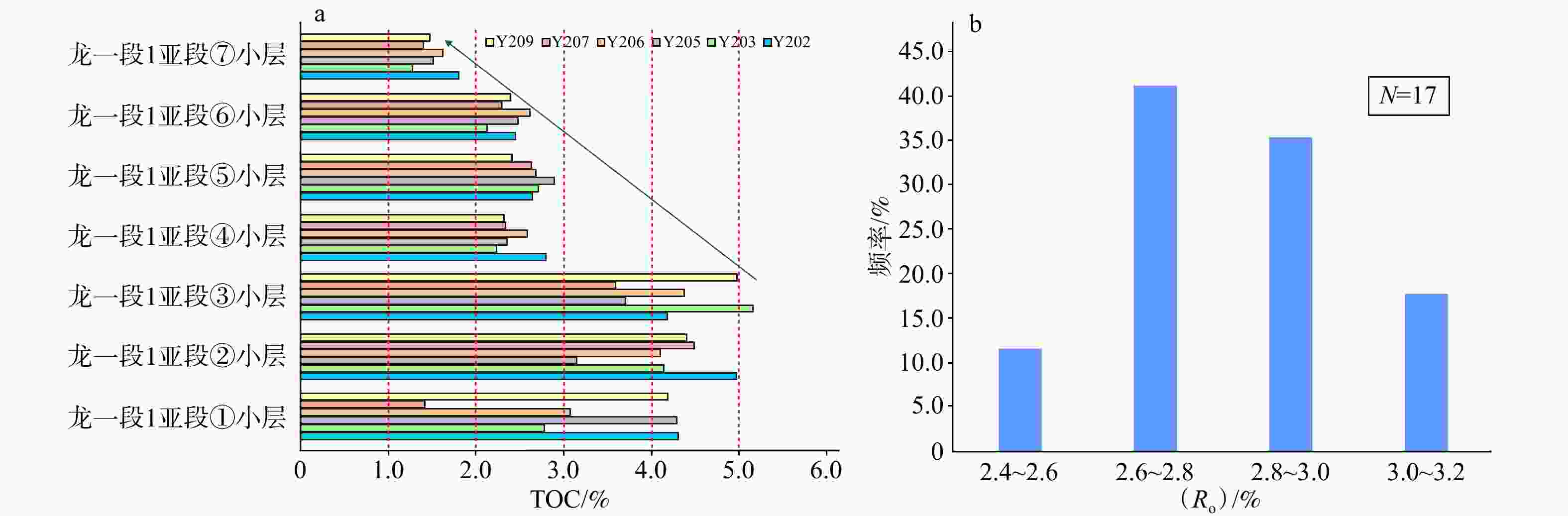
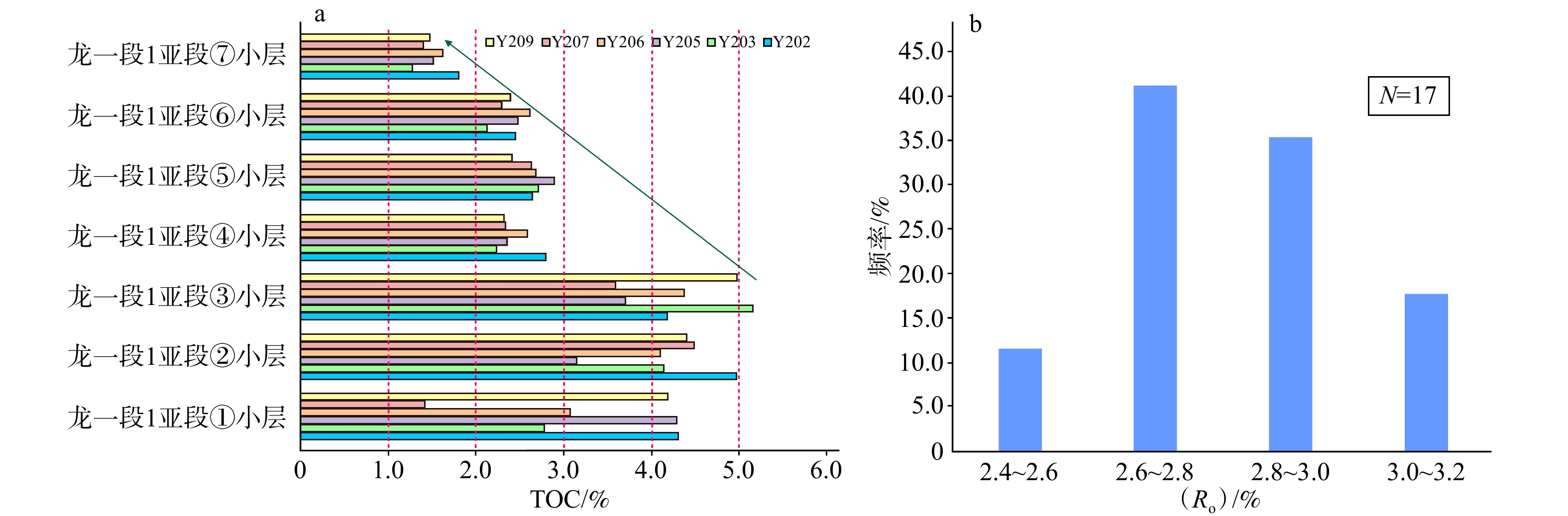
图 2 天宫堂地区龙一段1亚段TOC垂向分布特征、镜质体反射率实验结果图
a—龙一段1亚段TOC垂向分布特征;b—镜质体反射率实验结果图
Figure 2. Experimental results of the vertical TOC distribution and vitrinite reflectance in the Long 1-1 submember of the Longmaxi Formation in the Tiangongtang area
(a) Experimental results of TOC vertical distribution; (b) Vitrinite reflectance histogram
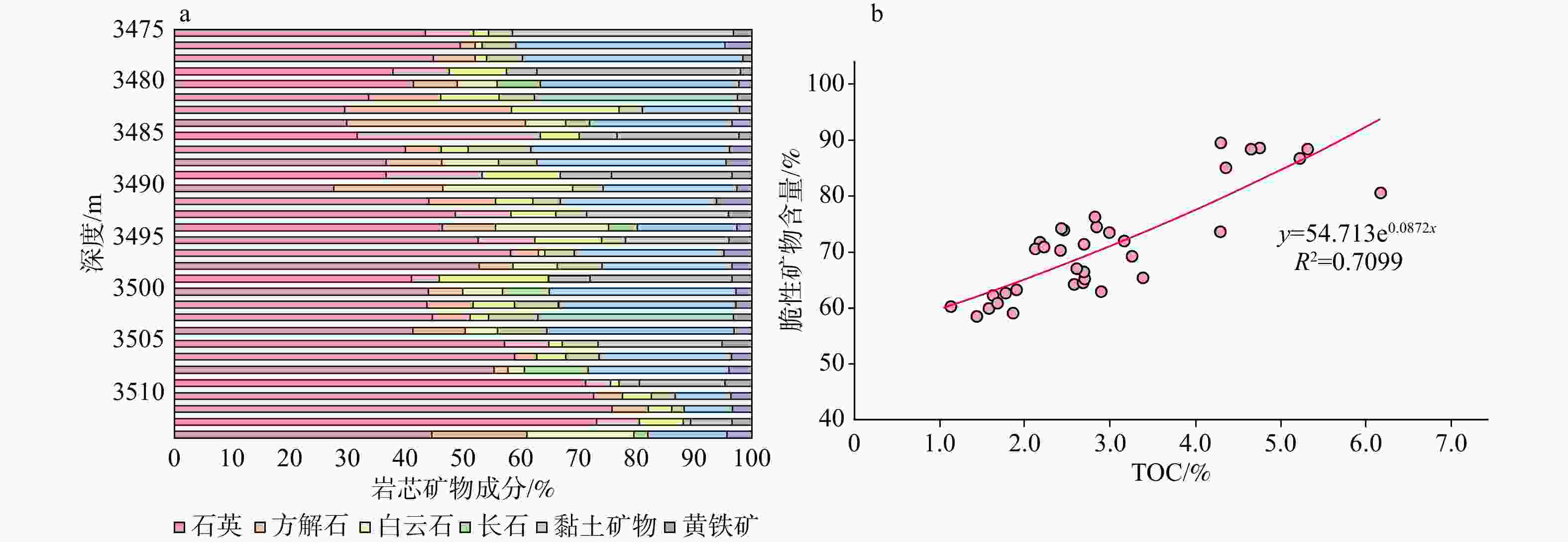
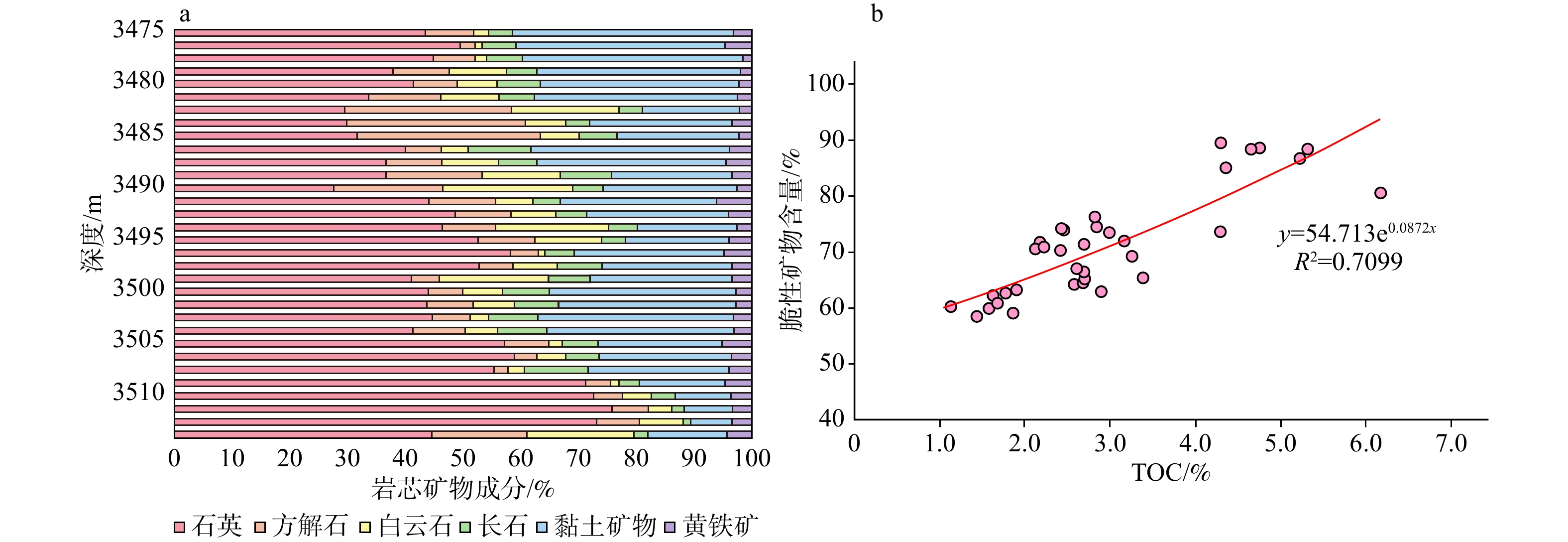
图 3 天宫堂地区龙一段1亚段矿物组分含量分析图
a—Y202井龙一段1亚段全岩矿物组分含量;b—龙一段1亚段TOC含量与脆性矿物含量相关图(其中y代表脆性矿物含量,x代表TOC,R2代表决定系数)
Figure 3. Mineral abundance distribution in the Long 1-1 submember of the Longmaxi Formation, Tiangongtang area
(a) Whole-rock mineral composition of the Long 1-1 submember of Longmaxi Formation in Well Y202; (b) Correlation between TOC content and brittle mineral content in the Long 1-1 submember of the Longmaxi Formation (where the y-axis represents brittle minerals, the x-axis represents TOC,and the R² represents the coefficient of determination)
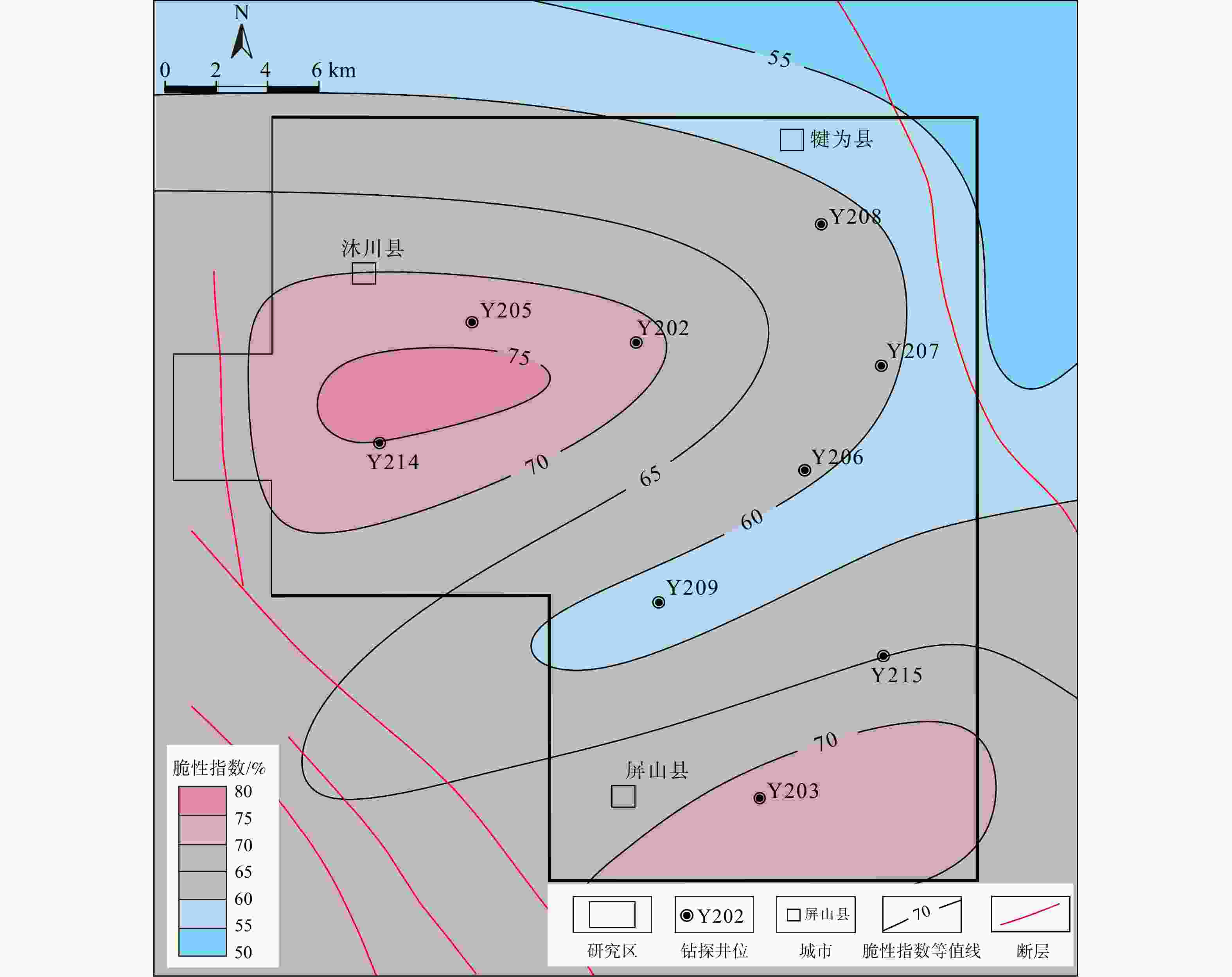
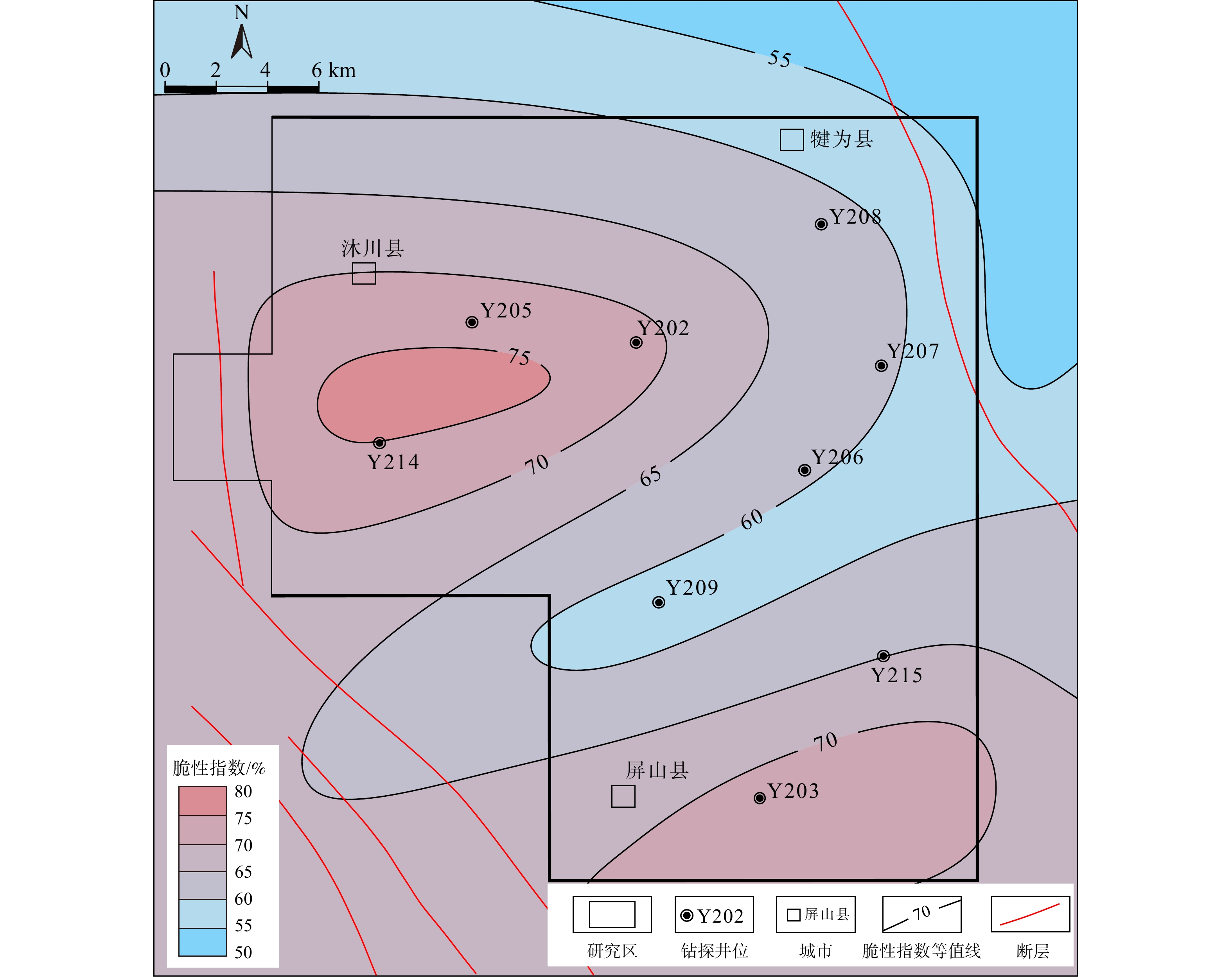
图 4 天宫堂地区龙一段1亚段脆性指数平面分布图
Figure 4. Spatial distribution of brittleness index in the Long 1-1 submember of the Longmaxi Formation, Tiangongtang region
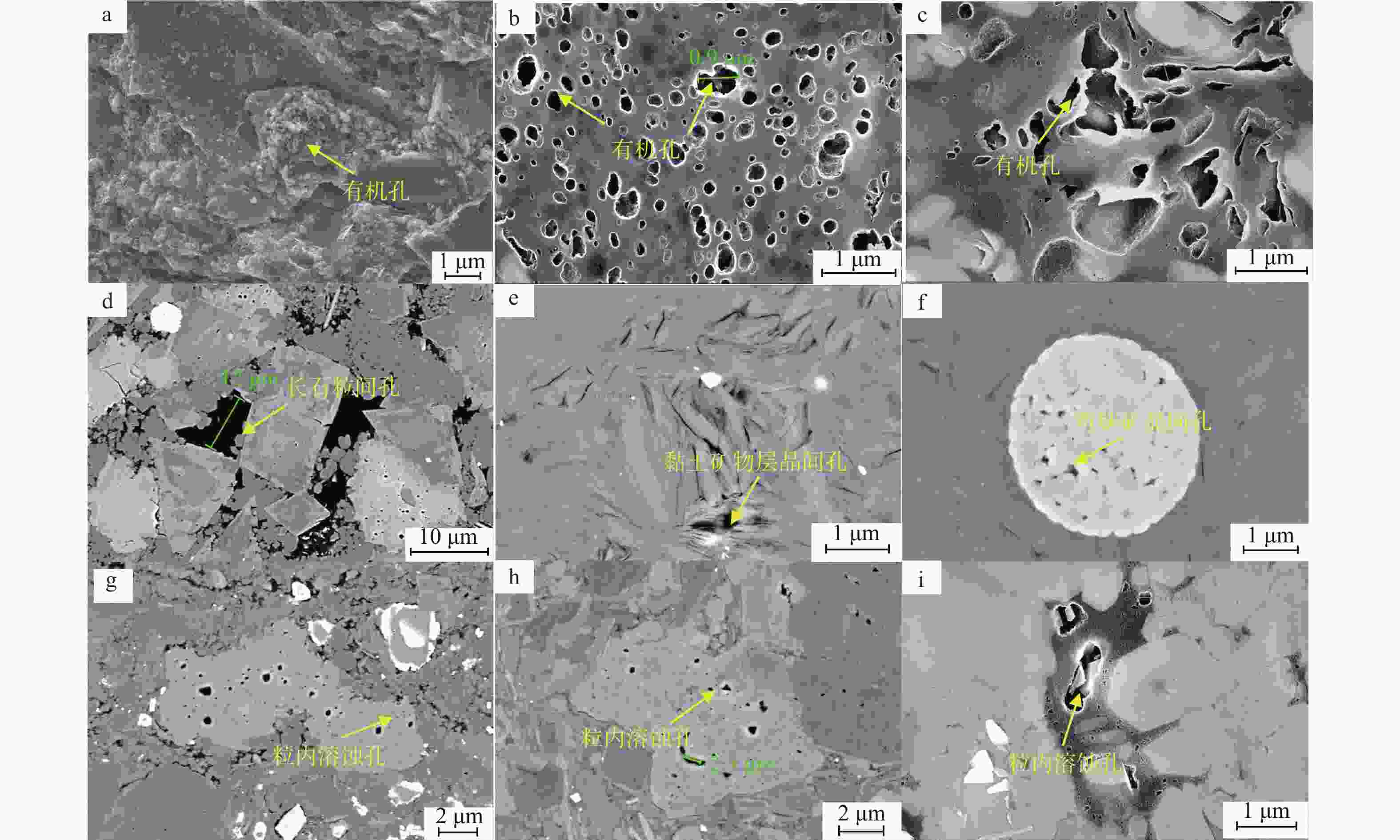
图 5 天宫堂地区龙一段1亚段页岩孔隙扫描电镜图片
a—Y203井,3777.7 m,有机孔发育;b—Y206井,3874.2 m,椭圆状有机孔发育;c—Y206井,③小层,有机孔溶蚀发育;dY206井,3887.5 m,长石粒间孔发育;e—Y206井,3886.6 m,黏土矿物层间晶间孔发育;f—Y206井,3887.6 m,黄铁矿晶间孔发育;g—Y206井,④小层,粒间溶蚀孔发育;h—Y206井,3887.1 m,粒内溶蚀孔;i—Y206井,②小层,粒内溶蚀孔发育
Figure 5. Scanning electron microscope images of pore networks in the Long 1-1 submember of the Longmaxi Formation shales
(a) Well Y203, 3777.7 m, well-developed organic pores; (b) Well Y206, 3874.2 m, well-developed elliptical organic pores; (c) Well Y206, Long 1-1-3, dissolved organic pores; (d) Well Y206, 3887.5 m, intergranular pores in feldspar; (e) Well Y206, 3886.6 m, intercrystalline pores between clay mineral layers; (f) Well Y206, 3887.6 m, intercrystalline pores in pyrite; (g) Well Y206, Long 1-1-4, intergranular dissolution pores; (h) Well Y206, 3887.1 m, intragranular dissolution pores; (i) Well Y206, Long 1-1-2, intragranular dissolution pores
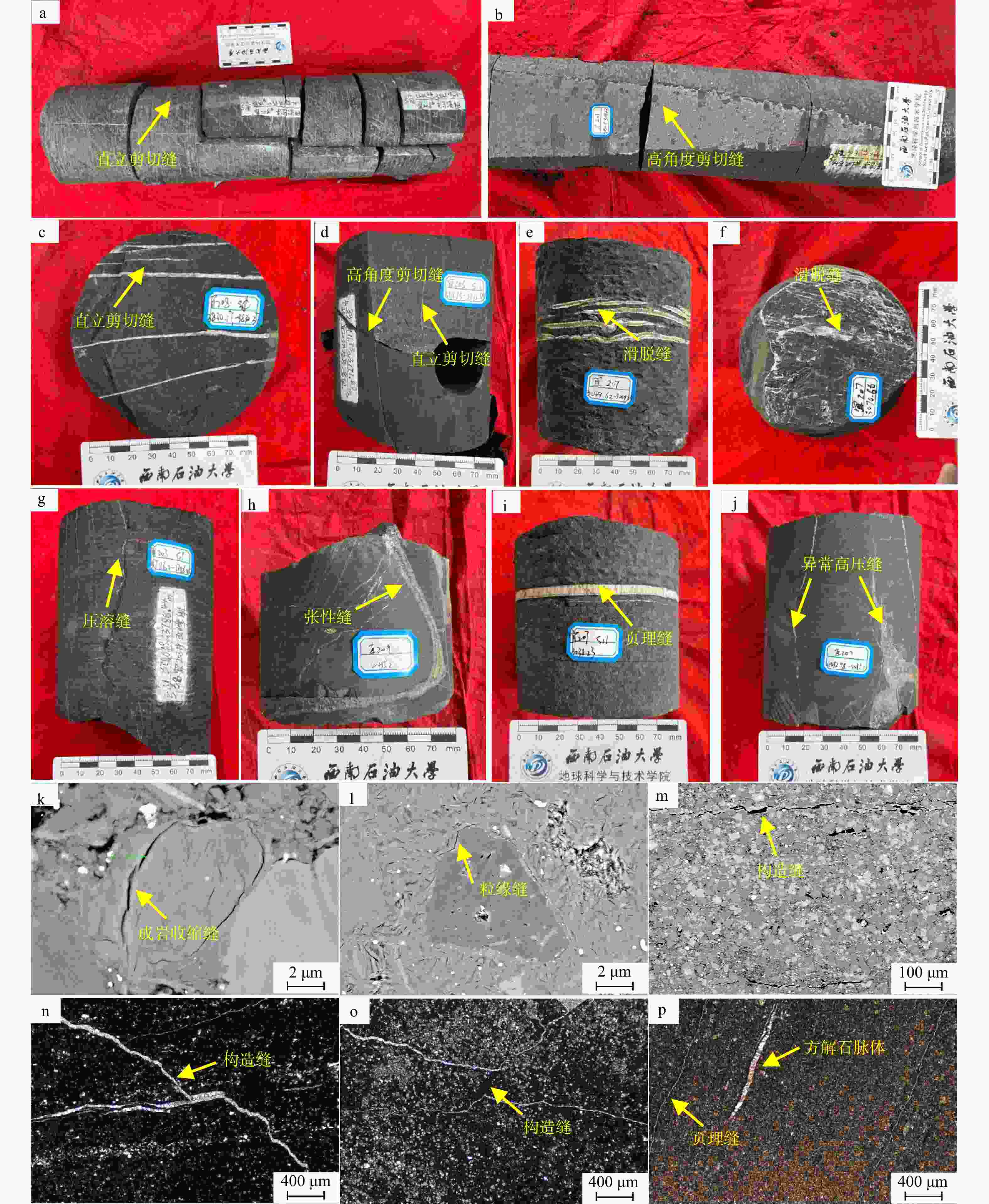
图 6 天宫堂地区龙马溪组龙一段1亚段页岩岩芯裂缝发育特征照片
a—Y208井,3830.88 m,直立剪切缝;b—Y207井,3830.81m,高角度剪切缝;c— Y208井,3830.17m,多条直立剪切缝;d—Y203井,3771.73m,直立剪切缝与高角度剪切缝相交;e—Y207井,3049.63m,滑脱缝;f—Y207井,3070.66m,滑脱缝;g—Y203井,3786.00m,压溶缝;h—Y209井,4453.2m,张性缝;i—Y207井,3038.23m,页理缝;j—Y209井,4452.98m,异常高压缝;k—Y206井,龙一段1亚段③小层,成岩收缩缝;l—Y206井,龙一段1亚段①小层,粒缘缝;m—Y206井,龙一段1亚段①小层,构造缝;n— Y207井,3049.62m,构造缝;o—Y207井,3069.69m,构造缝;p—Y207井,3049.62m,页理缝、方解石脉体
Figure 6. Photographs showing fracture characteristics in the Long 1-1 submember of the Longmaxi Formation, Tiangongtang Area
(a) Well Y208, 3830.88 m, vertical shear fracture; (b) Well Y207, 3830.81 m, high-angle shear fracture; (c) Well Y208, 3830.17 m, multiple vertical shear fractures; (d) Well Y203, 3771.73 m, intersection of vertical shear fracture and high-angle shear fracture; (e) Well Y207, 3049.63 m, detachment fracture; (f) Well Y207, 3070.66 m, detachment fracture; (g) Well Y203, 3786.00 m, pressure dissolution fracture; (h) Well Y209, 4453.2 m, tension fracture; (i) Well Y207, 3038.23 m, cleavage fracture; (j) Well Y209, 4452.98 m, abnormally high-pressure fracture; (k) Well Y206, Long 1-1-3 submember, diagenetic contraction fracture; (l) Well Y206, Long 1-1-1 submember, grain-edge fracture; (m) Well Y206, Long 1-1-1 submember, structural fracture; (n) Well Y207, 3049.62 m, structural fracture; (o) Well Y207, 3069.69 m, structural fracture; (p) Well Y207, 3049.62 m, cleavage fracture and calcite vein
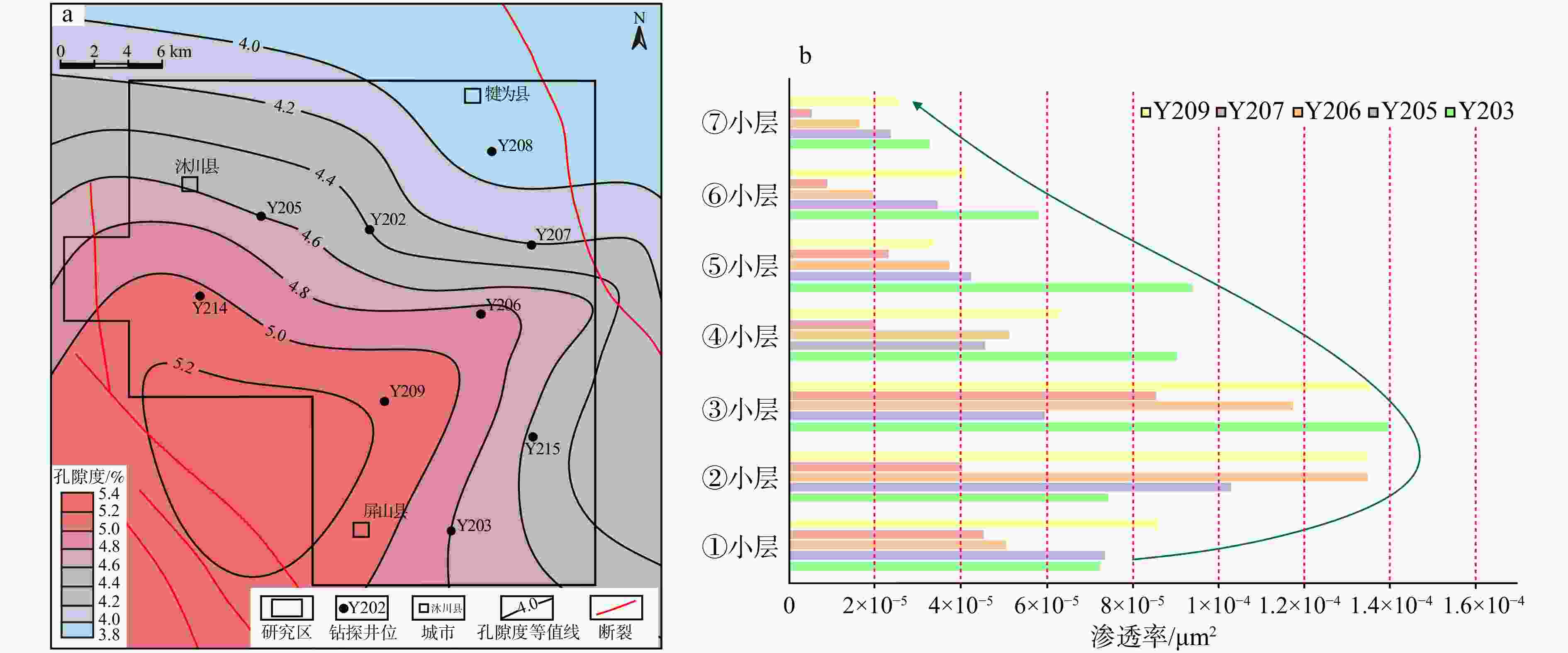
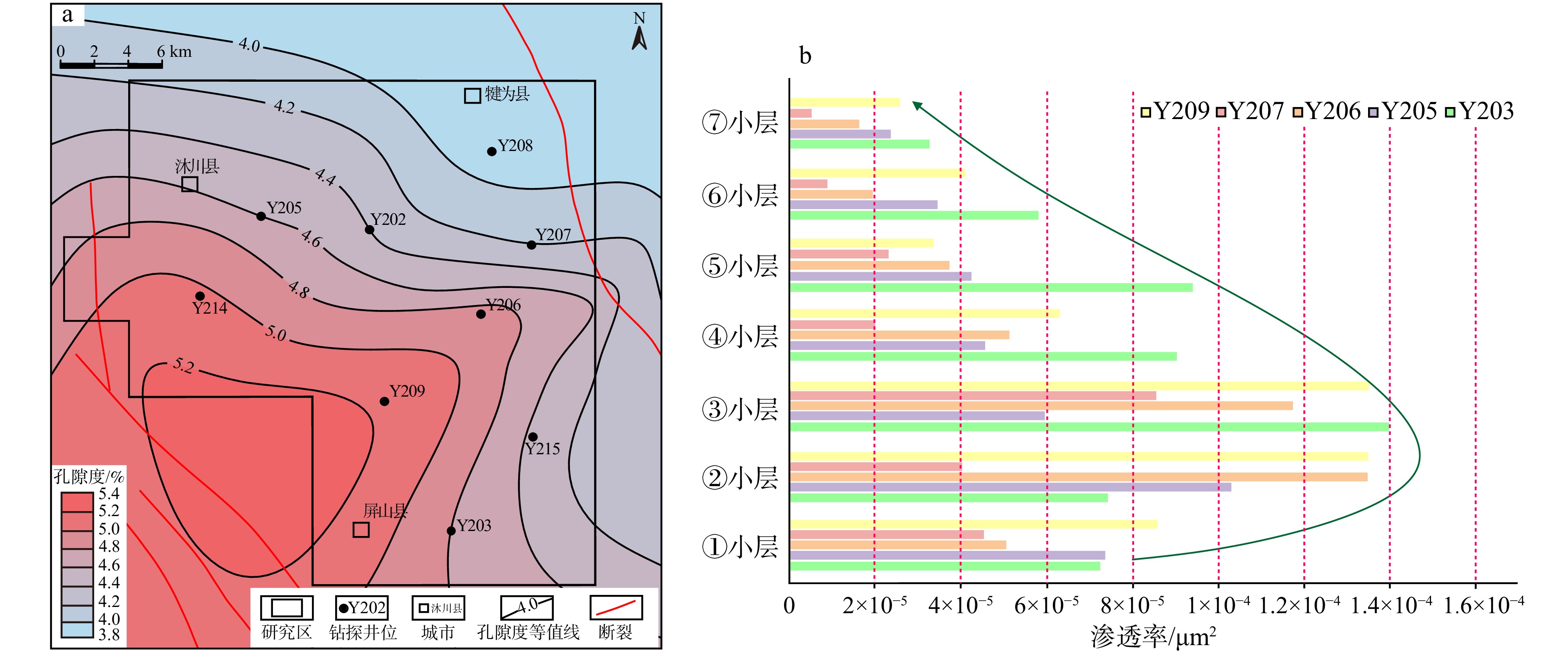
图 7 天宫堂地区龙一段1亚段物性特征统计图
a—天宫堂地区龙一段1亚段孔隙度平面等值线图;b—天宫堂地区典型井龙一段1亚段渗透率柱状图
Figure 7. Statistical characterization of reservoir properties in the Long 1-1 submember of the Longmaxi Formation
(a) Porosity contour map of the Long 1-1 submember of the Longmaxi Formation in the Tiangongtang area; (b) Permeability histogram of the Long 1-1 submember of the Longmaxi Formation in a representative well from the Tiangongtang area
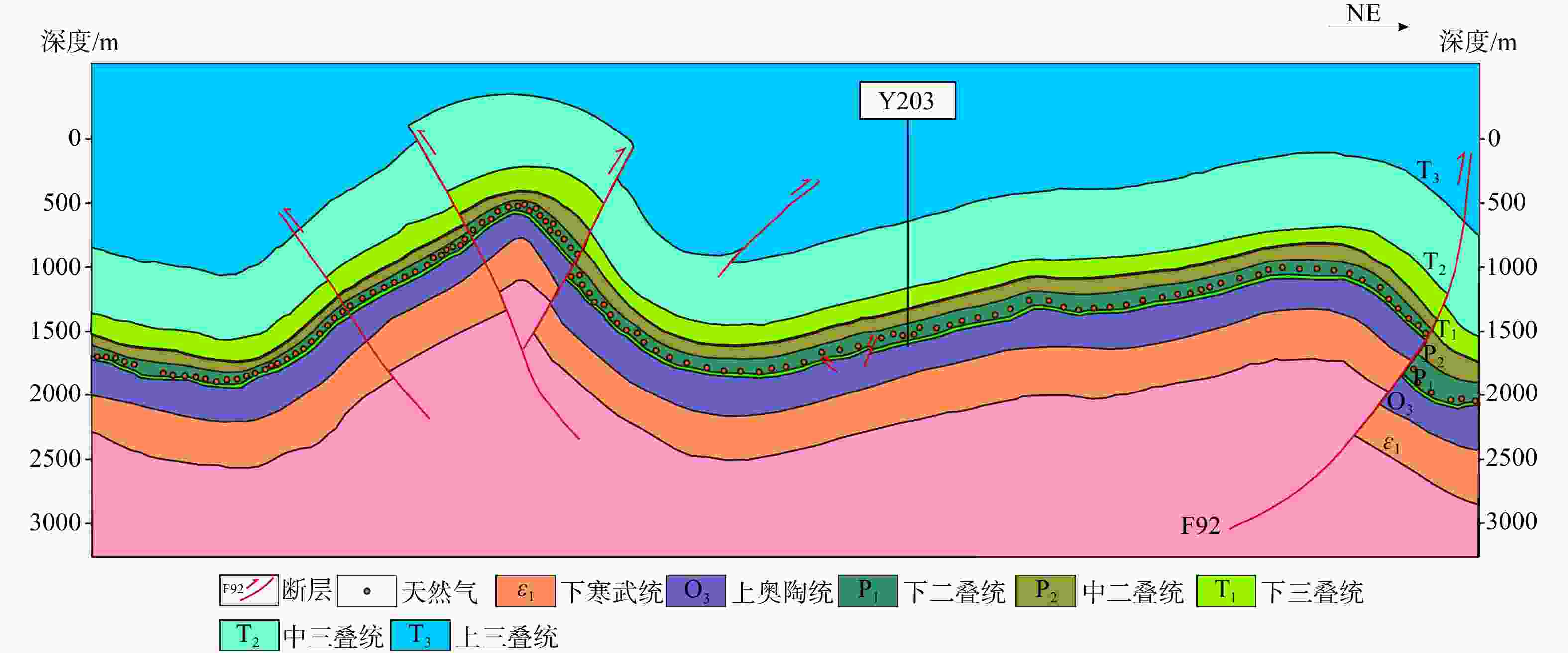
图 8 天宫堂地区构造样式剖面示意图(剖面位置见图1 A—A1)
Figure 8. Cross-section of structural patterns across the Tiangongtang area (Location of the section is shown in Fig. 1, line A–A1.)
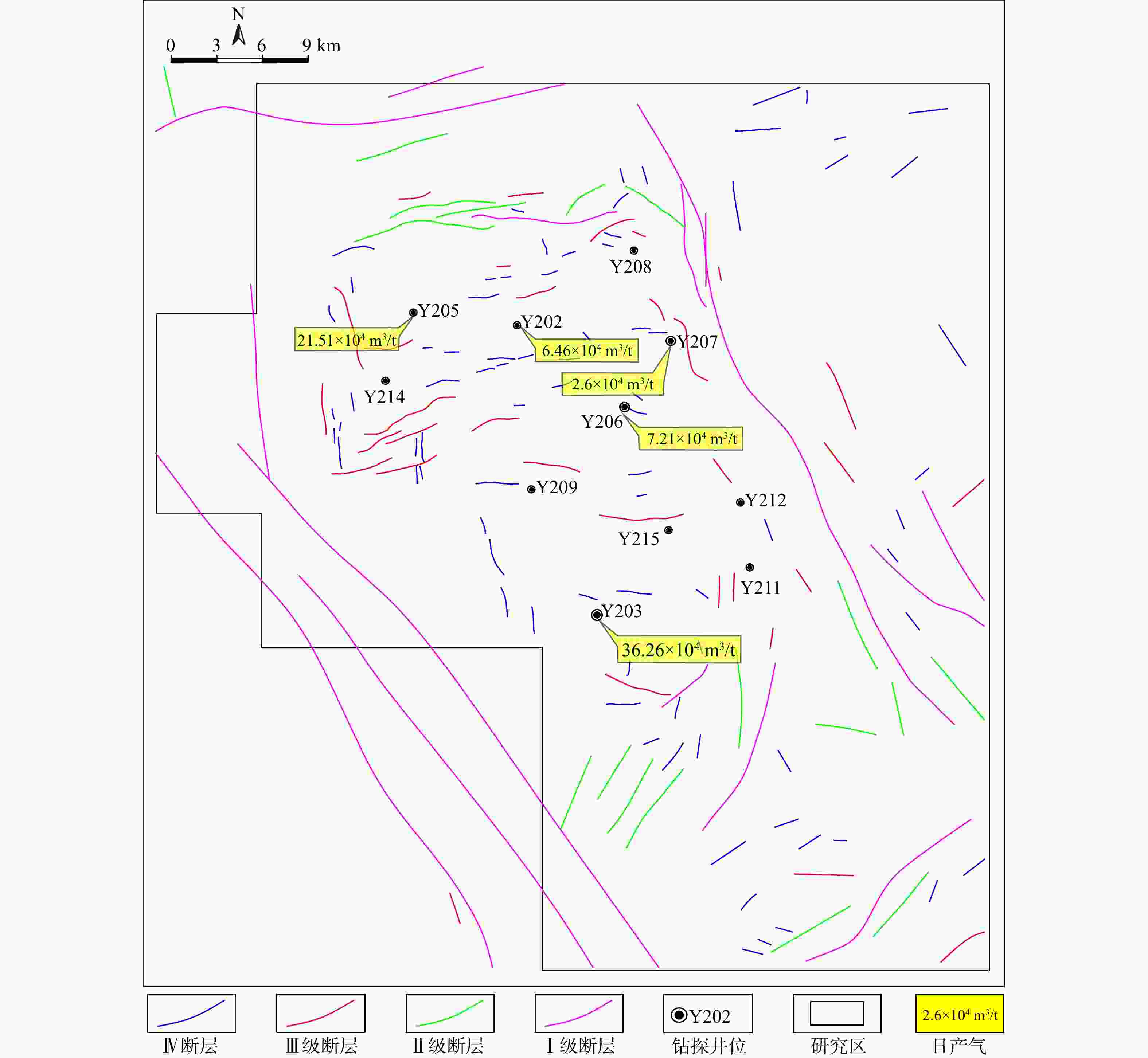
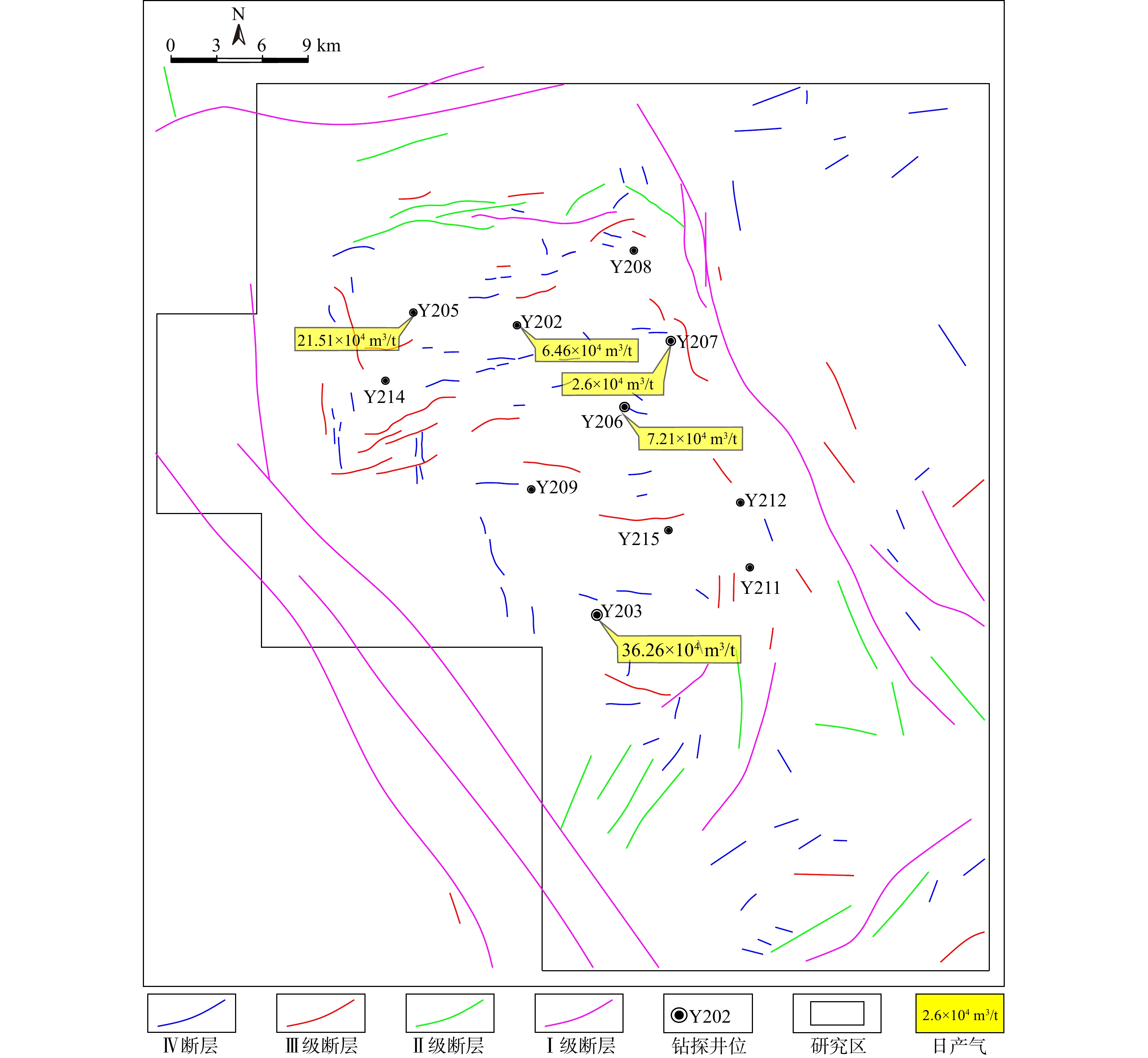
图 9 天宫堂地区断层分级及及单井产气量分布图
Figure 9. Map of fault classification and gas production distribution of individual wells in the Tiangongtang area
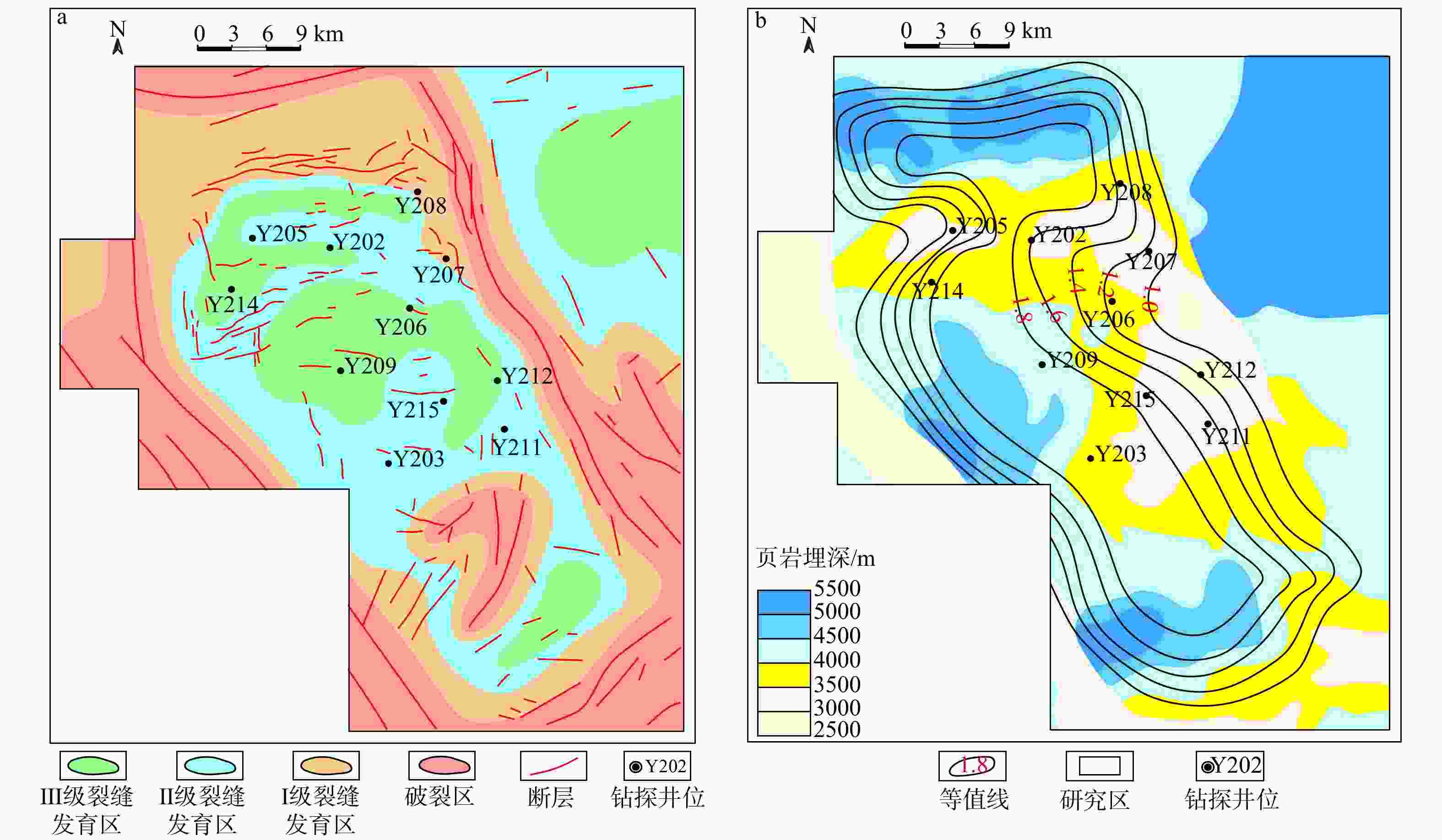
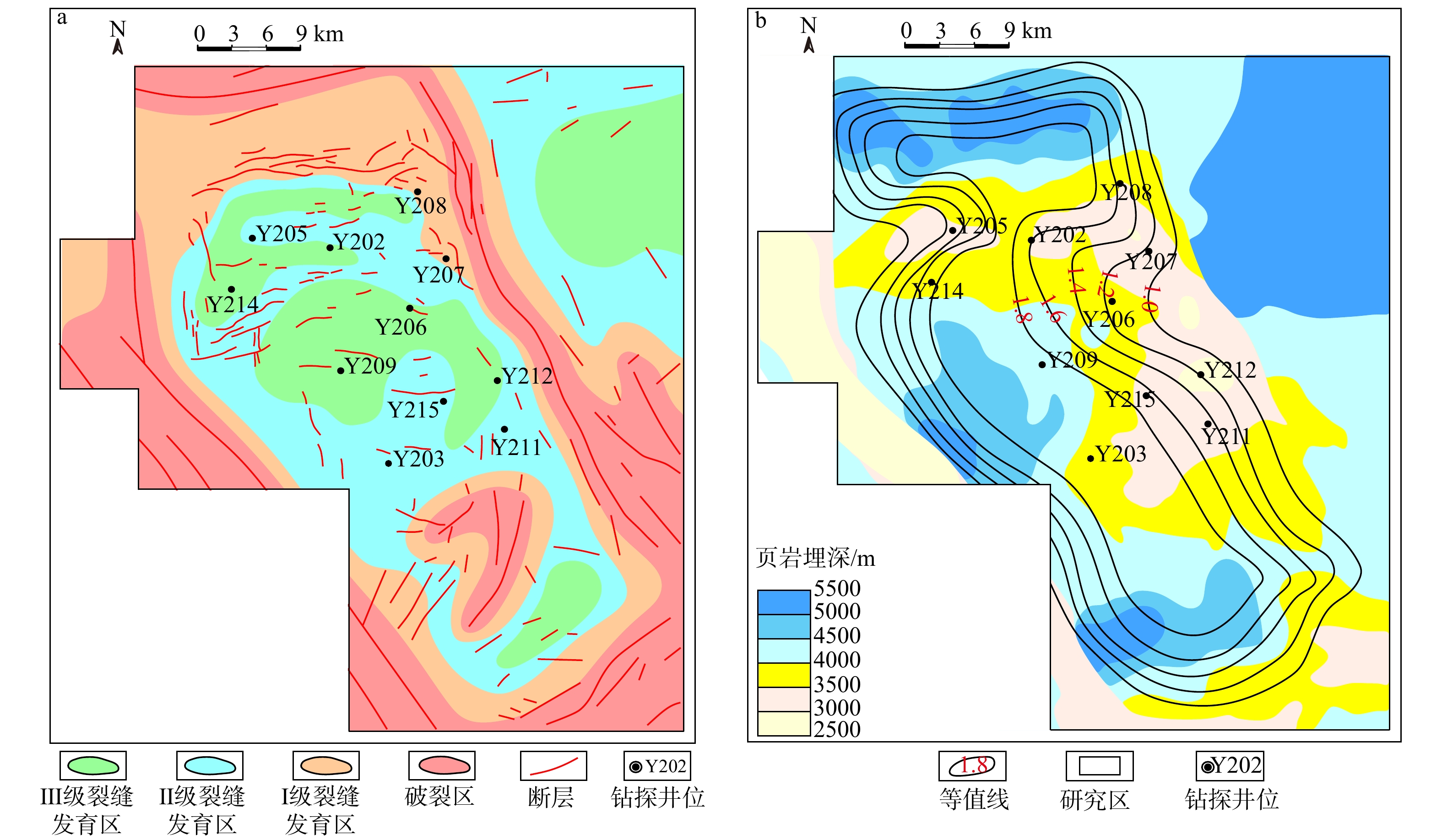
图 10 天宫堂地区裂缝发育分级、龙一段1亚段埋深及压力系数分布平面图
a—天宫堂地区裂缝发育分级;b—龙一段1亚段埋深及压力系数分布平面图
Figure 10. Fracture development classification and plan view of burial depth and pressure coefficient distribution in the Long 1-1 submember of Longmaxi Formation
(a) Fracture development classification in the Tiangongtang area; (b) Plan view of burial depth and pressure coefficient distribution in the Long 1-1 submember of Longmaxi Formation
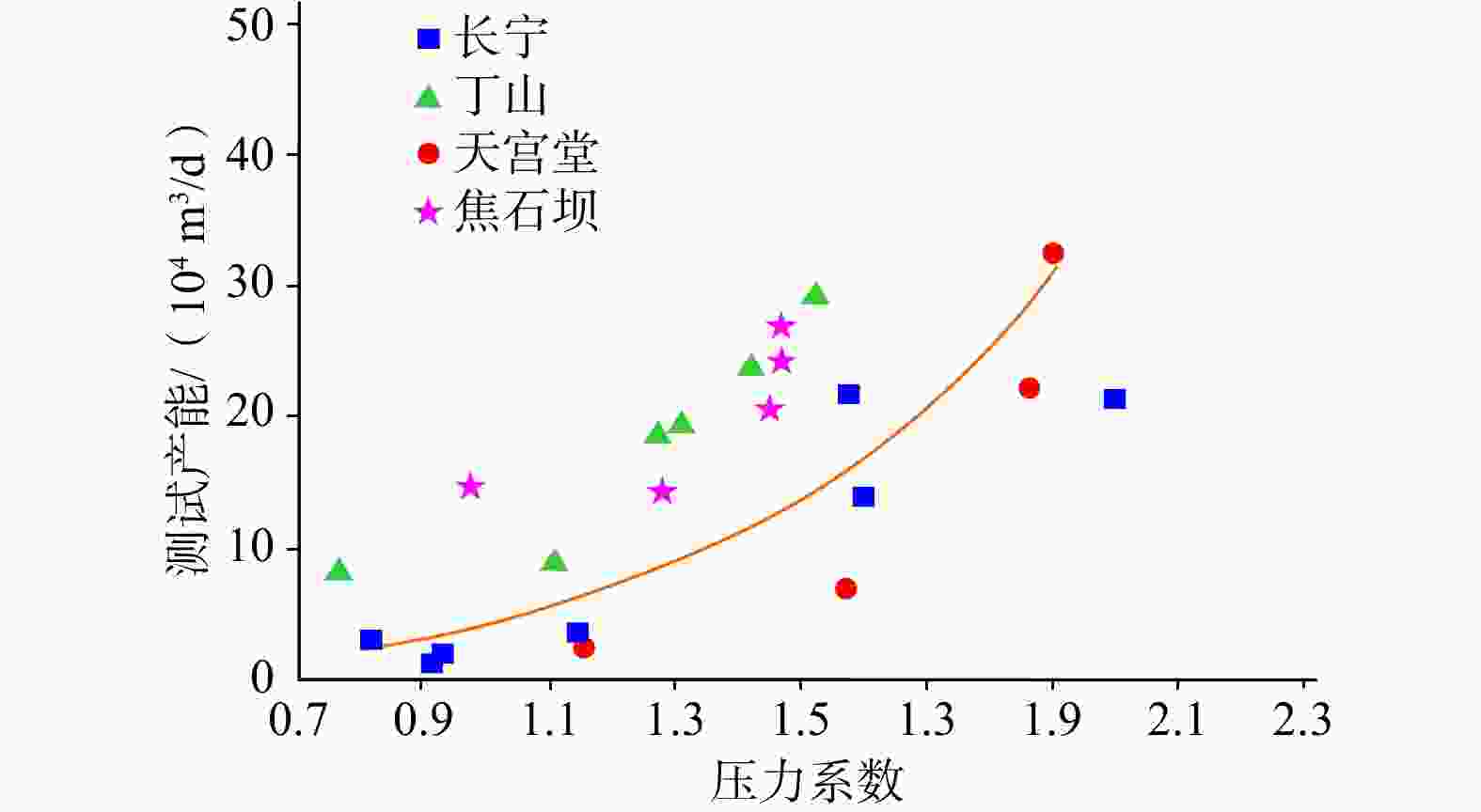
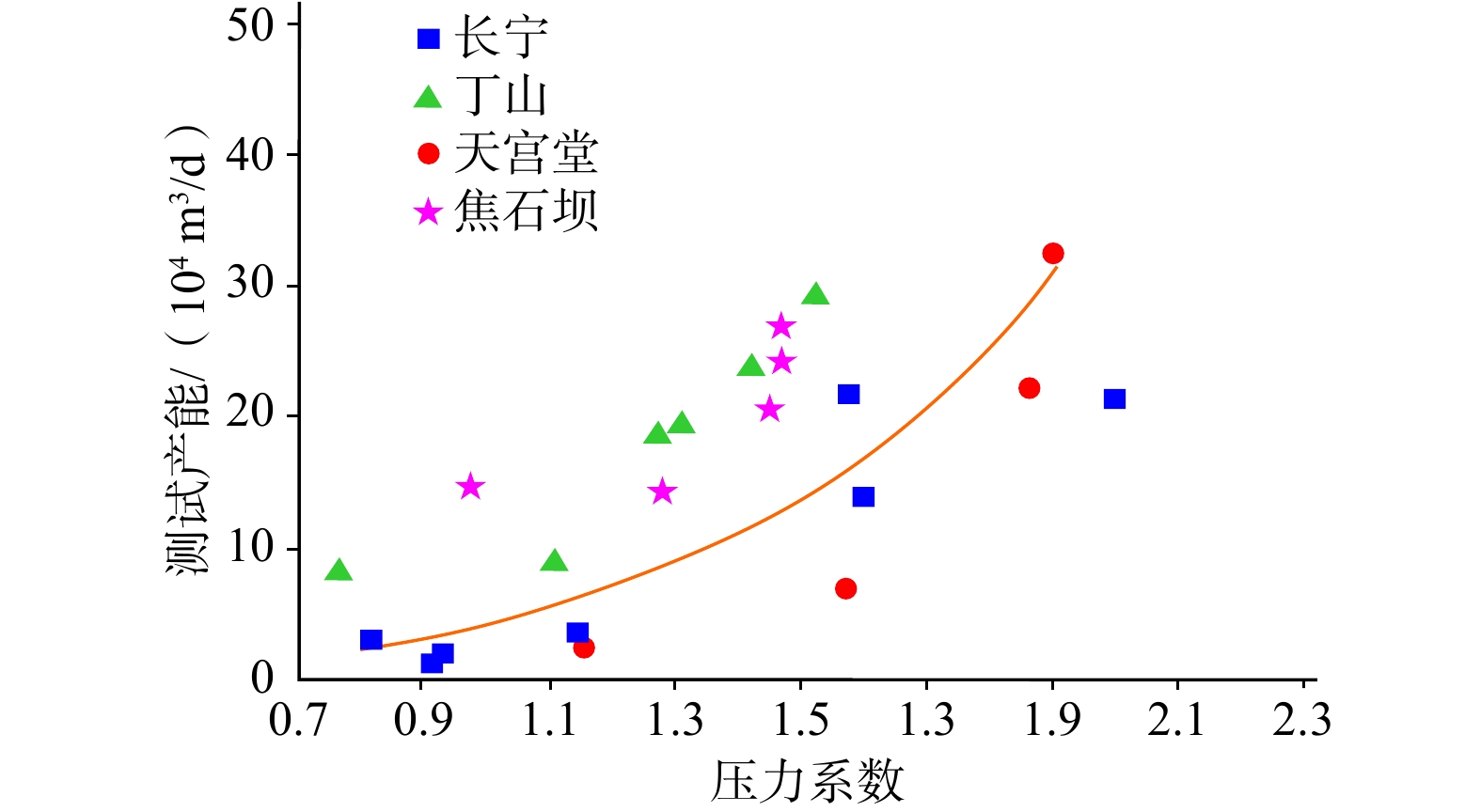
图 11 四川盆地及周缘龙马溪组页岩地层压力系数与产量的关系(长宁地区数据引自蔡景顺等,2024;丁山地区数据引自卢志远等,2021;焦石坝地区数据引自郭彤楼和张汉荣,2014)
Figure 11. Relationship between formation pressure coefficient and gas production in the Longmaxi Shale, Sichuan Basin (Data for the Changning area from Cai et al., 2024; data for the Dingshan area from Lu et al. , 2021; data for the Jiaoshiba area from Guo et al., 2014)
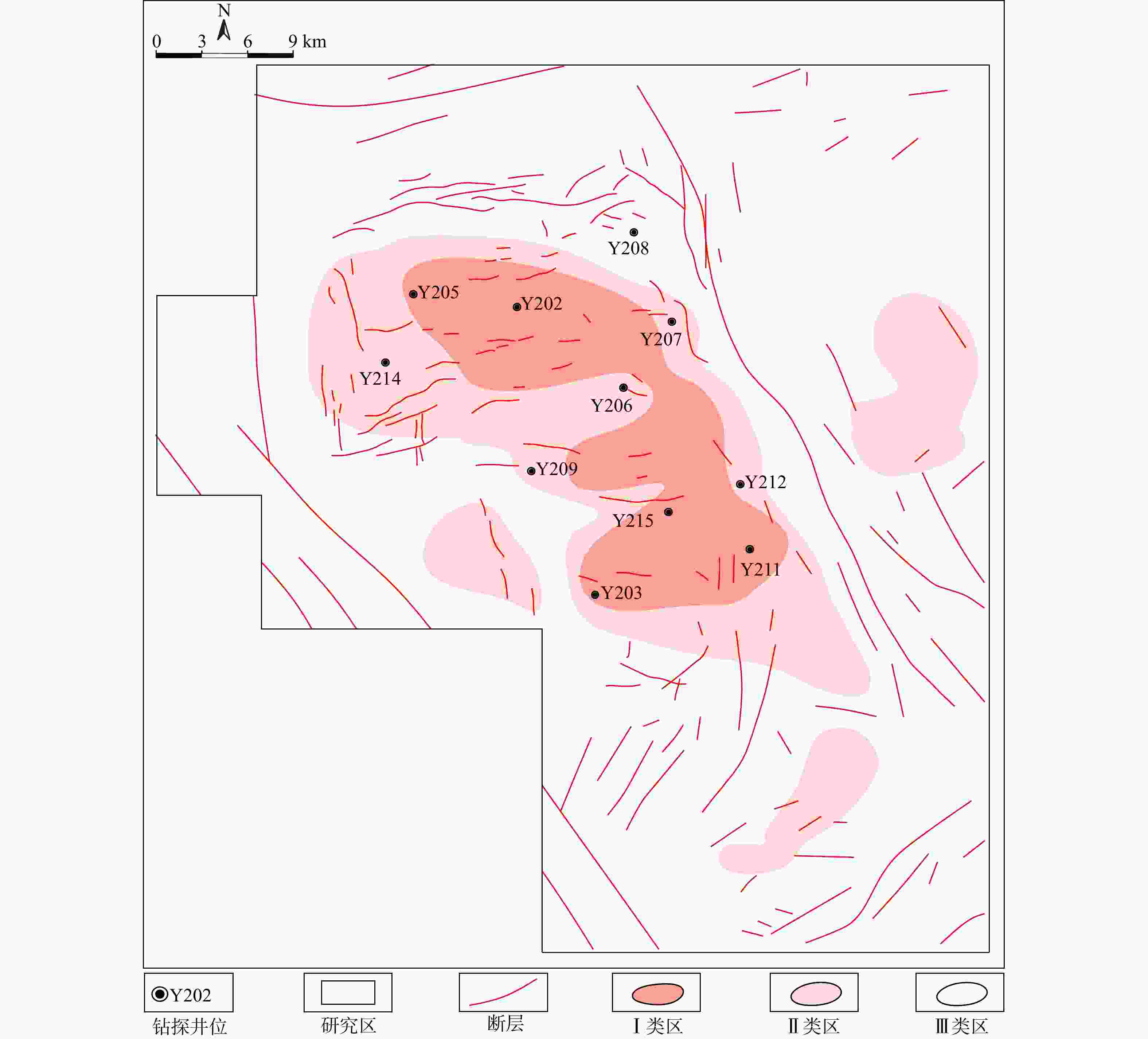
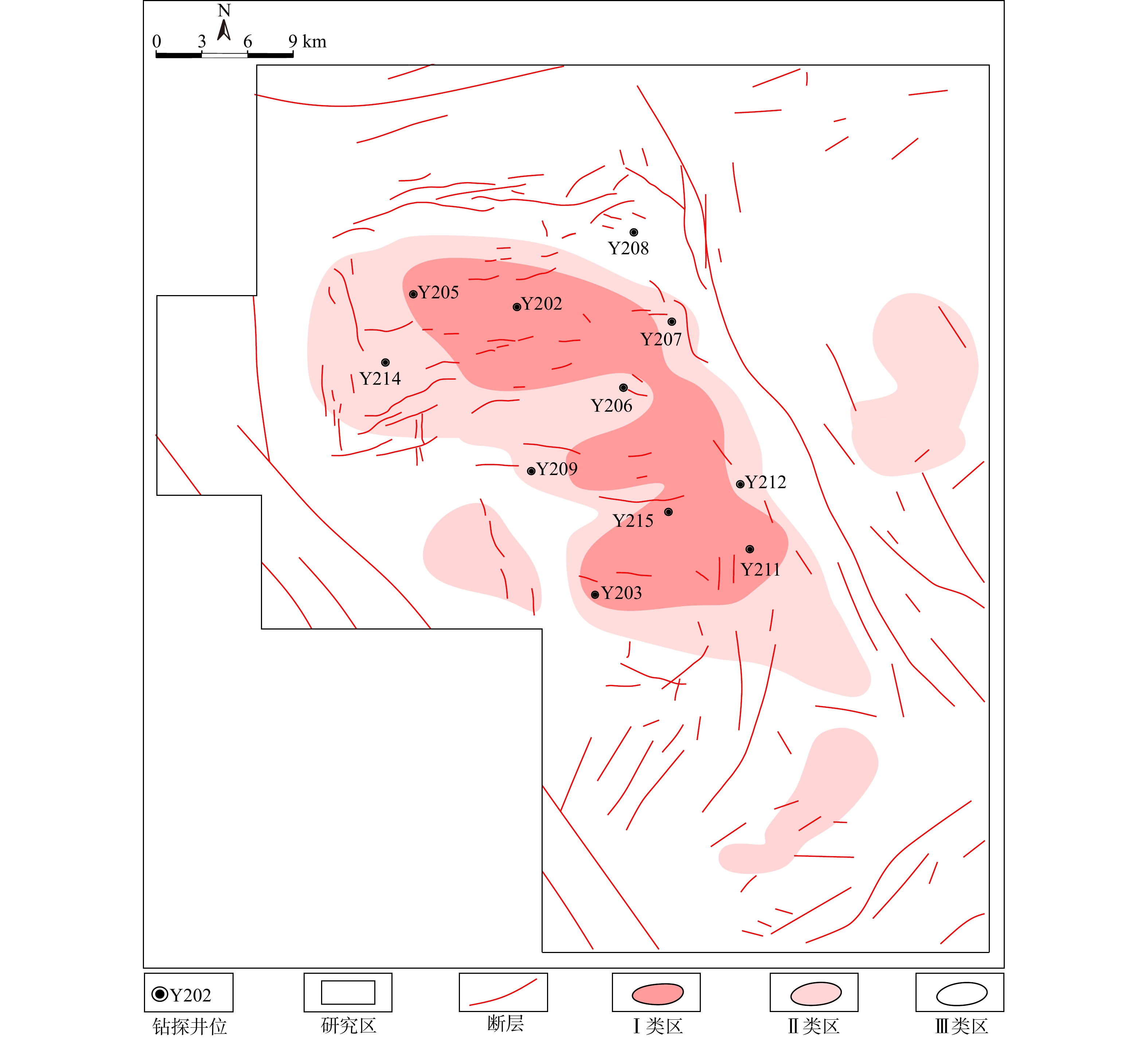
图 12 天宫堂地区龙一段1亚段页岩气有利区评价图
Figure 12. Evaluation of shale gas enrichment conditions and favorable zone distribution in the Long 1-1 submember of Longmaxi Formation,Tiangongtang area
表 1 天宫堂地区页岩气富集评价指标表
Table 1. Evaluation criteria for shale gas enrichment in the Tiangongtang area
参数类型 参数名称 优选指标 Ⅰ类区(好) Ⅱ类区(较好) Ⅲ类区(差) 源储条件 TOC含量/% >2.4 2.0~2.4 <2.0 脆性指数/% >65 55~65 45~55 孔隙度/% >4.5 4.0~4.5 2.0~4.0 优质页岩厚度/m >35 30~35 <30 保存条件 构造样式 宽缓背斜部位 斜坡部位 高陡背斜+大尺度断裂或向斜部位 断层级别 Ⅲ、Ⅳ级 Ⅱ级 Ⅰ级 裂缝发育程度 Ⅱ级裂缝发育区 Ⅲ级裂缝发育区 Ⅰ级裂缝发育区、裂缝欠发育区 距断裂距离 >6 3~6 <3 页岩埋深/m 3000~4000 2500~3500 >4000或<2500 地层压力系数 >1.4 1.4~1.2 <1.2  下载: 导出CSV
-
[1] BORJIGIN T, LU L F, YU L J, et al., 2021. Formation, preservation and connectivity control of organic pores in shale[J]. Petroleum Exploration and Development, 48(4): 687-699. (in Chinese with English abstract) doi: 10.1016/s1876-3804(21)60067-8 [2] CAI J S, YANG S H, XUE M, et al., 2024. Differences in structural deformation and its influence on shale gas preservation in Changning and Luzhou areas[J]. Fault-Block Oil and Gas Field, 31(2): 177-186. (in Chinese with English abstract) [3] CAO G Y, LIU Y, ZHOU X L, et al., 2023. Sedimentary environment and accumulation pattern of organic matter in Wufeng-Longmaxi formations in the southwestern Sichuan, China[J]. Journal of Earth Sciences and Environment, 45(5): 1227-1245. (in Chinese with English abstract) [4] CHEN G S, SHI X W, LIU Y, et al., 2024. New understandings of the factors controlling of deep shale gas enrichment in the Wufeng Formation-Longmaxi Formation of the southern Sichuan Basin[J]. Natural Gas Industry, 44(1): 58-71. (in Chinese with English abstract) doi: 10.2113/2022/4737801 [5] DING W L, WANG Y, WANG S H, et al., 2024. Research progress and insight on non-tectonic fractures in shale reservoirs[J]. Earth Science Frontiers, 31(1): 297-314. (in Chinese with English abstract) [6] DONG D Z, SHI Z S, SUN S S, et al., 2018. Factors controlling microfractures in black shale: a case study of Ordovician Wufeng Formation–Silurian Longmaxi Formation in Shuanghe Profile, Changning area, Sichuan Basin, SW China[J]. Petroleum Exploration and Development, 45(5): 763-774. (in Chinese with English abstract) doi: 10.1016/s1876-3804(18)30085-5 [7] FAN C H, NIE S, LI H, et al., 2024. Quantitative prediction and spatial analysis of structural fractures in deep shale gas reservoirs within complex structural zones: a case study of the Longmaxi Formation in the Luzhou area, southern Sichuan Basin, China[J]. Journal of Asian Earth Sciences, 263: 106025. doi: 10.1016/j.jseaes.2024.106025 [8] GAO S L, GAO Y Q, HE G S, et al., 2025. Tectonic controls on shale gas accumulation in the Sichuan Basin[J]. Acta Geologica Sinica, 99(12): 4277-4294. (in Chinese with English abstract) [9] GUO T L, ZHANG H R, 2014. Formation and enrichment mode of Jiaoshiba shale gas field, Sichuan Basin[J]. Petroleum Exploration and Development, 41(1): 28-36. (in Chinese with English abstract) [10] GUO T L, 2025. Review and reflection on shale gas development in China: from Silurian to Cambrian[J]. Petroleum Reservoir Evaluation and Development, 15(3): 339-348. (in Chinese with English abstract) [11] GUO T L, DONG X X, WEI L M, et al., 2025. Mechanisms of the differential enrichment and high productivity of deep to ultra-deep marine shale gas reservoirs[J]. Oil & Gas Geology, 46(6): 1792-1806. (in Chinese with English abstract) [12] GUO X S, 2014. Rules of two-factor enrichiment for marine shale gas in southern China: understanding from the Longmaxi Formation shale gas in Sichuan Basin and its surrounding area[J]. Acta Geologica Sinica, 88(7): 1209-1218. (in Chinese with English abstract) [13] JU Y W, SUN Y, TAN J Q, et al., 2018. The composition, pore structure characterization and deformation mechanism of coal-bearing shales from tectonically altered coalfields in eastern China[J]. Fuel, 234: 626-642. doi: 10.1016/j.fuel.2018.06.116 [14] LI L H, FAN C H, ZHAO S X, et al., 2024. Characteristics and formation stages of natural fractures in Lower Silurian Longmaxi Formation in Tiangongtang area of Sichuan Basin[J]. Petroleum Geology & Experiment, 46(3): 472-482. (in Chinese with English abstract) [15] LIANG D G, GUO T L, CHEN J P, et al., 2008. Some progresses on studies of hydrocarbon generation and accumulation in marine sedimentary regions, southern China (Part 1): distribution of four suits of regional marine source rocks[J]. Marine Origin Petroleum Geology, 13(2): 1-16. (in Chinese with English abstract) [16] LU Z Y, HE Z L, YU C, et al., 2021. Characteristics of shale gas enrichment in tectonically complex regions: a case study of the Wufeng-Longmaxi Formations of Lower Paleozoic in southeastern Sichuan Basin[J]. Oil & Gas Geology, 42(1): 86-97. (in Chinese with English abstract) [17] National Committee for Standardization of Oil and Gas (SAC/TC 355), 2022. Determination for total organic carbon in sedimentary rock: GB/T 19145-2022[S]. Beijing: Standards Press of China. (in Chinese) [18] NIE H K, TANG X, BIAN R K, 2009. Controlling factors for shale gas accumulation and prediction of potential development area in shale gas reservoir of South China[J]. Acta Petrolei Sinica, 30(4): 484-491. (in Chinese with English abstract) [19] NIE H K, JIN Z J, BIAN R K, et al., 2016. The "source-cap hydrocarbon-controlling" enrichment of shale gas in Upper Ordovician Wufeng Formation-Lower Silurian Longmaxi Formation of Sichuan Basin and its periphery[J]. Acta Petrolei Sinica, 37(5): 557-571. (in Chinese with English abstract) [20] OUGIER-SIMONIN A, RENARD F, BOEHM C, et al., 2016. Microfracturing and microporosity in shales[J]. Earth-Science Reviews, 162: 198-226. doi: 10.1016/j.earscirev.2016.09.006 [21] SHI M, YU B S, ZHANG J C, et al., 2018. Microstructural characterization of pores in marine shales of the Lower Silurian Longmaxi Formation, southeastern Sichuan Basin, China[J]. Marine and Petroleum Geology, 94: 166-178. doi: 10.1016/j.marpetgeo.2018.04.005 [22] WAN Y Q, CHEN J F, CHEN C, et al., 2024. Geological conditions and accumulation patterns of shale gas accumulation in Wufeng-Longmaxi formations of Baima Syncline, Fuling Gas Field, Sichuan Basin[J]. Natural Gas Geoscience, 35(9): 1656-1670. (in Chinese with English abstract) [23] WANG R Y, HU Z Q, LIU J S, et al., 2018. Comparative analysis of characteristics and controlling factors of fractures in marine and continental shales: a case study of the Lower Cambrian in Cengong area, northern Guizhou Province[J]. Oil & Gas Geology, 39(4): 631-640. (in Chinese with English abstract) [24] WANG R Y, NIE H K, HU Z Q, et al., 2020. Controlling effect of pressure evolution on shale gas reservoirs: a case study of the Wufeng–Longmaxi Formation in the Sichuan Basin[J]. Natural Gas Industry, 40(10): 1-11. (in Chinese with English abstract) [25] WANG R Y, HU Z Q, ZHOU T, et al., 2021. Characteristics of fractures and their significance for reservoirs in Wufeng-Longmaxi shale, Sichuan Basin and its periphery[J]. Oil & Gas Geology, 42(6): 1295-1306. (in Chinese with English abstract) [26] WANG R Y, HU Z Q, LAI F Q, et al., 2023. Brittleness features and controlling factors of continental shale from Da'anzhai Member of the Lower Jurassic Ziliujing Formation, northeastern Sichuan Basin[J]. Oil & Gas Geology, 44(2): 366-378. (in Chinese with English abstract) [27] WANG Y, QIU N S, MA Z L, et al., 2020. Evaluation of equivalent relationship between vitrinite reflectance and solid bitumen reflectance[J]. Journal of China University of Mining & Technology, 49(3): 563-575. (in Chinese with English abstract) [28] WANG Y B, 2024. Accumulation process of the Wufeng-Longmaxi Formation shale gas in the Tiangongtang anticline, Changning area[D]. Beijing: China University of Petroleum (Beijing). (in Chinese with English abstract) [29] XIONG J B, HE D F, LUO Y F, et al., 2025. Classification of shale gas enrichment patterns in southern Sichuan region and implications for shale reservoir development[J]. Chinese Journal of Geology, 60(6): 1604-1620. (in Chinese with English abstract) [30] YANG R, HE S, YI J Z, et al., 2016. Nano-scale pore structure and fractal dimension of organic-rich Wufeng-Longmaxi shale from Jiaoshiba area, Sichuan Basin: Investigations using FE-SEM, gas adsorption and helium pycnometry[J]. Marine and Petroleum Geology, 70: 27-45. doi: 10.1016/j.marpetgeo.2015.11.019 [31] YANG S H, LUO L, MA S J, et al., 2024. Structural deformation and shale gas preservation conditions in the Changning area of the southern Sichuan Basin[J]. Geoscience, 38(6): 1458-1472. (in Chinese with English abstract) [32] YAO H S, ZHANG P X, HE X P, et al., 2025. Classification and exploration practices of shale gas reservoirs in the Wufeng-Longmaxi formations in the Sichuan Basin and its periphery[J]. Oil & Gas Geology, 46(6): 1807-1822. (in Chinese with English abstract) [33] ZHAN G W, YANG J, ZHAO Y, et al., 2023. Development practice and challenges of deep shale gas in southern Sichuan Basin[J]. Petroleum Geology & Experiment, 45(6): 1067-1077. (in Chinese with English abstract) doi: 10.1016/j.ngib.2023.01.007 [34] ZHANG M L, LI G Q, HE J, et al., 2022. Main controlling factors of Ordovician Wufeng-Silurian Longmaxi shale gas enrichment in Tiangongtang structure, southwestern margin of Sichuan Basin[J]. Lithologic Reservoirs, 34(2): 141-151. (in Chinese with English abstract) [35] ZHANG S R, DONG D Z, LIAO Q S, et al., 2021. Geological characteristics and resource prospect of deep marine shale gas in the southern Sichuan Basin[J]. Natural Gas Industry, 41(9): 35-45. (in Chinese with English abstract) [36] ZHAO D F, JIAO W W, WEI Y, et al., 2021. Diagenesis of a shale reservoir and its influence on reservoir brittleness: taking the deep shale of the Wufeng-Longmaxi Formation in western Chongqing as an example[J]. Acta Sedimentologica Sinica, 39(4): 811-825. (in Chinese with English abstract) [37] ZHAO S X, LI B, CHEN X, et al., 2024. Structural differences of shale laminae and their controlling mechanisms in the Wufeng-Longmaxi Formations in Tiangongtang, southwestern Sichuan[J]. Earth Science Frontiers, 31(5): 75-88. (in Chinese with English abstract) [38] ZOU C N, ZHU R K, WU S T, et al., 2012. Types, characteristics, genesis and prospects of conventional and unconventional hydrocarbon accumulations: taking tight oil and tight gas in China as an instance[J]. Acta Petrolei Sinica, 33(2): 173-187. (in Chinese with English abstract) [39] 马新华,谢军,雍锐,等, 2020.四川盆地南部龙马溪组页岩气储集层地质特征及高产控制因素[J].石油勘探与开发, 47(05):841-855.MA X H, XIE J, YONG R, et al,2020. Geological characteristics and hig h production control factors of shale gas reservoirs inSilurian Longmaxi Formation, southern Sich u an Basin, SW China[J]. Petroleum Exploration and Development, 47(5): 841-855. [40] 聂海宽,李沛,党伟,等, 2022.四川盆地及周缘奥陶系-志留系深层页岩气富集特征与勘探方向[J].石油勘探与开发,49(04):648-659. doi: 10.19814/j.jese.2022.11040NIE H K, LI P, DANG W, et al.,2022 Enrichment characteristics and exploration directions of deep shale gas ofOrdovician-Silurian in the Sichuan Basin and its surrounding areas, China[J]. Petroleum Exploration and Development, 49(4): 648-659. doi: 10.19814/j.jese.2022.11040 [41] 蔡景顺, 杨少航, 薛萌, 等, 2024. 长宁和泸州地区构造变形差异性及其对页岩气保存的影响[J]. 断块油气田, 31(2): 177-186. [42] 曹光耀, 刘宇, 周小琳, 等, 2023. 川西南地区五峰组-龙马溪组沉积环境及有机质富集模式[J]. 地球科学与环境学报, 45(5): 1227-1245. [43] 陈更生, 石学文, 刘勇, 等, 2024. 四川盆地南部地区五峰组—龙马溪组深层页岩气富集控制因素新认识[J]. 天然气工业, 44(1): 58-71. [44] 丁文龙, 王垚, 王生晖, 等, 2024. 页岩储层非构造裂缝研究进展与思考[J]. 地学前缘, 31(1): 297-314. [45] 董大忠, 施振生, 孙莎莎, 等, 2018. 黑色页岩微裂缝发育控制因素: 以长宁双河剖面五峰组-龙马溪组为例[J]. 石油勘探与开发, 45(5): 763-774. doi: 10.11698/PED.2014.01.03 [46] 高山林, 高玉巧, 何贵松, 等, 2025. 构造作用对四川盆地页岩气成藏的影响[J]. 地质学报, 99(12): 4277-4294. doi: 10.13809/j.cnki.cn32-1825/te.2025.03.001 [47] 郭彤楼, 张汉荣, 2014. 四川盆地焦石坝页岩气田形成与富集高产模式[J]. 石油勘探与开发, 41(1): 28-36. doi: 10.11743/ogg20250604 [48] 郭彤楼, 2025. 中国页岩气发展的回顾与思考: 从志留系到寒武系[J]. 油气藏评价与开发, 15(3): 339-348. [49] 郭彤楼, 董晓霞, 魏力民, 等, 2025. 深层-超深层海相页岩气差异富集与高产机理[J]. 石油与天然气地质, 46(6): 1792-1806. [50] 郭旭升, 2014. 南方海相页岩气“二元富集”规律: 四川盆地及周缘龙马溪组页岩气勘探实践认识[J]. 地质学报, 88(7): 1209-1218. doi: 10.3969/j.issn.1672-9854.2008.02.001 [51] 李林豪, 范存辉, 赵圣贤, 等, 2024. 四川盆地天宫堂地区下志留统龙马溪组天然裂缝特征及形成期次[J]. 石油实验地质, 46(3): 472-482. doi: 10.11743/ogg20210108 [52] 梁狄刚, 郭彤楼, 陈建平, 等, 2008. 中国南方海相生烃成藏研究的若干新进展(一)南方四套区域性海相烃源岩的分布[J]. 海相油气地质, 13(2): 1-16.MA X H, XIE J, YONG R, et al,2020. Geological characteristics and high production control factors of shale gas reservoirs inSilurian Longmaxi Formation, southern Sichuan Basin, SW China[J]. Petroleum Exploration and Development, 47(5): 841-855. [53] 卢志远, 何治亮, 余川, 等, 2021. 复杂构造区页岩气富集特征: 以四川盆地东南部丁山地区下古生界五峰组-龙马溪组为例[J]. 石油与天然气地质, 42(1): 86-97. [54] 聂海宽,唐玄,边瑞康, 2009.页岩气成藏控制因素及中国南方页岩气发育有利区预测[J].石油学报,30(04):484-491.NIE H K, LI P, DANG W, et al.,2022 Enrichment characteristics and exploration directions of deep shale gas ofOrdovician-Silurian in the Sichuan Basin and its surrounding areas, China[J]. Petroleum Exploration and Development, 49(4): 648-659. [55] 聂海宽, 金之钧, 边瑞康, 等, 2016. 四川盆地及其周缘上奥陶统五峰组-下志留统龙马溪组页岩气“源-盖控藏”富集[J]. 石油学报, 37(5): 557-571. [56] 全国石油天然气标准化技术委员会(SAC/TC 355), 2022. 沉积岩中总有机碳测定: GB/T 19145-2022[S]. 北京: 中国标准出版社. [57] 腾格尔, 卢龙飞, 俞凌杰, 等, 2021. 页岩有机质孔隙形成、保持及其连通性的控制作用[J]. 石油勘探与开发, 48(4): 687-699. [58] 万云强, 陈践发, 陈聪, 等, 2024. 四川盆地涪陵气田白马向斜五峰组—龙马溪组页岩气成藏地质条件及成藏模式[J]. 天然气地球科学, 35(9): 1656-1670. [59] 王濡岳, 胡宗全, 刘敬寿, 等, 2018. 中国南方海相与陆相页岩裂缝发育特征及主控因素对比: 以黔北岑巩地区下寒武统为例[J]. 石油与天然气地质, 39(4): 631-640. [60] 王濡岳, 聂海宽, 胡宗全, 等, 2020. 压力演化对页岩气储层的控制作用: 以四川盆地五峰组-龙马溪组为例[J]. 天然气工业, 40(10): 1-11. doi: 10.3787/j.issn.1000-0976.2020.10.001 [61] 王濡岳, 胡宗全, 周彤, 等, 2021. 四川盆地及其周缘五峰组-龙马溪组页岩裂缝发育特征及其控储意义[J]. 石油与天然气地质, 42(6): 1295-1306. [62] 王濡岳, 胡宗全, 赖富强, 等, 2023. 川东北地区下侏罗统自流井组大安寨段陆相页岩脆性特征及其控制因素[J]. 石油与天然气地质, 44(2): 366-378. doi: 10.11743/ogg20230209 [63] 王亚博, 2024. 长宁地区天宫堂背斜五峰-龙马溪组页岩气成藏过程研究[D]. 北京: 中国石油大学(北京). [64] 王晔, 邱楠生, 马中良, 等, 2020. 固体沥青反射率与镜质体反射率的等效关系评价[J]. 中国矿业大学学报, 49(3): 563-575. [65] 熊加贝, 何登发, 罗瑀峰, 等, 2025. 川南地区页岩气富集模式分类及页岩储层开发启示[J]. 地质科学, 60(6): 1604-1620. doi: 10.12017/dzkx.2025.106 [66] 杨少航, 罗良, 马诗杰, 等, 2024. 川南长宁地区构造变形特征及对页岩气保存条件的影响[J]. 现代地质, 38(6): 1458-1472. doi: 10.19657/j.geoscience.1000-8527.2024.061 [67] 姚红生, 张培先, 何希鹏, 等, 2025. 四川盆地及其周缘地区五峰组-龙马溪组页岩气藏类型及勘探实践[J]. 石油与天然气地质, 46(6): 1807-1822. [68] 詹国卫, 杨建, 赵勇, 等, 2023. 川南深层页岩气开发实践与面临的挑战[J]. 石油实验地质, 45(6): 1067-1077. [69] 张梦琳, 李郭琴, 何嘉, 等, 2022. 川西南缘天宫堂构造奥陶系五峰组-志留系龙马溪组页岩气富集主控因素[J]. 岩性油气藏, 34(2): 141-151. [70] 张素荣, 董大忠, 廖群山, 等, 2021. 四川盆地南部深层海相页岩气地质特征及资源前景[J]. 天然气工业, 41(9): 35-45. doi: 10.3787/j.issn.1000-0976.2021.09.004 [71] 赵迪斐, 焦伟伟, 魏源, 等, 2021. 页岩储层成岩作用及其对储层脆性的影响: 以渝西地区五峰组-龙马溪组深层页岩为例[J]. 沉积学报, 39(4): 811-825. [72] 赵圣贤, 李博, 陈鑫, 等, 2024. 川南天宫堂构造带五峰组-龙马溪组页岩不同纹层内部结构差异及其控制机理[J]. 地学前缘, 31(5): 75-88. [73] 邹才能, 朱如凯, 吴松涛, 等, 2012. 常规与非常规油气聚集类型、特征、机理及展望: 以中国致密油和致密气为例[J]. 石油学报, 33(2): 173-187. -

 下载:
下载:




计量
- 文章访问数: 1518
- HTML全文浏览量: 170
- PDF下载量: 208
- 被引次数: 0
