


Relationship between reducing media and uranium mineralization in the Telaaobao uranium deposit, Ordos Basin
-
摘要: 特拉敖包铀矿床是鄂尔多斯盆地北部下白垩统首个特大型铀矿床,其沉积背景与以往重点研究的中侏罗统直罗组诸多铀矿床明显不同。该矿床铀储层砂体中缺乏炭质碎屑、黄铁矿等传统还原介质,而当前对还原介质认识的不足,严重制约了铀成矿机理的完善及找矿成功的扩大。文章综合利用光学显微镜、扫描电子显微镜、能谱仪、电子探针等仪器,并结合荧光、硫同位素及酸解烃等分析测试手段,识别出该矿床中炭质碎屑、黄铁矿、含烃流体、绿泥石等多种还原介质类型,总结了其成因特征,并明确了含烃流体为最主要的还原介质类型。其中,炭质碎屑多为老地层异地搬运而来;黄铁矿中的硫主要来源于细菌成因硫化物和有机硫化物;含烃流体来源于深部含煤、含油、含气地层,并通过矿床附近的断裂运移;绿泥石按成因可分为云母−长石蚀变型和自生型2类。在特拉敖包成矿模式的基础上,探讨了该矿床成矿不同阶段还原介质的类型及作用。早白垩世早期沉积成岩阶段,还原介质以炭质碎屑、黄铁矿等金属硫化物为主;早白垩世中—晚期大规模还原阶段,还原介质以来自深部的含烃流体为主;早白垩世末期—渐新世二次氧化成矿阶段,绿泥石进一步增强砂体还原容量,最终氧化还原作用终止,成矿结束。Abstract:
Objective The Telaaobao uranium deposit is the first super-large uranium deposit hosted in the Lower Cretaceous strata in the northern Ordos Basin. Its sedimentary setting is markedly different from that of the numerous uranium deposits previously studied in the Middle Jurassic Zhiluo Formation. The uranium-bearing sandstone reservoirs in this deposit are notably deficient in traditional reducing agents, such as carbonaceous debris and pyrite. This limited understanding of reducing media has significantly hindered the refinement of uranium metallogenic models and the advancement of successful exploration. This study aims to identify the types and genetic characteristics of reducing media in the Telaaobao uranium deposit and elucidate their roles in uranium mineralization. Methods Optical microscopy, scanning electron microscopy (SEM) coupled with energy-dispersive spectroscopy (EDS), and electron probe microanalysis (EPMA) were employed, together with fluorescence analysis, sulfur isotope analysis, and acidolysis hydrocarbon analysis to characterize the reducing media and investigate their origins and roles in uranium mineralization. The findings were interpreted within the framework of the metallogenic model of the Telaaobao uranium deposit. Results Four types of reducing media were identified: carbonaceous debris, pyrite, hydrocarbon-bearing fluids, and chlorite. Hydrocarbon-bearing fluids were identified as the predominant reducing medium. The carbonaceous debris was mainly allochthonous and derived from older strata. Sulfur in pyrite primarily originated from bacteriogenic sulfides and organic sulfides. The hydrocarbon-bearing fluids were sourced from deep coal-, oil-, and gas-bearing strata and migrated into the deposit via faults in its vicinity. Chlorite can be subdivided into alteration products of mica and feldspar and authigenic chlorite. Conclusions Based on the Telao Bao metallogenic model, the types and roles of reducing media during different mineralization stages were discussed: (1) During the sedimentary-diagenetic stage in the early Early Cretaceous, the main reducing media were carbonaceous debris and metal sulfides such as pyrite; (2) In the late Early Cretaceous large-scale reduction stage, the principal reducing medium was deep-sourced hydrocarbon-bearing fluids; (3) From the Late Cretaceous to the Oligocene, during the secondary oxidation–mineralization stage, chlorite further enhanced the reducing capacity of the sandstone reservoirs, ultimately leading to termination of redox-driven mineralization. Significance These findings clarify the types, origins, and stage-specific roles of reducing media in the Telaaobao uranium deposit, highlighting the importance of deep-sourced hydrocarbon-bearing fluids in uranium mineralization. The results provide a basis for refining the metallogenic model of the deposit and may inform uranium exploration in comparable geological settings. -
Key words:
- Telaaobao uranium deposit /
- reducing media /
- carbonaceous debris /
- pyrite /
- hydrocarbon-bearing fluids
-
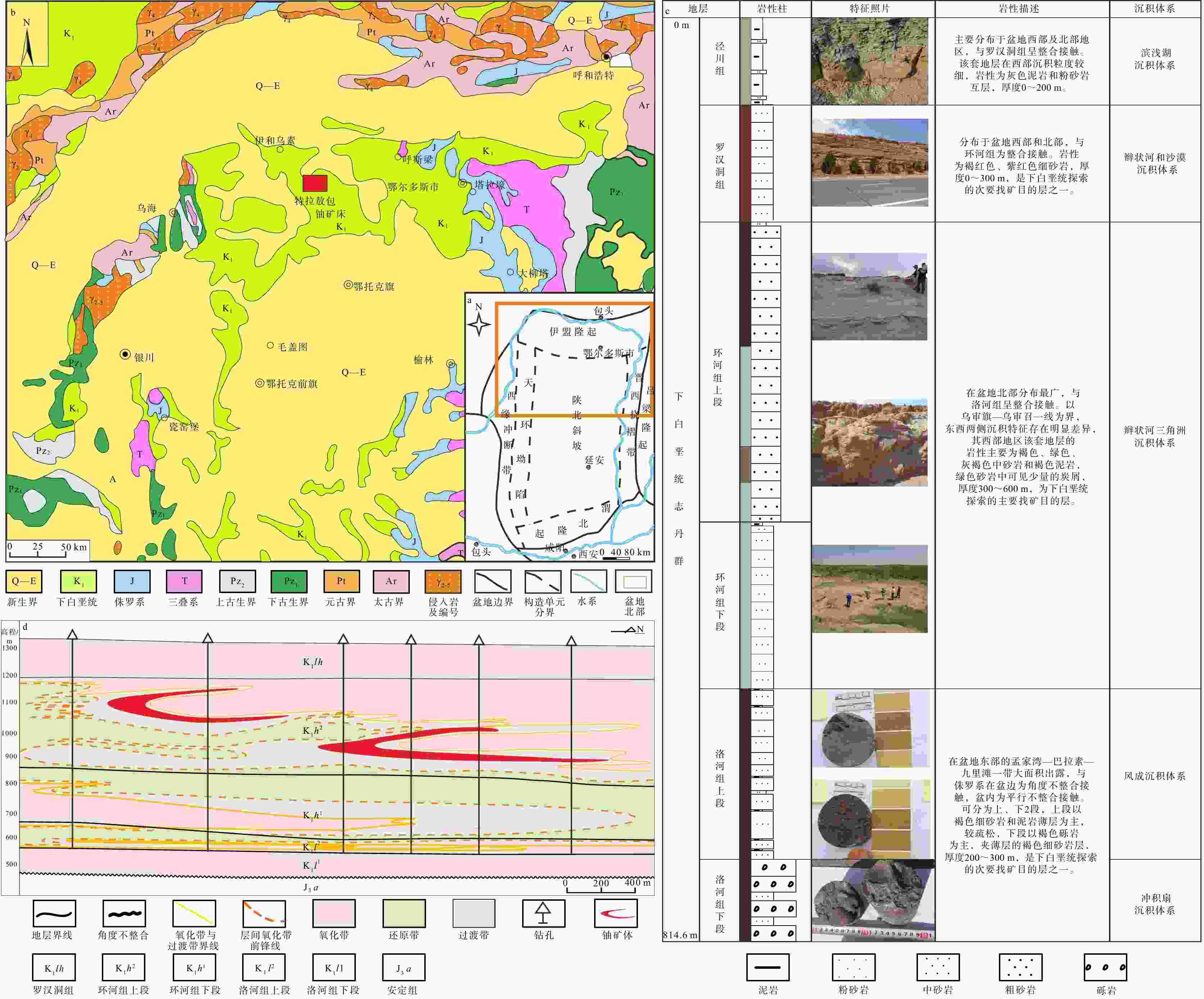
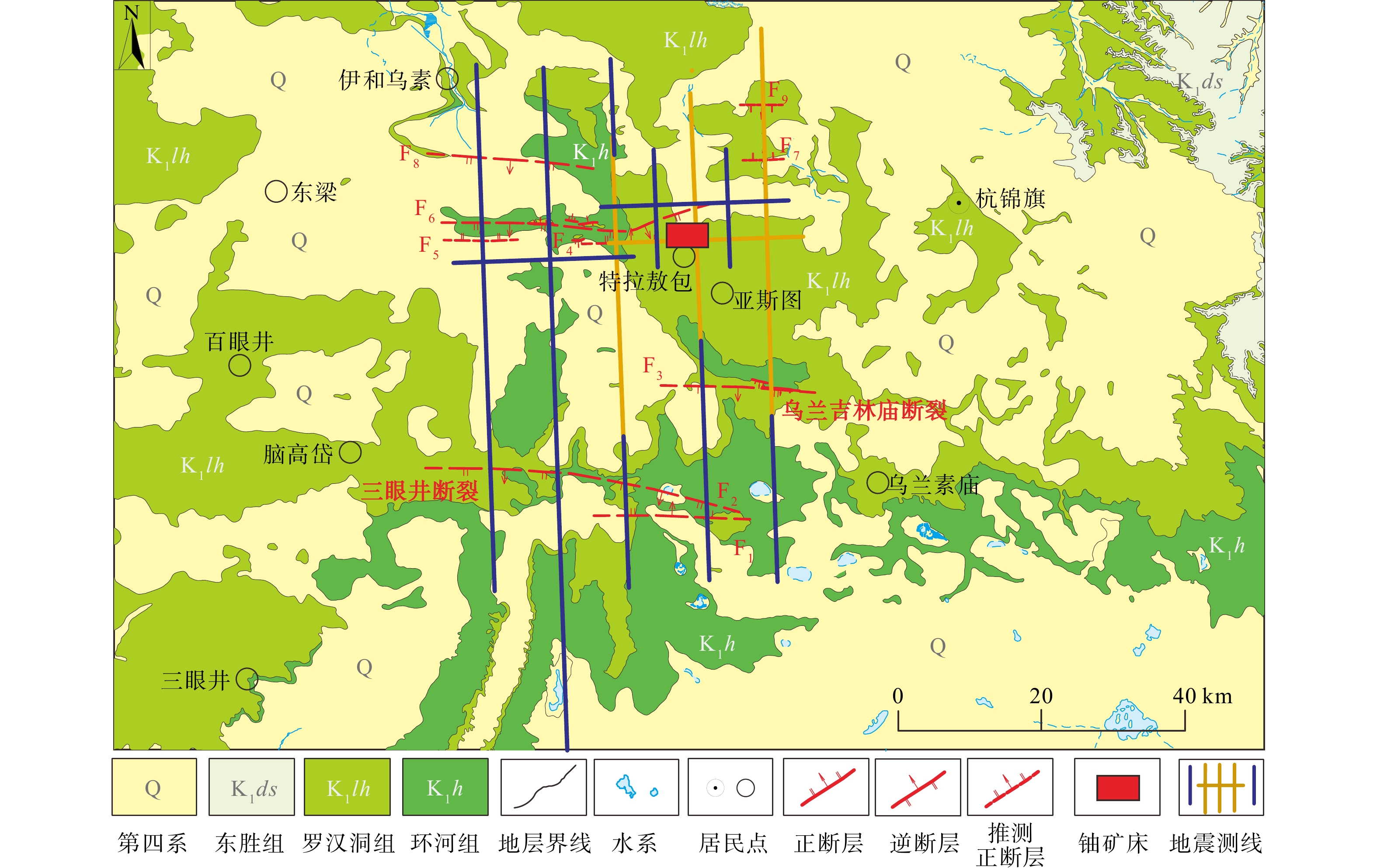
图 1 鄂尔多斯盆地北部区域地质背景及矿床地质特征
a—鄂尔多斯盆地构造简图;b—鄂尔多斯盆地北部铀矿地质简图(据王龙辉等,2023修改);c—鄂尔多斯盆地北部下白垩统综合柱状图;d—特拉敖包铀矿床典型岩石地化剖面
Figure 1. Tectonic setting of the study area and geological sketch map of uranium deposits
(a) Simplified tectonic map of the Ordos Basin; (b) Simplified geological map of uranium deposits in the northern Ordos Basin (modified after Wang et al., 2023); (c) Comprehensive stratigraphic column of the Lower Cretaceous in the northern Ordos Basin; (d) Representative petrogeochemical profile of the Teleaobao uranium deposit
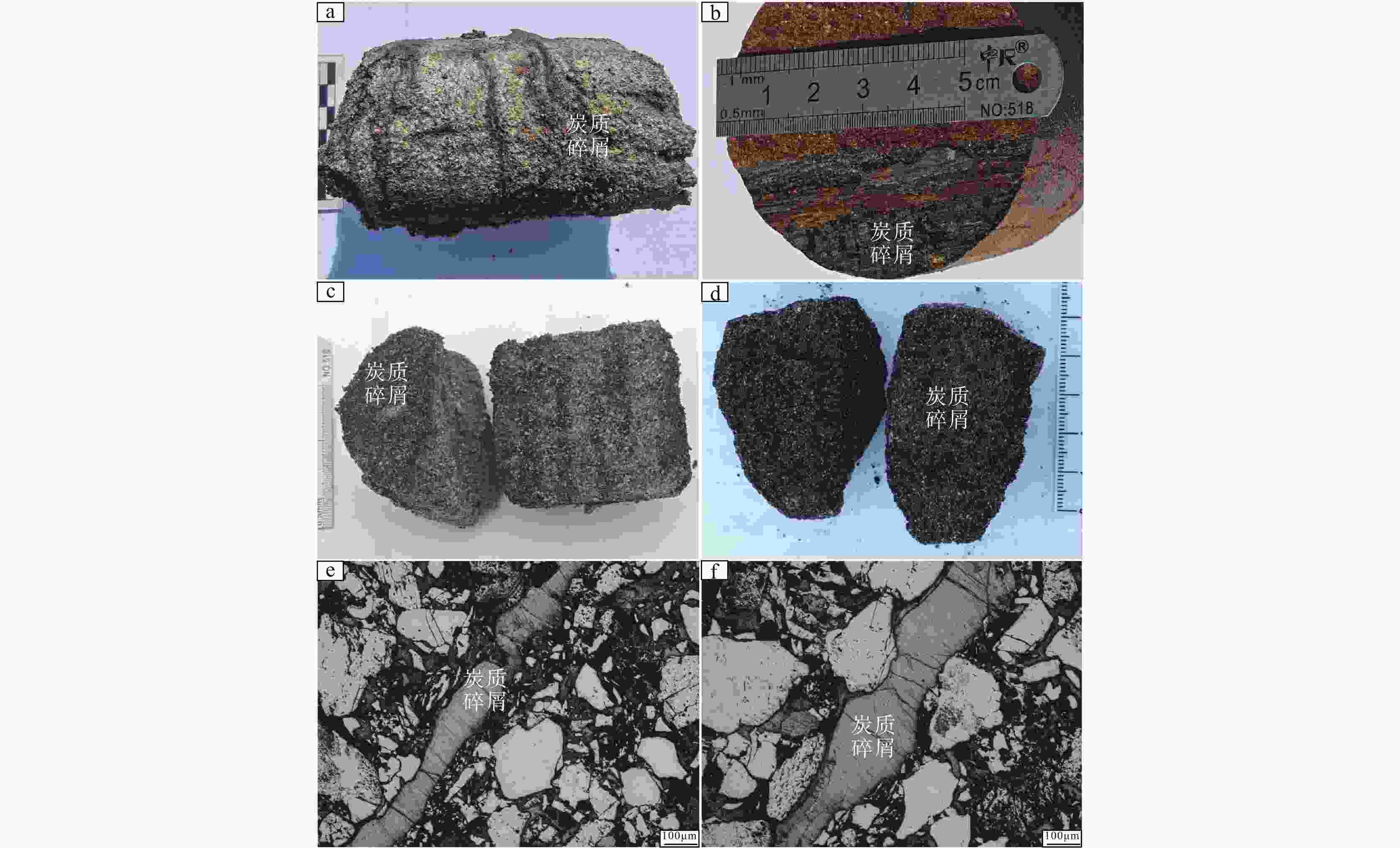
图 2 特拉敖包铀矿床铀储层砂岩中炭质碎屑特征
a—条带状炭质碎屑;b—炭化植物茎干;c—炭质碎屑将砂岩浸染,呈层状展布;d—砂岩被浸染成黑色;e—反射光下镜质体条带赋存于砂岩基质中;f—反射光下砂岩中碎屑颗粒旁发育镜质体条带
Figure 2. Characteristics of carbonaceous debris in uranium-bearing reservoir sandstones of the Telaaobao uranium deposit
(a) Banded carbonaceous debris; (b) Carbonized plant root and stem; (c) Sandstone impregnated by carbonaceous debris, showing a layered distribution; (d) Sandstone blackened by impregnation with carbonaceous material; (e) Vitrinite bands within the sandstone matrix under reflected light; (f)Vitrinite bands adjacent to detrital grains in sandstone under reflected light
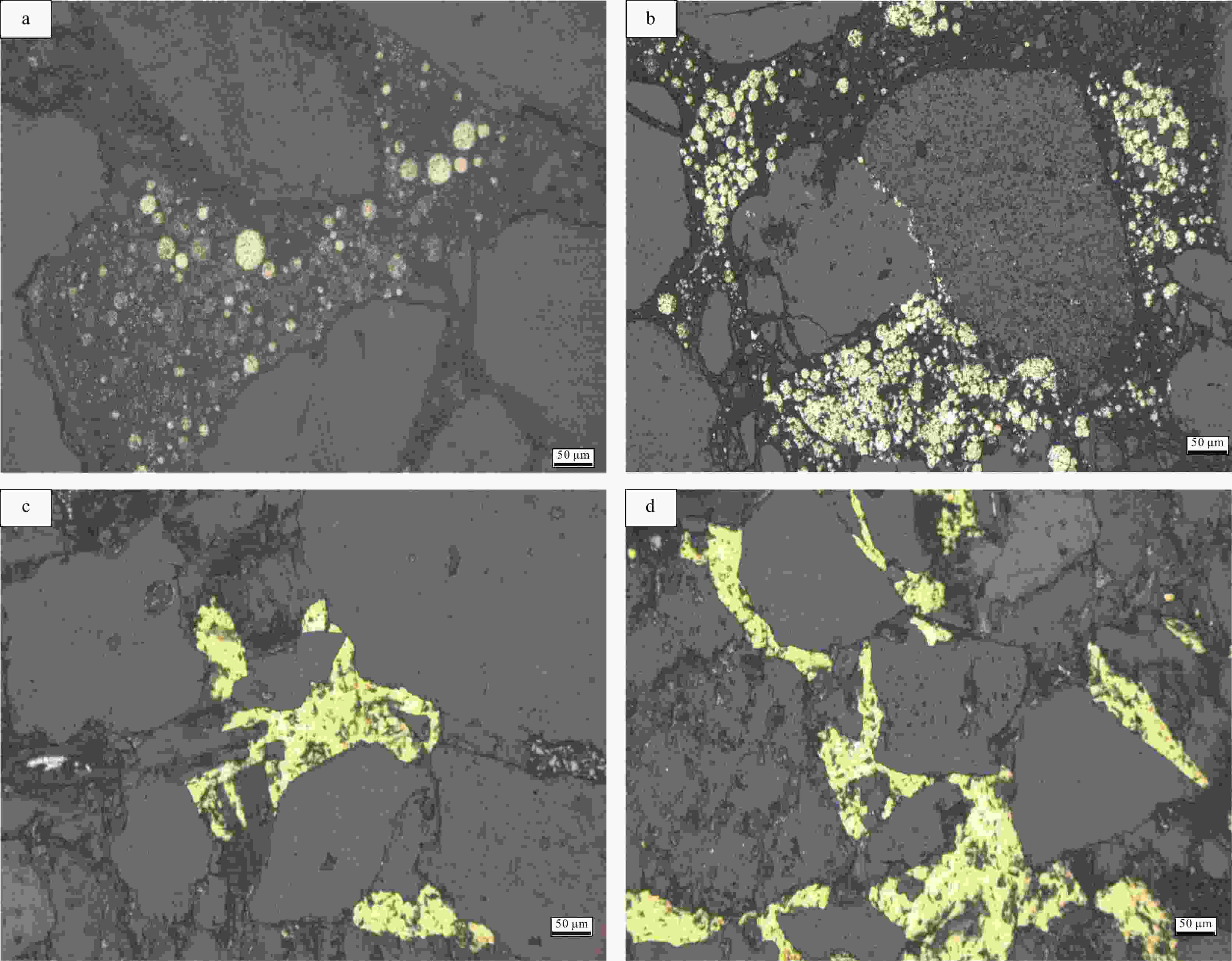
图 3 特拉敖包铀矿床黄铁矿显微特征
a—草莓状黄铁矿分布在填隙物中(反射光);b—草莓状黄铁矿分布在碎屑颗粒间(反射光);c—胶状黄铁矿分布在碎屑颗粒物粒间孔隙中(反射光);d—胶状黄铁矿将碎屑颗粒包裹(反射光)
Figure 3. Microscopic characteristics of pyrite in the Telaaobao uranium deposit
(a) Framboidal pyrite within interstitial materials under reflected light; (b) Framboidal pyrite between detrital grains under reflected light; (c) Colloform pyrite in intergranular pores of detrital grains under reflected light; (d) Colloform pyrite enveloping detrital grains under reflected light
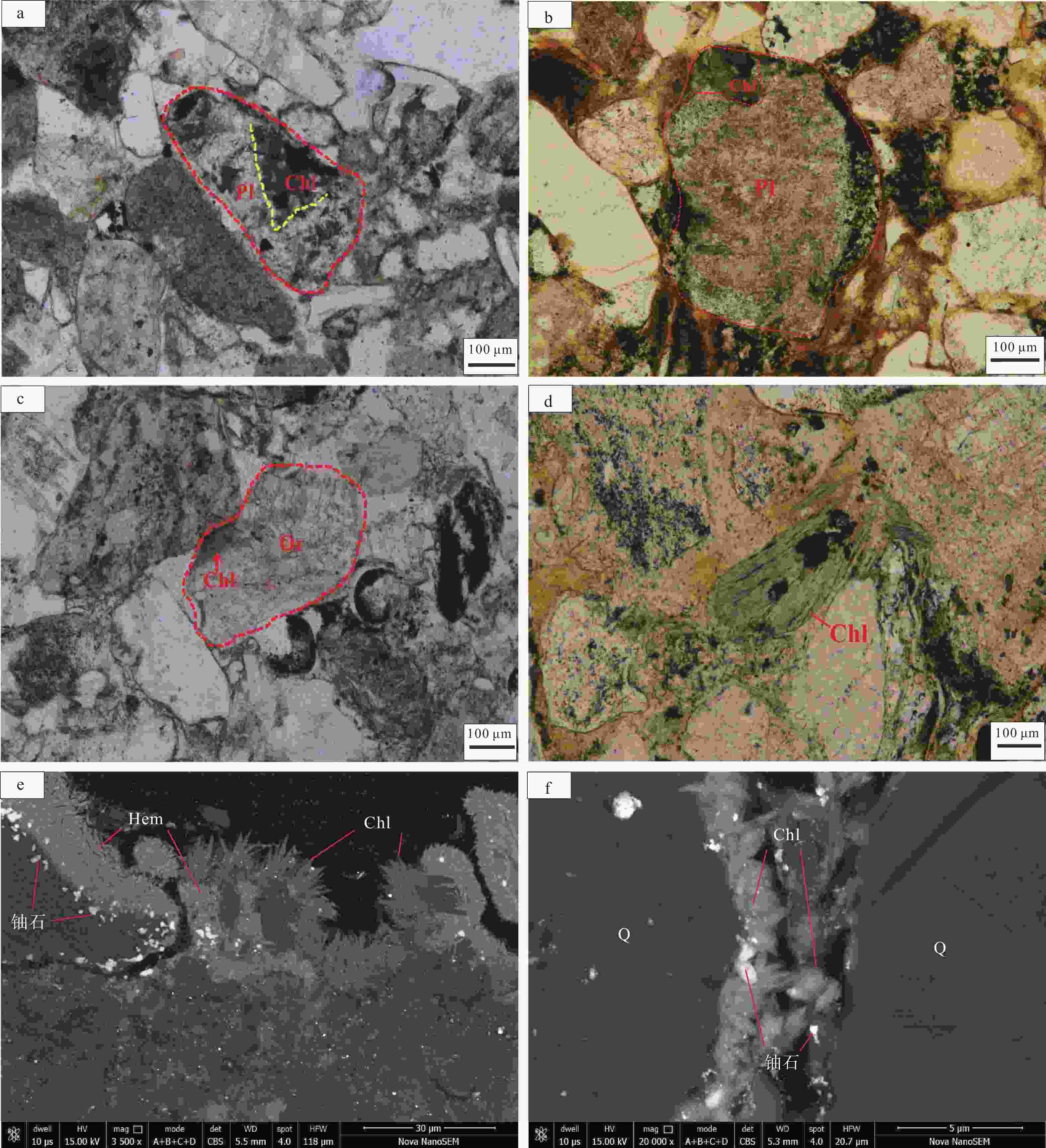
图 4 特拉敖包铀矿床铀储层砂岩中绿泥石特征
Chl—绿泥石;Pl—斜长石;Or—钾长石;Q—石英;Hem—赤铁矿a—绿泥石交代斜长石,呈暗绿色;b—绿泥石交代斜长石边部;c—绿泥石交代钾长石;d—绿泥石完全交代黑云母;e—毛发状绿泥石附着在赤铁矿表面;f—毛发状绿泥石生长在碎屑颗粒边部
Figure 4. Characteristics of chlorite in uranium-bearing reservoir sandstones in the Telaaobao uranium deposit
(a) Dark-green chlorite replacing plagioclase; (b) Chlorite replaces the margins of plagioclase; (c) Chlorite replacing K-feldspar (Or); (d) Chlorite (Chl) completely replacing biotite; (e) Fibrous chlorite occurs on the surface of hematite; (f) Fibrous chlorite growing along the margins of detrital grains Chl–chlorite; Pl–plagioclase; Or–K-feldspar; Q–quartz; Hem–hematite
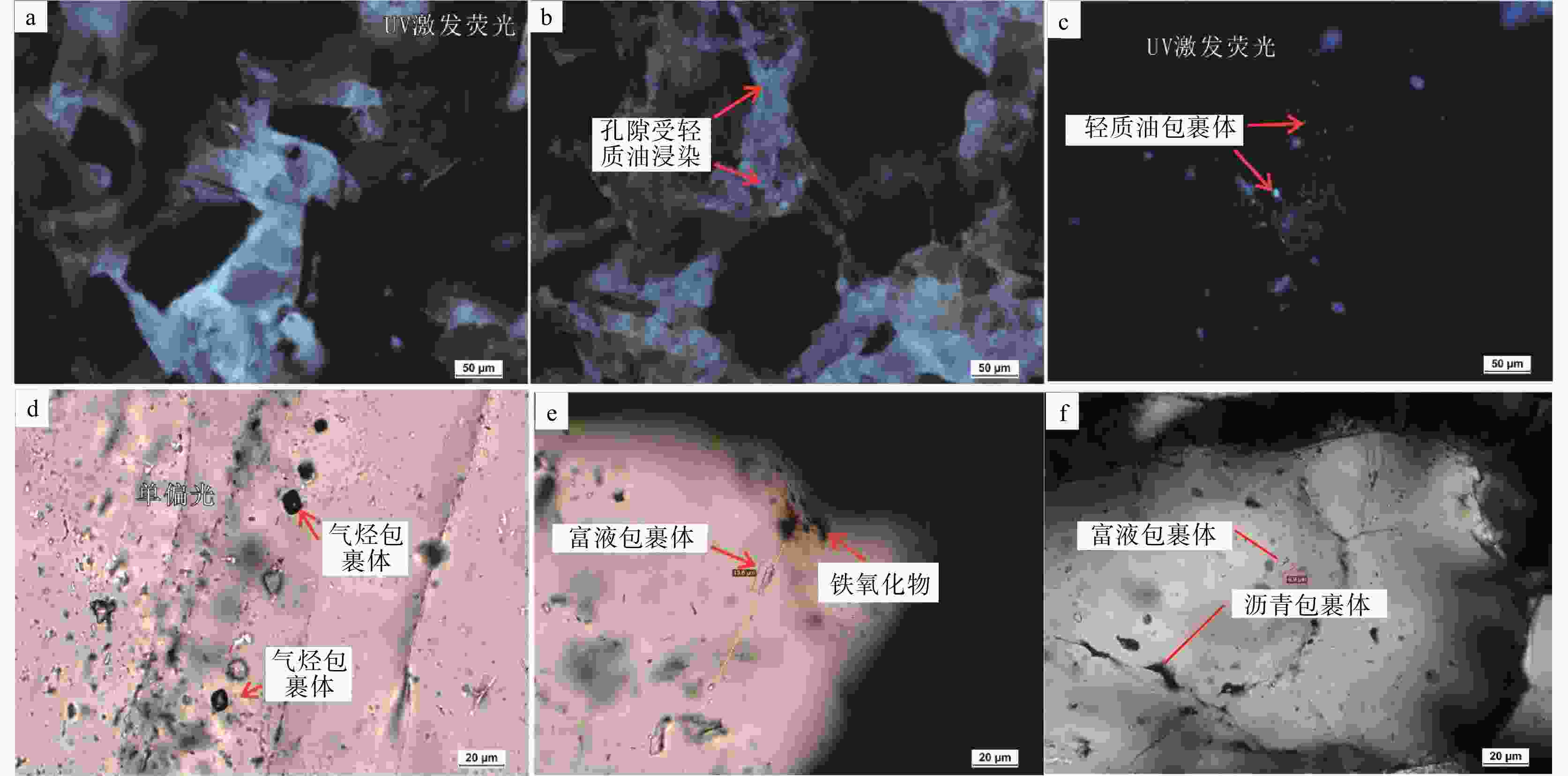
图 5 特拉敖包铀矿床环河组铀储层砂岩中的含烃流体特征(据王龙辉等,2023;邱林飞等,2024修改)
a—绿色细砂岩碎屑颗粒间有机质荧光响应(环河组上段);b—绿色细砂岩碎屑物颗粒孔隙中轻质油浸染(环河组上段);c—绿色中砂岩中轻质油包裹体及荧光响应(环河组下段);d—褐色粗砂岩中的气态烃包裹体(环河组上段);e—绿色中砂岩中沿裂隙分布的富液包裹体和铁氧化物(环河组下段);f—绿色细砂岩中的沥青和富液包裹体(环河组下段)
Figure 5. Characteristics of hydrocarbon-bearing fluids in uranium-bearing reservoir sandstones from the Telaaobao uranium deposit (modified after Wang et al., 2023; Qiu et al., 2024)
(a) Fluorescence response of organic matter between detrital grains in green fine-grained sandstone from the upper part of the Huanhe Formation; (b) Light oil impregnating intergranular pores in green fine-grained sandstone from the upper part of the Huanhe Formation; (c) Light-oil inclusions and their fluorescence response in green medium-grained sandstone from the lower part of the Huanhe Formation; (d) Gaseous hydrocarbon inclusions in brown coarse-grained sandstone from the upper part of the Huanhe Formation; (e) Liquid-rich inclusions and iron oxides along fractures in green medium-grained sandstone from the lower part of the Huanhe Formation; (f) Bitumen and liquid-rich inclusions in green fine-grained sandstone from the lower part of the Huanhe Formation
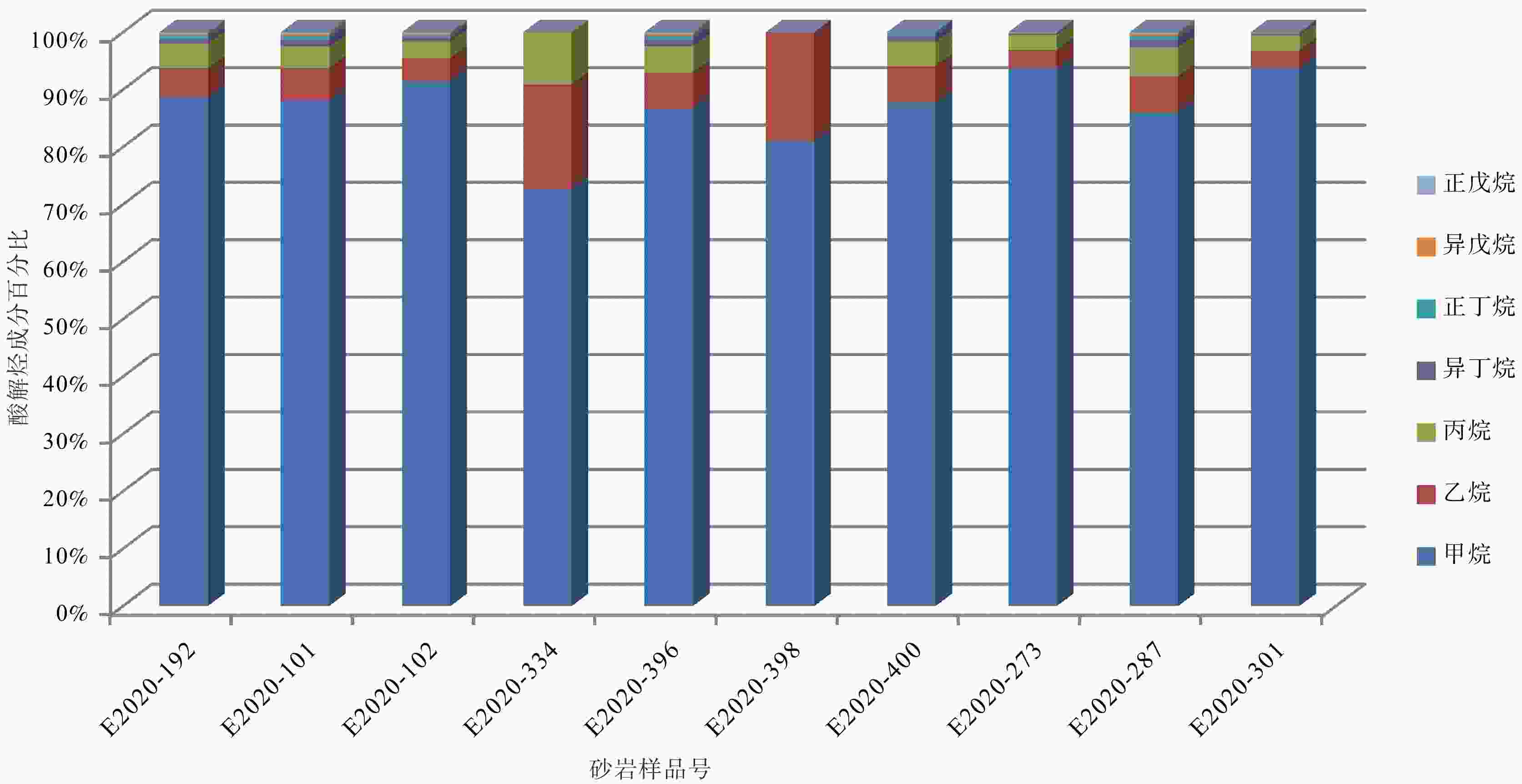
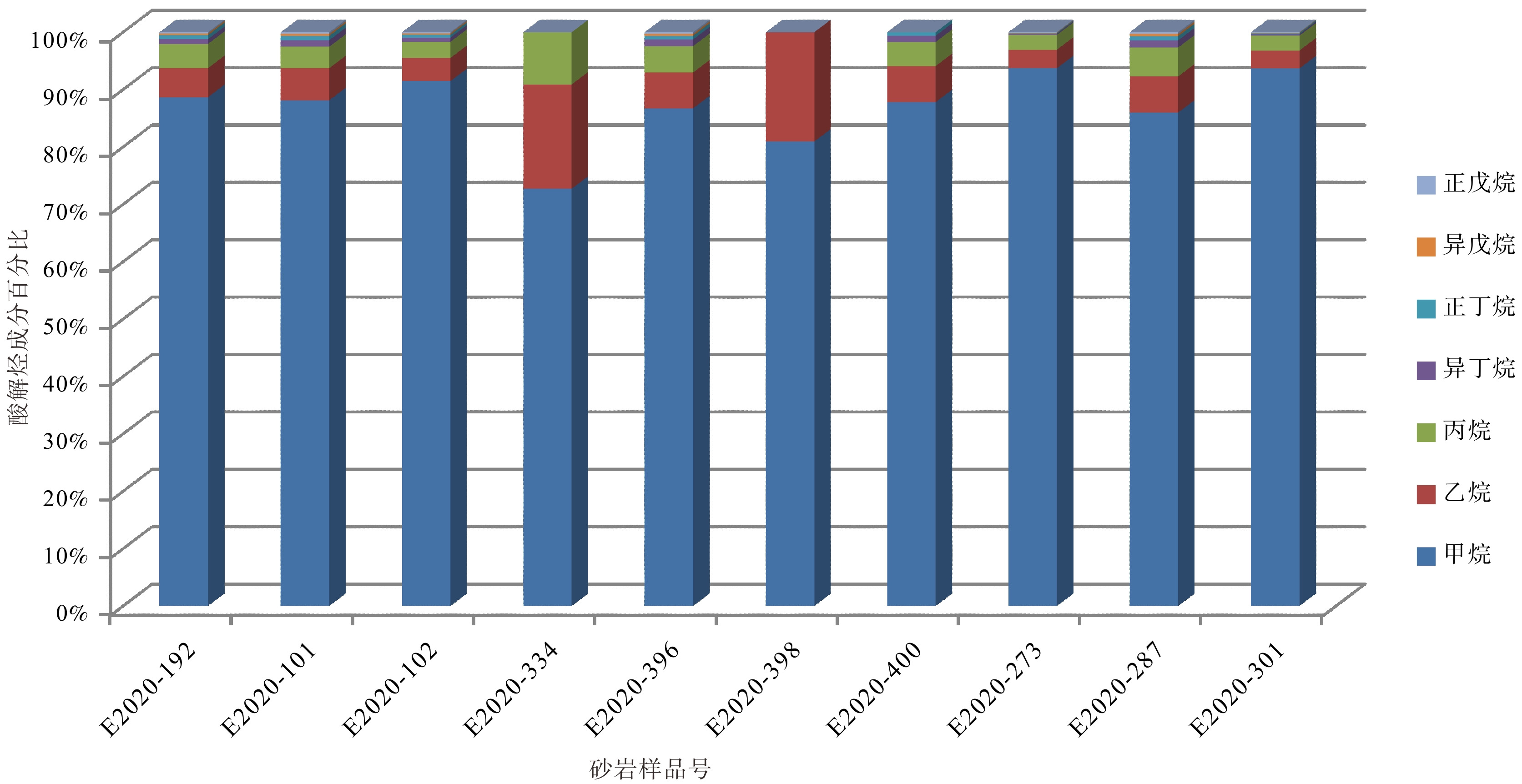
图 6 特拉敖包铀矿床酸解烃含量百分比特征图
Figure 6. Proportional composition of acid-extractable hydrocarbons in the Telaaobao uranium deposit
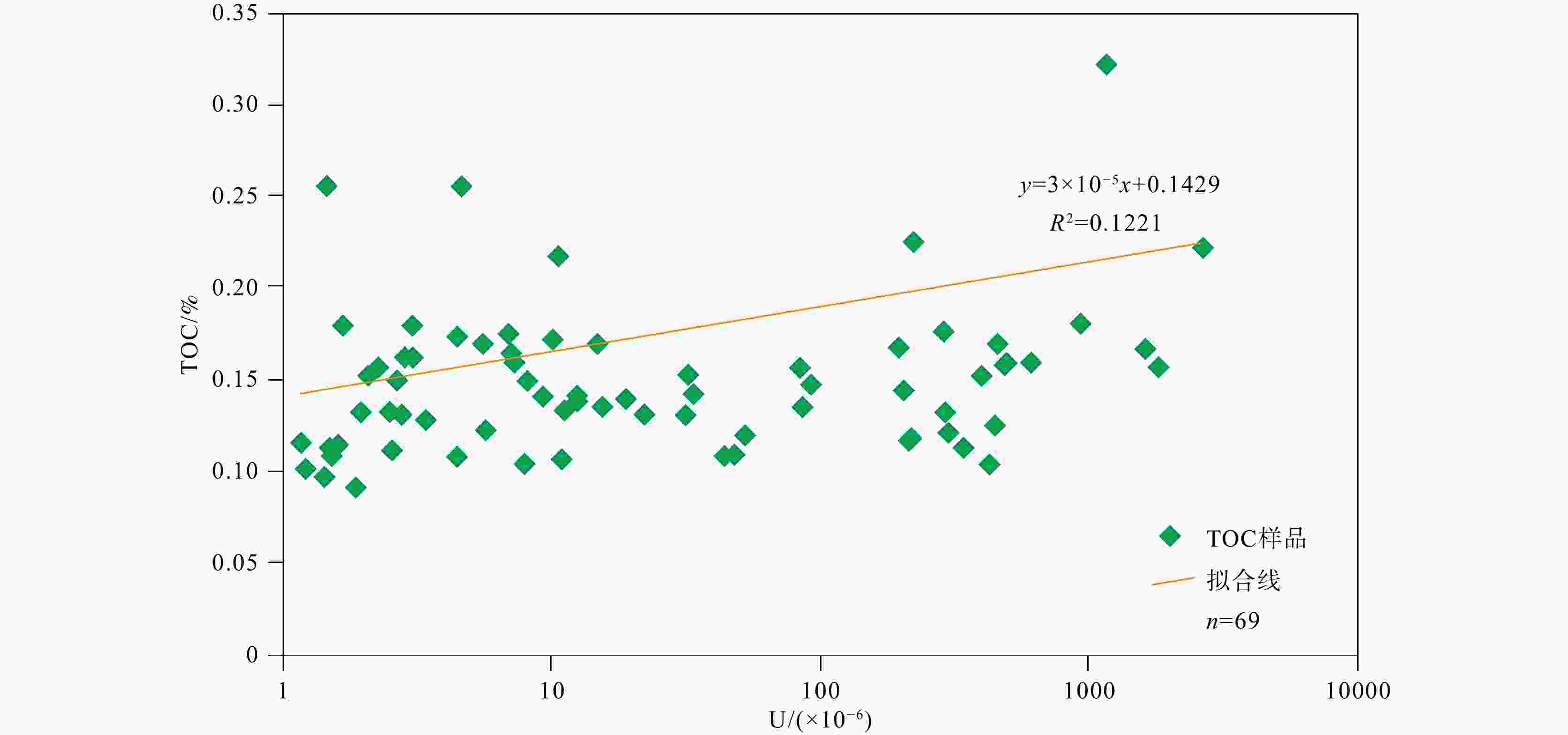
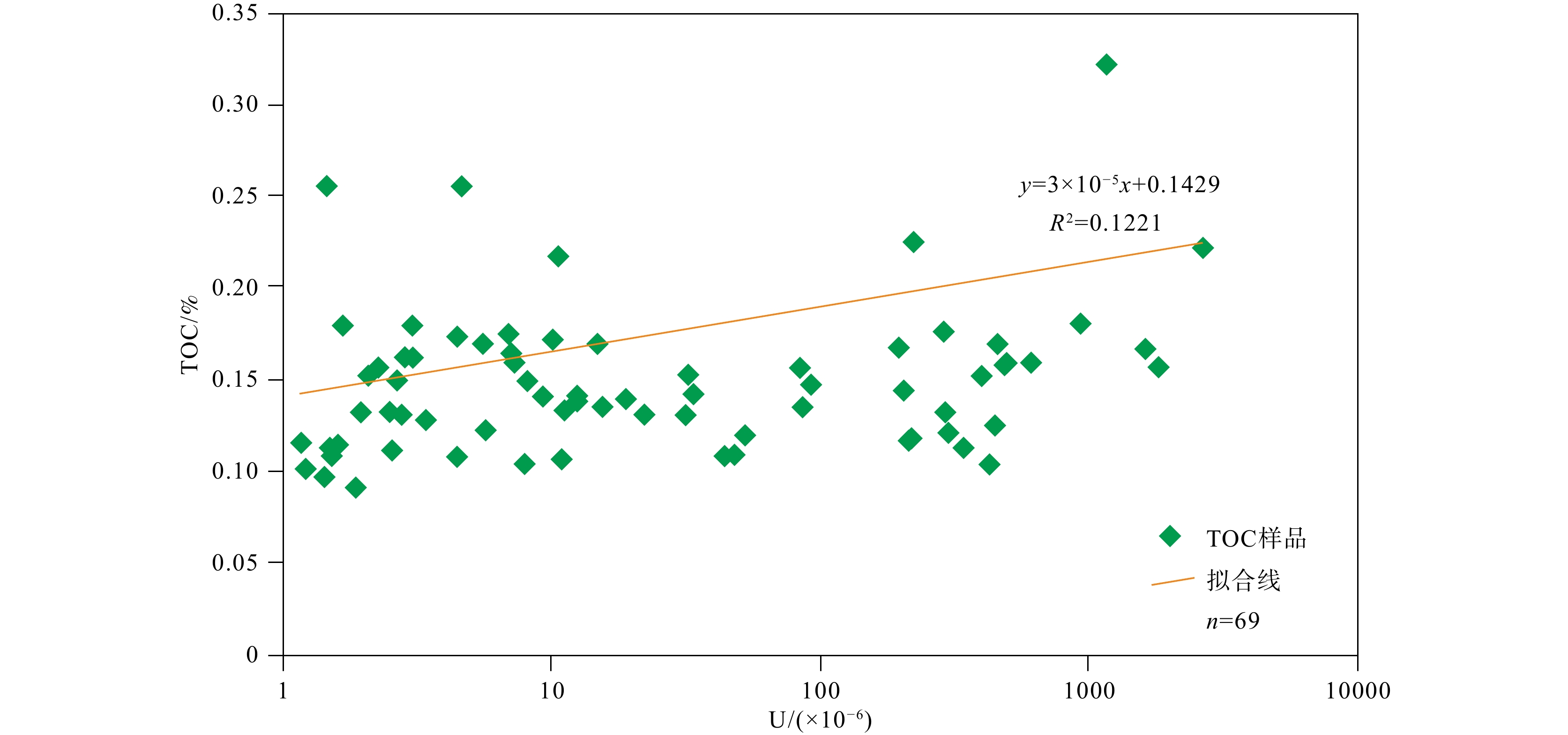
图 7 特拉敖包铀矿床铀储层砂岩总有机碳(TOC)含量与U含量散点图
Figure 7. Scatter plot of total organic carbon (TOC) content versus uranium content in uranium reservoir sandstones of the Telaaobao uranium deposit
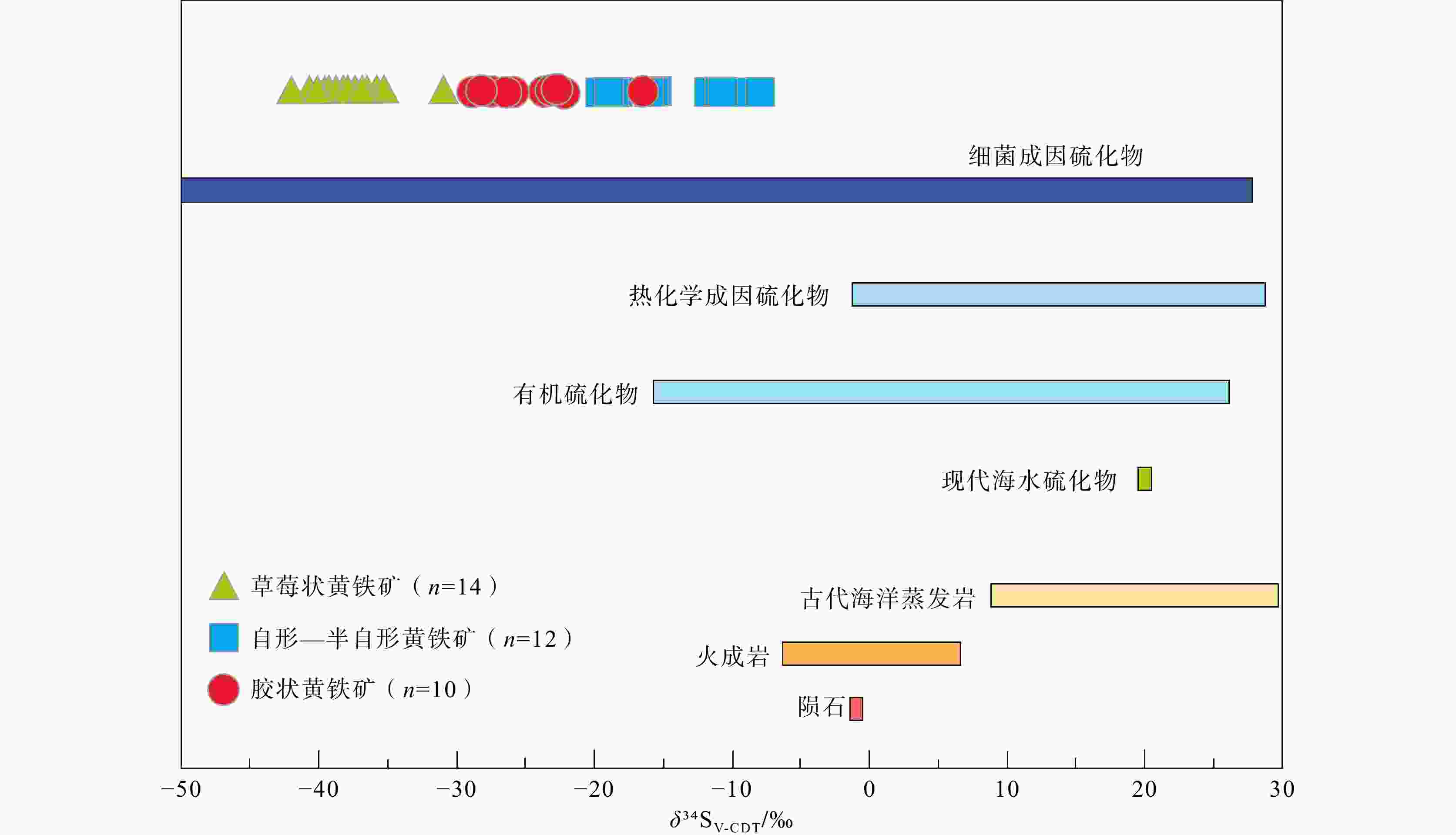
图 8 特拉敖包铀矿床不同成因类型硫化物及本区黄铁矿δ34SV-CDT 同位素组成对比图(据Zhao et al.,2018修改)
水平条带为不同硫源的δ34SV-CDT值域,样品投点用于判别硫来源
Figure 8. Comparison of δ34SV-CDT isotopic compositions of sulfides with different genetic types and pyrite from the Telaobao uranium deposit (modified after Zhao et al., 2018)
Horizontal bands indicate the δ34SV-CDT ranges of different sulfur sources. Sample plotting for discriminating sulfur sources.
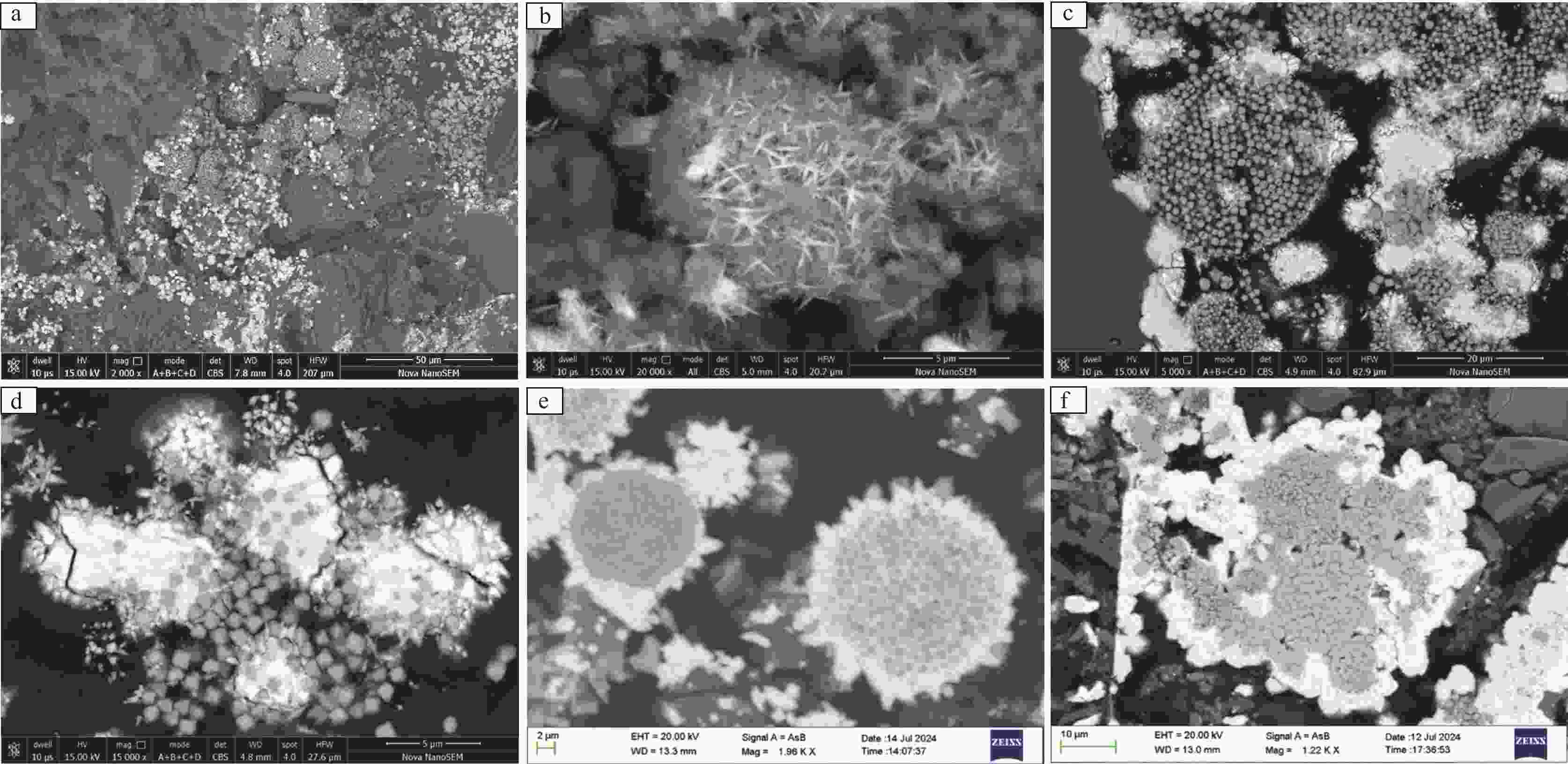
图 9 特拉敖包铀矿床铀储层砂岩中黄铁矿与铀矿物背散射电子照片
a—粒状铀石赋存于草莓状黄铁矿周围;b—针状铀石赋存于草莓状黄铁矿表面;c—粒状铀石逐渐生长并包裹草莓状黄铁矿;d—铀石充填于草莓状黄铁矿孔隙;e—铀石包裹草莓状黄铁矿;f—铀石包裹草莓状—胶状过渡型黄铁矿
Figure 9. Backscattered-electron images showing the relationships between pyrite and uranium minerals in uranium-bearing reservoir sandstones of the Telaaobao uranium deposit
(a) Granular uraninite hosted within framboidal pyrite; (b) Acicular uraninite occurring on the surface of framboidal pyrite; (c) Granular uraninite progressively overgrowing and enclosing framboidal pyrite; (d) Uraninite infilling pores and interstices of framboidal pyrite; (e) Framboidal pyrite completely encased by uraninite; (f) Coffinite enclosing pyrite that transitions from framboidal to colloform
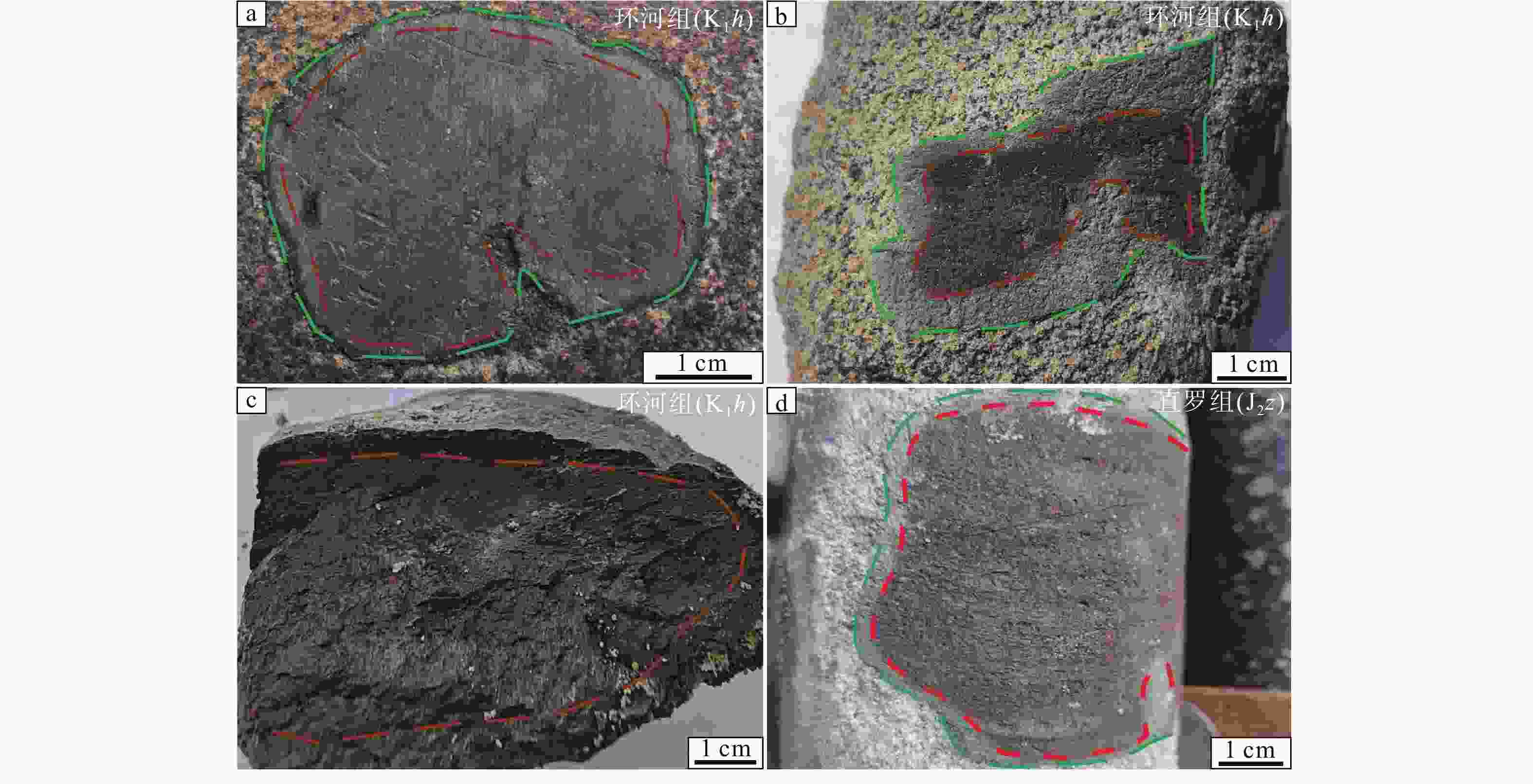
图 11 特拉敖包铀矿床铀储层砂岩中泥砾宏观特征
a—环河组核部褐色、边部绿色的椭圆状泥砾;b—环河组核部褐色、边部绿色的扁平状状泥砾;c—环河组椭圆状泥砾劈半,核部褐色、边部绿色;d—直罗组核部褐色,边部绿色的扁平状泥砾
Figure 11. Macroscopic characteristics of mud gravels in uranium reservoir sandstones of the Telaaobao uranium deposit
(a) Elliptical mud clasts in the Huanhe Formation with brown cores and green margins; (b) Flattened mud clasts in the Huanhe Formation with brown cores and green margins; (c) Split elliptical mud clast in the Huanhe Formation, showing brown core and green margin; (d) Flattened mud clasts in the Zhiluo Formation with brown cores and green margins
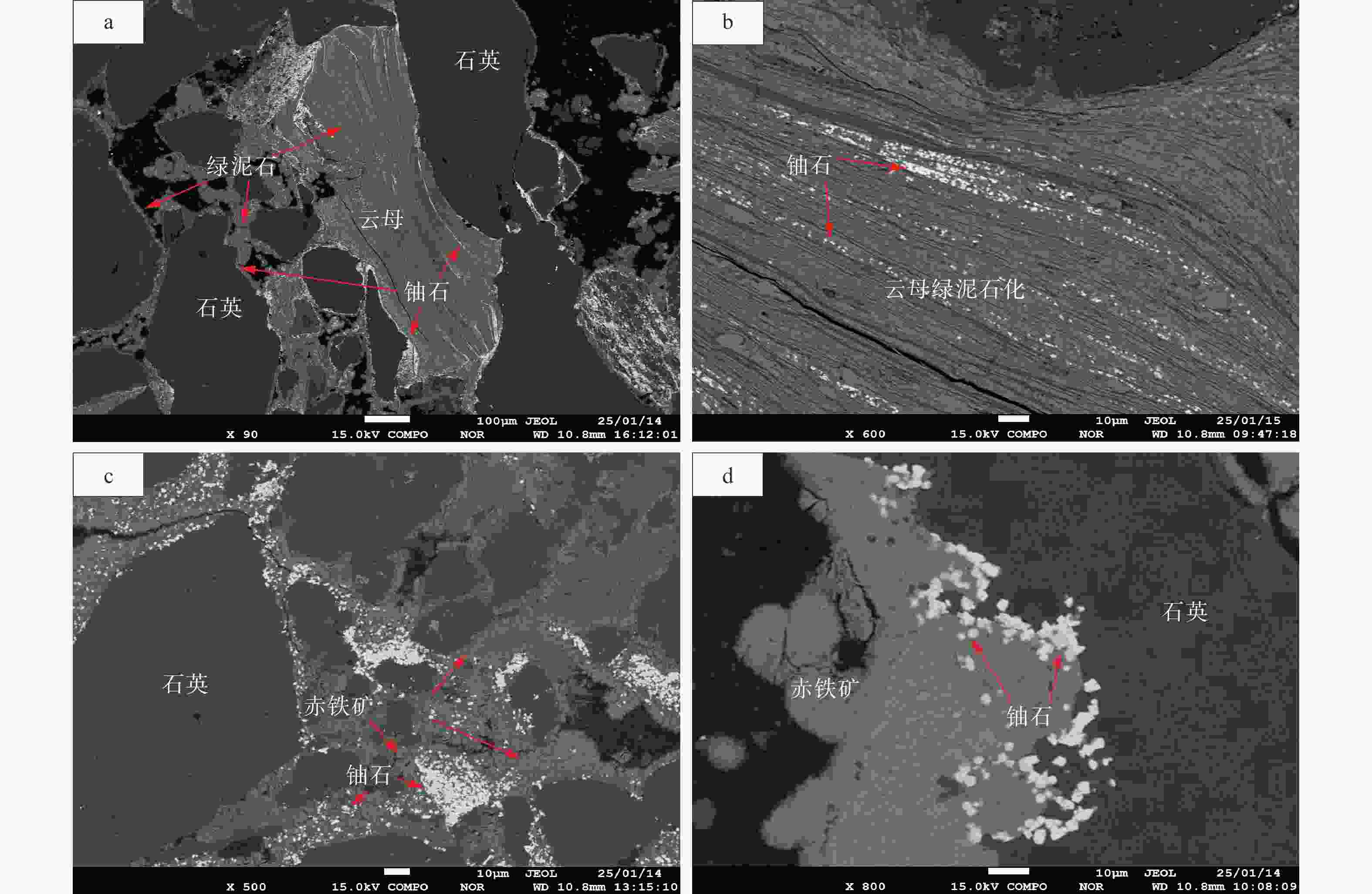
图 12 特拉敖包铀矿床绿泥石、赤铁矿与铀矿物背散射电子照片
a—绿泥石、铀石与云母伴生;b—云母绿泥石化并与铀石伴生;c—赤铁矿与铀石伴生;d—针状、毛发状绿泥石与赤铁矿、铀石伴生;
Figure 12. Backscattered-electron images showing the relationships among chlorite, hematite, and uranium minerals in the Telaaobao uranium deposit
(a) Chlorite and uraninite associated with mica; (b) Chloritized mica coexisting with uraninite; (c) Hematite associated with uraninite; (d) Acicular to hair-like chlorite occurring together with hematite and uraninite
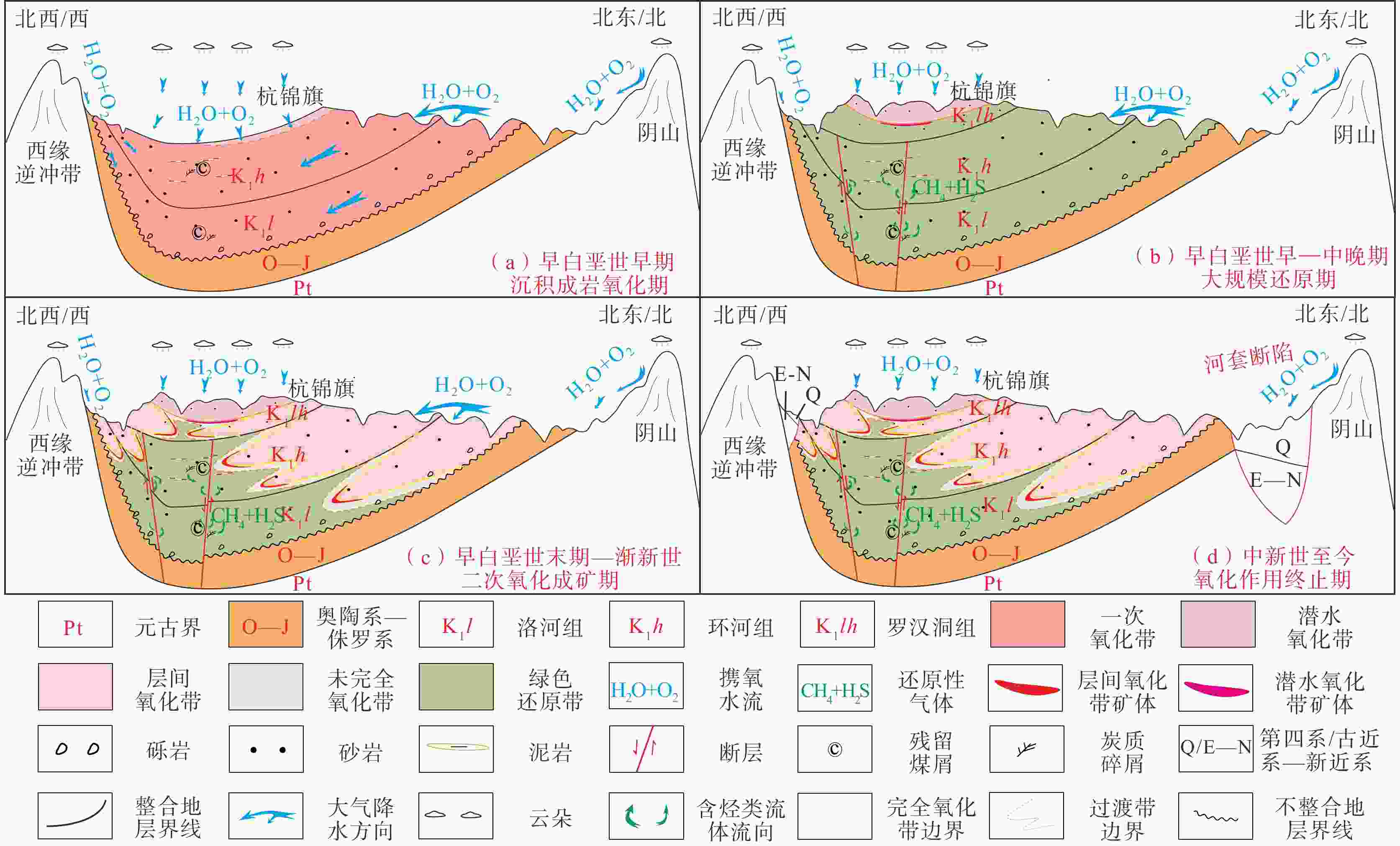
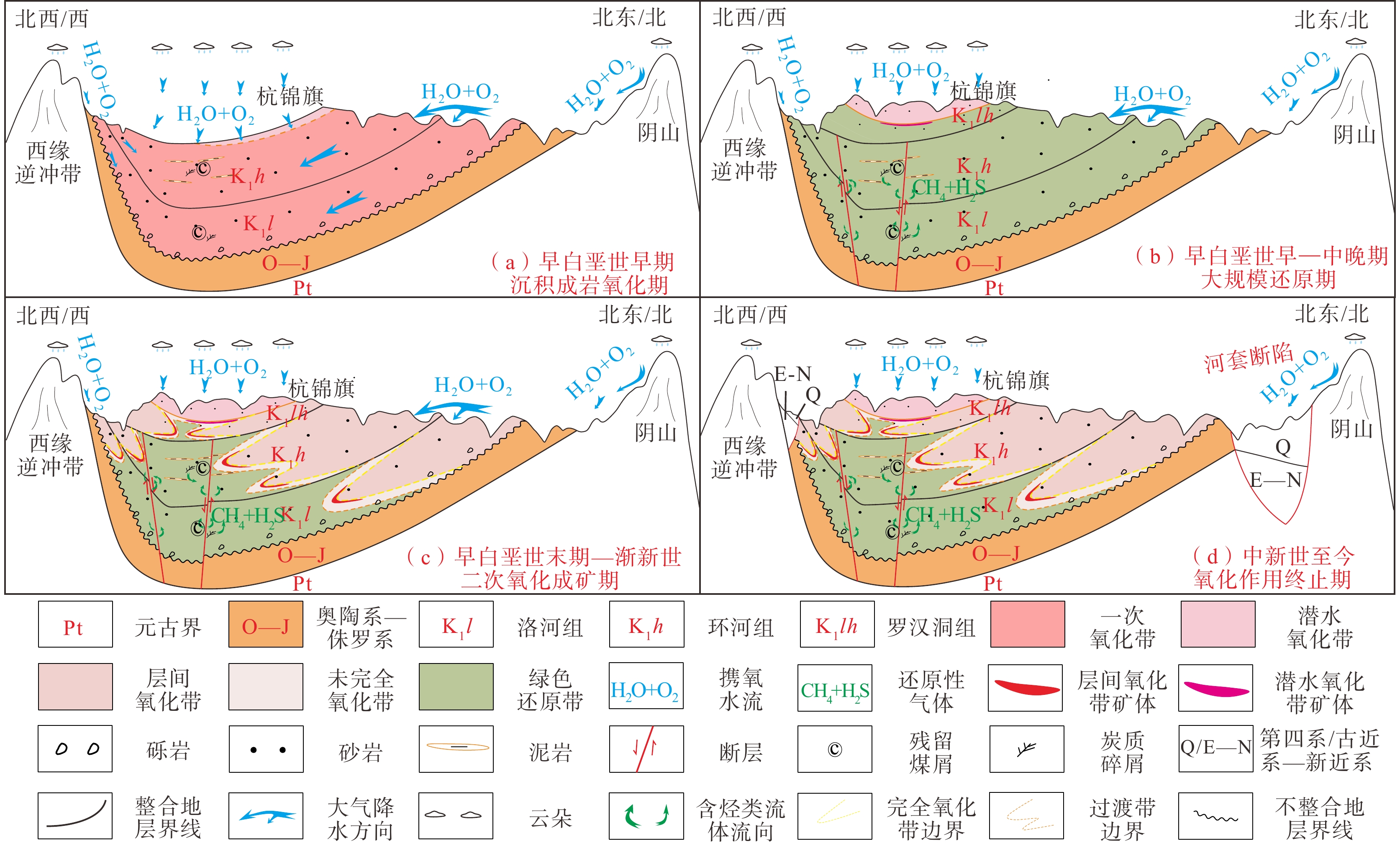
图 13 鄂尔多斯盆地北部下白垩统成矿模式图(据剡鹏兵等,2024修改)
Figure 13. Metallogenic model for the Lower Cretaceous in the northern Ordos Basin (modified after Yan et al., 2024)
(a) Early Early Cretaceous sedimentary–diagenetic preservation stage; (b) Middle to late Early Cretaceous large-scale reduction stage; (c) Latest Early Cretaceous to Oligocene secondary oxidation-mineralization stage; (d) Miocene to presenday oxidation termination stage
表 1 特拉敖包铀矿床环河组黄铁矿硫同位素分析结果
Table 1. Sulfur isotope compositions of pyrite from the Huanhe Formation in the Telaaobao uranium deposit
序号 测试点编号 岩性 黄铁矿形态 δ34SV-CDT/‰ 1 S1-1 灰色细砂岩 自形—半自形 −19.23 2 S2-1 褐灰色中砂岩 胶状 −23.16 3 S2-2 褐灰色中砂岩 胶状 −23.04 4 S3-1 褐绿色细砂岩 自形—半自形 −7.77 5 S3-2 褐绿色中砂岩 自形—半自形 −11.53 6 S3-3 褐绿色中砂岩 胶状 −27.09 7 S3-4 褐绿色中砂岩 胶状 −26.11 8 S4-1 褐绿色粗砂岩 草莓状 −37.43 9 S4-2 褐绿色粗砂岩 草莓状 −30.85 10 S4-3 褐绿色粗砂岩 草莓状 −39.27 11 S4-4 褐绿色粗砂岩 草莓状 −38.27 12 S4-5 褐绿色粗砂岩 草莓状 −35.82 13 S5-1 褐红色粗砂岩 自形—半自形 −17.27 14 S5-2 褐红色粗砂岩 胶状 −16.48 15 S5-3 褐红色粗砂岩 自形—半自形 −19.44 16 S5-4 褐红色粗砂岩 自形—半自形 −15.58 17 S5-5 褐红色粗砂岩 自形—半自形 −18.94 18 S6-1 褐绿色粗砂岩 胶状 −26.63 19 S7-1 褐绿粗砂岩 胶状 −23.46 20 S8-1 褐绿色含砾砂岩 草莓状 −35.68 21 S9-1 绿褐色粗砂岩 草莓状 −41.94 22 S10-1 褐绿色中砂岩 草莓状 −40.15 23 S10-2 褐绿色中砂岩 草莓状 −40.38 24 S11-1 绿褐色粗砂岩 草莓状 −37.82 25 S12-1 褐绿色砂岩 草莓状 −37.23 26 S13-1 褐灰色粗砂岩 草莓状 −37.39 27 S14-1 褐灰色中砂岩 草莓状 −38.83 28 S15-1 褐灰色粗砂岩 草莓状 −38.91 29 S16-1 褐色砂岩 自形—半自形 −9.04 30 S17-1 紫红色砂岩 自形—半自形 −15.49 31 S18-1 褐红色砂岩 自形—半自形 −16.41 32 S19-1 褐绿色粗砂岩 自形—半自形 −17.95 33 S20-1 紫色砂岩 自形—半自形 −10.96 34 S21-1 褐红色粗砂岩 胶状 −22.18 35 S22-1 灰色中砂岩 胶状 −22.26 36 S23-1 褐绿色砂岩 胶状 −28.95  下载: 导出CSV
表 2 特拉敖包铀矿床环河组砂岩酸解烃分析结果
Table 2. Analysis results of acidolysis hydrocarbons from sandstones of the Huanhe Formation in the Tela'aobao uranium deposit
钻孔号 矿化情况 取样深度/m 岩性 甲烷 乙烷 丙烷 异丁烷 正丁烷 异戊烷 正戊烷 ZKW2020-1 工业矿孔 174.4 灰绿色粗砂岩 40.3 2.3 1.92 0.38 0.32 0.13 0.1 378 灰绿色粗砂岩 13.9 0.88 0.59 0.18 0.12 0.05 0.05 337.64 灰绿色粗砂岩 77.6 3.43 2.39 0.62 0.42 0.21 0.16 ZKW2019-3 矿化孔 155.46 褐灰色粗砂岩 16.4 1.18 0.87 0.22 0.12 0.06 0.06 337.28 灰绿色粗砂岩 11.3 0.81 0.54 0.14 0.08 / / ZKW2019-1 工业矿孔 404.84 灰绿色粗砂岩 706 24.3 19.4 1.52 1.01 0.56 0.51 500.72 灰绿色粗砂岩 16.4 1.2 0.96 0.24 0.14 0.07 0.06 658.01 灰绿色粗砂岩 554 18.4 15.4 1.45 1.16 0.46 0.44 注:各烷烃组分含量单位均为μL/kg
下载: 导出CSV
-
[1] AAGAARD P, JAHREN J S, HARSTAD A O, et al., 2000. Formation of grain-coating chlorite in sandstones. Laboratory synthesized vs. natural occurrences[J]. Clay Minerals, 35(1): 261-269. doi: 10.1180/000985500546639 [2] AWADH S M, NEJBERT K, 2016. Polymetallic sulfide ores hosted in Late Permian carbonate at the Alanish locality, northern Iraq: petrography and mineral chemistry[J]. Arabian Journal of Geosciences, 9(9): 540. doi: 10.1007/s12517-016-2571-y [3] BAI Y M, LIU B, LI H M, 2025. Geochemical characteristics and indicative significance of green sandstone in Mesozoic uranium-producing horizon in Northern Ordos Basin[J]. Uranium Geology, 41(1): 13-28. (in Chinese with English abstract) [4] CAI C F, DONG H L, LI H T, et al., 2007. Mineralogical and geochemical evidence for coupled bacterial uranium mineralization and hydrocarbon oxidation in the Shashagetai deposit, NW China[J]. Chemical Geology, 236(1-2): 167-179. doi: 10.1016/j.chemgeo.2006.09.007 [5] DENG J, WANG Q F, GAO B F, et al., 2005. Evolution of Ordos Basin and its distribution of various energy resources[J]. Geoscience, 19(4): 538-545. (in Chinese with English abstract) [6] GOLDHABER M B, REYNOLDS R L, RYE R O, 1983. Role of fluid mixing and fault-related sulfide in the origin of the Ray Point uranium district, South Texas[J]. Economic Geology, 78(6): 1043-1063. doi: 10.2113/gsecongeo.78.6.1043 [7] GRANGER H C, WARREN C G, 1969. Unstable sulfur compounds and the origin of roll-type uranium deposits[J]. Economic Geology, 64(2): 160-171. doi: 10.2113/gsecongeo.64.2.160 [8] HE Z X, HUANG D J, ZHENG C B, 2006. Modification and geology implication of Ordovician paleogeomorphology and paleogeosyncline distribution models in Ordos Basin[J]. Marine Origin Petroleum Geology, 11(2): 25-28. (in Chinese with English abstract) [9] HOU H Q, LI Y R, LIU H J, et al., 2016. The organic matter characteristics of the Zhiluo Formation and its relationship with uranium mineralization in the North Ordos Basin[J]. Acta Geologica Sinica, 90(12): 3367-3374. (in Chinese with English abstract) [10] HOUGH G, SWAPP S, FROST C, et al., 2019. Sulfur isotopes in biogenically and abiogenically derived uranium roll-front deposits[J]. Economic Geology, 114(2): 353-373. doi: 10.5382/econgeo.2019.4634 [11] HUANG S J, 1994. Formation conditions and prospecting criteria for sandstone uranium deposit of interlayered oxidation type[J]. Uranium Geology, 10(1): 6-13. (in Chinese with English abstract) [12] HUANG S J, XIE L W, ZHANG M, et al., 2004. Formation mechanism of authigenic chlorite and relation to preservation of porosity in nonmarine Triassic reservoir sandstones, Ordos Basin and Sichuan Basin, China[J]. Journal of Chengdu University of Technology (Science & Technology Edition), 31(3): 273-281. (in Chinese with English abstract) [13] INGHAM E S, COOK N J, CLIFF J, et al., 2014. A combined chemical, isotopic and microstructural study of pyrite from roll-front uranium deposits, Lake Eyre Basin, South Australia[J]. Geochimica et Cosmochimica Acta, 125: 440-465. doi: 10.1016/j.gca.2013.10.017 [14] JIANG X J, LU C, WANG L H, et al., 2025. Study on the characteristic and uranium enrichment mechanism of purple uranium ore in the upper member of Huanhe Formation in Telaaobao Area, Northwestern Ordos Basin[J]. Uranium Geology, 41(3): 387-402. (in Chinese with English abstract) [15] JIAO Y Q, WU L Q, RONG H, 2018. Model of inner and outer reductive media within uranium reservoir sandstone of sandstone-type uranium deposits and its ore-controlling mechanism: case studies in Daying and Qianjiadian uranium deposits[J]. Earth Science, 43(2): 459-474. (in Chinese with English abstract) [16] JIAO Y Q, WU L Q, RONG H, et al., 2021. Coal accumulation regularity of Zhiluo Formation and its indication to paleoclimate and uranium metallogenic environment, Ordos Basin[J]. Journal of China Coal Society, 46(7): 2331-2345. (in Chinese with English abstract) [17] JIAO Y Q, WU L Q, TAO Z P, et al., 2026. Metallogenic Specificity and Prospecting Directions of Sandstone-Type Uranium Deposits in Uranium-Bearing Series in Arid Depositional Background[J]. Earth Science, 2026, 51(5): 2024-2046. [18] JIN R S, TENG X M, LI X G, et al., 2020. Genesis of sandstone-type uranium deposits along the northern margin of the Ordos Basin, China[J]. Geoscience Frontiers, 11(1): 215-227. doi: 10.1016/j.gsf.2019.07.005 [19] JU Y W, WANG W, REN Z L, et al., 2025. Multi-stage evolution of the Ordos Basin: its coupled basin-mountain systems and energy resource[J]. Science China Earth Sciences, 68(8): 2426-2473. doi: 10.1007/s11430-025-1627-1 [20] LI Z C, LI H M, YAN P B, et al., 2024. Characteristics and ore-controlling factors of uranium mineralization in Telaaobao Area, Northern Ordos Basin[J]. Uranium Geology, 40(5): 899-910. (in Chinese with English abstract) [21] LI S F, ZHANG Y, 2004. Formation mechanism of uranium minerals at sandstone-type uranium deposits [J]. Uranium Geology, 2004,(2):80-84+90. (in Chinese with English abstract) [22] LIU C H, LI Z Y, HE F, et al. , 2024. Quantitative analysis of provenance in the Lower Cretaceous of the northwestern Ordos Basin[J]. Earth Science Frontiers, 31(3): 80-99. (in Chinese with English abstract) [23] LIU Y, 2024. Mineralization of sandstone-hosted uranium deposit in the northern Ordos Basin[D]. Wuhan: China University of Geosciences. (in Chinese with English abstract) [24] LUO J J, 2017. Coal organic matter characteristic and metallogenic significance in Daying sandstone-type uranium deposit, Ordos Basin[D]. Xi'an: Northwest University. (in Chinese with English abstract) [25] LUO Q, 2010. Concept, principle, model and significance of the fault controlling hydrocarbon theory[J]. Petroleum Exploration and Development, 37(3): 316-324. doi: 10.1016/S1876-3804(10)60035-3 [26] NORTHROP H R, GOLDHABER M B, LANDIS G P, et al., 1990. Genesis of the tabular-type vanadium-uranium deposits of the Henry Basin, Utah[J]. Economic Geology, 85(2): 215-269. doi: 10.2113/gsecongeo.86.6.1350 [27] QIU L F, LI Z Y, ZHANG Z L, et al., 2024. Characteristics of organic matter in Lower Cretaceous ore-bearing sandstones and its relationship with uranium mineralization in the northern Ordos Basin[J]. Earth Science Frontiers, 31(4): 281-296. (in Chinese with English abstract) [28] REN Z L, QI K, LIU R C, et al., 2020. Dynamic background of Early Cretaceous tectonic thermal events and its control on various mineral accumulations such as oil and gas in the Ordos Basin[J]. Acta Petrologica Sinica, 36(4): 1213-1234. (in Chinese with English abstract) doi: 10.18654/1000-0569/2020.04.15 [29] WANG D Z, LENG C B, QIN C J, et al., 2022. Geochemical characteristics and mineralization of uranium[J]. Geotectonica et Metallogenia, 46(2): 282-302. (in Chinese with English abstract) [30] WANG G, LIU B, BAI Y M, et al., 2025. Geological characteristics and metallogenic mechanism of Lower Cretaceous uranium mineralization in northern Ordos basin[J]. World Nuclear Geoscience, 42(3): 485-503. (in Chinese with English abstract) [31] WANG L H, YAN P B, JIAO Y Q, et al., 2023. Uranium metallogenic model of the Lower Cretaceous in the northern Ordos Basin[J]. Bulletin of Geological Science and Technology, 42(3): 222-233. (in Chinese with English abstract) [32] WARREN C G, 1972. Sulfur isotopes as a clue to the genetic geochemistry of a roll-type uranium deposit[J]. Economic Geology, 67(6): 759-767. doi: 10.2113/gsecongeo.67.6.759 [33] WU R G, XU Z, GONG W J, et al., 2012. Discussion on the genesis of Baixintu uranium deposit in Sonliao Basin[J]. Uranium Geology, 28(3): 142-147. (in Chinese with English abstract) [34] XI D P, WAN X Q, LI G B, et al., 2019. Cretaceous integrative stratigraphy and timescale of China[J]. Science China Earth Sciences, 62(1): 256-286. doi: 10.1007/s11430-017-9262-y [35] YAN P B, WANG L H, LI H M, et al., 2024. Metallogenic mechanism and exploration achievements of sandstone-type uranium in the Lower Cretaceous strata of the northern Ordos Basin[J]. Journal of East China University of Technology (Natural Science), 47(5): 409-420. (in Chinese with English abstract) [36] YAO J L, WANG Q, ZHANG R, et al., 2011. Forming mechanism and their environmental implications of chlorite-coatings in Chang 6 sandstone (Upper Triassic) of Hua-Qing Area, Ordos Basin[J]. Acta Sedimentologica Sinica, 29(1): 72-79. (in Chinese with English abstract) [37] YI C, LI X D, ZHANG K, et al., 2017. Relationship between reducing materials and uranium mineralization in the northeastern Ordos Basin[J]. Geological Review, 63(S1): 139-140. (in Chinese with English abstract) [38] YUE L, 2021. The formation process and evolution law of pyrite in uranium reservoir in Zhiluo Formation, northern Ordos Basin[D]. Wuhan: China University of Geosciences. (in Chinese with English abstract) [39] YUE L, JIAO Y Q, WU L Q, et al., 2024. Framboidal pyrite in Dongsheng sandstone-hosted uranium deposit, northern Ordos Basin: implications for fluid evolution and uranium mineralization[J]. Ore Geology Reviews, 174: 106303. doi: 10.1016/j.oregeorev.2024.106303 [40] ZHANG F, 2018. Enhancement of organic matter maturation of carbonaceous debris due to radiogenic heat from the sandstone-type uranium deposits, Ordos basin[D]. Wuhan: China University of Geosciences. (in Chinese with English abstract) [41] ZHANG F, JIAO Y Q, WANG S M, et al., 2022. Origin of dispersed organic matter within sandstones and its implication for uranium mineralization: a case study from Dongsheng uranium ore filed in China[J]. Journal of Earth Science, 33(2): 325-341. doi: 10.1007/s12583-020-1364-0 [42] ZHANG J D, XU G Z, LIN J R, et al., 2010. The implication of six kinds of new sandstone-type uranium deposits to uranium resources potential in North China[J]. Geology in China, 37(5): 1434-1449. (in Chinese with English abstract) [43] ZHANG Z L, HE F, LI Z Y, et al. , 2024. Material composition characteristics of uranium ore from Telaaobao mineral occurrence, northwestern Ordos Basin[J]. Uranium Geology, 40(1): 16-28. (in Chinese with English abstract) [44] ZHAO L, CAI C F, JIN R S, et al., 2018. Mineralogical and geochemical evidence for biogenic and petroleum-related uranium mineralization in the Qianjiadian deposit, NE China[J]. Ore Geology Reviews, 101: 273-292. doi: 10.1016/j.oregeorev.2018.07.025 [45] ZHAO X Q, LI X D, SHI Q P, et al., 2016. Hydrocarbon fluid feature of the Zhiluo Formation sandstone in the Dongsheng Area, Ordos Basin and its relationship to uranium mineralization[J]. Acta Geologica Sinica, 2016, 90(12): 3381-3392. (in Chinese withEnglish abstract) [46] ZHENG F X, TENG Y G, ZHAI Y Z, et al., 2023. Geo-environmental models of in-situ leaching sandstone-type uranium deposits in North China: a review and perspective[J]. Water, 15(6): 1244. doi: 10.3390/w15061244 [47] ZHONG W H, WU L Q, WANG L H, et al., 2025. The distinctiveness of carbonaceous debris in uranium reservoirs under arid sedimentary backgrounds and its implication for uranium mineralization: a case study of northern Ordos Basin[J]. Ore Geology Reviews, 179: 106526. doi: 10.1016/j.oregeorev.2025.106526 [48] ZHU Q, YU R A, LI J G, et al., 2018. Control of reducing medium on uranium deposit of sandstone in Tarangaole area, northeastern Ordos basin[J]. Coal Geology & Exploration, 46(6): 11-18. (in Chinese with English abstract) [49] 白一鸣, 刘波, 李华明, 2025. 鄂尔多斯盆地北部中生代产铀层位绿色砂岩地球化学特征及其指示意义[J]. 铀矿地质, 41(1): 13-28. doi: 10.3969/j.issn.1000-0658.2025.41.002 [50] 邓军, 王庆飞, 高帮飞, 等, 2005. 鄂尔多斯盆地演化与多种能源矿产分布[J]. 现代地质, 19(4): 538-545. doi: 10.3969/j.issn.1000-8527.2005.04.009 [51] 韩美芝, 李子颖, 邱林飞, 等, 2023. 鄂尔多斯盆地西北部特拉敖包铀矿产地华池—环河组黄铁矿特征及其成因探讨[J]. 铀矿地质, 39(6): 919-932. doi: 10.3969/j.issn.1000-0658.2023.39.080 [52] 何自新, 黄道军, 郑聪斌, 2006. 鄂尔多斯盆地奥陶系古地貌、古沟槽模式的修正及其地质意义[J]. 海相油气地质, 11(2): 25-28. doi: 10.3969/j.issn.1672-9854.2006.02.004 [53] 侯惠群, 李言瑞, 刘洪军, 等, 2016. 鄂尔多斯盆地北部直罗组有机质特征及与铀成矿关系[J]. 地质学报, 90(12): 3367-3374. doi: 10.3969/j.issn.0001-5717.2016.12.006 [54] 黄世杰, 1994. 层间氧化带砂岩型铀矿的形成条件及找矿判据[J]. 铀矿地质, 10(1): 6-13. [55] 黄思静, 谢连文, 张萌, 等, 2004. 中国三叠系陆相砂岩中自生绿泥石的形成机制及其与储层孔隙保存的关系[J]. 成都理工大学学报(自然科学版), 31(3): 273-281. doi: 10.3969/j.issn.1671-9727.2004.03.009 [56] 姜晓杰, 鲁超, 王龙辉, 等, 2025. 鄂尔多斯盆地北部特拉敖包地区紫色铀矿石特征及富集机理研究[J]. 铀矿地质, 41(3): 387-402. doi: 10.3969/j.issn.1000-0658.2025.41.027 [57] 焦养泉, 吴立群, 荣辉, 2018. 砂岩型铀矿的双重还原介质模型及其联合控矿机理: 兼论大营和钱家店铀矿床[J]. 地球科学, 43(2): 459-474. [58] 焦养泉, 吴立群, 荣辉, 等, 2021. 鄂尔多斯盆地直罗组聚煤规律及其对古气候和铀成矿环境的指示意义[J]. 煤炭学报, 46(7): 2331-2345. doi: 10.13225/j.cnki.jccs.YG20.1822 [59] 焦养泉, 吴立群, 陶振鹏, 等, 2026. 干旱沉积背景含铀岩系砂岩型铀矿成矿特殊性与找矿方向[J]. 地球科学, 51(5): 2024-2046. [60] 乐亮, 2021. 鄂尔多斯盆地北部直罗组铀储层中黄铁矿的形成过程与演化规律[D]. 武汉: 中国地质大学. [61] 李盛富, 张蕴, 2004. 砂岩型铀矿床中铀矿物的形成机理[J]. 铀矿地质, 20(2): 80-84, 90. [62] 李振成, 李华明, 剡鹏兵, 等, 2024. 鄂尔多斯盆地北部特拉敖包地区铀矿化特征及控矿因素分析[J]. 铀矿地质, 40(5): 899-910. doi: 10.3969/j.issn.1000-0658.2024.40.080 [63] 刘持恒, 李子颖, 贺锋, 等, 2024. 鄂尔多斯盆地西北部下白垩统物源定量分析研究[J]. 地学前缘, 31(3): 80-99. doi: 10.13745/j.esf.sf.2023.6.22 [64] 刘源, 2024. 鄂尔多斯盆地北部砂岩型铀矿成矿作用研究[D]. 武汉: 中国地质大学. [65] 罗晶晶, 2017. 鄂尔多斯盆地北部大营砂岩型铀矿煤屑有机质特征及其成矿意义[D]. 西安: 西北大学. [66] 邱林飞, 李子颖, 张字龙, 等, 2024. 鄂尔多斯盆地北部下白垩统赋矿砂岩中有机质特征及其与铀成矿的关系[J]. 地学前缘, 31(4): 281-296. doi: 10.13745/j.esf.sf.2023.9.23 [67] 任战利, 祁凯, 刘润川, 等, 2020. 鄂尔多斯盆地早白垩世构造热事件形成动力学背景及其对油气等多种矿产成藏(矿)期的控制作用[J]. 岩石学报, 36(4): 1213-1234. doi: 10.18654/1000-0569/2020.04.15 [68] 王大钊, 冷成彪, 秦朝建, 等, 2022. 铀的地球化学性质与成矿作用[J]. 大地构造与成矿学, 46(2): 282-302. doi: 10.16539/j.ddgzyckx.2022.02.007 [69] 王果, 刘波, 白一鸣, 等, 2025. 鄂尔多斯盆地北部下白垩统环河组铀成矿地质特征及成矿机理研究[J]. 世界核地质科学, 42(3): 485-503. doi: 10.3969/j.issn.1672-0636.2025.03.002 [70] 王龙辉, 剡鹏兵, 焦养泉, 等, 2023. 鄂尔多斯盆地北部下白垩统铀成矿模式[J]. 地质科技通报, 42(3): 222-233. doi: 10.19509/j.cnki.dzkq.2022.0096 [71] 吴仁贵, 徐喆, 宫文杰, 等, 2012. 松辽盆地白兴吐铀矿床成因讨论[J]. 铀矿地质, 28(3): 142-147. doi: 10.3969/j.issn.1000-0658.2012.03.003 [72] 席党鹏, 万晓樵, 李国彪, 等, 2019. 中国白垩纪综合地层和时间框架[J]. 中国科学: 地球科学, 49(1): 257-288. [73] 剡鹏兵, 王龙辉, 李华明, 等, 2024. 鄂尔多斯盆地北部下白垩统砂岩型铀成矿机理与找矿成果[J]. 东华理工大学学报(自然科学版), 47(5): 409-420. doi: 10.3969/j.issn.1674-3504.2024.05.002 [74] 姚泾利, 王琪, 张瑞, 等, 2011. 鄂尔多斯盆地华庆地区延长组长6砂岩绿泥石膜的形成机理及其环境指示意义[J]. 沉积学报, 29(1): 72-79. doi: 10.14027/j.cnki.cjxb.2011.01.006 [75] 易超, 李西得, 张康, 等, 2017. 鄂尔多斯盆地东北部还原性物质与铀成矿关系探讨[J]. 地质论评, 63(S1): 139-140. doi: 10.16509/j.georeview.2017.s1.066 [76] 张帆, 2018. 鄂尔多斯盆地砂岩型铀矿衰变生热对炭质碎屑成熟度的催化影响[D]. 武汉: 中国地质大学. [77] 张金带, 徐高中, 林锦荣, 等, 2010. 中国北方6种新的砂岩型铀矿对铀资源潜力的提示[J]. 中国地质, 37(5): 1434-1449. doi: 10.3969/j.issn.1000-3657.2010.05.020 [78] 张字龙, 贺锋, 李子颖, 等, 2024. 鄂尔多斯盆地西北部特拉敖包矿产地铀矿石物质组成特征[J]. 铀矿地质, 40(1): 16-28. [79] 赵兴齐, 李西得, 史清平, 等, 2016. 鄂尔多斯盆地东胜区直罗组砂岩中烃类流体特征与铀成矿关系[J]. 地质学报, 90(12): 3381-3392. [80] 朱强, 俞礽安, 李建国, 等, 2018. 鄂尔多斯盆地东北部塔然高勒地区还原介质对砂岩型铀矿的控制[J]. 煤田地质与勘探, 46(6): 11-18. doi: 10.3969/j.issn.1001-1986.2018.06.002 -

 下载:
下载:








计量
- 文章访问数: 57
- HTML全文浏览量: 9
- PDF下载量: 2
- 被引次数: 0
