


Geochemical characteristics of Late Paleozoic–Early Mesozoic volcanic rocks in Heiyingshan, Beishan Orogenic Belt: evidence of the transition from subduction to collision of the Paleo-Asian Ocean
-
摘要: 黑鹰山地区位于北山造山带北缘,是研究北山造山带古亚洲洋演化的关键地区。文章对黑鹰山地区出露的晚石炭世、晚三叠世火山凝灰岩进行了岩石地球化学研究。研究结果表明,晚石炭世火山凝灰岩属于过铝质钙碱性系列,富集大离子亲石元素(LILE)Rb、Ba、Th、U,亏损高场强元素Nb、Ta、Zr、Hf、Ti;稀土元素总量(ΣREE)为74.64×10⁻⁶~142.45×10⁻⁶,轻/重稀土分馏明显(LREE/HREE=5.14~7.49、(La/Yb)N=4.58~6.36),稀土元素配分模式呈右倾特征,具有弱的负Eu异常(δEu=0.35~0.66),表现出类I型花岗岩特征。晚三叠世火山凝灰岩属于弱过铝质高钾钙碱性系列,富硅、碱,贫铝、镁,具有强烈的Eu负异常(δEu=0.02~0.22);稀土元素配分模式呈略微右倾的“海鸥型”,富集Rb、Th、U等大离子亲石元素,亏损Ba、Nb、Zr、Ti等不相容元素,具有类S型花岗岩的特征。黑鹰山地区晚石炭世和晚三叠世火山凝灰岩分别形成于北山地区古亚洲洋俯冲和碰撞的构造环境,岩浆来源主要为地壳熔融,指示晚石炭世至晚三叠世红石山—黑鹰山一带可能发生了构造环境的转变。Abstract:
Objective It is generally accepted that the Paleo-Asian Ocean in the northern part of the Beishan Orogenic Belt was in the stage of ocean–continent evolution during the Carboniferous–Permian. However, the timing of the closure of the Paleo-Asian Ocean remains controversial. The Heiyingshan area, located at the northern margin of the Beishan Orogenic Belt, is a key area for studying the evolution of the Paleo-Asian Ocean. This study analyzes the geochemical characteristics of tuffs in this area to reveal their tectonic setting and further constrain the evolution of the Paleo-Asian Ocean in the northern Beishan Orogenic Belt. Methods Late Carboniferous and Late Triassic volcanic tuffs exposed in the Heiyingshan area were analyzed using petrological and geochemical methods. Major, trace, and rare earth elements concentrations were determined to obtain the geochemical characteristics of the volcanic tuffs. Combined with published regional volcanic rock ages and geochemical data, the petrogenesis and tectonic setting of the volcanic tuff are discussed. Results The Late Carboniferous volcanic tuff belongs to the peraluminous calc-alkaline series; it is enriched in large ion lithophile elements (LILE; i.e., Rb, Ba, Th and U) and depleted in high field strength elements (HFSE; i.e., Nb, Ta, Zr, Hf and Ti). The total rare earth element content (ΣREE) ranges from 74.64×10⁻⁶ to 142.45×10⁻⁶, with significant fractionation between light and heavy REEs (LREE/HREE=5.14–7.49, (La/Yb)N=4.58–6.36). The chondrite-normalized REE distribution pattern is right-leaning, with a weak negative Eu anomaly (δEu=0.35–0.66). These characteristics are indicative of I-type granite. The Late Triassic volcanic tuff belongs to the peraluminous high-K calc-alkaline series. It is enriched in silicon and alkali but depleted in aluminum and magnesium. This tuff exhibits a strong negative Eu anomaly (δEu=0.02–0.22). Its chondrite-normalized REE distribution pattern is a slightly right-leaning ‘seagull type’. This tuff is enriched in LILE, (e.g., Rb, Th and U), depleted in incompatible elements (e.g., Ba, Nb, Zr and Ti), and depleted in HFSE, (e.g., Hf and Zr). These characteristics are typical of S-type granite. The Th content of the Late Carboniferous and Late Triassic rock samples in the Heiyingshan area ranges from 7.66 to 32.2 μg/g, with an average of 19.24 μg/g, which is much higher than the average mantle abundance and closer to the crust. The Nb/Ta ratios of the rock samples range from 8.01 to 12.78, with an average of 10.36, which is much lower than the mantle average of 60 and closer to the crust average of 11. In addition, the Ba/La ratios of the Late Carboniferous volcanic rocks range from 19.19 to 24.09, with an average of 21.64, slightly higher than the continental crust average of 15.63. Conclusions The Late Carboniferous and Late Triassic volcanic tuffs in the Heiyingshan area formed in the subduction and collision setting of the Paleo-Asian Ocean, respectively, indicating that the tectonic environment in the Hongshishan-Heiyingshan area transitioned from subduction to collision between the Late Carboniferous and the Late Triassic. The volcanic magma in this area was mainly derived from partial melting of the crust, with the Late Carboniferous volcanic rocks possibly mixed with a small amount of mantle-derived materials. [ Significance ] The geochemical characteristics of the Late Carboniferous and Late Triassic volcanic tuffs in the Heiyingshan area provide evidence for the subduction–collision processes of the Paleo-Asian Ocean in the Beishan Orogenic Belt. The results constrain the timing of the tectonic environment transformation in the Hongshishan–Heiyingshan area in the northern Beishan Orogenic Belt, which is of great significance for understanding the closure of the Paleo-Asian Ocean. -
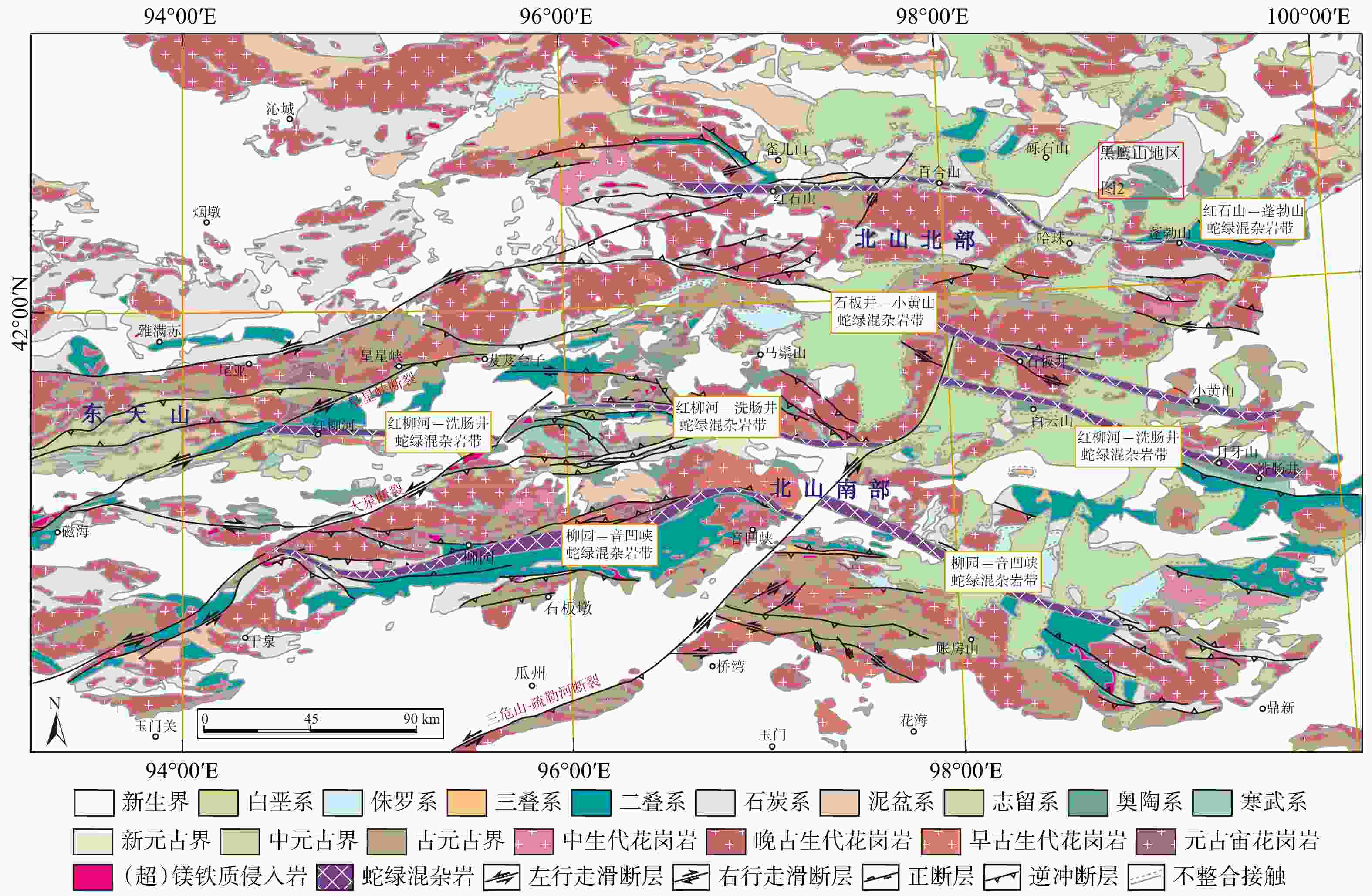
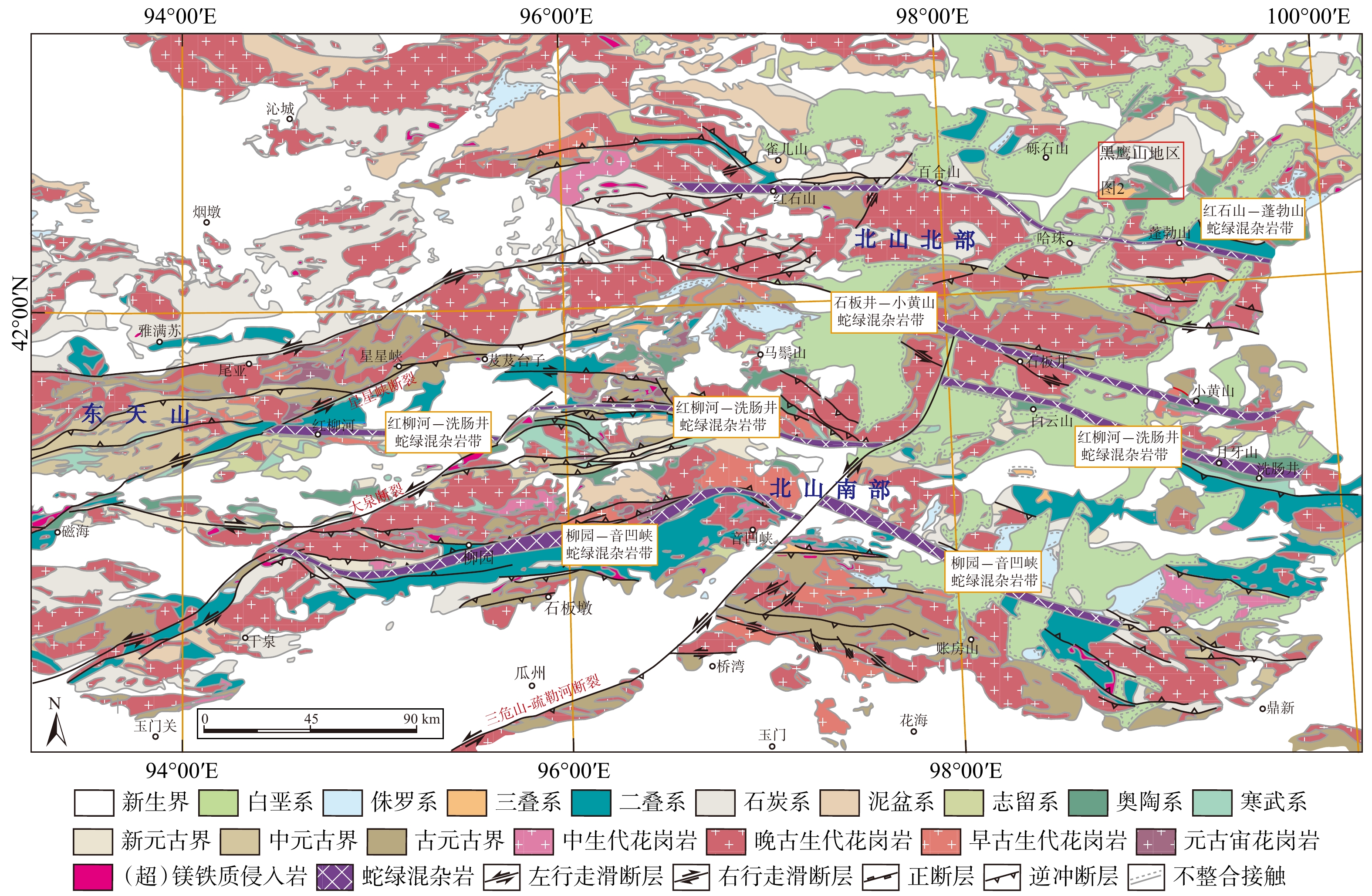
图 1 北山地区地质图(据Zhang and Cunningham,2012修改)
Figure 1. Geological map of the Beishan area (modified after Zhang and Cunningham, 2012)
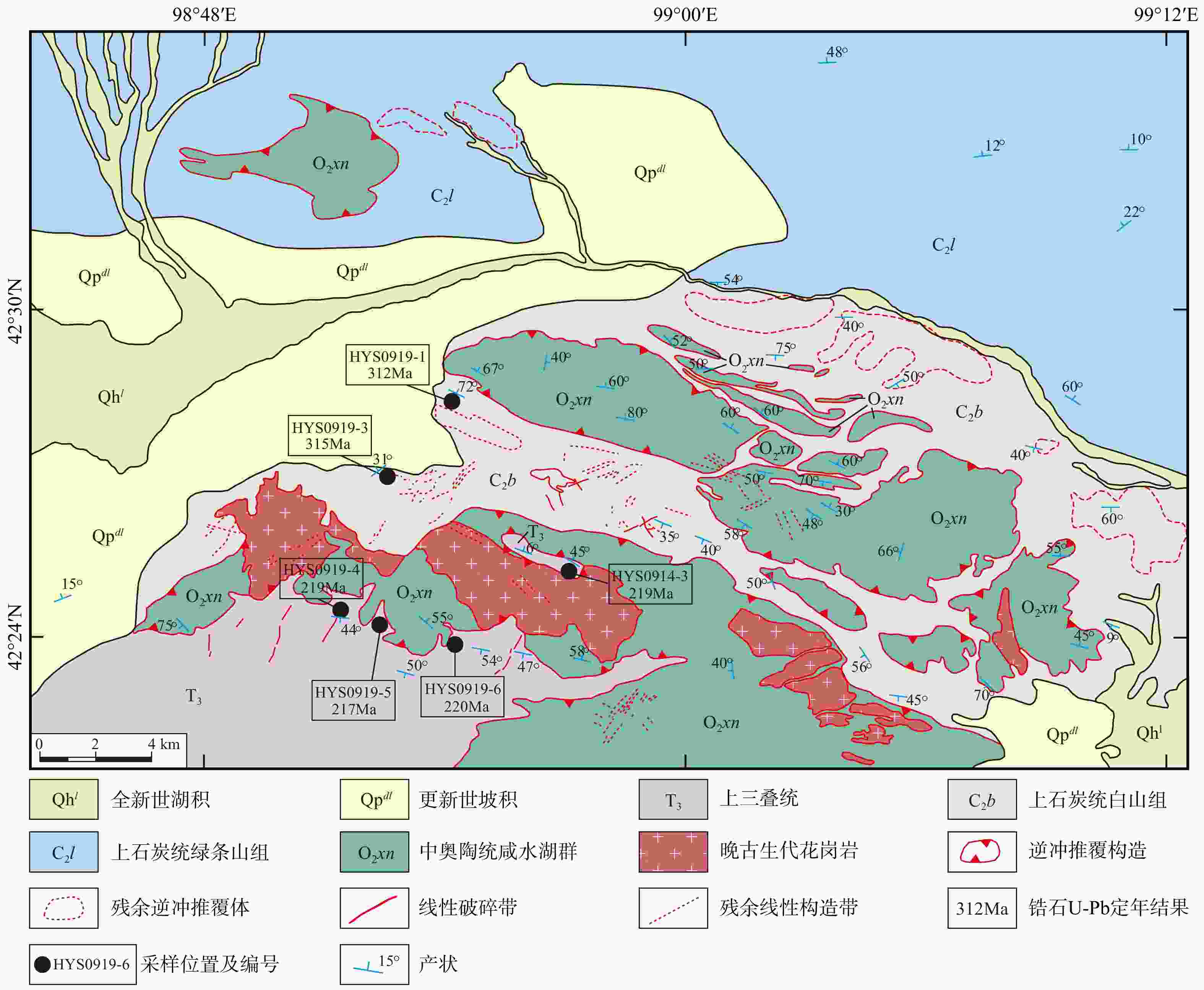
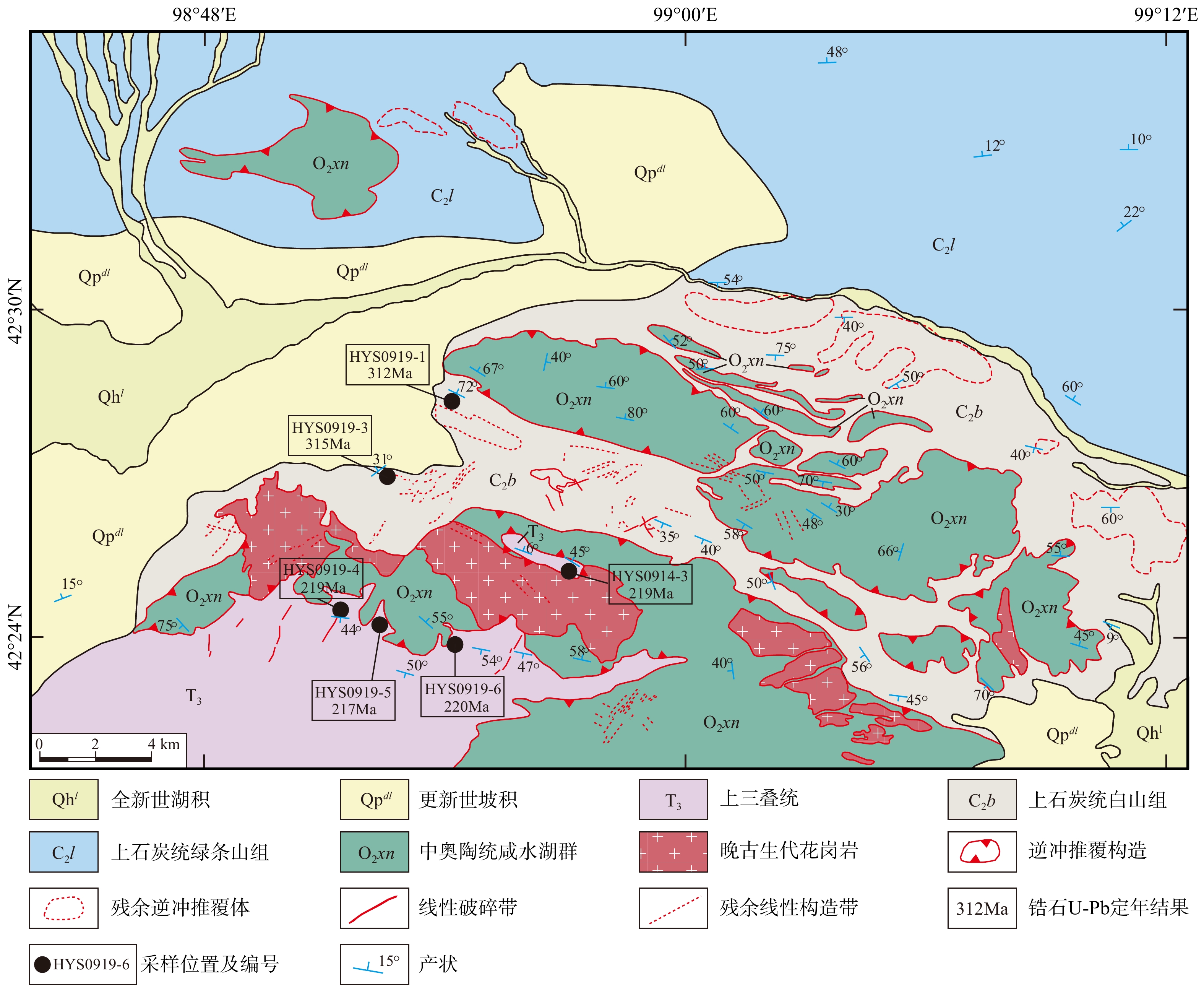
图 2 北山造山带北部黑鹰山地区地质图(底图据邵兆刚等,2024修改;年龄数据来源于邵兆刚等,2024)
Figure 2. Geological map of Heiyingshan area in the northern Beishan Orogenic Belt (modified after Shao et al., 2024; age data are cited from Shao et al., 2024)
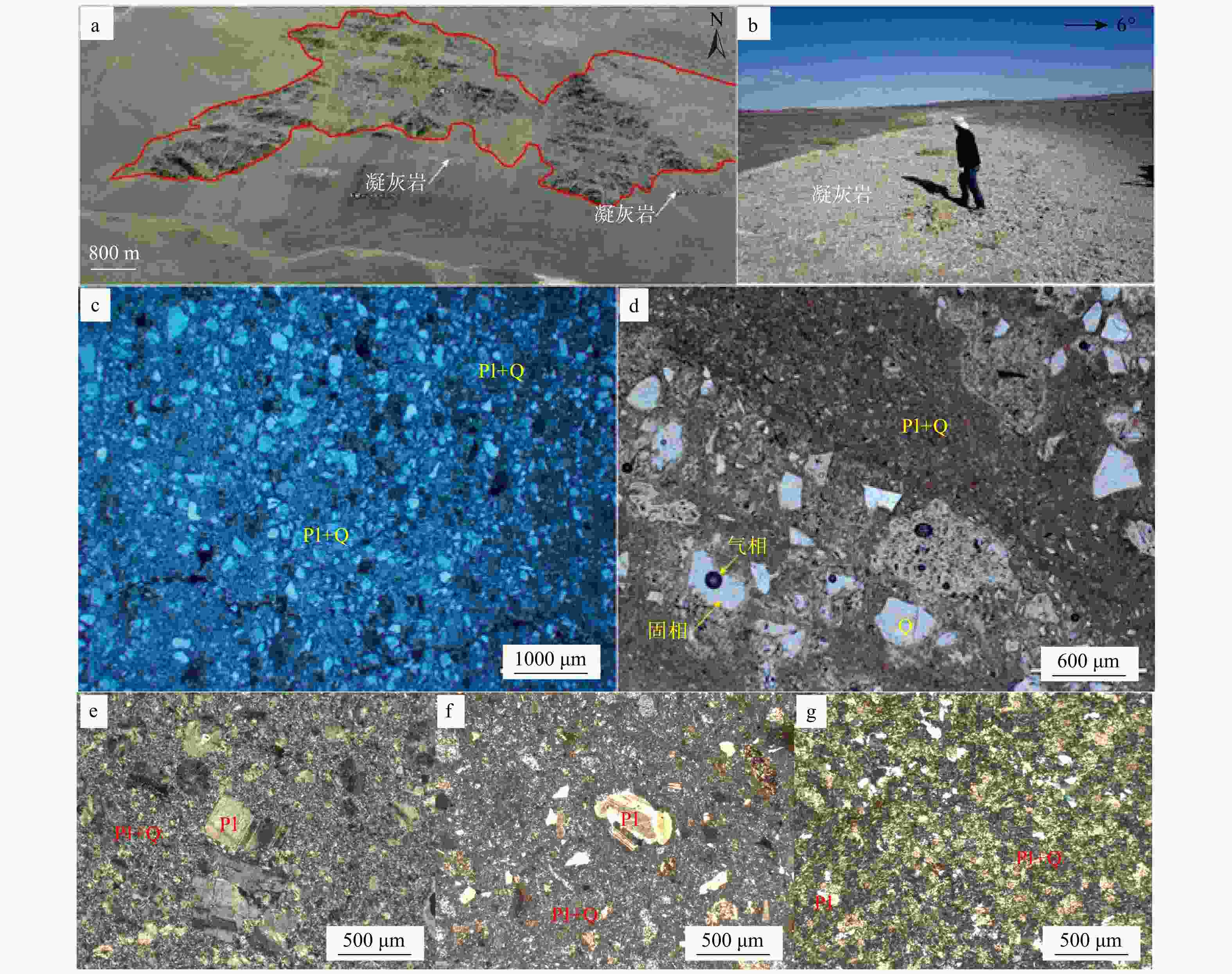
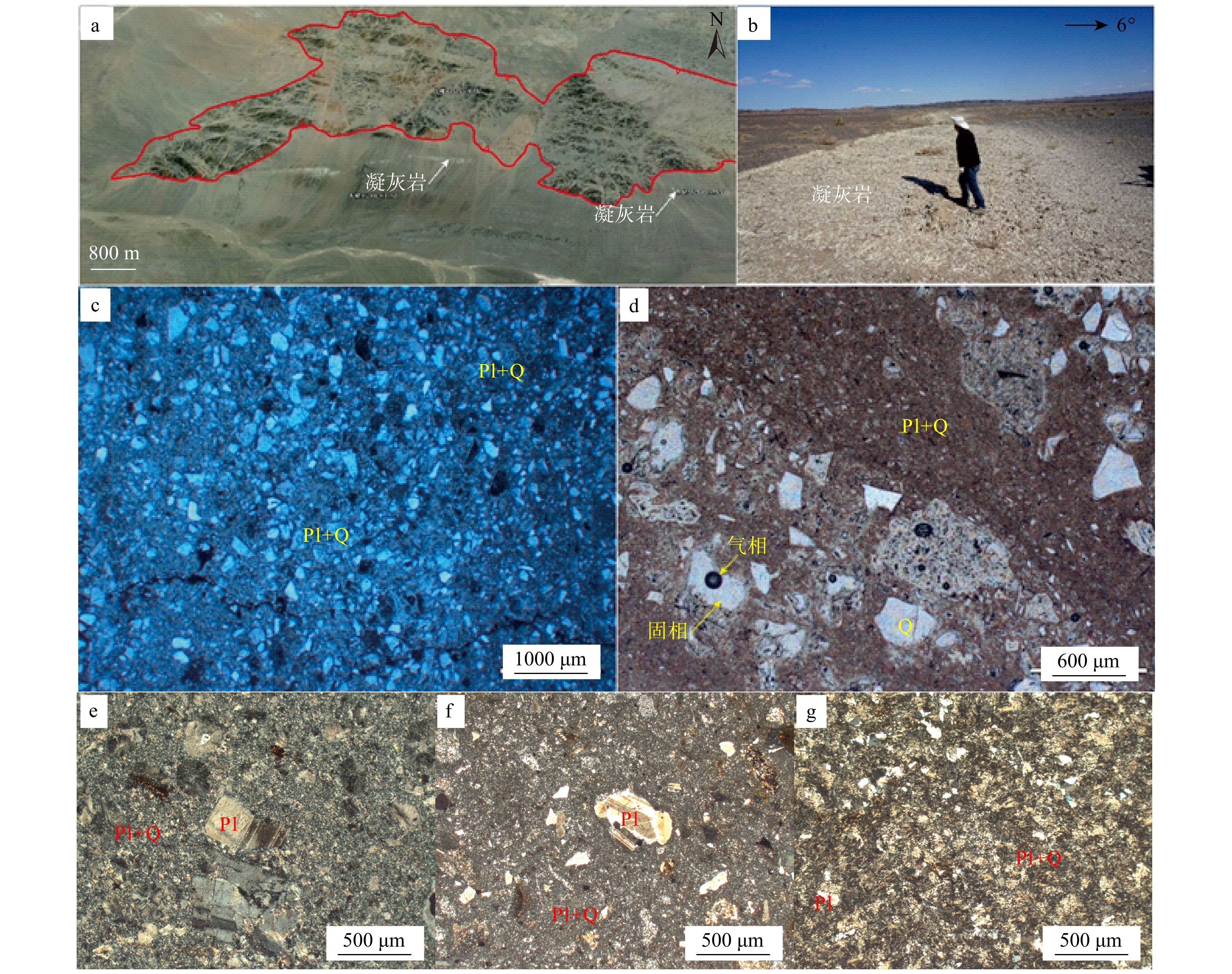
图 3 北山北部黑鹰山地区构造解译图、野外及岩石显微照片
Pl—斜长石;Q—石英a—黑鹰山凝灰岩与上覆推覆体构造关系;b—凝灰岩露头照片;c—晚三叠世流纹质晶屑凝灰岩显微照片(样品号:HYS0919-4);d—晚三叠世流纹质晶屑凝灰岩斑晶中的流体−熔体包裹体(样品号:HYS0919-5);e—晚三叠世流纹质晶屑凝灰岩显微照片(样品号:HYS0919-6);f—晚石炭世流纹质晶屑凝灰岩显微照片(样品号:HYS0919-1);g—晚石炭世流纹质晶屑凝灰岩显微照片(样品号:HYS0919-3)
Figure 3. Google Earth satellite image, field photo, and rock micrographs of the Heiyingshan area in northern Beishan
(a) Structural relationship between the tuff and the overlying nappe in the Heiyingshan area; (b) Field photograph of a tuff outcrop; (c) Microphotograph of a Late Triassic rhyolitic crystal tuff (sample no.:HYS0919-4); (d) Fluid-melt inclusion in phenocrysts of a Late Triassic rhyolitic crystal tuff (sample no.: HYS0919-5); (e) Microphotograph of a Late Triassic rhyolitic crystal tuff (sample no.: HYS0919-6); (f) Microphotograph of a Late Carboniferous rhyolitic crystal tuff (sample no.: HYS0919-1); (g) Microphotograph of a Late Carboniferous rhyolitic crystal tuff (sample no.: HYS0919-3) Pl—plagioclase; Q—quartz
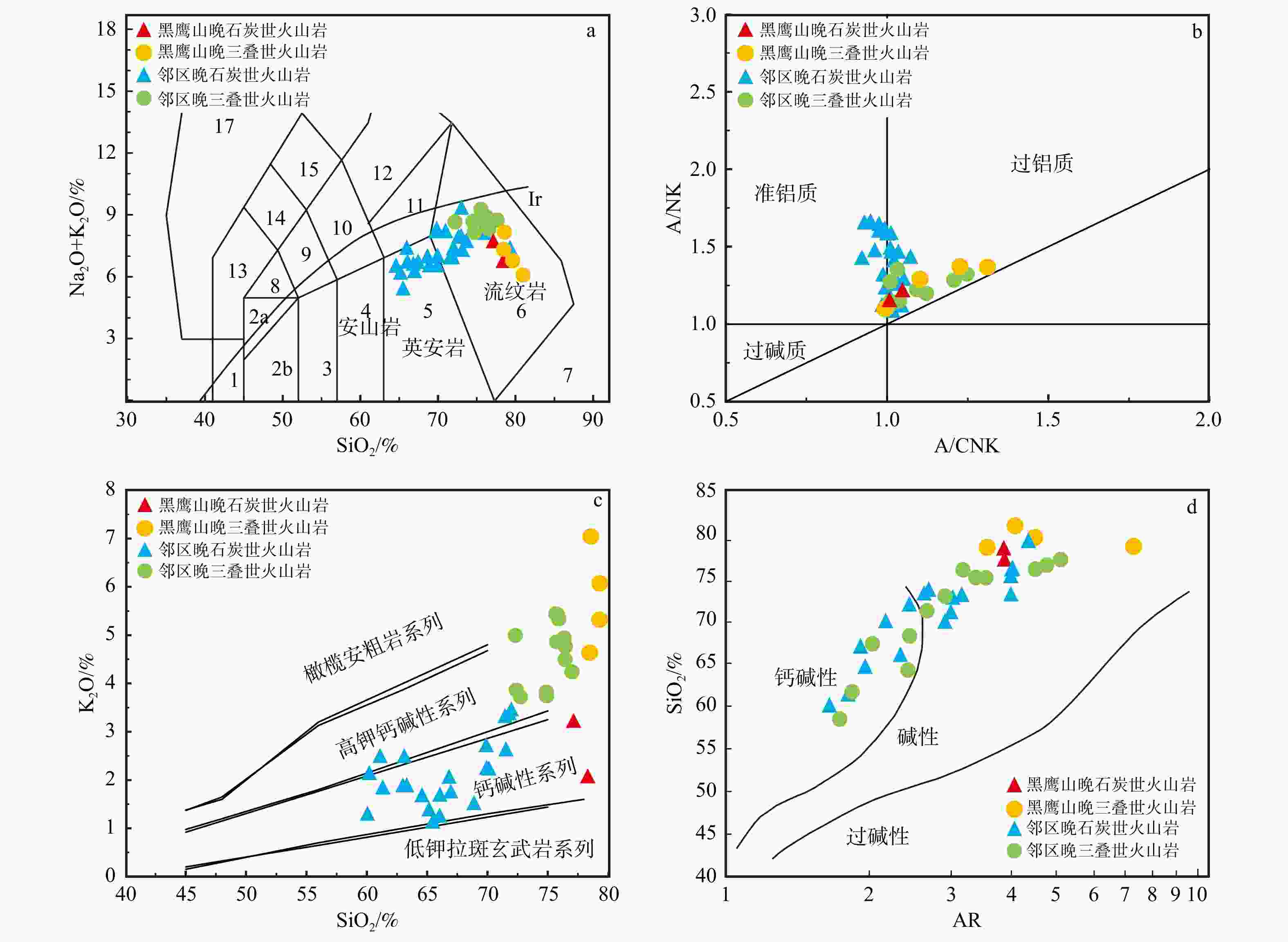
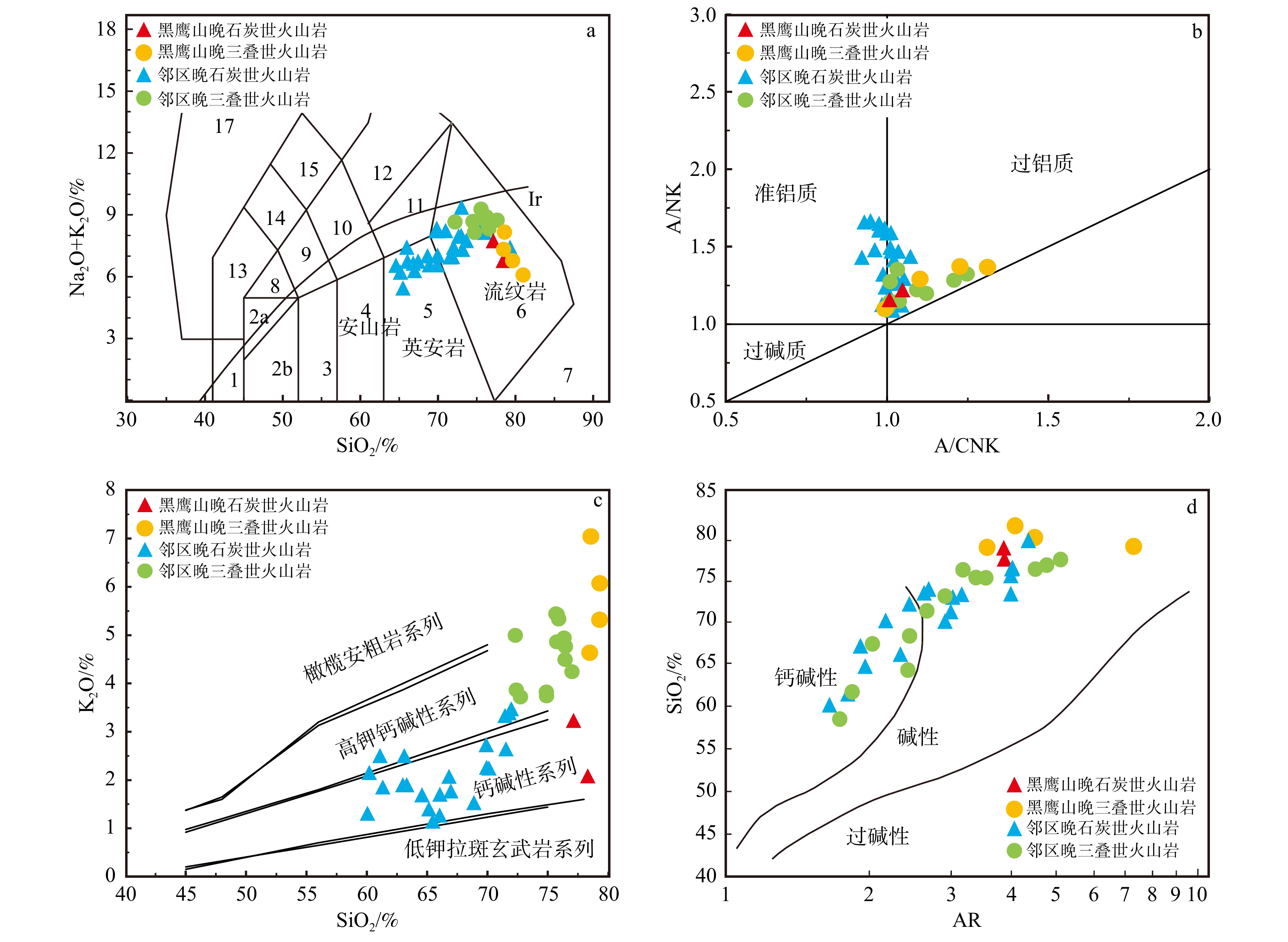
图 4 黑鹰山及邻区火山岩主量元素地球化学特征
邻区晚石炭世火山岩数据引自文献郝增元等(2020)、李敏等(2018)、徐旭明等(2018)、朱炜等(2019);邻区晚三叠世火山岩数据引自黄增保等(2011)、李敏等(2020)、杨镇熙等(2021);图a中数字代表不同火山岩类型:1—玄武岩;2a—玄武安山岩;2b—低碱玄武岩;3—安山岩;4—英安岩;5—流纹岩;6—碱性流纹岩;7—粗面岩;8—粗面安山岩;9—碱性粗面安山岩;10—粗面英安岩;11—碱性粗面岩;12—响岩;13—碱性玄武岩;14—霞石粗面岩;15—霞石岩;Ir—Irvine分界线,用于区分碱性与亚碱性系列(Bas et al., 1986)a—TAS图解(Bas et al.,1986);b—A/CNK-A/NK图解(Maniar and Piccoli,1989);c—K2O-SiO2图解(Peccerillo and Taylor,1976);d—SiO2-AR图解(Wright,1969)
Figure 4. Major element geochemical characteristics of volcanic rocks in the Heiyingshan and adjacent areas
(a) TAS diagram of volcanic rocks (Bas et al., 1986); (b) A/CNK–A/NK diagram (Maniar and Piccoli, 1989); (c) K2O–SiO2 diagram (Peccerillo and Taylor, 1976); (d) SiO2–AR diagram (Wright, 1969) The data of Late Carboniferous volcanic rocks in adjacent areas are cited from Hao et al., 2020; Li et al., 2018; Xu et al., 2018; Zhu et al., 2019; the data of Late Triassic volcanic rocks in adjacent areas are cited from Huang et al., 2011; Li et al., 2020; Yang et al., 2021. In panel (a), numbers correspond to different volcanic rock fields: 1—basalt; 2a—basaltic andesite; 2b—basaltic andesite (low-SiO2); 3—andesite; 4—dacite; 5—rhyolite; 6—alkaline rhyolite; 7—trachyte; 8—trachyandesite; 9—alkaline trachyandesite; 10—trachydacite; 11—alkaline trachyte; 12—phonolite; 13—tephrite/basanite; 14—phonotephrite; 15—foidite. Ir denotes the Irvine line separating alkaline and subalkaline series. after Bas et al. (1986)
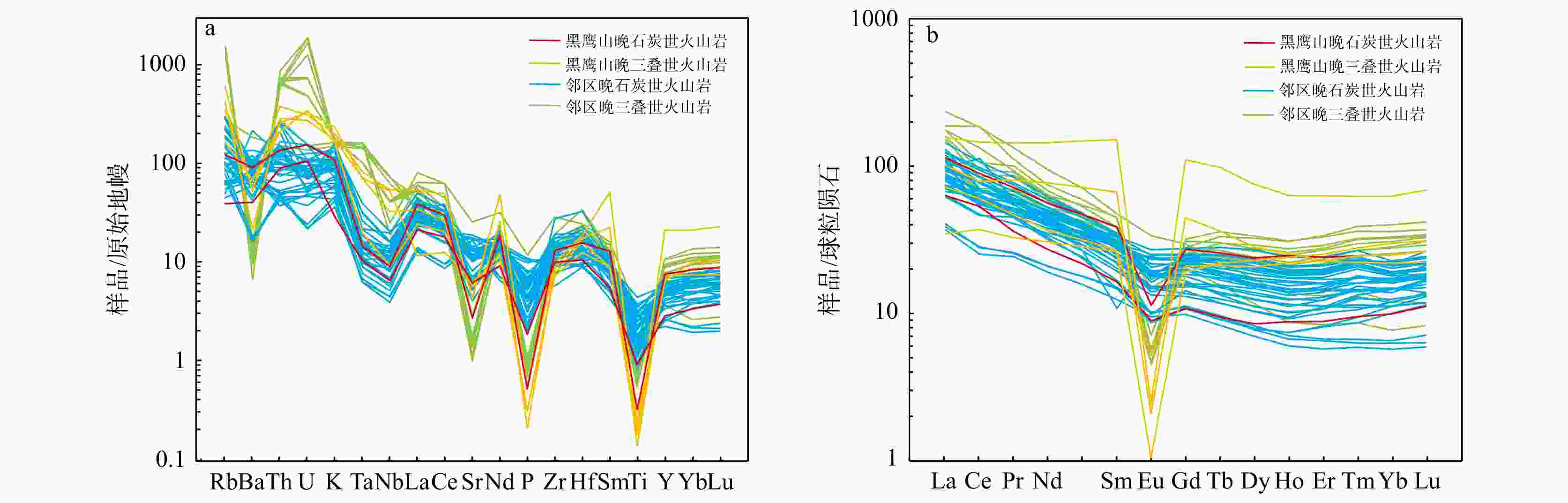
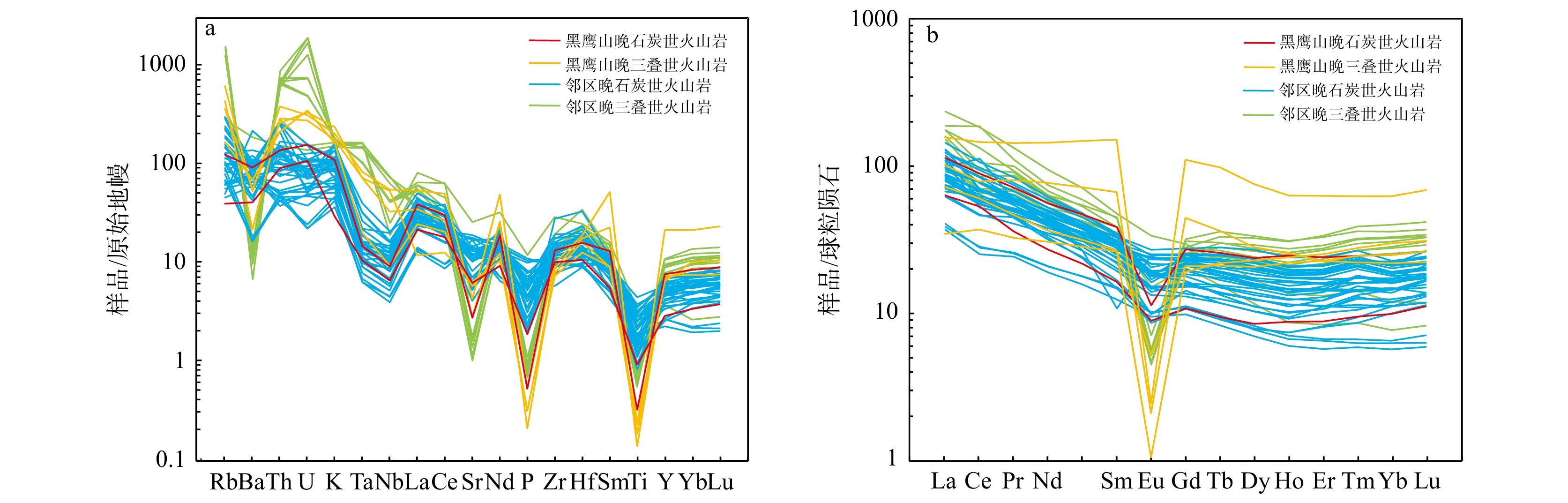
图 5 黑鹰山及邻区火山岩微量元素地球化学特征
邻区晚石炭世火山岩数据引自文献郝增元等(2020)、李敏等(2018)、徐旭明等(2018)、朱炜等(2019);邻区晚三叠世火山岩数据黄增保等(2011)、李敏等(2020)、杨镇熙等(2021)a—原始地幔标准化微量元素蛛网图;b—球粒陨石标准化稀土配分曲线(原始地幔值和球粒陨石据Sun and McDonough,1989)
Figure 5. Trace element geochemical characteristics of volcanic rocks in the Heiyingshan and adjacent areas
(a) Primitive mantle-normalized trace element spider diagram; (b) Chondrite-normalized REE patterns (chondrite and primitive mantle values are from Sun and McDonough, 1989) The data of Late Carboniferous volcanic rocks in adjacent areas are cited from Hao et al., 2020; Li et al., 2018; Xu et al., 2018; Zhu et al., 2019; the data of Late Triassic volcanic rocks in adjacent areas are cited from Huang et al., 2011; Li et al., 2020; Yang et al., 2021.
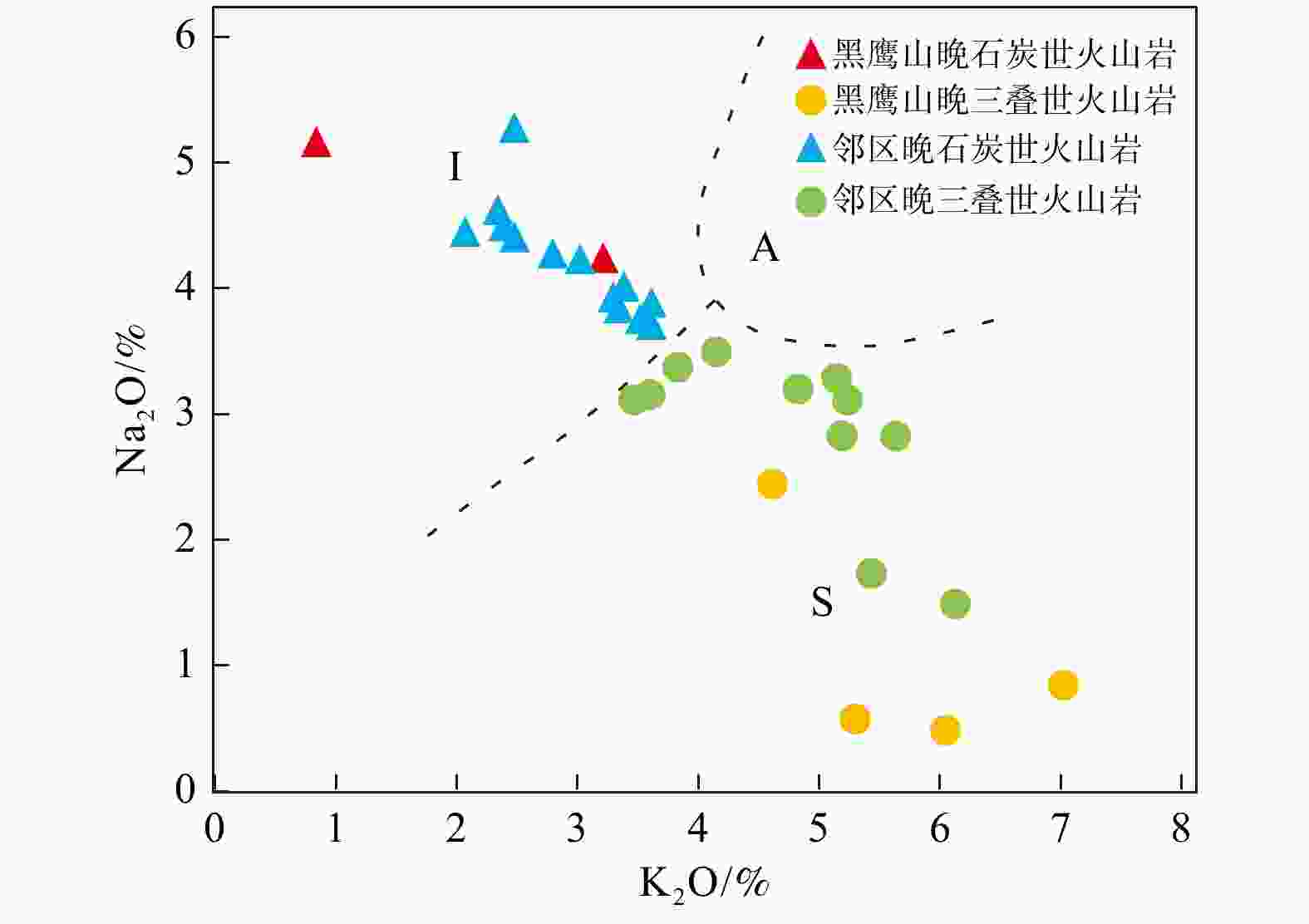
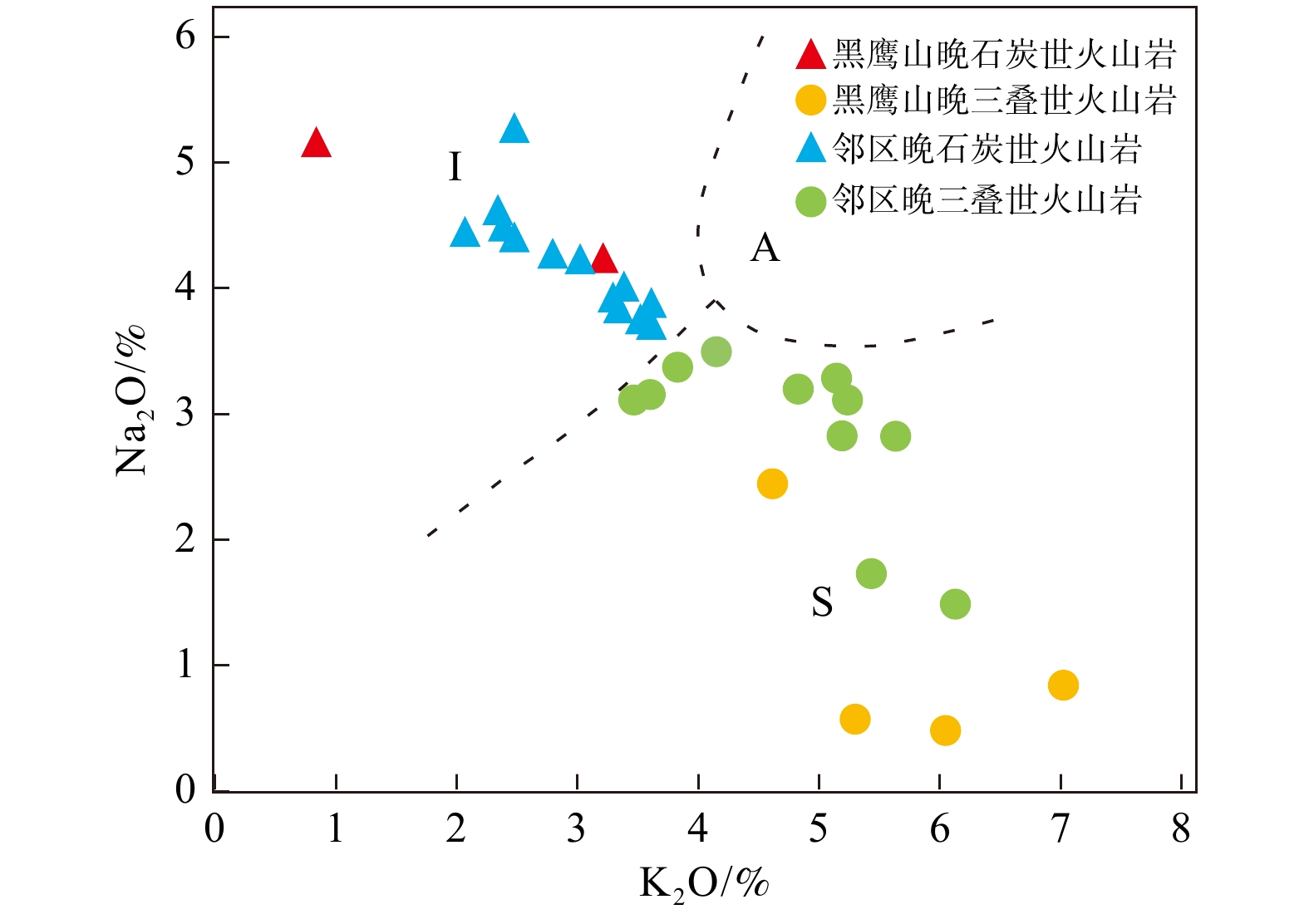
图 6 黑鹰山及邻区火山岩成因类型图解(底图据Collins et al.,1982)
邻区晚石炭世火山岩数据引自文献郝增元等(2020)、李敏等(2018)、徐旭明等(2018)、朱炜等(2019);邻区晚三叠世火山岩数据引自黄增保等(2011)、李敏等(2020)、杨镇熙等(2021)
Figure 6. Genetic discrimination diagram of volcanic rocks in the Heiyingshan and adjacent areas (base map after Collins et al., 1982)
The data of Late Carboniferous volcanic rocks in adjacent areas are cited from Hao et al., 2020; Li et al., 2018; Xu et al., 2018; Zhu et al., 2019; the data of Late Triassic volcanic rocks in adjacent areas are cited from Huang et al., 2011; Li et al., 2020; Yang et al., 2021.
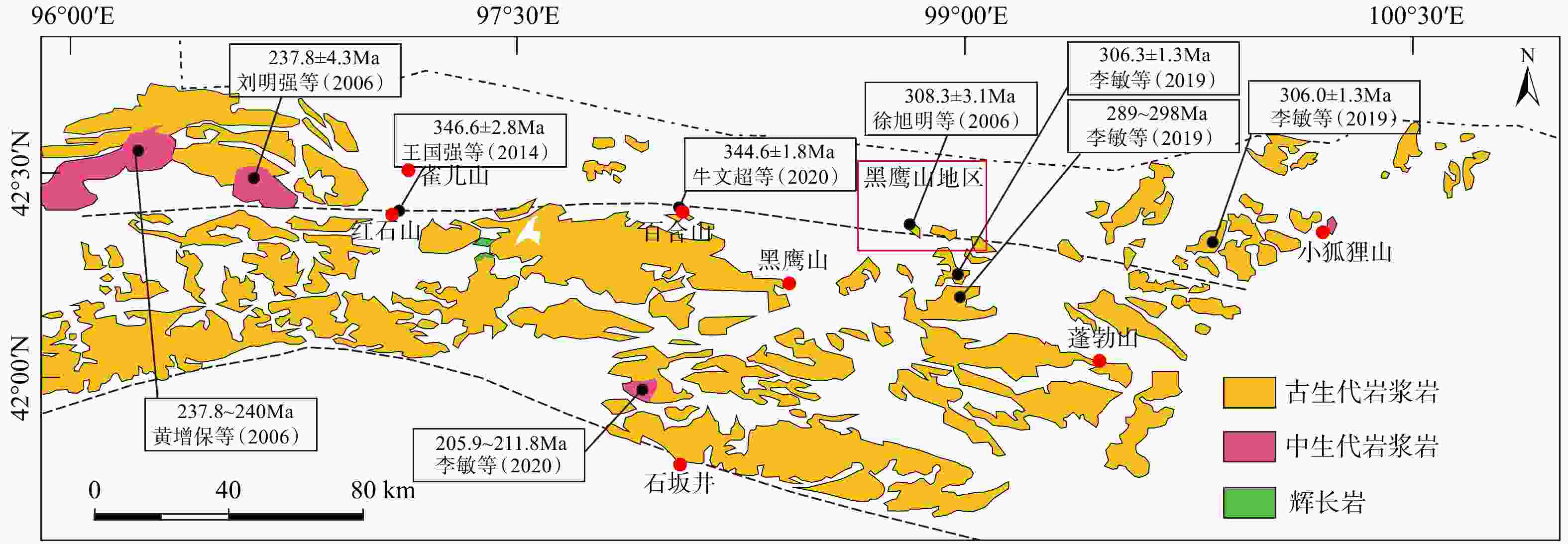
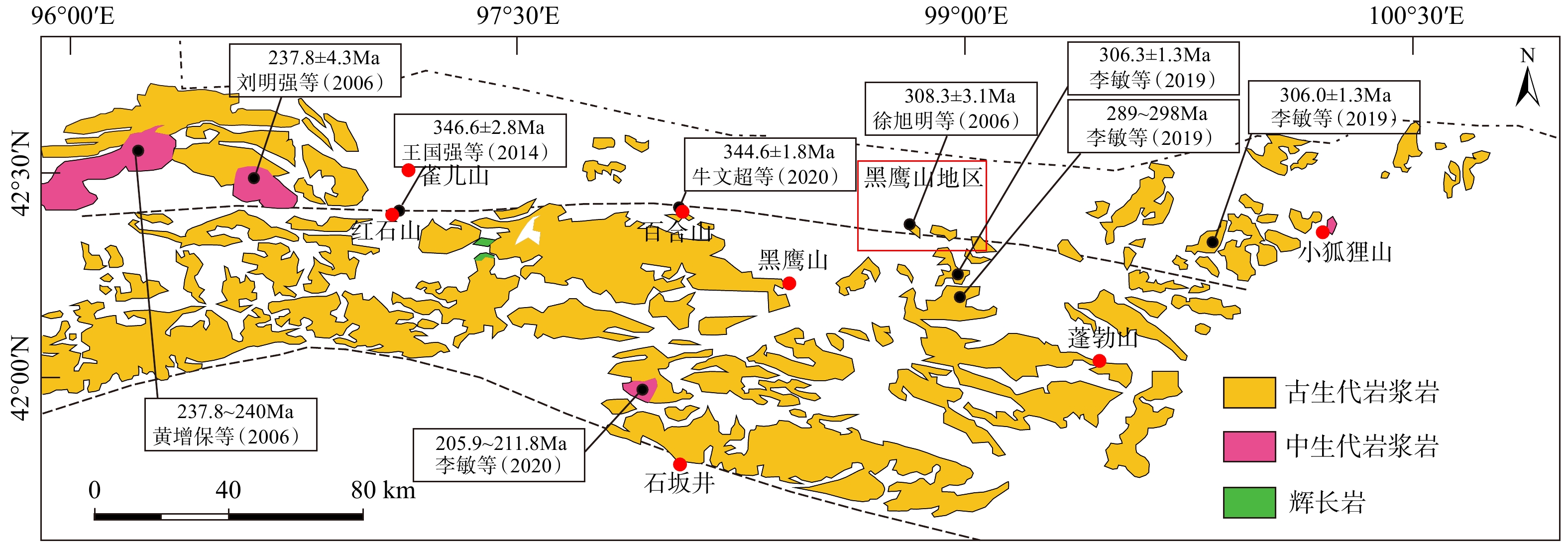
图 7 北山造山带北部岩浆岩分布图(卫彦升等,2020)
Figure 7. Simplified geological map showing the distribution of magmatic rocks in the northern Beishan Orogenic Belt (modified after Wei et al., 2020)
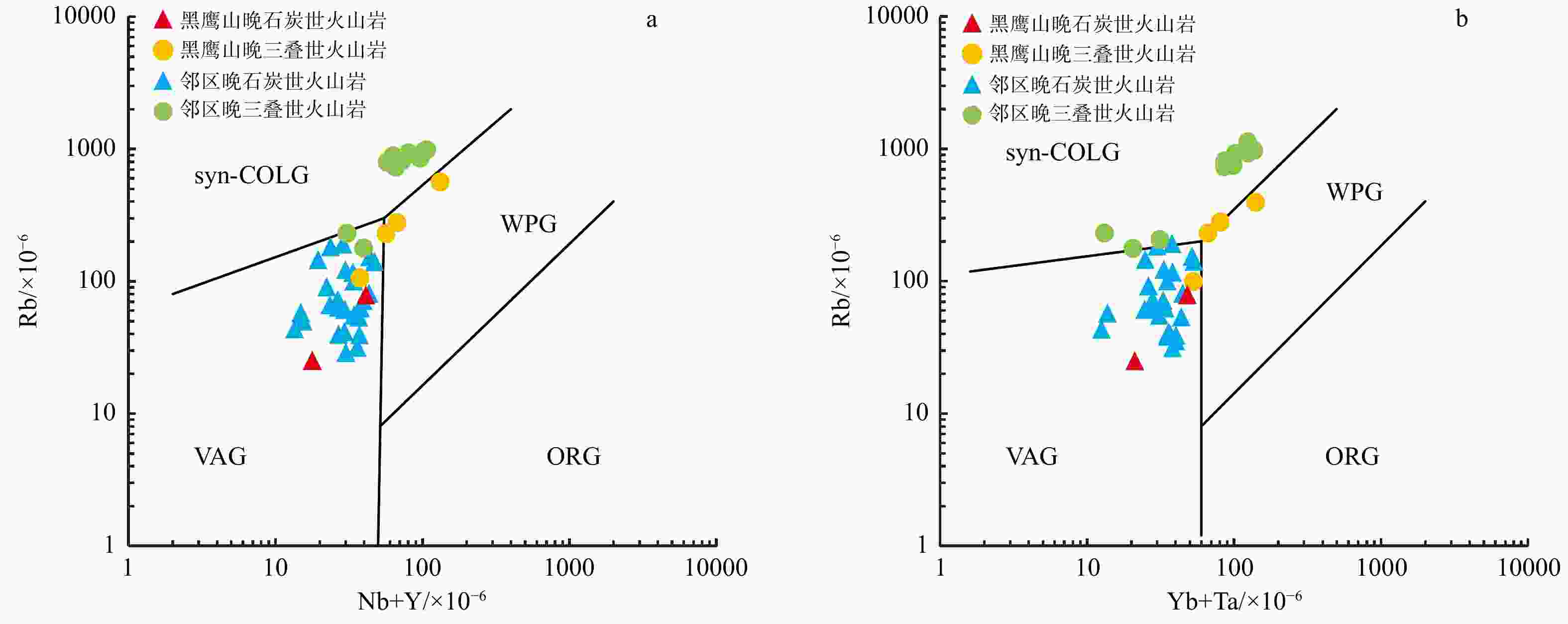
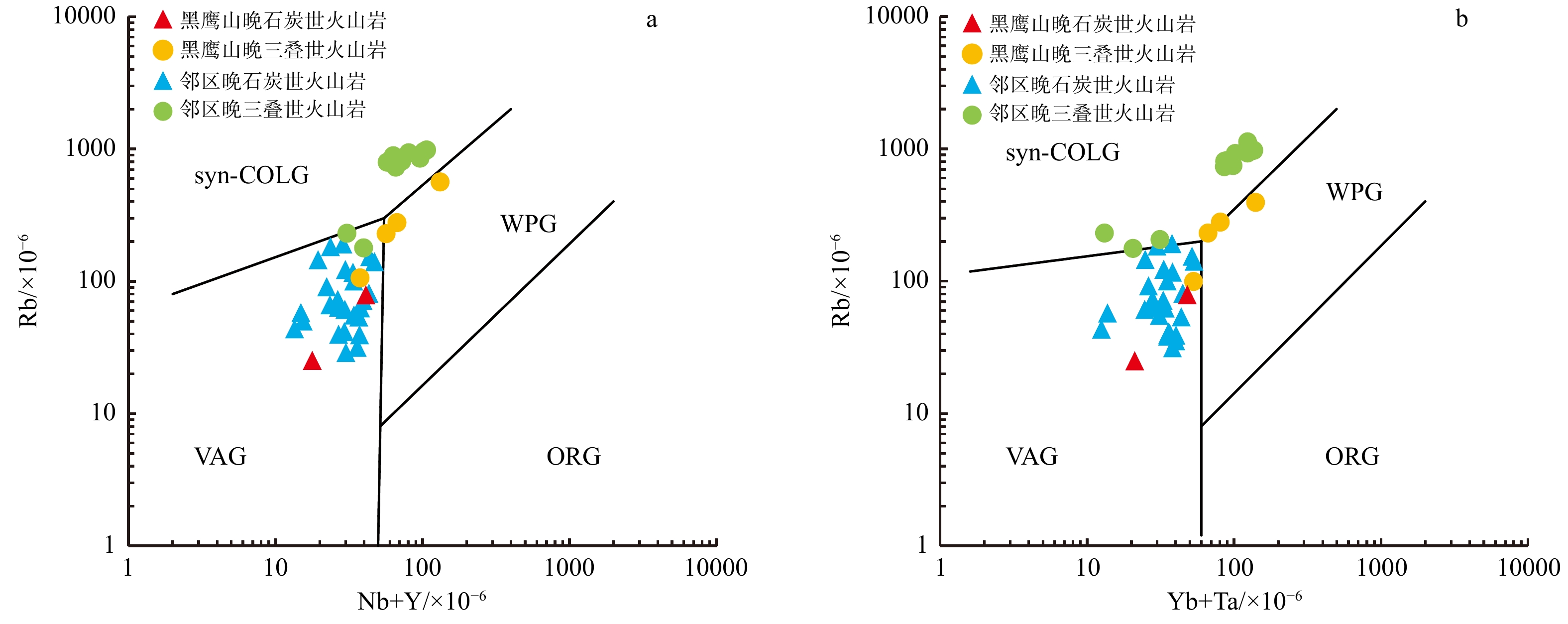
图 8 黑鹰山及邻区火山岩构造环境判别图
邻区晚石炭世火山岩数据引自文献郝增元等(2020)、李敏等(2018)、徐旭明等(2018)、朱炜等(2019);邻区晚三叠世火山岩数据引自黄增保等(2011)、李敏等(2020)、杨镇熙等(2021);WPG—板内环境;VAG—火山弧环境;syn-COLG—同碰撞环境;ORG—大洋中脊环境a—Rb-Nb+Y;b—Rb-Yb+Ta(底图据Pearce et al.,1984)
Figure 8. Tectonic discrimination diagrams for volcanic rocks in the Heiyingshan and adjacent areas
(a) Rb vs. Nb + Y; (b) Rb vs. Yb + Ta; (base map after Pearce et al., 1984) The data of Late Carboniferous volcanic rocks in adjacent areas are cited from Hao et al., 2020; Li et al., 2018; Xu et al., 2018; Zhu et al., 2019; the data of Late Triassic volcanic rocks in adjacent areas are cited from Huang et al., 2011; Li et al., 2020; Yang et al., 2021. WPG—within-plate environment; VAG—volcanic arc environment; syn-ORG—syn-collisional environment; ORG—mid-ocean ridge environment
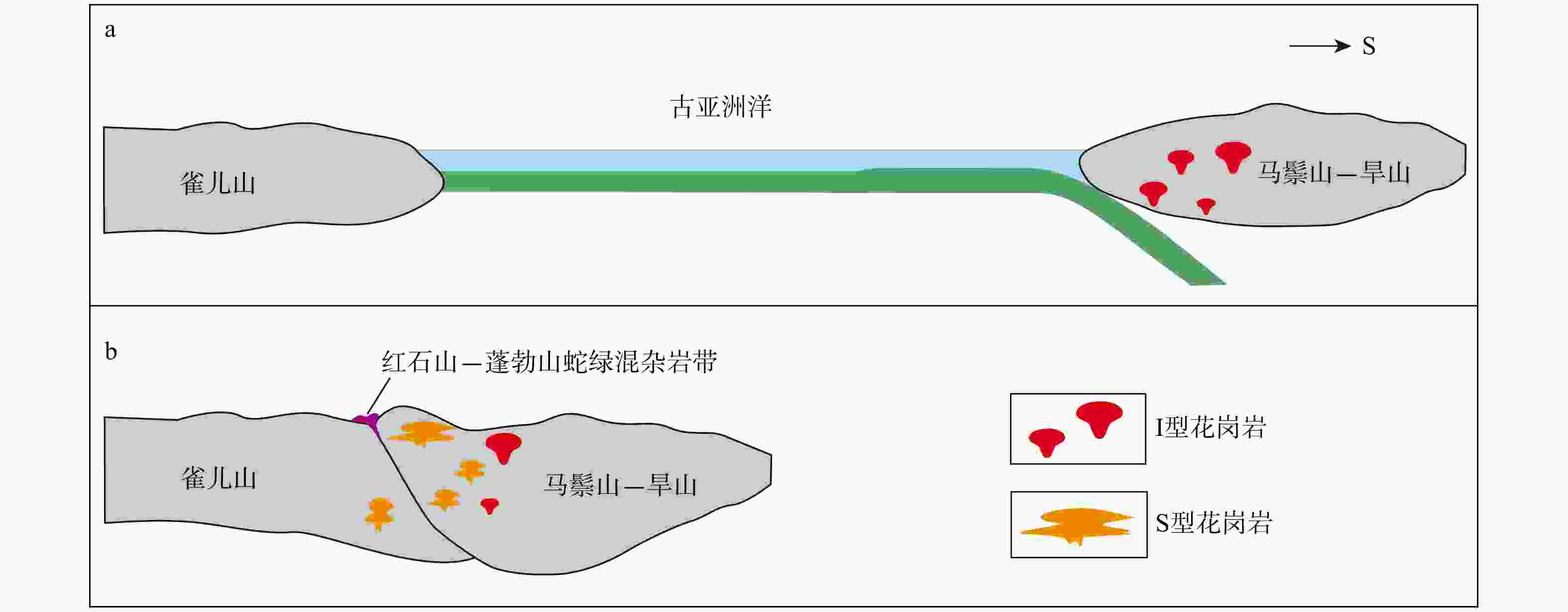
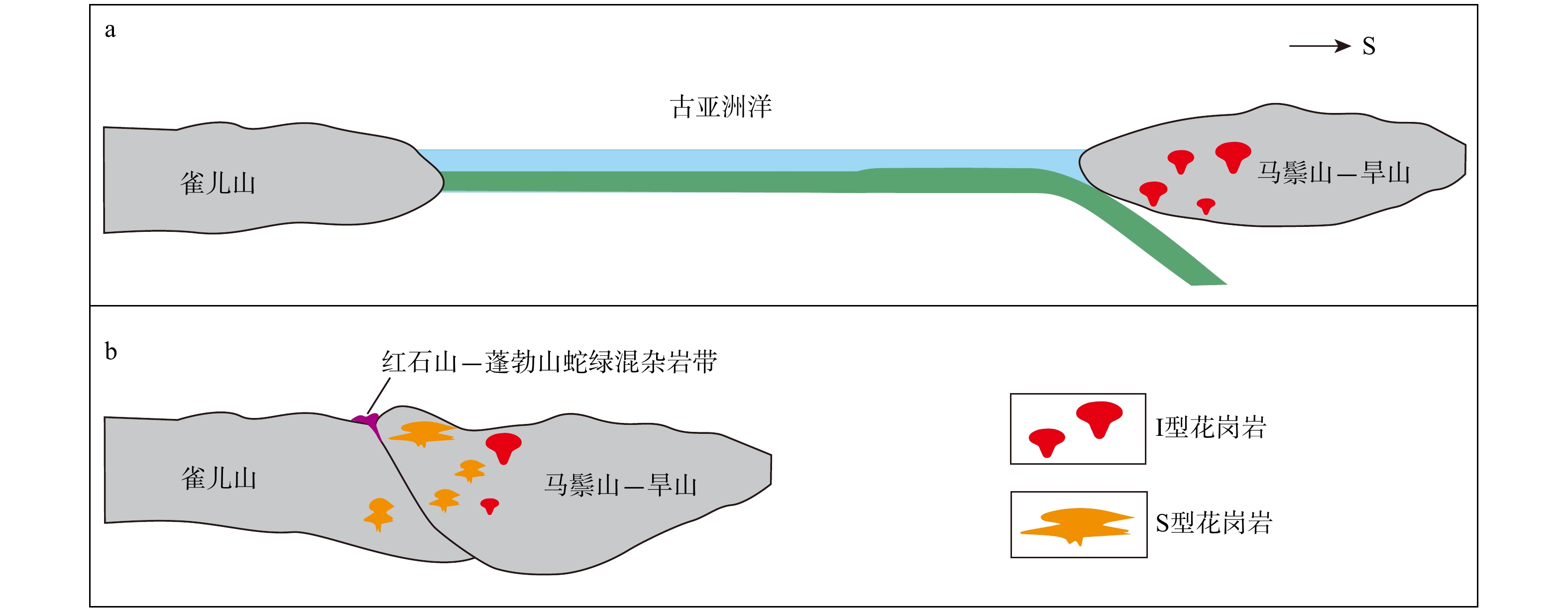
图 9 北山造山带北部构造演化模式图
a—晚石炭世古亚洲洋向南俯冲作用;b—晚三叠世碰撞作用
Figure 9. Schematic sketch of the tectonic evolution of the northern Beishan Orogenic Belt
(a) Late Carboniferous southward subduction of the Paleo-Asian Ocean; (b) Late Triassic collision
表 1 黑鹰山火山岩的主量元素(%)、微量元素(×10−6)和稀土元素(×10−6)分析结果
Table 1. Major (wt%) and trace and rare earth element (×10−6) compositions of volcanic rocks from the Heiyingshan area
样品号 HYS0919-1 HYS0919-3 HYS0919-4 HYS0919-5 HYS0919-6 HYS0914-3 SiO2 78.29 77.02 78.45 80.86 79.50 78.34 TiO2 0.20 0.07 0.03 0.05 0.05 0.04 Al2O3 11.49 12.00 9.82 9.26 9.57 12.39 Fe2O3T 1.52 1.37 0.89 0.76 0.66 0.56 MnO 0.06 0.03 0.01 0.01 0.01 0.02 MgO 0.38 0.07 0.15 0.43 0.17 0.13 CaO 0.81 0.65 0.56 0.43 0.71 0.18 Na2O 5.18 4.26 0.86 0.59 0.50 2.46 K2O 2.08 3.22 7.02 5.30 6.05 4.62 P2O5 0.04 0.01 <0.01 <0.01 <0.01 <0.01 烧失量 1.36 1.35 1.79 2.31 2.02 1.03 总量 100.18 100.05 99.58 100 99.24 99.77 Rb 25.00 78.70 228.00 276.00 388.00 105.50 Ba 284.00 641.00 385.00 151.00 367.00 480.00 Th 7.66 11.65 21.80 24.30 32.20 17.80 U 2.25 3.25 6.94 5.76 6.52 7.28 Ta 0.43 0.60 2.91 2.95 3.38 0.82 Nb 4.70 6.50 23.30 37.70 39.10 6.60 Sr 131.50 58.40 60.00 136.00 90.40 121.50 Zr 113.00 148.00 99.00 88.00 111.00 82.00 Hf 3.30 4.90 5.40 5.00 5.80 3.90 La 14.80 26.60 23.80 8.10 36.80 16.90 Ce 32.20 53.80 47.50 22.40 88.10 36.50 Pr 3.37 6.68 7.53 3.06 13.45 4.38 Nd 12.50 25.70 35.40 14.10 66.50 16.80 Sm 2.47 5.81 10.05 3.98 22.90 4.04 Eu 0.51 0.65 0.12 0.06 0.14 0.30 Gd 2.19 5.52 9.02 3.88 22.4 4.25 Tb 0.35 0.95 1.34 0.81 3.61 0.78 Dy 2.13 5.98 7.03 5.74 18.85 5.19 Ho 0.49 1.38 1.43 1.34 3.52 1.23 Er 1.44 3.93 3.70 4.13 10.25 3.72 Tm 0.24 0.62 0.56 0.70 1.57 0.62 Yb 1.67 4.17 3.69 5.03 10.50 4.19 Lu 0.28 0.66 0.56 0.78 1.72 0.66 Y 13.10 34.80 33.50 29.50 96.80 31.10 ΣREE 74.64 142.45 151.73 74.11 300.31 99.56 LREE/HREE 7.49 5.14 4.55 2.31 3.15 3.82 (La/Yb)N 6.36 4.58 4.63 1.16 2.51 2.89 δEu 0.66 0.35 0.04 0.05 0.02 0.22 注:δEu=Eu/(SmN×GdN)1/2(Taylor and McLennan,1985);其中下标N为球粒陨石标准化值(Sun and McDonough,1989)  下载: 导出CSV
-
[1] AO S J, XIAO W J, HAN C M, et al., 2010. Geochronology and geochemistry of Early Permian mafic–ultramafic complexes in the Beishan area, Xinjiang, NW China: implications for late Paleozoic tectonic evolution of the southern Altaids[J]. Gondwana Research, 18(2-3): 466-478. [2] BAS M J L, MAITRE R W L, STRECKEISEN A, et al., 1986. A chemical classification of volcanic rocks based on the total Alkali-silica diagram[J]. Journal of Petrology, 27(3): 745-750. [3] BONIN B, 2007. A-type Granites and related rocks: evolution of a concept, problems and prospects[J]. Lithos, 97(1-2): 1-29. doi: 10.1016/j.lithos.2006.12.007 [4] CHEN D Q, CHEN G, 1990. Shiyong xitu yuansu diqiuhua xue [M]. Beijing: Metallurgical Industry Press. (in Chinese) [5] COLLINS W J, BEAMS S D, WHITE A J R, et al., 1982. Nature and origin of a-type granites with particular reference to southeastern Australia[J]. Contributions to Mineralogy and Petrology, 80(2): 189-200. [6] DU Q X, WU S N, ZHANG Y, et al., 2023. Zircon U-Pb ages and geochemistry of volcanic rocks from the baishan formation in the Yuanbaoshan-Xirehada area in Beishan orogenic collage, Inner Mongolia, NW China, and implications for the subduction history of the Paleo-Asian ocean[J]. Geological Bulletin of China, 42(11): 1875-1893. (in Chinese with English abstract) [7] GREEN T H, PEARSON N J, 1987. An experimental study of Nb and Ta partitioning between Ti-rich minerals and silicate liquids at high pressure and temperature[J]. Geochimica et Cosmochimica Acta, 51(1): 55-62. [8] HAO Z Y, GAO J, WANG C, et al., 2020. LA-ICP-MS Zircon U-Pb dating and tectonic setting of the monzogranites in the Fengleishan area of Beishan orogenic belt, Inner Mongolia[J]. Geology in China, 47(4): 1204-1219. (in Chinese with English abstract) [9] HE S P, ZHOU H W, REN B C, et al., 2005. Crustal evolution of palaeozoic in Beishan Area, Gansu and Inner Mongolia, China[J]. Northwestern Geology, 38(3): 6-15. (in Chinese with English abstract) [10] HUANG Z B, JIN X, LI B H, et al., 2011. Petrological and geochemical characteristics of indosinian granites in Hongshishan Area, Gansu province and discussion on its genesis[J]. Northwestern Geology, 44(1): 10-19. (in Chinese with English abstract) [11] JAHN B M, 2004. The central Asian orogenic belt and growth of the continental crust in the Phanerozoic[J]. Geological Society, London, Special Publications, 226(1): 73-100. [12] JI W H, LI R S, CHEN F N, et al., 2020. Tectonic reconstruction of northwest China in the Nanhua-Paleozoic and discussions on key issues[J]. Journal of Geomechanics, 26(5): 634-655. (in Chinese with English abstract) [13] LI C N, 1992. Huochengyan weiliang yuansu yanshixue [M]. Wuhan: China University of Geosciences Press. (in Chinese) [14] LI J, 2023. Tectonic history of the Beishan orogen: constraints from high-pressure metamorphic rocks and magmatic evolution[D]. Beijing: China University of Geosciences (Beijing). (in Chinese with English abstract) [15] LI M, REN B F, TENG X J, et al., 2018. Geochemical characteristics, zircon U-Pb age and Hf isotope and geological significance of granitoid in Beishan orogenic belt[J]. Earth Science, 43(12): 4586-4605. (in Chinese with English abstract) [16] LI M, XIN H T, REN B F, et al., 2019. Petrogenesis and tectonic significance of the late Palaeozoic granitoids in Hazhu Area, Inner Mongolia[J]. Earth Science, 44(1): 328-343. (in Chinese with English abstract) [17] LI M, REN B F, DUAN X L, et al., 2020. Petrogenesis of Triassic granites in Xiaohongshan Area, Beishan orogenic belt: constraints from the Zircon U-Pb ages and Hf isotopes[J]. Geological Bulletin of China, 39(9): 1422-1435. (in Chinese with English abstract) [18] LI R W, ZHANG X, SHI Q, et al., 2020. Early Permian to late Triassic tectonics of the southern central Asian orogenic belt: geochronological and geochemical constraints from gabbros and granites in the northern Alxa area, NW China[J]. Geological Magazine, 157(12): 2089-2105. [19] LI S, WANG T, WILDE S A, et al. , 2012. Geochronology, petrogenesis and tectonic implications of Triassic granitoids from Beishan, NW China[J]. Lithos, 134-135: 123-145. [20] LI S, 2013. Triassic granitoids in Beishan-Inner Mongolia, China and its tectonic implications[D]. Beijing: Chineses Academy of Geological Sciences. (in Chinese with English abstract) [21] LIU M Q, WANG J J, DAI W J, 2006. The U-Pb age of Single-grained zircon from Maanshanbei granite in Hongshishan area of the Beishan orogenic belt, Gansu province[J]. Acta Petrologica et Mineralogica, 25(6): 473-479. (in Chinese with English abstract) [22] MANIAR P D, PICCOLI P M, 1989. Tectonic discrimination of granitoids[J]. GSA Bulletin, 101(5): 635-643. [23] MAO Q G, XIAO W J, WINDLEY B F, et al., 2012. The Liuyuan complex in the Beishan, NW China: a carboniferous–permian ophiolitic fore-arc sliver in the southern Altaids[J]. Geological Magazine, 149(3): 483-506. [24] MAO Q G, XIAO W J, WANG H, et al., 2022. Prolonged late Mesoproterozoic to late Triassic tectonic evolution of the major Paleo-Asian Ocean in the Beishan orogen (NW China) in the southern Altaids[J]. Frontiers in Earth Science, 9: 825852. [25] MAO Q G, XIAO W J, AO S J, et al., 2023. Final amalgamation processes of the southern altaids: insights from the triassic houhongquan ophiolitic mélange in the beishan orogen (NW China)[J]. Lithosphere, 2023(1): 1988410. [26] MCCULLOCH M T, WASSERBURG G J, 1978. Sm-Nd and Rb-Sr chronology of continental crust formation[J]. science, 200(4345): 1003-1011. [27] MIAO L C, ZHU M S, ZHANG F Q, 2014. Tectonic setting of Mesozoic magmatism and associated metallogenesis in Beishan area[J]. Geology in China, 41(4): 1190-1204. (in Chinese with English abstract) [28] NIU W C, XIN H T, DUAN L F, et al., 2020. Geochemical characteristics, zircon U-Pb age of SSZ ophiolite in the Baiheshan area of the Beishan orogenic belt, Inner Mongolia, and its indication for the evolution of the Paleo-Asian ocean[J]. Geological Bulletin of China, 39(9): 1317-1329. (in Chinese with English abstract) [29] NIU Y Z, LU J C, WEI J S, et al., 2014. Chronology of the Lütiaoshan formation in the Beishan area and its tectonic significances[J]. Geological Review, 60(3): 567-576. (in Chinese with English abstract) [30] PEARCE J A, HARRIS N B W, TINDLE A G, 1984. Trace element discrimination diagrams for the tectonic interpretation of granitic rocks[J]. Journal of Petrology, 25(4): 956-983. [31] PECCERILLO A, TAYLOR S R, 1976. Geochemistry of eocene Calc-alkaline volcanic rocks from the Kastamonu area, northern Turkey[J]. Contributions to Mineralogy and Petrology, 58(1): 63-81. [32] PITCHER W S, ATHERTON M P, COBBING E J, 1985. Magmatism at a Plate Edge: The Peruvian Andes[M]. Glasgow: Blackie, 19-25. [33] SANG L K, MA C Q, WANG G Q, et al. , 2012. Petrology[M]. 2nd ed. Beijing: Geological Publishing House. (in Chinese) [34] SHAO Z G, CHEN X H, WANG Z Z, et al., 2024. Characteristics of Heiyingshan late Triassic thrust nappe structure in the Beishan orogenic belt and its constraint on the evolution of the orogenic belt[J]. Geological Bulletin of China, 43(11): 1893-1906. (in Chinese with English abstract) [35] SOLDNER J, YUAN C, SCHULMANN K, et al., 2020. Grenvillean evolution of the Beishan orogen, NW China: implications for development of an active Rodinian margin[J]. GSA Bulletin, 132(7-8): 1657-1680. [36] SONG D F, XIAO W J, WINDLEY B F, et al. , 2015. A Paleozoic Japan-type Subduction-accretion system in the Beishan orogenic collage, southern central Asian orogenic belt[J]. Lithos, 224-225: 195-213. [37] SONG D F, XIAO W J, AO S J, et al., 2024. Contemporaneous closure of the Paleo-Asian Ocean in the Middle-Late Triassic: A synthesis of new evidence and tectonic implications for the final assembly of Pangea[J]. Earth-Science Reviews, 2024, 253: 104771. [38] SONG D F, XIAO W J, ZENG H, et al., 2024. Accretionary orogenic processes of the Beishan orogenic belt[J]. Geological Bulletin of China, 43(12): 2131-2150. (in Chinese with English abstract) [39] SU H, CHEN X H, YU X Q, et al., 2023. Triassic nappe in the central part of the southern Central Asian Orogenic Belt (Ejinaq, NW China): evidence from structural analysis and geothermochronology[J]. Acta Geologica Sinica-English Edition, 97(1): 13-34. [40] SUN S S, 1980. Lead Isotopic Study of young volcanic rocks from mid-ocean ridges, ocean islands and island Arcs[J]. Proceedings of the Royal Society A: Mathematical, Physical and Engineering Sciences, 297(1431): 409-445. [41] SUN S S, MCDONOUGH W F, 1989. Chemical and isotopic systematics of oceanic basalts: implications for mantle composition and processes[J]. Geological Society, London, Special Publications, 42: 313-345. [42] TAYLOR S R, MCLENNAN S M, 1985. The continental crust: its composition and evolution[M]. Oxford: Blackwell Scientific Publications. [43] WANG D Z, ZHOU J C, 1999. Look back and look forward to granite research[J]. Acta Petrologica Sinica, 15(2): 161-169. (in Chinese with English abstract) [44] WANG G Q, LI X M, XU X Y, et al., 2014. Zircon U-Pb chronological study of the Hongshishan ophiolite in the Beishan area and their tectonic significance[J]. Acta Petrologica Sinica, 30(6): 1685-1694. (in Chinese with English abstract) [45] WANG K, XIAO W J, WINDLEY B F, et al., 2022. The Dashui subduction complex in the eastern Tianshan-Beishan orogen (NW China): long-lasting subduction-accretion terminated by unique mid-triassic strike-slip juxtaposition of arcs in the southern altaids[J]. Tectonics, 41(6): e2021TC007190. [46] WANG X Y, YUAN C, ZHANG Y Y, et al., 2018. S-type granite from the gongpoquan arc in the Beishan orogenic collage, southern Altaids: implications for the tectonic transition[J]. Journal of Asian Earth Sciences, 153: 206-222. [47] WEI Y S, YAN T, YANG W B, et al., 2020. The establishment of late Paleozoic stratigraphic framework in the northern belt of Beishan orogenic belt of inner Mongolia[J]. Geological Bulletin of China, 39(9): 1367-1388. (in Chinese with English abstract) [48] WEI Z J, HUANG Z B, JIN X, et al., 2004. Geological characteristics of ophiolite migmatitic complex of Hongshishan region, Gansu[J]. Northwestern Geology, 37(2): 13-18. (in Chinese with English abstract) [49] WHALEN J B, CURRIE K L, CHAPPELL B W, 1987. A-type granites: geochemical characteristics, discrimination and petrogenesis[J]. Contributions to Mineralogy and Petrology, 95(4): 407-419. [50] WRIGHT J B, 1969. A simple alkalinity ratio and its application to questions of non-orogenic granite genesis[J]. Geological Magazine, 106(4): 370-384. [51] XIAO Q H, DENG J F, QIU R Z, et al., 2009. A preliminary study of the relationship between granitoids and the growth of continental crust: a case study of the formation of key orogen granitoids in China[J]. Geology in China, 36(3): 594-622. (in Chinese with English abstract) [52] XIAO W J, MAO Q G, WINDLEY B F, et al., 2010. Paleozoic multiple accretionary and collisional processes of the Beishan orogenic collage[J]. American Journal of Science, 310: 1553-1594. [53] XIE C L, YANG J G, WANG L S, et al., 2009. Disscussion on the location of paleozoic island arc zone on the south margin of Paleo-Asian ocean in the Beishan area of Gansu province[J]. Acta Geologica Sinica, 83(11): 1584-1600. (in Chinese with English abstract) [54] XIE F Q, WU Q H, WANG L D, et al., 2018. Petrogenesis and tectonic setting of a granitic pluton in the northern Ya-Gan fault zone, north Alxa, China: constraints from whole-rock geochemistry, zircon U-Pb ages, and Sr-Nd-Hf isotope compositions[EB/OL]. Preprints, doi: 10.20944/preprints201806.0344.v1. [55] XIN H T, NIU W C, TIAN J, et al., 2020. Spatio-temporal structure of Beishan orogenic belt and evolution of Paleo-Asian ocean, inner Mongolia[J]. Geological Bulletin of China, 39(9): 1297-1366. (in Chinese with English abstract) [56] XU W, SUN Z M, SHI G R, et al., 2019. First report of coupled early Permian paleomagnetic and geochronologic data from the Dunhuang block (NW China), and implications for the tectonic evolution of the Paleo-Asian ocean[J]. Gondwana Research, 67: 46-64. [57] XU X M, LU Y, XIN H T, et al., 2018. The constraint of closing time of Paleo-Asian ocean in the north edge of Beishan, inner Mongolia: evidence from the late Carboniferous quartz dioritein in Heihongshan[J]. Mineralogy and Petrology, 38(4): 66-75. (in Chinese with English abstract) [58] YANG Z X, ZHAO J C, JING D L, et al., 2021. Chronological and geochemical characteristics of the porphyritic granodiorite in the Qianhongquan area, Beishan region, Gansu province, China and their tectonic significances[J]. Bulletin of Mineralogy, Petrology and Geochemistry, 40(1): 228-241. (in Chinese with English abstract) [59] ZHANG G Z, XIN H T, DUAN L F, et al., 2022. Geochemical characteristics and tectonic implications of the end early permian high magnesium gabbro from northern beishan orogenic belt, Inner Mongolia[J]. Earth Science, 47(9): 3258-3269. (in Chinese with English abstract) [60] ZHANG J, ZHANG H F, YING J F, et al., 2008. Contribution of subducted pacific slab to late Cretaceous mafic magmatism in Qingdao region, China: a petrological record[J]. Island Arc, 17(2): 231-241. [61] ZHANG J, CUNNINGHAM D, 2012. Kilometer-scale refolded folds caused by strike-slip reversal and intraplate shortening in the Beishan region, China[J]. Tectonics, 31(3): TC3009. [62] ZHANG W, PEASE V, WU T R, et al. , 2012a. Discovery of an adakite-like pluton near Dongqiyishan (Beishan, NW China)-its age and tectonic significance[J]. Lithos, 142-143: 148-160. [63] ZHANG W, WU T R, ZHENG R G, et al., 2012b. Post-collisional southeastern Beishan granites: geochemistry, geochronology, Sr-Nd-Hf isotopes and their implications for tectonic evolution[J]. Journal of Asian Earth Sciences, 58: 51-63. [64] ZHANG W, PEASE V, MENG Q P, et al., 2015. Timing, petrogenesis, and setting of granites from the southern Beishan late Palaeozoic granitic belt, northwest China and implications for their tectonic evolution[J]. International Geology Review, 57(16): 1975-1991. [65] ZHENG J X, ZHAO T Y, HAN Q, et al., 2019. Tectonic deformation characteristics and ore-control significance of the Sanjiashan ductile shear zone in Beishan orogenic belt, Xinjiang[J]. Journal of Geomechanics, 25(S1): 32-38. (in Chinese with English abstract) [66] ZHENG R G, LI J Y, ZHANG J, et al. , 2020. Permian oceanic slab subduction in the southmost of Central Asian Orogenic Belt: evidence from adakite and high-Mg diorite in the southern Beishan[J]. Lithos, 358-359: 105406. [67] ZHONG H M, TONG J S, LU R K, et al., 2007. Geochemical features and tectonic setting of Yanshaniann high-K calc-alka-line granite in the Songxi-Shenglishan area, northern Rutog, Tibet, China[J]. Geological Bulletin of China, 26(6): 730-738. (in Chinese with English abstract) [68] ZHOU J S, YANG Z S, WANG Q, et al., 2020. Extraction of high-silica granites from an upper crustal magma reservoir: insights from the Narusongduo magmatic system, Gangdese arc[J]. American Mineralogist, 105(10): 1572-1584. [69] ZHU W, ZHANG Z P, SUN Y S, et al., 2019. Time constraint on the closing of the Paleo-Asian ocean in northern Beishan of inner Mongolia: evidence from Heihongshan admellite[J]. Geological Bulletin of China, 38(11): 1846-1857. (in Chinese with English abstract) [70] ZUO G C, ZHANG S L, WANG X, et al., 1987. Characteristics of the turbidite and volcanic-sedimentary assemblages of cambrian-middle ordovician in the Xichang-Jing area of Beishan[J]. Acta Sedimentologica Sinica, 5(2): 63-71. (in Chinese with English abstract) [71] ZUO G C, ZHANG S L, HE G Q, et al., 1991. Plate tectonic characteristics during the early Paleozoic in Beishan near the Sino-Mongolian border region, China[J]. Tectonophysics, 188(3-4): 385-392. [72] 陈德潜, 陈刚, 1990. 实用稀土元素地球化学[M]. 北京: 冶金工业出版社. [73] 杜庆祥, 伍赛男, 张永, 等, 2023. 内蒙古北山造山带圆包山—希热哈达地区白山组火山岩锆石U-Pb年龄、地球化学特征及对古亚洲洋俯冲作用的启示[J]. 地质通报, 42(11): 1875-1893. [74] 郝增元, 高鉴, 王晨, 等, 2020. 北山造山带风雷山地区二长花岗岩LA-ICP-MS锆石U-Pb年龄及其构造背景[J]. 中国地质, 47(4): 1204-1219. [75] 何世平, 周会武, 任秉琛, 等, 2005. 甘肃内蒙古北山地区古生代地壳演化[J]. 西北地质, 38(3): 6-15. [76] 黄增保, 金霞, 李葆华, 等, 2011. 甘肃红石山地区印支期花岗岩地球化学特征及成因讨论[J]. 西北地质, 44(1): 10-19. [77] 计文化, 李荣社, 陈奋宁, 等, 2020. 中国西北地区南华纪—古生代构造重建及关键问题讨论[J]. 地质力学学报, 26(5): 634-655. [78] 李昌年, 1992. 火成岩微量元素岩石学[M]. 武汉: 中国地质大学出版社. [79] 李杰, 2023. 北山造山带构造历史: 来自高压变质岩和岩浆演化的证据[D]. 北京: 中国地质大学(北京). [80] 李敏, 任邦方, 滕学健, 等, 2018. 内蒙古北山造山带花岗岩地球化学、锆石U-Pb年龄和Hf同位素特征及地质意义[J]. 地球科学, 43(12): 4586-4605. [81] 李敏, 辛后田, 任邦方, 等, 2019. 内蒙古哈珠地区晚古生代花岗岩类成因及其构造意义[J]. 地球科学, 44(1): 328-343. [82] 李敏, 任邦方, 段宵龙, 等, 2020. 内蒙古北山造山带小红山地区三叠纪花岗岩成因: 来自锆石U-Pb年龄和Hf同位素的约束[J]. 地质通报, 39(9): 1422-1435. [83] 李舢, 2013. 北山—内蒙古地区三叠纪花岗岩及其构造意义[D]. 北京: 中国地质科学院. [84] 刘明强, 王建军, 代文军, 2006. 甘肃北山红石山地区马鞍山北花岗岩体的单颗粒锆石U-Pb年龄及地质意义[J]. 岩石矿物学杂志, 25(6): 473-479. [85] 苗来成, 朱明帅, 张福勤, 2014. 北山地区中生代岩浆活动与成矿构造背景分析[J]. 中国地质, 41(4): 1190-1204. [86] 牛文超, 辛后田, 段连峰, 等, 2020. 内蒙古北山造山带百合山SSZ型蛇绿岩地球化学特征、锆石U-Pb年龄及其对古亚洲洋演化的指示[J]. 地质通报, 39(9): 1317-1329. [87] 牛亚卓, 卢进才, 魏建设, 等, 2014. 甘蒙北山地区下石炭统绿条山组时代修正及其构造意义[J]. 地质论评, 60(3): 567-576. [88] 桑隆康, 马昌前, 2012. 岩石学(2版) [M]. 北京: 地质出版社. [89] 邵兆刚, 陈宣华, 王增振, 等, 2024. 北山造山带黑鹰山晚三叠世逆冲推覆构造特征及其对造山带演化的制约[J]. 地质通报, 43(11): 1893-1906. [90] 宋东方, 肖文交, 曾浩, 等, 2024. 北山造山带增生造山过程[J]. 地质通报, 43(12): 2131-2150. [91] 王德滋, 周金城, 1999. 我国花岗岩研究的回顾与展望[J]. 岩石学报, 15(2): 161-169. [92] 王国强, 李向民, 徐学义, 等, 2014. 甘肃北山红石山蛇绿岩锆石U-Pb年代学研究及构造意义[J]. 岩石学报, 30(6): 1685-1694. [93] 卫彦升, 闫涛, 杨五宝, 等, 2020. 内蒙古北山造山带北带晚古生代地层时空格架的建立[J]. 地质通报, 39(9): 1367-1388. [94] 魏志军, 黄增保, 金霞, 等, 2004. 甘肃红石山地区蛇绿混杂岩地质特征[J]. 西北地质, 37(2): 13-18. [95] 肖庆辉, 邓晋福, 邱瑞照, 等, 2009. 花岗岩类与大陆地壳生长初探: 以中国典型造山带花岗岩类岩石的形成为例[J]. 中国地质, 36(3): 594-622. [96] 谢春林, 杨建国, 王立社, 等, 2009. 甘肃北山地区古亚洲南缘古生代岛弧带位置的讨论[J]. 地质学报, 83(11): 1584-1600. [97] 辛后田, 牛文超, 田健, 等, 2020. 内蒙古北山造山带时空结构与古亚洲洋演化[J]. 地质通报, 39(9): 1297-1366. [98] 徐旭明, 鲁扬, 辛后田, 等, 2018. 内蒙古北山北缘古亚洲洋闭合时间制约: 来自黑红山晚石炭世石英闪长岩的证据[J]. 矿物岩石, 38(4): 66-75. [99] 杨镇熙, 赵吉昌, 荆德龙, 等, 2021. 甘肃北山前红泉地区斑状花岗闪长岩年代学、地球化学特征及其构造意义[J]. 矿物岩石地球化学通报, 40(1): 228-241. [100] 张国震, 辛后田, 段连峰, 等, 2022. 内蒙古北山造山带北部早二叠世末期高镁辉长岩地球化学特征及构造意义[J]. 地球科学, 47(9): 3258-3269. [101] 郑加行, 赵同阳, 韩琼, 等, 2019. 新疆北山地区三架山韧性剪切带构造变形特征及控矿意义[J]. 地质力学学报, 25(S1): 32-38. [102] 钟华明, 童劲松, 鲁如魁, 等, 2007. 西藏日土北部松西—胜利山—带燕山期高钾钙碱性花岗岩的地球化学特征及构造环境[J]. 地质通报, 26(6): 730-738. [103] 朱炜, 张正平, 孙璎姝, 等, 2019. 内蒙古北山北缘蓬勃山一带古亚洲洋闭合时间制约: 来自黑红山二长花岗岩的证据[J]. 地质通报, 38(11): 1846-1857. [104] 左国朝, 张淑玲, 王谐, 等, 1987. 北山洗肠井地区寒武系—中奥陶统浊积岩及其火山—沉积组合特征[J]. 沉积学报, 5(2): 63-71. -

 下载:
下载:

计量
- 文章访问数: 1016
- HTML全文浏览量: 268
- PDF下载量: 286
- 被引次数: 0
