


Current status and prospects of geothermal resource exploration and development in Xiong’an New Area
-
摘要: 雄安新区中深层地热资源丰富,碳酸盐岩热储具有储量大、分布广、清洁稳定等特点,是雄安新区能源体系的关键组成部分。文章基于全区整装勘查成果,系统总结了地热勘查开发的理论、技术方法及应用案例:提出了古潜山“优势流传热”理论,揭示深部热量向上传输的非线性特征,指导探获了多口中高温地热井;建立了采灌均衡条件下地热可采资源量评价方法,综合考虑回灌率、采灌井间热交换效率、热储温度衰减等因素,提升了资源评价结果对地热规划开发的指导作用。在勘探技术方面,将广域电磁法用于雄安新区蓟县系热储的勘探,该技术在识别埋深较大的热水储层构造时具有精度高、成本低的优势;针对古潜山热储顶部风化壳破碎、取芯率低的难题,提出了小径先导探孔钻进工艺,使整体岩芯采取率达到85.06%;对深部高于庄组热储实施了水力喷射+酸化压裂增产工艺,实现热储产能提升8倍,地热流体温度从60.0℃升至66.5℃;针对区域“资源富集区负荷小、负荷中心资源匮乏”的空间错位矛盾,提出了远程供热的理念及相关技术,构建了“集采−集输−集灌”规模化开采新模式。以上针对雄安新区地热资源探测开采的理论与技术创新,对该区地热资源高效规模化开发利用具有指导作用,也为京津冀乃至全国地热规模化绿色开发提供了理论与技术支撑。Abstract:
Objective This study aims to review the history and current status of geothermal resource exploration and development in Xiong’an New Area, and to assess the advances, challenges, and future directions of geothermal exploration and utilization. Methods Based on the results of comprehensive geothermal exploration across the whole area, this study synthesizes the theoretical approaches, exploration and development technologies, and representative applications. Results The principal achievements are as follows: (1) The “dominant-flow heat transfer” theory for buried hills is proposed, revealing the nonlinear characteristics of upward deep heat transport and providing a theoretical basis for identifying highest-temperature and largest-capacity geothermal wells in North China. (2) An evaluation method for recoverable geothermal resources under withdrawal–recharge equilibrium is established, comprehensively considering recharge rate, inter-well heat-exchange efficiency, and reservoir temperature attenuation, thereby improving the applicability of resource assessment to geothermal planning and development. (3) For geothermal exploration, the wide-field electromagnetic (WFEM) method is applied for the first time to the Jixianian geothermal reservoirs in Xiong’an New Area; demonstrating high precision and low cost in locating deeply buried geothermal reservoir structures. To address the low core recovery caused by the fractured weathered crust at the top of buried-hill reservoirs, a small-diameter pilot-hole drilling technique is proposed, achieving an overall core recovery of 85.06%. (4) Hydra-jet and acid-fracturing stimulation is implemented for the first time on the deep Gaozhuangzhuang Formation geothermal reservoir, increasing reservoir productivity eightfold and raising the geothermal-fluid temperature from 60.0 ℃ to 66.5 ℃. (5) To address the spatial mismatch between resource-rich areas with low heat demand and heat-demand centers with limited geothermal resources, the concept and associated technologies of long-distance heat transmission are proposed, and a new large-scale exploitation model based on “centralized extraction–centralized transmission–centralized reinjection” is established. Conclusions The geothermal exploration and development in Xiong’an New Area has progressed from localized exploration to systematic and scaled utilization, forming an integrated pathway from genetic understanding and resource assessment to exploration and drilling, reservoir stimulation, and cross-regional heat transmission and development. Future efforts should focus on the detection and enhanced development of deep Gaoyuzhuang Formation geothermal reservoirs, digital and intelligent integrated development, and “geothermal+” multi-energy complementarity and geothermal energy storage. Significance These theoretical and technological innovations provide guidance for the efficient and scaled development of geothermal resources in Xiong’an, and offer theoretical and technical support for the green and large-scale geothermal development in the Beijing–Tianjin–Hebei region and nationwide. -
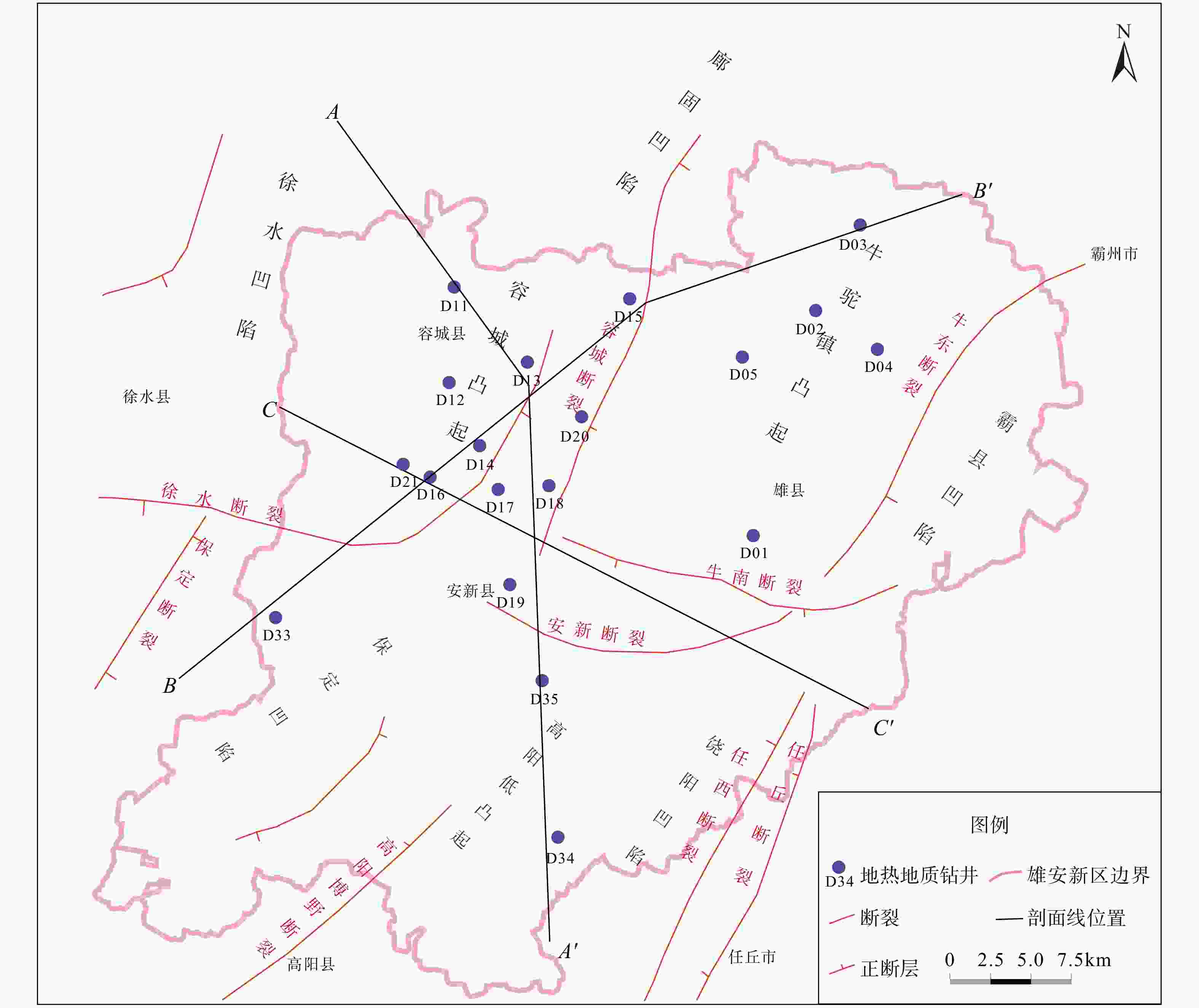
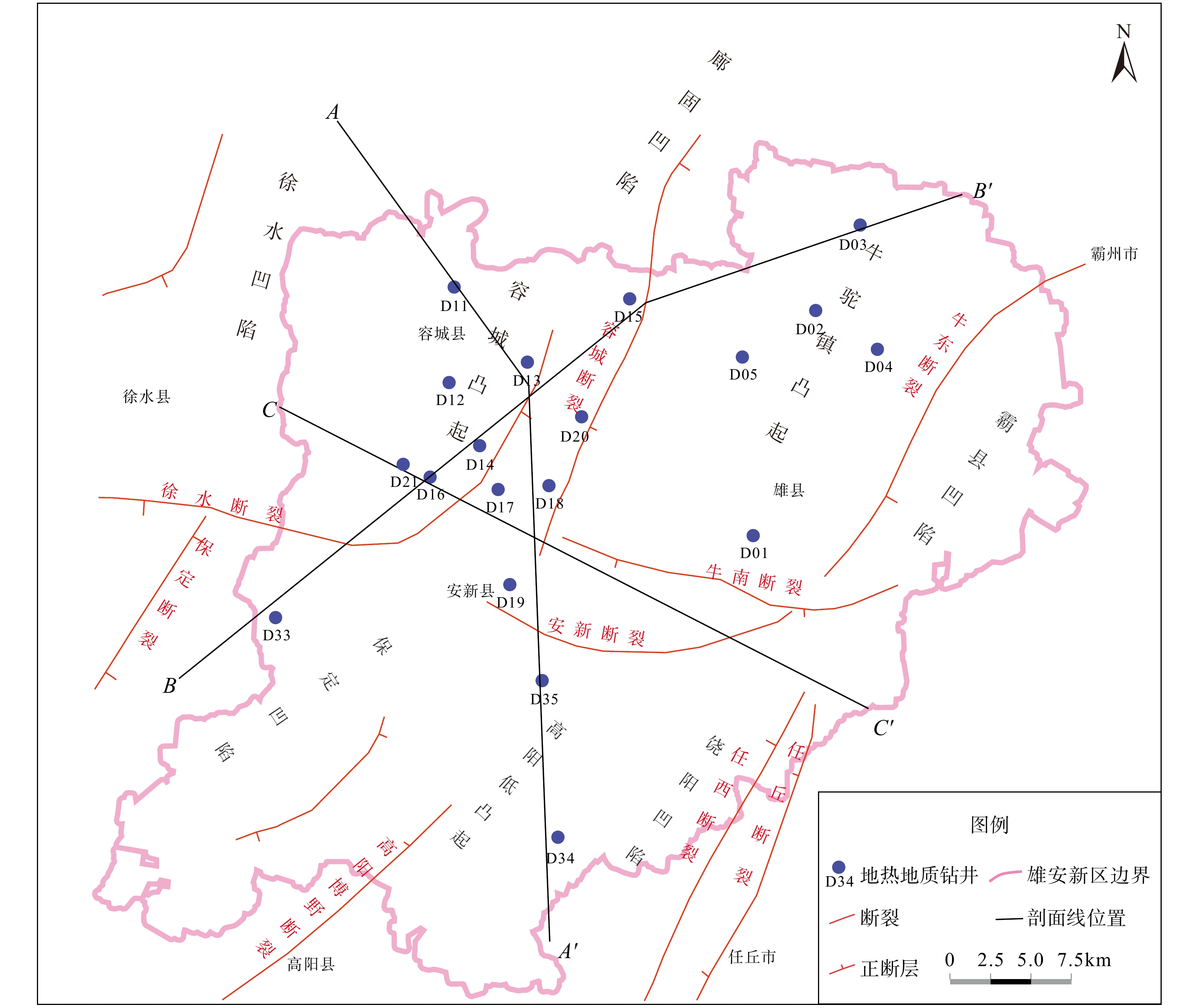
图 1 雄安新区构造纲要图及地热地质勘查点分布图
Figure 1. Structural outline map and distribution of geothermal exploration sites in Xiong'an New Area
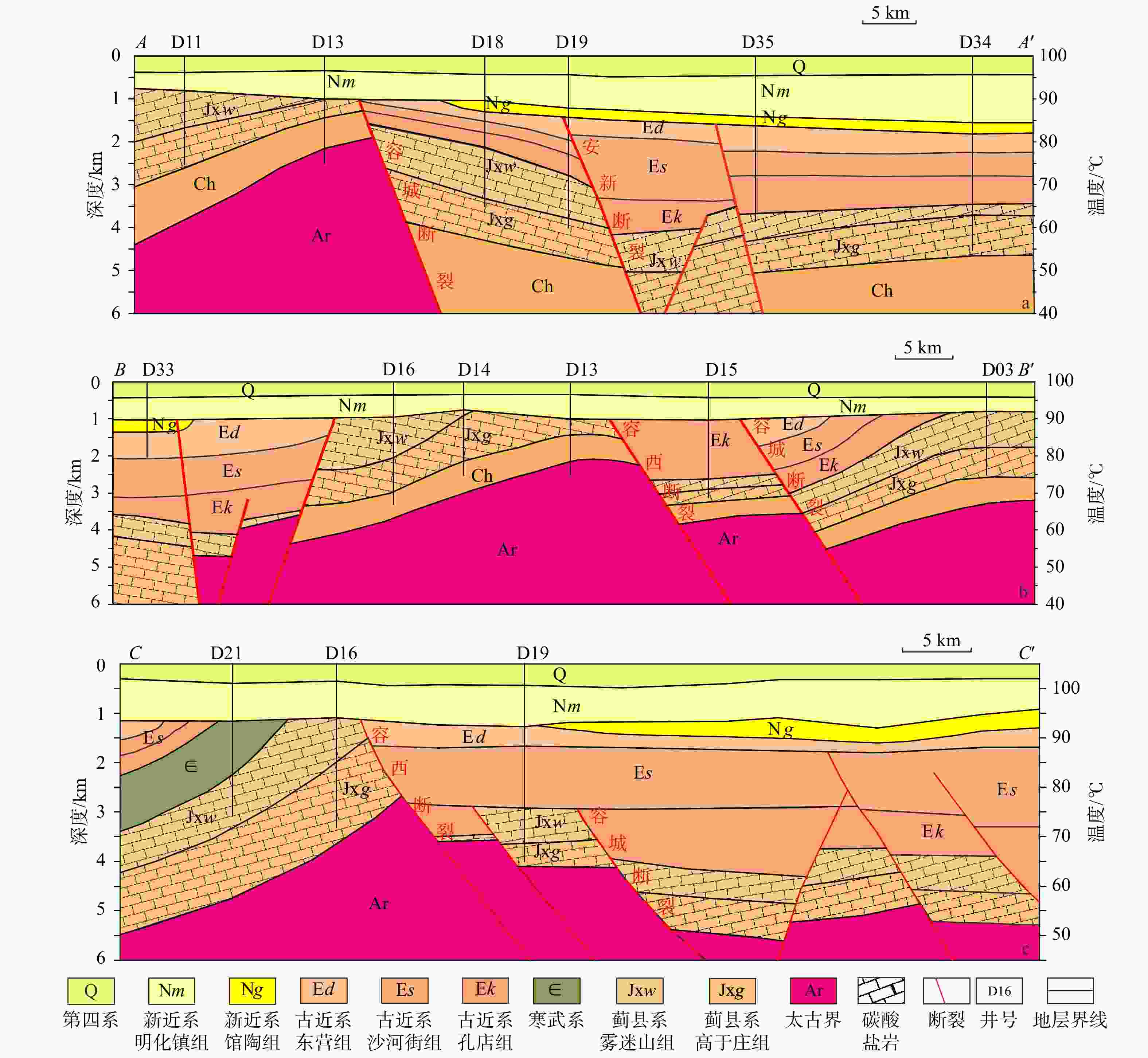
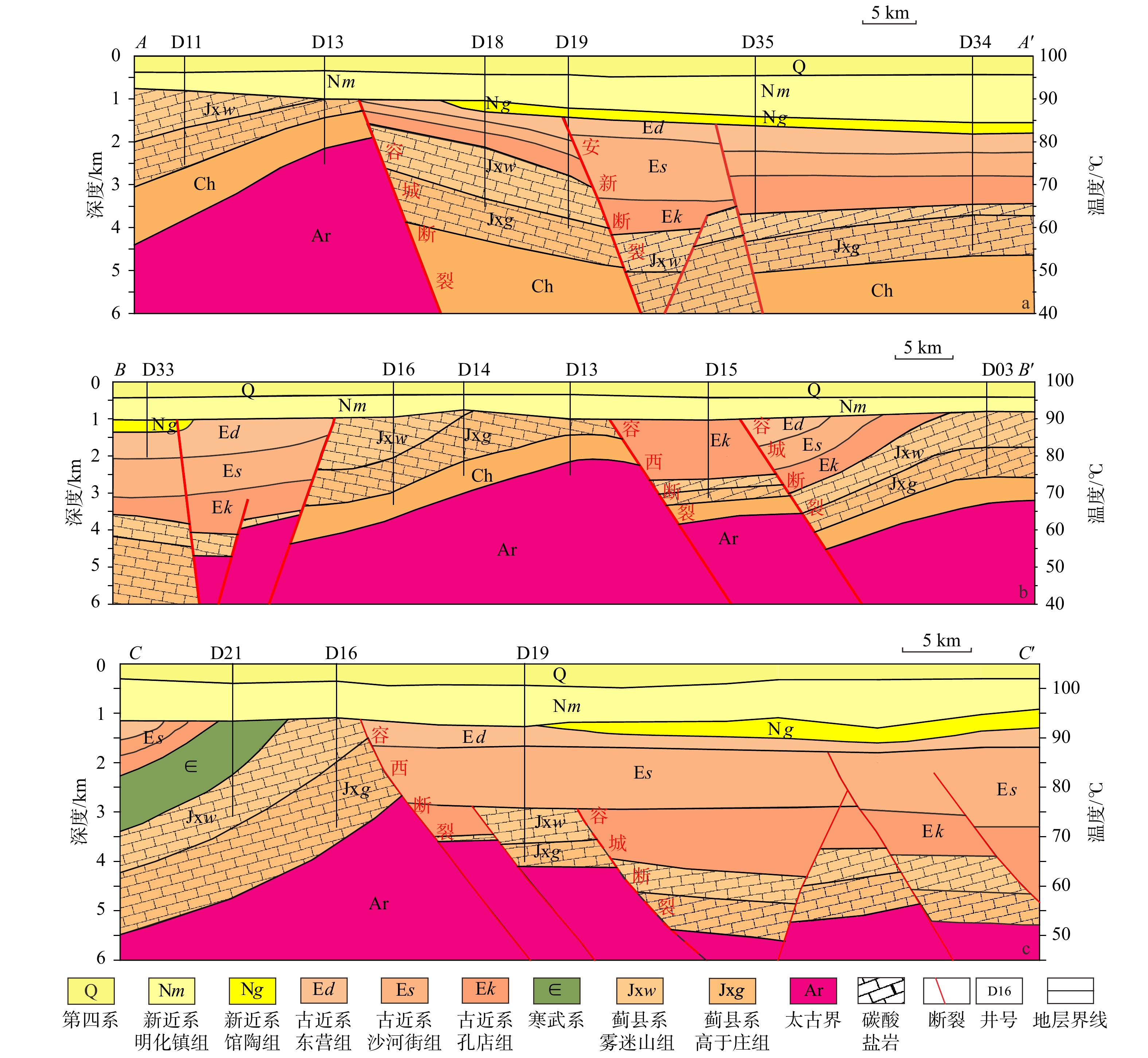
图 2 雄安新区地热地质剖面图
a—剖面A−A';b—剖面B−B';c—剖面C−C'
Figure 2. Geothermal geological cross-sections in Xiong’an New Area
(a) Cross-section A−A';(b) Cross-section B−B';(c) Cross-section C−C'
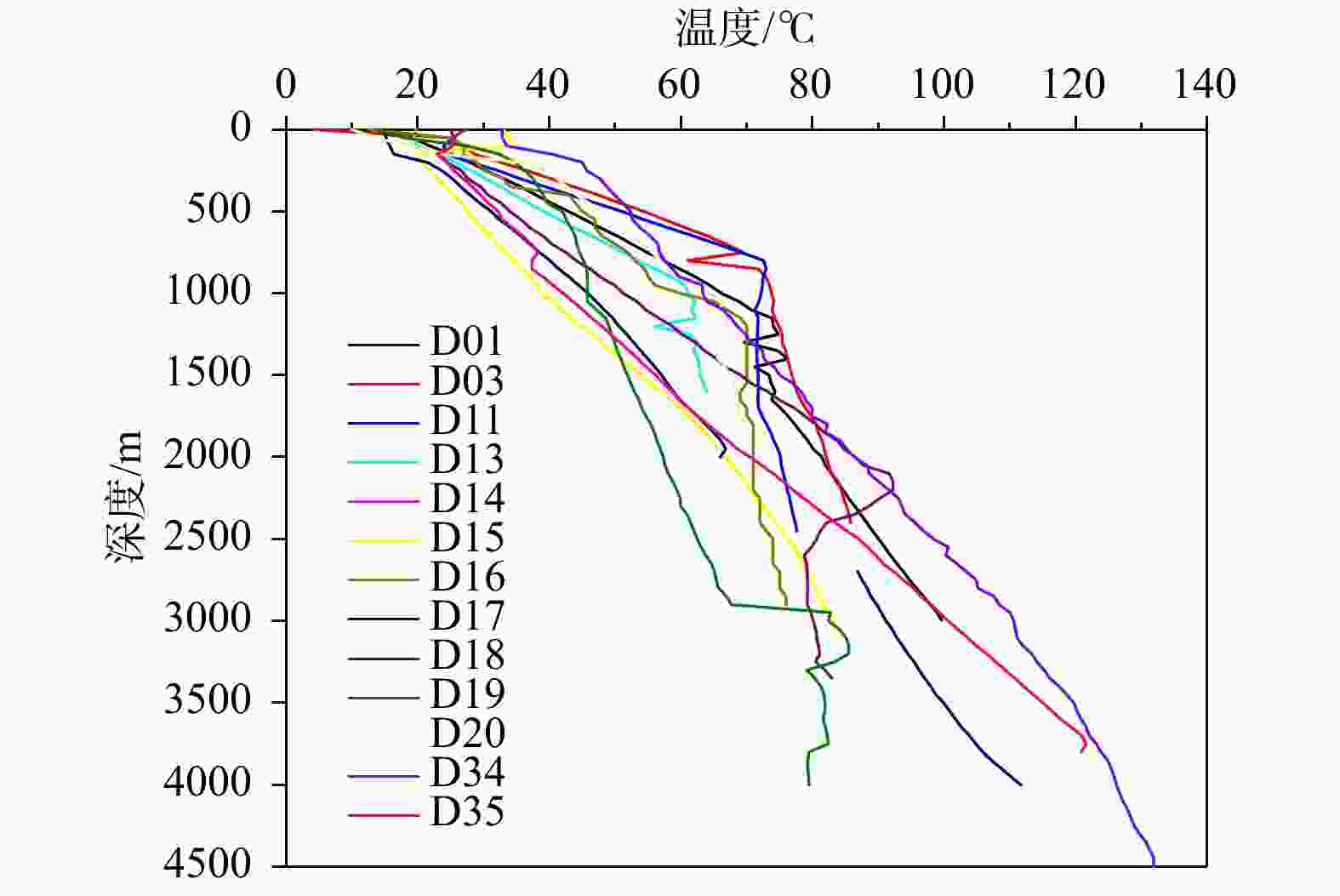
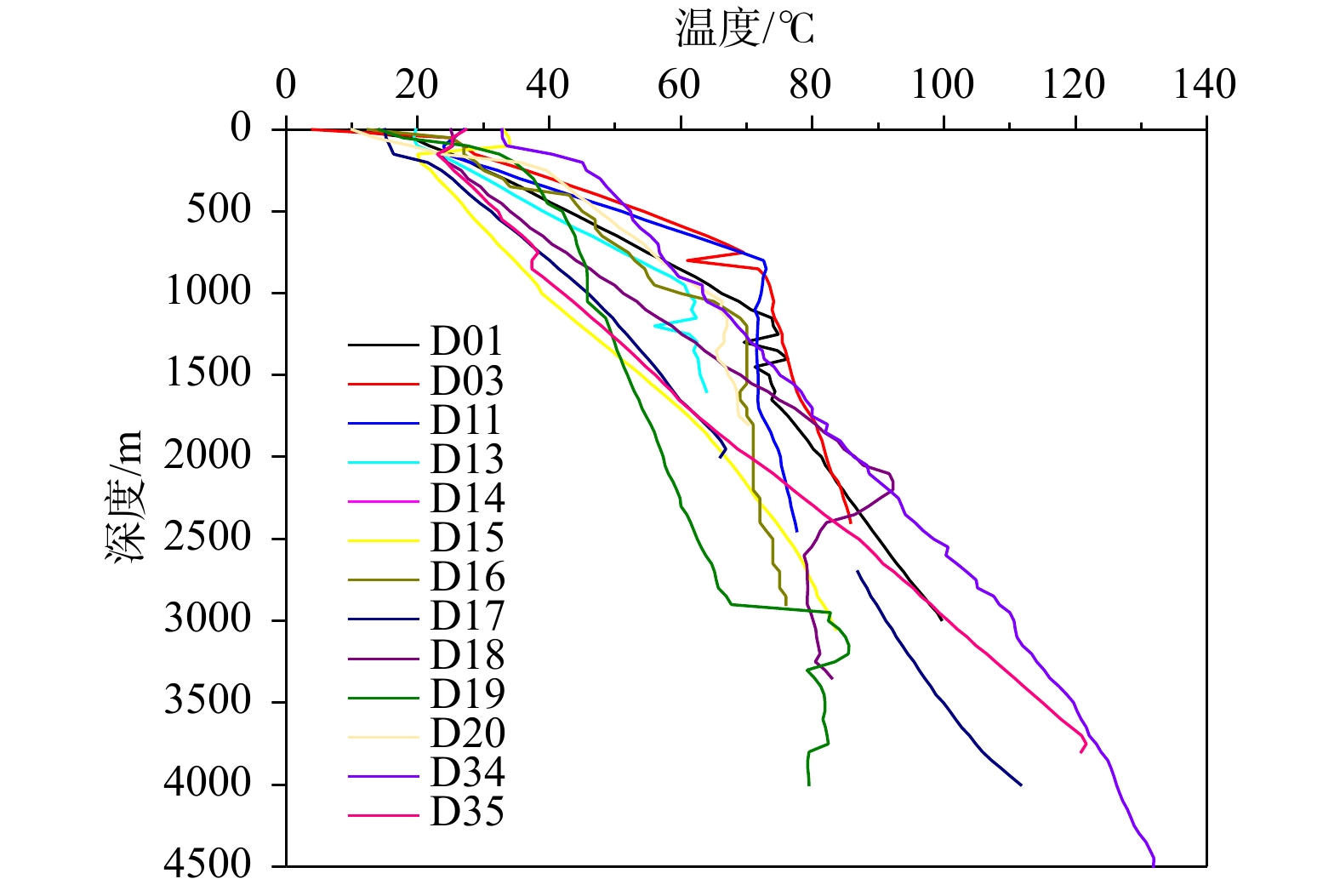
图 4 雄安新区地热勘探井稳态测温曲线
Figure 4. Static temperature logs of geothermal exploration wells in Xiong’an New Area
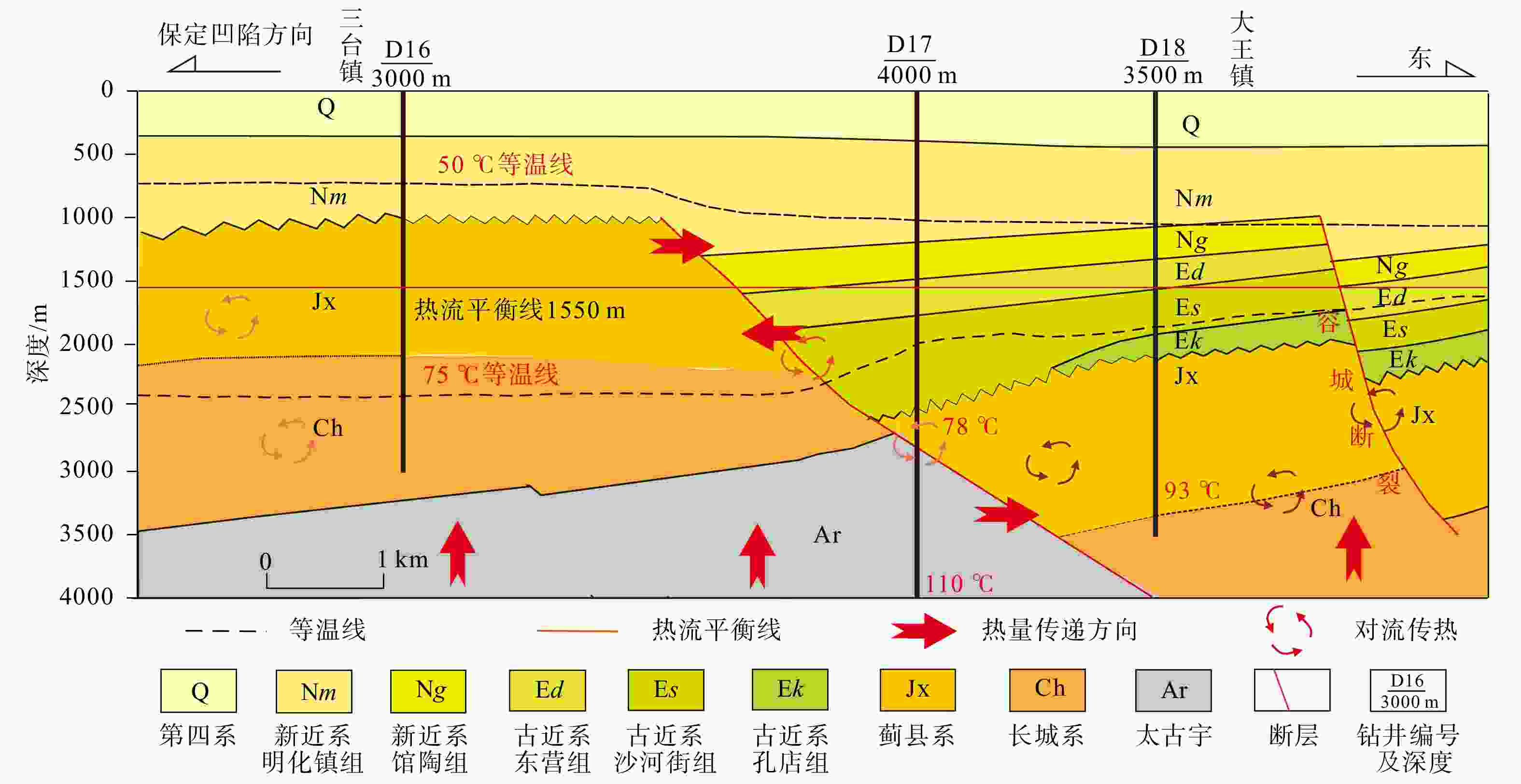
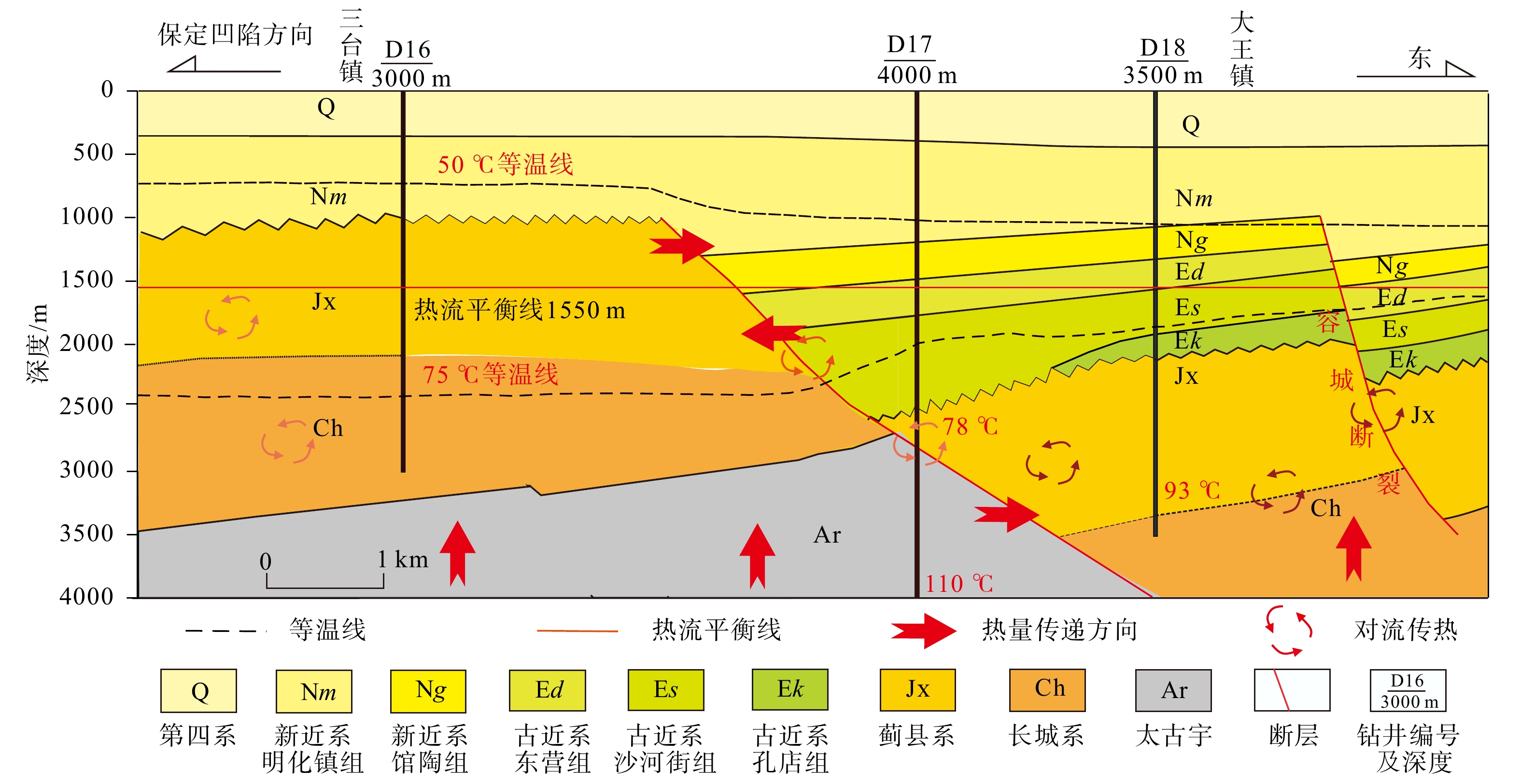
图 5 古潜山热储热量传递示意图
Figure 5. Schematic diagram of heat transfer in buried-hill geothermal reservoir
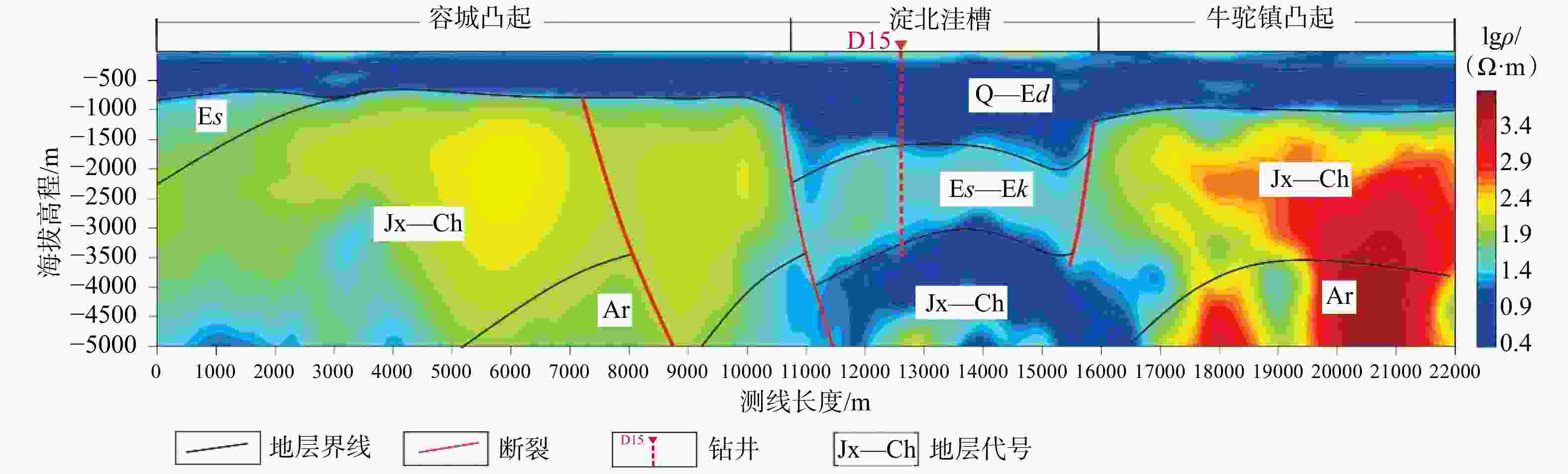
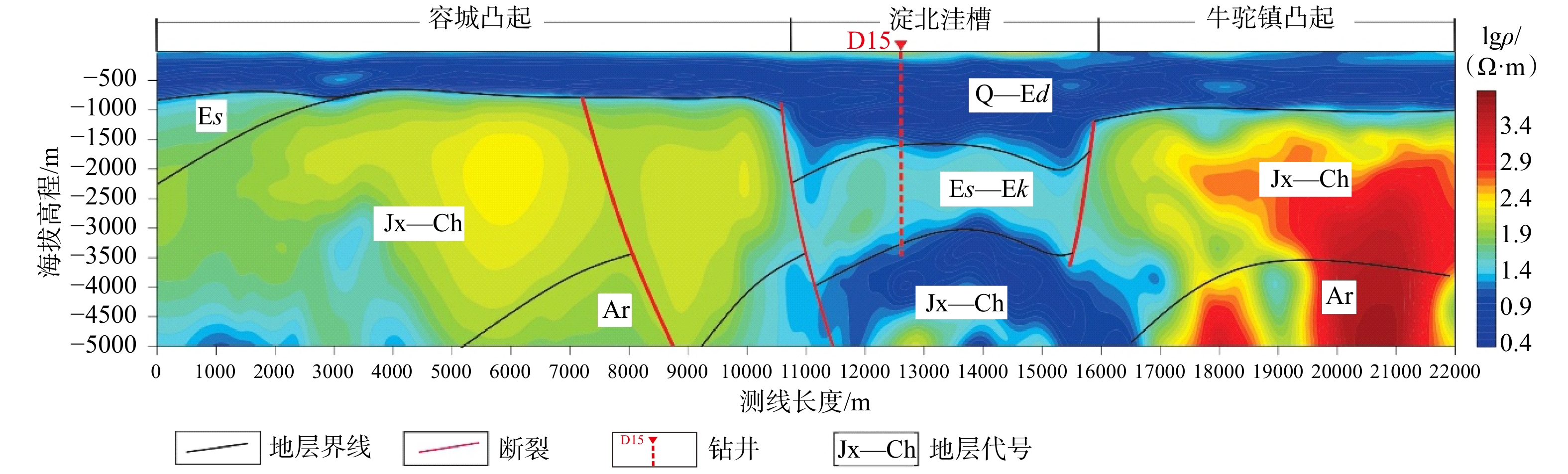
图 6 雄安新区晾马台乡广域电磁测线反演电阻率图
Figure 6. Inverted resistivity section of a wide-field electromagnetic survey line in Liangmatai, Xiong'an New Area
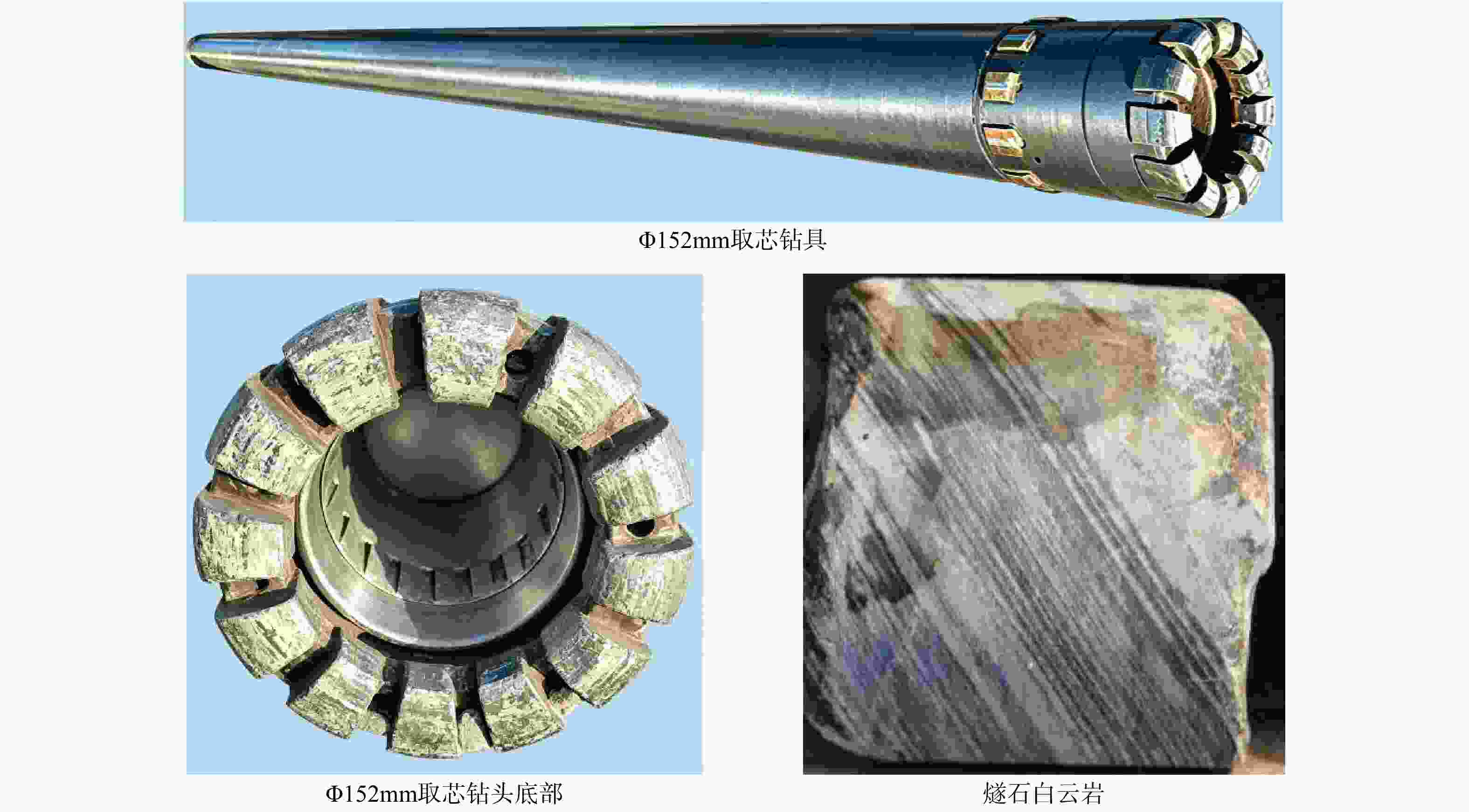
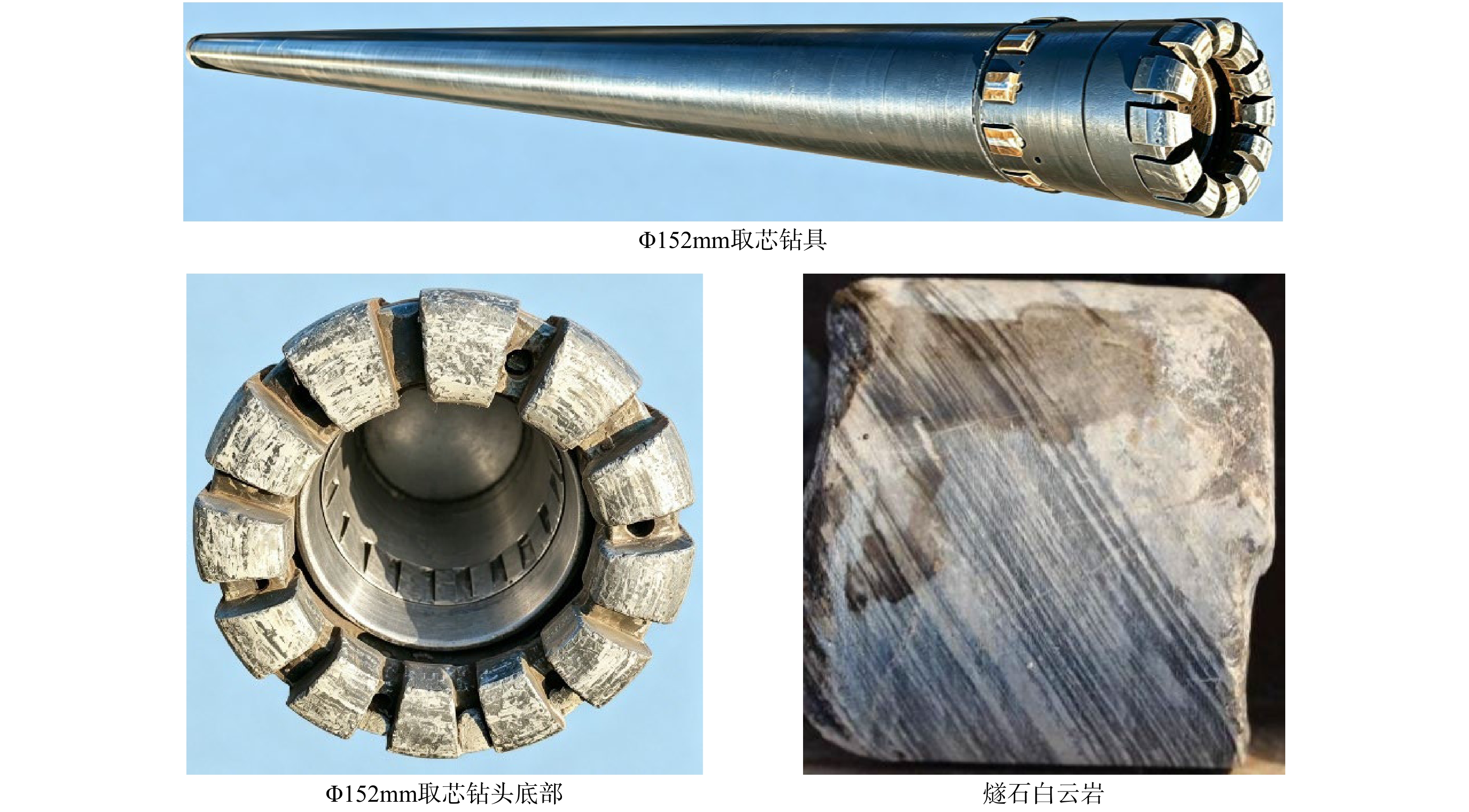
图 7 Φ152 mm单动双管取芯钻具及取芯样品
Figure 7. Φ152 mm single-tube double-barrel coring tool and retrieved core samples
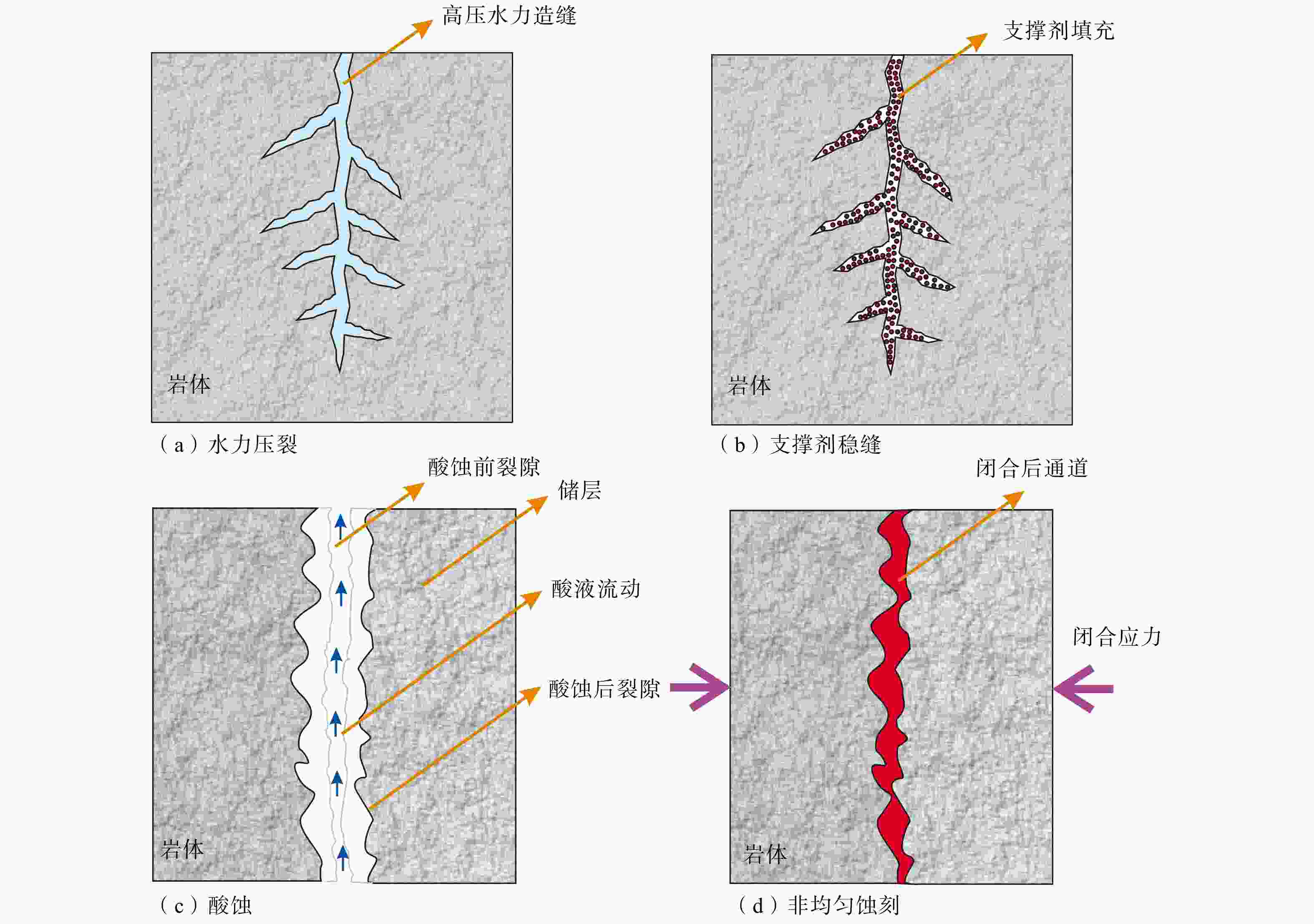
图 8 水力压裂和酸蚀改造的增产改造机理
Figure 8. Mechanisms of reservoir stimulation by hydraulic fracturing and acid etching (a) Hydraulic fracturing; (b) Proppant stabilization; (c) Acid etching; (d) Non-uniform etching
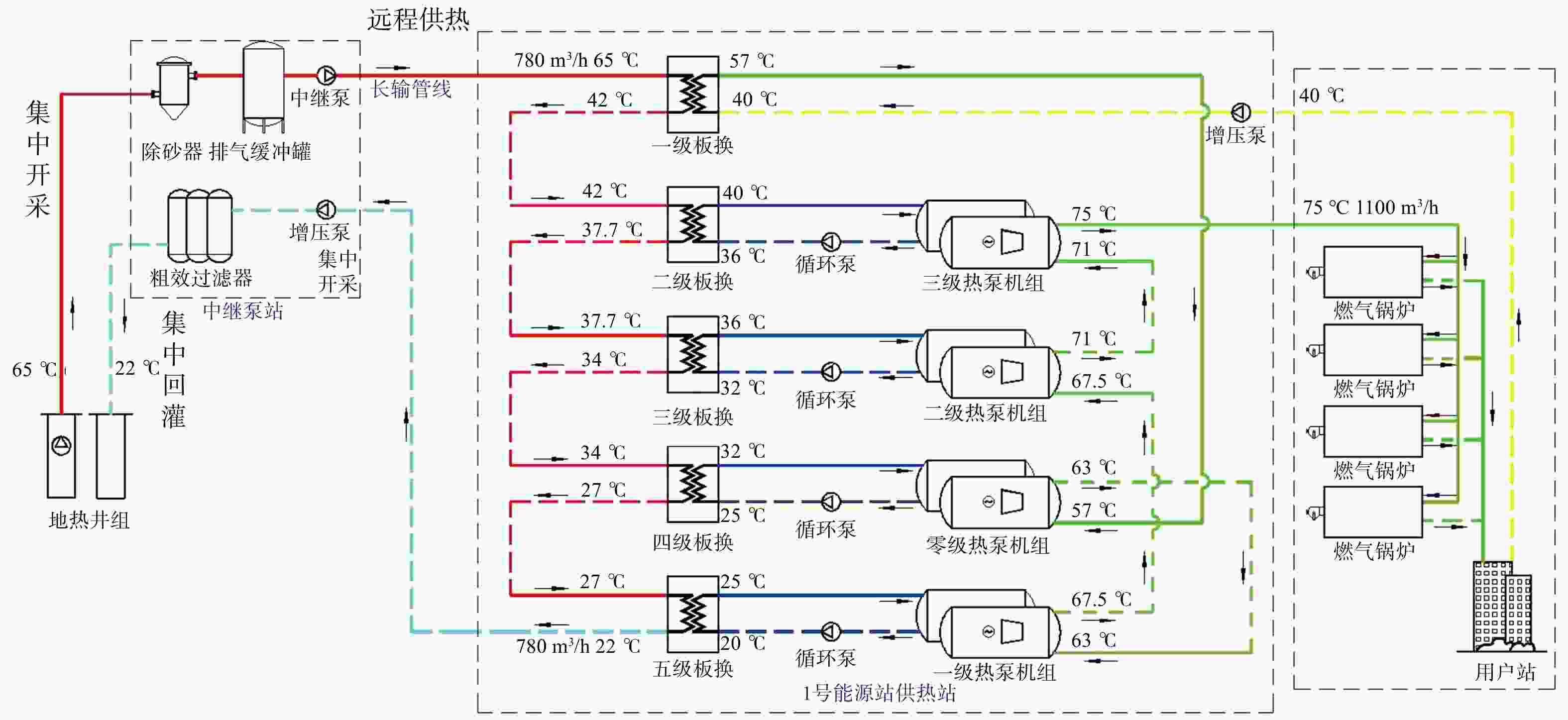
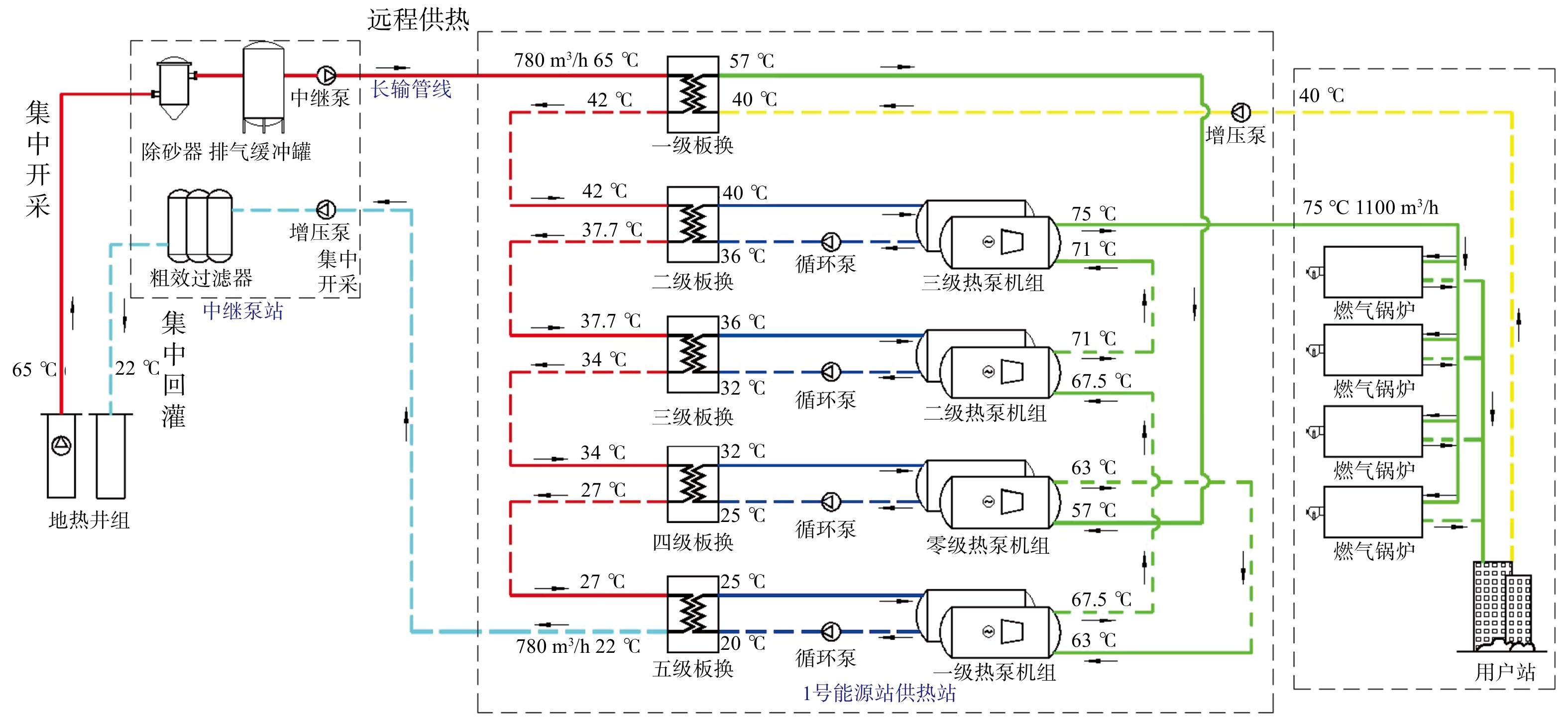
图 9 集中开采−低耗传输−低品位区集中回灌−全流程开发调控技术
Figure 9. Technology framework for centralized production, low-energy-consumption transmission, centralized reinjection in low-grade areas, and whole-process development regulation
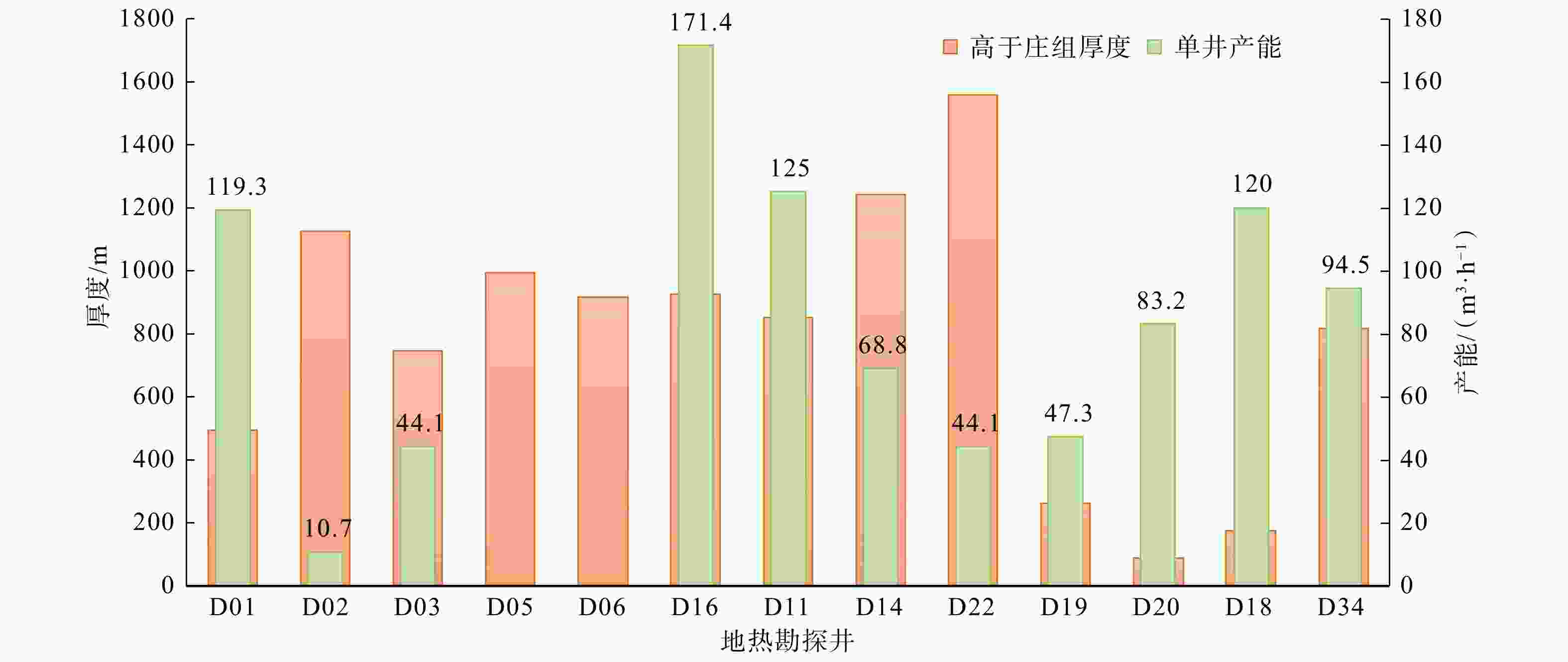
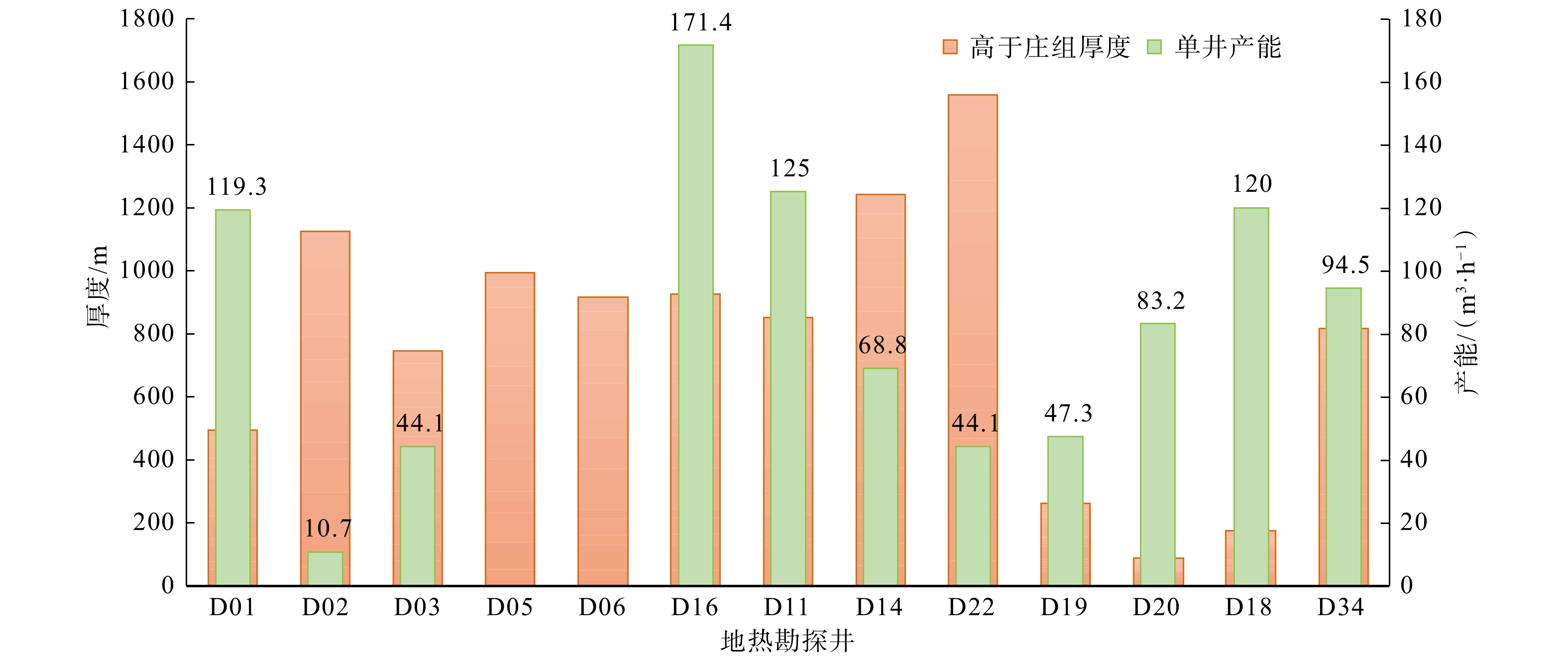
图 10 雄安新区典型地热井高于庄组热储的厚度及产能
Figure 10. Thickness and productivity of the Gaoyuzhuang Formation geothermal wells in a representative geothermal well in Xiong’an New Area
表 1 雄安新区主要地层生热率和热导率
Table 1. Radiogenic heat production and thermal conductivity of the main stratigraphic formations in Xiong’an New Area
地层代号 地层时代 岩性含量/% 生热率A/(μW·m-3) 热导率K/(W·m−1·K−1) Q+N 第四系+新近系 砂岩 30 1.17 1.907 粉砂岩 20 泥岩 50 E 古近系 砂岩 30 1.16 2.315 粉砂岩 23 泥岩 45 陆相白云岩 2 Mz+Pz 中生界+古生界 砂岩 6 1.06 3.395 粉砂岩 2 泥岩 6 灰岩 50 海相白云岩 25 海相碎屑岩 11 Jx 蓟县系 海相碎屑岩 5 0.46 5.109 海相白云岩 95 Ch 长城系 海相碎屑岩 30 0.94 3.838 海相白云岩 70  下载: 导出CSV
表 2 雄安新区施工6口地热勘探井取芯情况统计
Table 2. Statistics of coring operations for six geothermal exploration wells in Xiong’an New Area
序号 井号 取芯进尺/m 岩芯长度/m 平均岩芯采取率/% 1 D11 59.38 50.32 84.74 2 D12 67.33 58.30 86.59 3 D13 50.51 41.85 82.85 4 D15 49.44 43.56 88.10 5 D16 52.33 42.76 81.71 6 D22 36.17 31.24 86.37
下载: 导出CSV
表 3 雄安新区高于庄组热储厚度及单井产能
Table 3. Thickness of the Gaoyuzhuang Formation geothermal reservoir and individual well productivity in Xiong’an New Area
井号 构造位置 高于庄组厚度/m 单井产能/(m3/h) 井底温度/℃ D01 牛驼镇凸起中部 493.5 119.3 64.1 D02 1125.0 10.7 65.5 D03 743.1 44.1 68.2 D05 牛驼镇凸起西部 994.3 − − D06 牛驼镇凸起北部 914.4 − − D16 容城凸起中部 925.2 171.4 69.6 D11 850.8 125.0 71.0 D14 1240.0 68.8 59.6 D22 1556.2 44.1 70.3 D19 容城凸起南部 261.8 47.3 80.1 D20 容城凸起东部 88.0 83.2 71.0 D18 174.0 120.0 93.3 D34 高阳低凸起中部 814.4 94.5 123.4
下载: 导出CSV
-
[1] CAULK R A, GHOREISHI-MADISEH S A, AMIRI H, 2023. Seasonal borehole thermal energy storage (BTES) and aquifer thermal energy storage (ATES): recent advances and techno-economic barriers[J]. Energy, 263: 125812. doi: 10.1016/j.energy.2022.125812 [2] CHEN M X, WANG J Y, DENG X, 1994. Geothermal resources in China: formation characteristics and potential assessment[M]. Beijing: Science Press. (in Chinese with English abstract) [3] CUI Y, ZHU C Q, QIU N S, et al., 2019. Radioactive heat production and terrestrial heat flow in the Xiong'an Area, North China[J]. Energies, 12(24): 4608. doi: 10.3390/en12244608 [4] DAI M G, SUN P G, LEI H F, et al., 2023. Spatial distribution characteristics of strata and main thermal reservoirs and geothermal water resource potential in Xiong'an New Area[J]. Chinese Journal of Geology, 58(2): 412-437. (in Chinese with English abstract) [5] DAI M G, 2025. Analysis on influencing factors for calculation of thermal breakthrough spacing between pumping well and recharging well: a case study in Xiong'an New Area[J]. Acta Geologica Sinica, 99(4): 1409-1426. (in Chinese with English abstract) [6] FAN L S, JIA X F, WANG G L, et al., 2020. Drilling practice of D03 geothermal exploration well in Xiong'an New Area[J]. Exploration Engineering (Rock & Soil Drilling and Tunneling), 47(10): 13-22. (in Chinese with English abstract) [7] FURLONG K P, CHAPMAN D S, 2013. Heat flow, heat generation, and the thermal state of the lithosphere[J]. Annual Review of Earth and Planetary Sciences, 41: 385-410. doi: 10.1146/annurev.earth.031208.100051 [8] General Administration of Quality Supervision, Inspection and Quarantine of the People's Republic of China, Standardization Administration of the People's Republic of China, 2011. Geologic exploration standard of geothermal resources: GB/T 11615-2010[S]. Beijing: Standards Press of China. (in Chinese) [9] GRINGARTEN A C, SAUTY J P, 1975. A theoretical study of heat extraction from an aquifer by means of a down-hole heat exchanger or a water circulation well[C]//Proceedings of the 2nd United Nations symposium on the development and use of geothermal resources. San Francisco, USA: Lawrence Berkeley Laboratory: 405-415. [10] GUO S S, ZHU C Q, QIU N S, et al., 2019. Present geothermal characteristics and influencing factors in the Xiong'an New Area, North China[J]. Energies, 12(20): 3884. doi: 10.3390/en12203884 [11] HE D F, SHAN S Q, ZHANG Y Y, et al., 2018. 3-D geologic architecture of Xiong’an New Area: constraints from seismic reflection data[J]. Science China Earth Sciences, 61(8): 1007-1022. doi: 10.1007/s11430-017-9188-4 [12] HE J S, 2020. New research progress in theory and application of wide field electromagnetic method[J]. Geophysical and Geochemical Exploration, 44(5): 985-990. (in Chinese with English abstract) [13] HU Y, BANKS J, BU X, et al., 2024. Digital twin for geothermal systems: concepts, enabling technologies and emerging applications[J]. Renewable and Sustainable Energy Reviews, 189: 114078. [14] KAYA E, ZARROUK S J, O'SULLIVAN M J, 2024. Reinjection in geothermal fields: a global review and classification[J]. Geothermics, 109: 102692. [15] LI J, ZENG H H, LU X Y, et al., 2024. Application of wide-field electromagnetic method for favorable target optimization in the Heishan granite geothermal area of Yunnan Province[J]. Natural Gas Industry B, 11(1): 74-82. doi: 10.1016/j.ngib.2024.01.006 [16] MA F, WANG G L, ZHANG W, et al., 2020. Structure of geothermal reservoirs and resource potential in the Rongcheng geothermal field in Xiong’an New Area[J]. Acta Geologica Sinica, 94(7): 1981-1990. (in Chinese with English abstract) [17] MA F, WANG G L, ZHU X, et al., 2022. Experimental study of the enhanced stimulation of a deep carbonate thermal reservoir in the Xiong'an New Area[J]. Chinese Journal of Engineering, 44(10): 1789-1798. (in Chinese with English abstract) [18] MA Y, ZHANG B J, YAN J K, et al., 2022. Deep geothermal reservoir structure detection and geothermal well optimization technology in Xiongan New Area[J]. Acta Geoscientica cSinica, 43(5): 699-710. (in Chinese with English abstract) [19] MA F, WANG G L, YU M X, et al., 2026. Geothermal reservoir property and productivity of deep carbonate in Xiong'an New Area, China[J]. Contributions to Geology and Mineral Resources Research, 41(1): 1-13. (in Chinese with English abstract) [20] Ministry of Geology and Mineral Resources of the People's Republic of China, 1985. Method for geothermal resource evaluation: DZ 40-85[S]. Beijing: Standards Press of China. (in Chinese) [21] PANG J M, PANG Z H, LV M, et al., 2018. Geochemical and isotopic characteristics of fluids in the Niutuozhen geothermal field, North China[J]. Environmental Earth Sciences, 77(1): 12. doi: 10.1007/s12665-017-7171-y [22] PORTIER S, VUATAZ G, BURNOL A, et al., 2020. Chemical and physical processes during geothermal fluids reinjection: impacts on reservoir properties and sustainability—a review[J]. Geothermics, 88: 101865. doi: 10.1016/j.geothermics.2020.101865 [23] VAN DAM R P, BAKKER M, SOMMER W T, et al., 2022. Long-term performance of aquifer thermal energy storage (ATES): field data and model-based interpretation[J]. Journal of Hydrology, 612: 128283. doi: 10.1016/j.jhydrol.2022.128283 [24] WANG G L, ZHANG W, LIANG J Y, et al., 2017. Evaluation of geothermal resources potential in China[J]. Acta Geoscientica Sinica, 38(4): 449-459. (in Chinese with English abstract) [25] WANG G L, GAO J, ZHANG B J, et al., 2020. Study on the thermal storage characteristics of the Wumishan Formation and huge capacity geothermal well parameters in the Gaoyang low uplift area of Xiong’an New Area[J]. Acta Geologica Sinica, 94(7): 1970-1980. (in Chinese with English abstract) [26] WANG G L, LIN W J, 2020. Main hydro-geothermal systems and their genetic models in China[J]. Acta Geologica Sinica, 94(7): 1923-1937. (in Chinese with English abstract) [27] WANG G L, YUE G F, LIN W J, et al., 2024. Deep carbonate geohermal reservoir production enhancement technology in North China Plain[J]. Earth Science, 49(4): 1470-1486. (in Chinese with English abstract) [28] WANG J Y, HU S B, PANG Z H, et al., 2012. Estimate of geothermal resources potential for hot dry rock in the continental area of China[J]. Science & Technology Review, 30(32): 25-31. (in Chinese with English abstract) [29] WANG S Q, ZHANG B J, LI Y Y, et al., 2021. Heat accumulation mechanism of deep ancient buried hill in the northeast of Gaoyang geothermal field, Xiong'an New Area[J]. Bulletin of Geological Science and Technology, 40(3): 12-21. (in Chinese with English abstract) [30] WANG Z T, JIANG G Z, ZHANG C, et al., 2019. Thermal regime of the lithosphere and geothermal potential in Xiong'an New Area[J]. Energy Exploration & Exploitation, 37(2): 787-810. doi: 10.1177/0144598718778163 [31] WANG Z T, ZHANG C, JIANG G Z, et al., 2019. Present-day geothermal field of Xiongan New Area and its heat source mechanism[J]. Chinese Journal of Geophysics, 62(11): 4313-4322. (in Chinese with English abstract) [32] WU A M, MA F, WANG G L, et al., 2018. A study of deep-seated karst geothermal reservoir exploration and huge capacity geothermal well parameters in Xiongan New Area[J]. Acta Geoscientica Sinica, 39(5): 523-532. (in Chinese with English abstract) [33] XIONG L P, ZHANG J M, 1988. Relationship between geothermal gradient and the relief of basement rock in North China Plain[J]. Acta Geophysica Sinica, 31(2): 146-155. (in Chinese with English abstract) [34] YANG M H, LIU C Y, SUN D S, et al., 2002. Extensional tectonic system and its deep-seated setting of Jizhong Basin, China[J]. Geotectonica et Metallogenia, 26(2): 113-120. (in Chinese with English abstract) [35] YU M X, MA F, WANG G L, et al., 2023. Characteristics and evaluation of geothermal resources in the Rongdong Area of Xiongan New Area[J]. Acta Geoscientica Sinica, 44(1): 180-190. (in Chinese with English abstract) [36] YUAN R X, MA F, ZHANG W, et al., 2022. Application of geothermal reservoir modification technologies and prospective[J]. Science & Technology Review, 40(20): 52-64. (in Chinese with English abstract) [37] YUE G F, WANG G L, MA F, et al., 2021. Evaluation of fault slip probability of geothermal large-scale development: a case study of deep karst geothermal reservoir in Xiong'an New Area[J]. Geology in China, 48(5): 1382-1391. (in Chinese with English abstract) [38] YUE G F, 2022. Study on the acidizing mechanisms of fractured carbonate hydrothermal reservoir of Gaoyuzhuang Formation in Xiong’an New Area[D]. Wuhan: China University of Geosciences. (in Chinese with English abstract) [39] ZHAO J Y, ZHANG W, MA F, et al., 2020. Geochemical characteristics of the geothermal fluid in the Rongcheng geothermal field, Xiong’an New Are[J]. Acta Geologica Sinica, 94(7): 1991-2001. (in Chinese with English abstract) [40] ZHOU X, JIN X M, LIANG S H, et al. , 2010. Monograph on groundwater science[M]. Beijing: Geological Publishing House. (in Chinese with English abstract) [41] ZHU X, WANG G L, MA F, et al., 2021. Hydrogeochemistry of geothermal waters from Taihang Mountain-Xiong’an New Area and its indicating significance[J]. Earth Science, 46(7): 2594-2608. (in Chinese with English abstract) [42] ZHU X, WANG G L, MA F, et al., 2023. Evaluation of geothermal resources of the Xiong'an New Area[J]. Earth Science, 48(3): 1093-1106. (in Chinese with English abstract) [43] 陈墨香, 汪集旸, 邓孝, 1994. 中国地热资源: 形成特点和潜力评估[M]. 北京: 科学出版社. [44] 戴明刚, 孙彭光, 雷海飞, 等, 2023. 雄安新区地层及主要热储空间结构特征与地热水资源潜力[J]. 地质科学, 58(2): 412-437. doi: 10.12017/dzkx.2023.026 [45] 戴明刚, 2025. 地热水开发采灌井热突破距离计算影响因素研究: 以雄安新区为例[J]. 地质学报, 99(4): 1409-1426. doi: 10.19762/j.cnki.dizhixuebao.2023087 [46] 樊腊生, 贾小丰, 王贵玲, 等, 2020. 雄安新区D03地热勘探井钻探施工实践[J]. 探矿工程(岩土钻掘工程), 47(10): 13-22. doi: 10.12143/j.tkgc.2020.10.003 [47] 何登发, 单帅奇, 张煜颖, 等, 2018. 雄安新区的三维地质结构: 来自反射地震资料的约束[J]. 中国科学: 地球科学, 48(9): 1207-1222. [48] 何继善, 2020. 广域电磁法理论及应用研究的新进展[J]. 物探与化探, 44(5): 985-990. doi: 10.11720/wtyht.2020.0192 [49] 马峰, 王贵玲, 张薇, 等, 2020. 雄安新区容城地热田热储空间结构及资源潜力[J]. 地质学报, 94(7): 1981-1990. doi: 10.3969/j.issn.0001-5717.2020.07.007 [50] 马峰, 王贵玲, 朱喜, 等, 2022. 雄安新区深部碳酸盐岩热储强化增产试验研究[J]. 工程科学学报, 44(10): 1789-1798. doi: 10.13374/j.issn2095-9389.2022.04.08.008 [51] 马峰, 王贵玲, 余鸣潇, 等, 2026. 雄安新区容城地热田碳酸盐岩热储物性特征与产能分析[J]. 地质找矿论丛, 41(1): 1-13. doi: 10.6053/j.issn.1001-1412.2026.01.001 [52] 马岩, 张保建, 闫金凯, 等, 2022. 雄安新区深部储热构造探测研究与地热井优选技术[J]. 地球学报, 43(5): 699-710. doi: 10.3975/cagsb.2022.061601 [53] 王贵玲, 张薇, 梁继运, 等, 2017. 中国地热资源潜力评价[J]. 地球学报, 38(4): 449-459. doi: 10.3975/cagsb.2017.04.02 [54] 王贵玲, 高俊, 张保建, 等, 2020. 雄安新区高阳低凸起区雾迷山组热储特征与高产能地热井参数研究[J]. 地质学报, 94(7): 1970-1980. doi: 10.3969/j.issn.0001-5717.2020.07.006 [55] 王贵玲, 蔺文静, 2020. 我国主要水热型地热系统形成机制与成因模式[J]. 地质学报, 94(7): 1923-1937. doi: 10.3969/j.issn.0001-5717.2020.07.002 [56] 王贵玲, 岳高凡, 蔺文静, 等, 2024. 华北平原典型深部碳酸盐岩热储增产改造技术[J]. 地球科学, 49(4): 1470-1486. doi: 10.3799/dqkx.2022.449 [57] 汪集旸, 胡圣标, 庞忠和, 等, 2012. 中国大陆干热岩地热资源潜力评估[J]. 科技导报, 30(32): 25-31. doi: 10.3981/j.issn.1000-7857.2012.32.003 [58] 王思琪, 张保建, 李燕燕, 等, 2021. 雄安新区高阳地热田东北部深部古潜山聚热机制[J]. 地质科技通报, 40(3): 12-21. doi: 10.19509/j.cnki.dzkq.2021.0319 [59] 王朱亭, 张超, 姜光政, 等, 2019. 雄安新区现今地温场特征及成因机制[J]. 地球物理学报, 62(11): 4313-4322. doi: 10.6038/cjg2019M0326 [60] 吴爱民, 马峰, 王贵玲, 等, 2018. 雄安新区深部岩溶热储探测与高产能地热井参数研究[J]. 地球学报, 39(5): 523-532. doi: 10.3975/cagsb.2018.071104 [61] 熊亮萍, 张菊明, 1988. 华北平原区地温梯度与基底构造形态的关系[J]. 地球物理学报, 31(2): 146-155. [62] 杨明慧, 刘池阳, 孙冬胜, 等, 2002. 冀中坳陷的伸展构造系统及其构造背景[J]. 大地构造与成矿学, 26(2): 113-120. doi: 10.3969/j.issn.1001-1552.2002.02.001 [63] 余鸣潇, 马峰, 王贵玲, 等, 2023. 雄安新区容东片区地热资源赋存特征及潜力评价[J]. 地球学报, 44(1): 180-190. doi: 10.3975/cagsb.2022.121603 [64] 原若溪, 马峰, 张薇, 等, 2022. 地热储层改造技术研究进展[J]. 科技导报, 40(20): 52-64. [65] 岳高凡, 王贵玲, 马峰, 等, 2021. 地热规模化开发断层滑动概率评估: 以雄安新区深部岩溶热储为例[J]. 中国地质, 48(5): 1382-1391. doi: 10.12029/gc20210505 [66] 岳高凡, 2022. 雄安新区高于庄组裂缝型碳酸盐岩热储酸化改造机理研究[D]. 武汉: 中国地质大学. [67] 赵佳怡, 张薇, 马峰, 等, 2020. 雄安新区容城地热田地热流体化学特征[J]. 地质学报, 94(7): 1991-2001. doi: 10.3969/j.issn.0001-5717.2020.07.008 [68] 中国地质调查局, 2020a. 雄安新区地热清洁能源调查报告[R]. 石家庄: 中国地质科学院水文地质环境地质研究所. [69] 中国地质调查局, 2020b. 雄安新区地热清洁能源调查报告[R]. 保定: 中国地质调查局水文地质环境地质调查中心. [70] 中国地质调查局, 2020c. 雄安新区地热清洁能源调查报告[R]. 北京: 中国地质科学院. [71] 中华人民共和国地质矿产部, 1985. 地热资源评价方法: DZ 40-85[S]. 北京: 中国标准出版社. [72] 中华人民共和国国家质量监督检验检疫总局, 中国国家标准化管理委员会, 2011. 地热资源地质勘查规范: GB/T 11615-2010[S]. 北京: 中国标准出版社. [73] 周训, 金晓媚, 梁四海, 等, 2010. 地下水科学专论[M]. 北京: 地质出版社. [74] 朱喜, 王贵玲, 马峰, 等, 2021. 太行山-雄安新区蓟县系含水层水文地球化学特征及意义[J]. 地球科学, 46(7): 2594-2608. [75] 朱喜, 王贵玲, 马峰, 等, 2023. 雄安新区地热资源潜力评价[J]. 地球科学, 48(3): 1093-1106. -

 下载:


计量
- 文章访问数: 106
- HTML全文浏览量: 19
- PDF下载量: 4
- 被引次数: 0
