


How do borehole observations characterize crustal stress?
-
摘要: 了解原位应力状态对于认识和理解地壳中各类地质力学过程、解决地下工程中的诸多实际问题具有重要意义。钻孔原位应力表征主要通过经典的水压致裂测试与钻孔孔壁破坏观测两种手段实现,为揭示脆性上地壳的应力状态提供了核心技术支撑。将上述两种方法主导的钻孔观测结果与其他表征更大尺度应力信息的成果进行整合后,区域尺度上不同钻孔间及较大深度范围内的应力方向一致性与相对应力大小的规律性均得以呈现。通过水压致裂法与钻孔破坏观测获取的应力大小,与经典的Anderson-Coulomb理论及经验性的Byerlee定律相符,这种一致性对约束原位应力状态、量化断层稳定性有着重要的作用。尽管受不连续面、岩性差异及其他因素影响,局部尺度的应力变化几乎普遍存在,但上地壳整体仍可以被认为处于摩擦平衡状态。一直以来,水压致裂法、钻孔破坏观测及其近期的衍生方法仍具有极强的应用性。然而,随着深地探测和地下工程的不断推进,对应力原位观测的需求不断增长,依托地壳应力表征技术的创新发展,从根本上革新应力数据的采集、解释与共享方式,已成为亟待推进的关键任务。文章旨在从多尺度创新地应力观测方法,表述突破传统钻孔地应力表征范式的重要性,并印证经典理论与创新发展之间的内在联系。Abstract:
Objective Knowing the in-situ stress state is of great importance for understanding a wide range of geomechanical processes in the Earth’s crust, and for addressing many practical problems in the subsurface. The in-situ stress characterization in boreholes through the classic hydraulic fracturing test and borehole failure observation has provided fundamental knowledge of the stress state in the brittle upper crust. Methods Compiling borehole observations and other stress indicators over much larger scales reveals coherent and consistent stress orientations and relative stress magnitudes over appreciable depths and between boreholes at the regional scale. Stress magnitudes determined using the hydraulic fracturing method and borehole failure observation are consistent with the classic Anderson and Coulomb faulting theories, as well as with the empirical Byerlee’s law. This is useful for constraining the in-situ stress state and quantifying fault stability. The general state of frictional equilibrium in the upper crust is present, although stress variations at local scales due to discontinuities, lithology contrasts, rock mass anisotropy and other factors are practically ubiquitous. Results To date, the hydraulic fracturing method and borehole failure observations—and their evolved variants—remain extremely useful. However, given the challenges ahead in subsurface exploration and engineering, it is imperative that we fundamentally revolutionize how we collect, interpret, and share the stress data with innovative developments in crustal stress characterization. Significance In this paper, we also present several ongoing projects that attempt to innovate stress observations at various scales. These attempts build upon the foundation laid by hydraulic fracturing tests and borehole failure observations. At the scale of individual boreholes, deep learning is being employed to automatically identify borehole stress indicators, such as fractures and breakouts, in image logs to increase the efficiency and robustness of stress interpretation. Processed image logs with various characteristics can further improve the applicability of deep learning models. At the scale of borehole arrays in subsurface engineering, the use of multiple boreholes and complementary approaches (hydraulic fracturing tests and borehole failure observations) enables stress characterization at finer spatial scales, which prompts the understanding of stress distribution and engineering practicality. At the scale of ultra-deep boreholes, the identification and classification of uncommon stress indicators, such as natural fractures, are utilized to invert the in-situ stress and crustal rock mass strength. The inversion confirms the frictional equilibrium hypothesis and offers an alternative approach for stress characterization. Conclusion These attempts underscore the importance of moving beyond the paradigm of borehole stress characterization and the interconnectedness between classic theories and novel developments. -
Key words:
- in-situ stress /
- hydraulic fracturing /
- borehole failures /
- natural fractures /
- frictional equilibrium
-
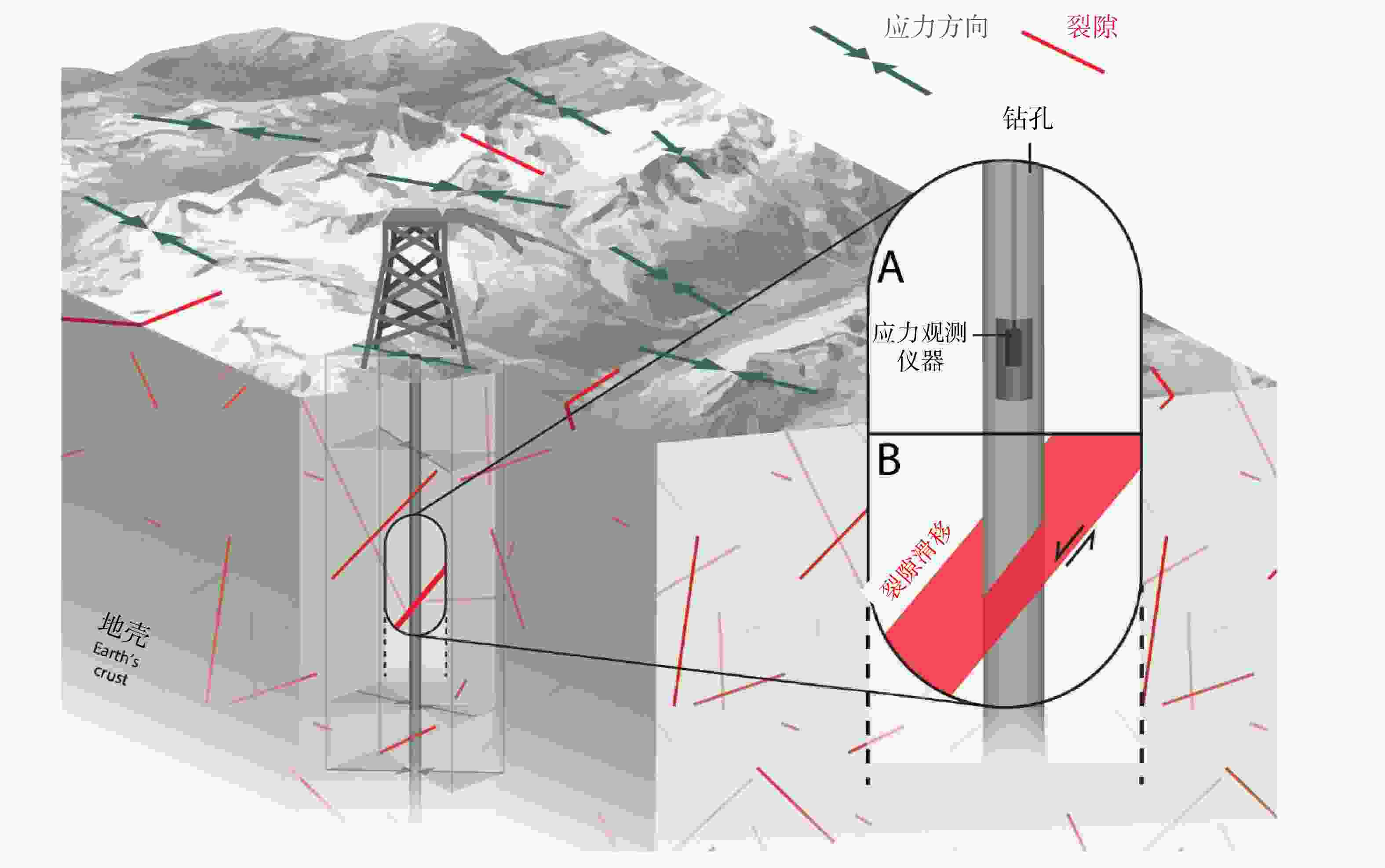
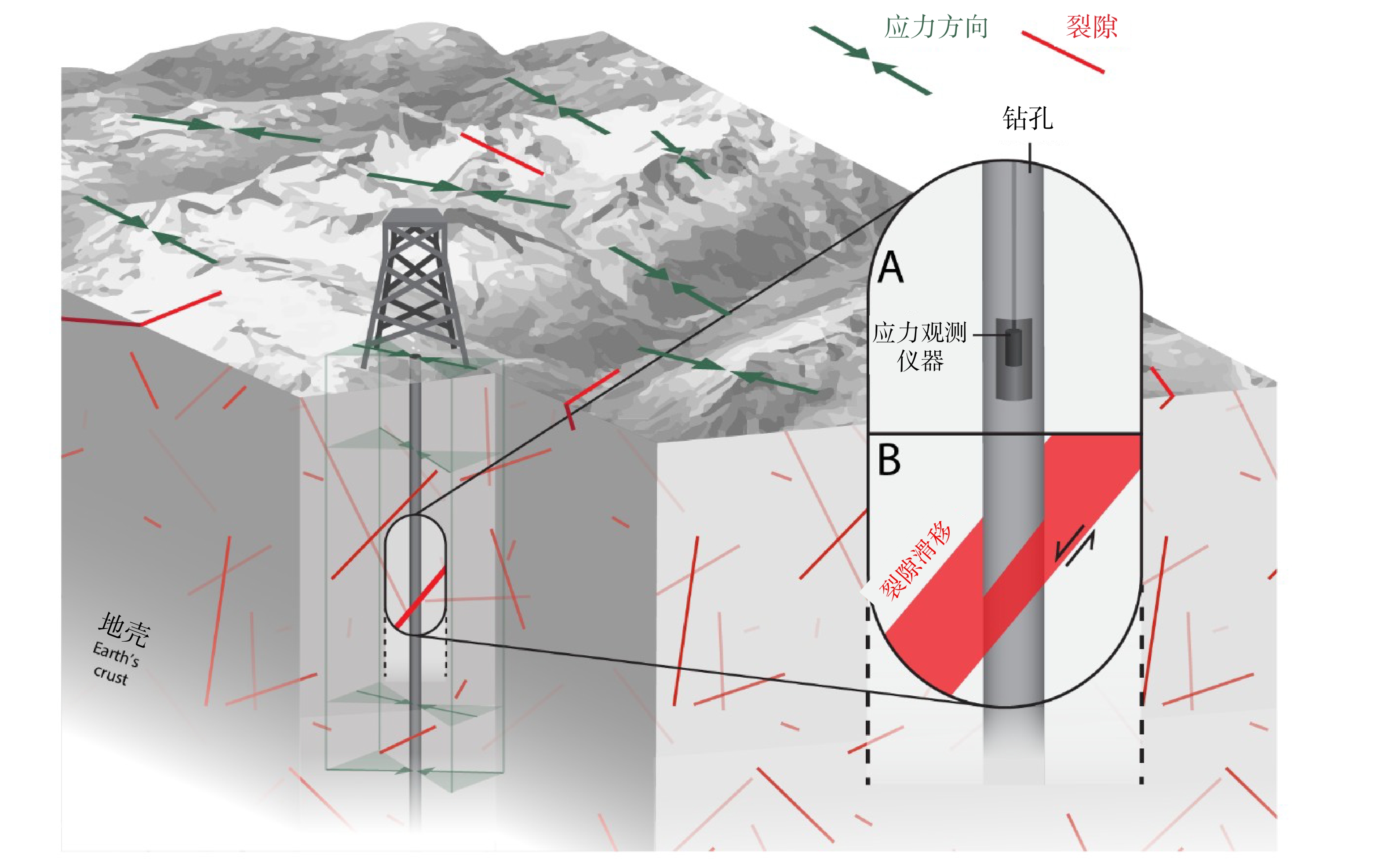
图 1 钻孔中应力观测示意图
地壳应力不均质性(深绿色箭头表示应力方向);地壳岩体结构面如裂隙、断层等(红线)
Figure 1. Illustrations of in-situ stress observations in boreholes
The crustal stress heterogeneity is illustrated by the orientations of the green arrows, and crustal rock mass discontinuities such as fractures and faults are illustrated by the red lines.
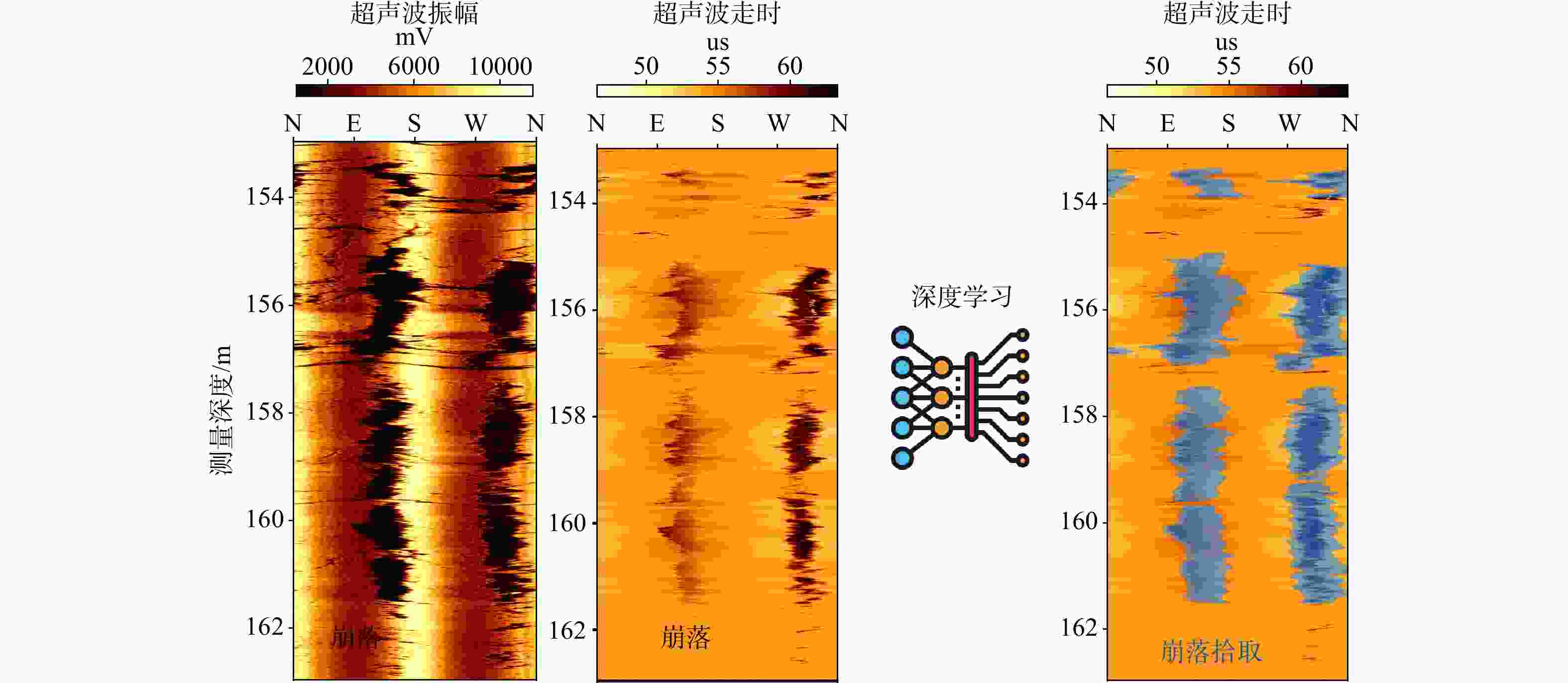
图 2 利用深度学习自动拾取钻孔成像中的崩落示例
超声波成像测井的振幅、走时数据,通过深度学习手段自动拾取崩落等地应力指示物信息
Figure 2. Example of automatic breakout identification from borehole image logs via deep learning
Amplitude and travel–time data of ultrasonic imaging logging are used to automatically extract the information of in-situ stress indicators such as borehole breakouts by means of deep learning.
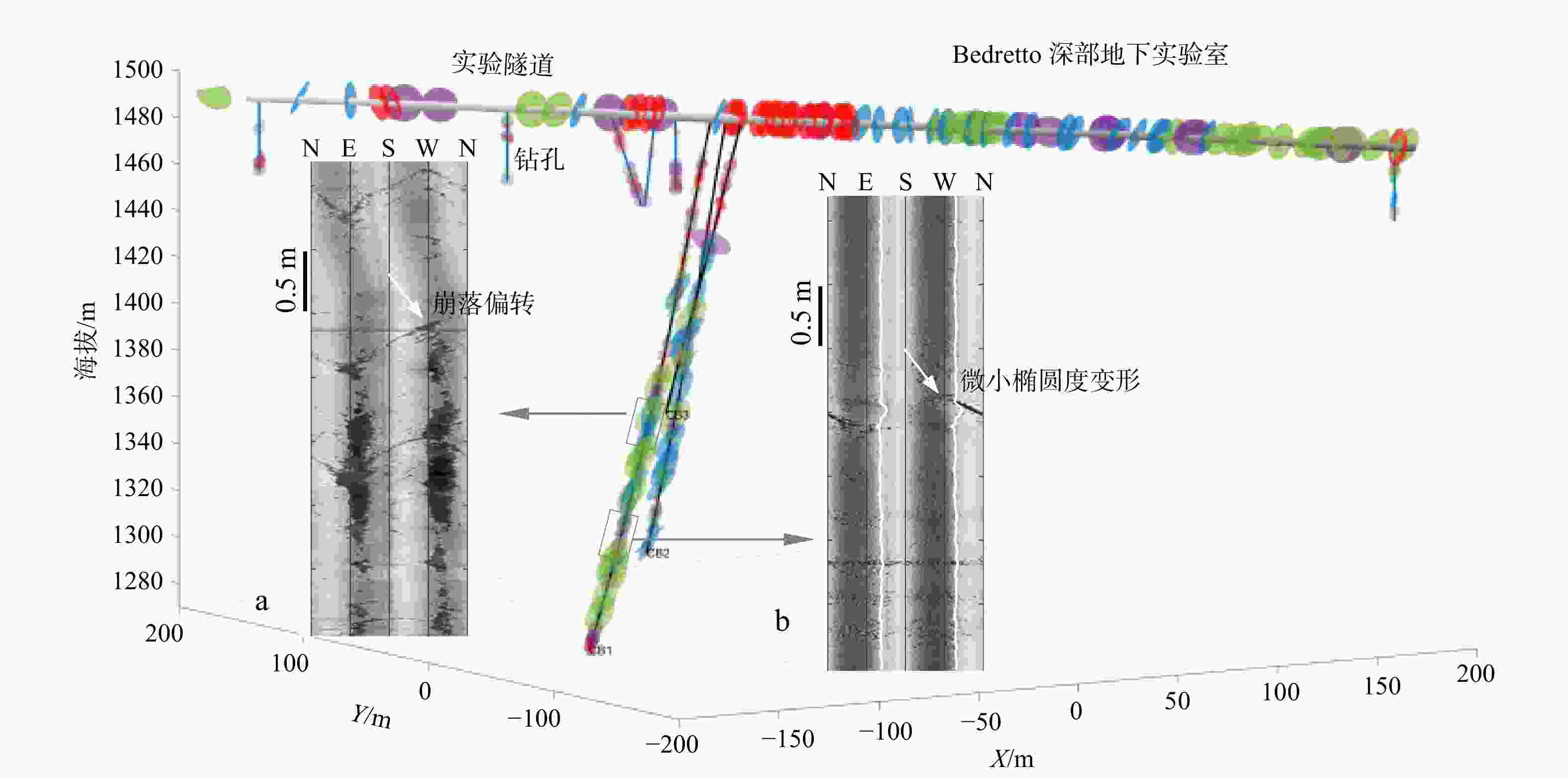
图 3 瑞士Bedretto地下实验室应力表征的概况
图中X表示正东方向,Y为正北方向a—钻孔成像展示的一处钻孔崩落;b— 钻孔成像及其反演钻孔微小椭圆度变形
Figure 3. Overview of the in-situ stress characterization in the Bedretto Underground Laboratory, Switzerland
(a) Breakout identified on the borehole image log; (b) Borehole ellipticityX represents the east direction, and Y represents the north direction.
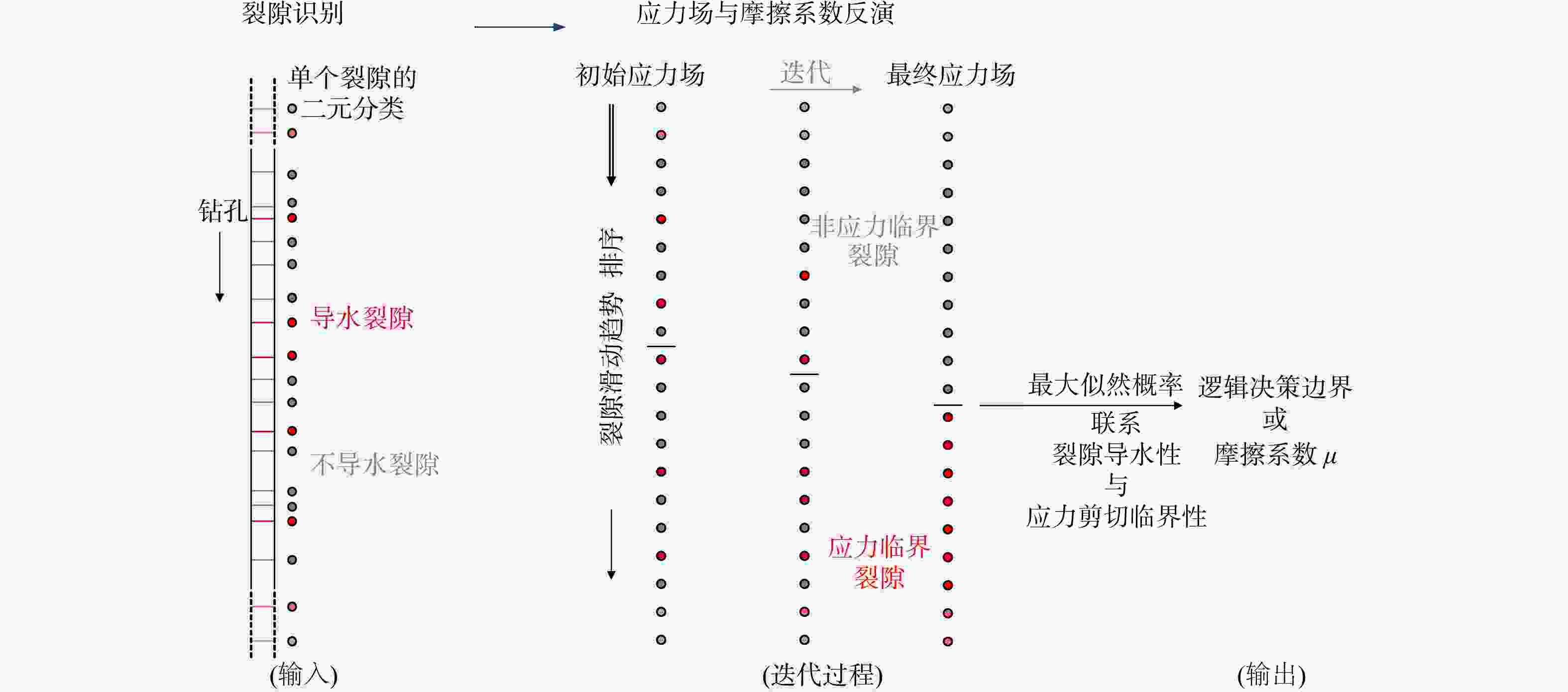
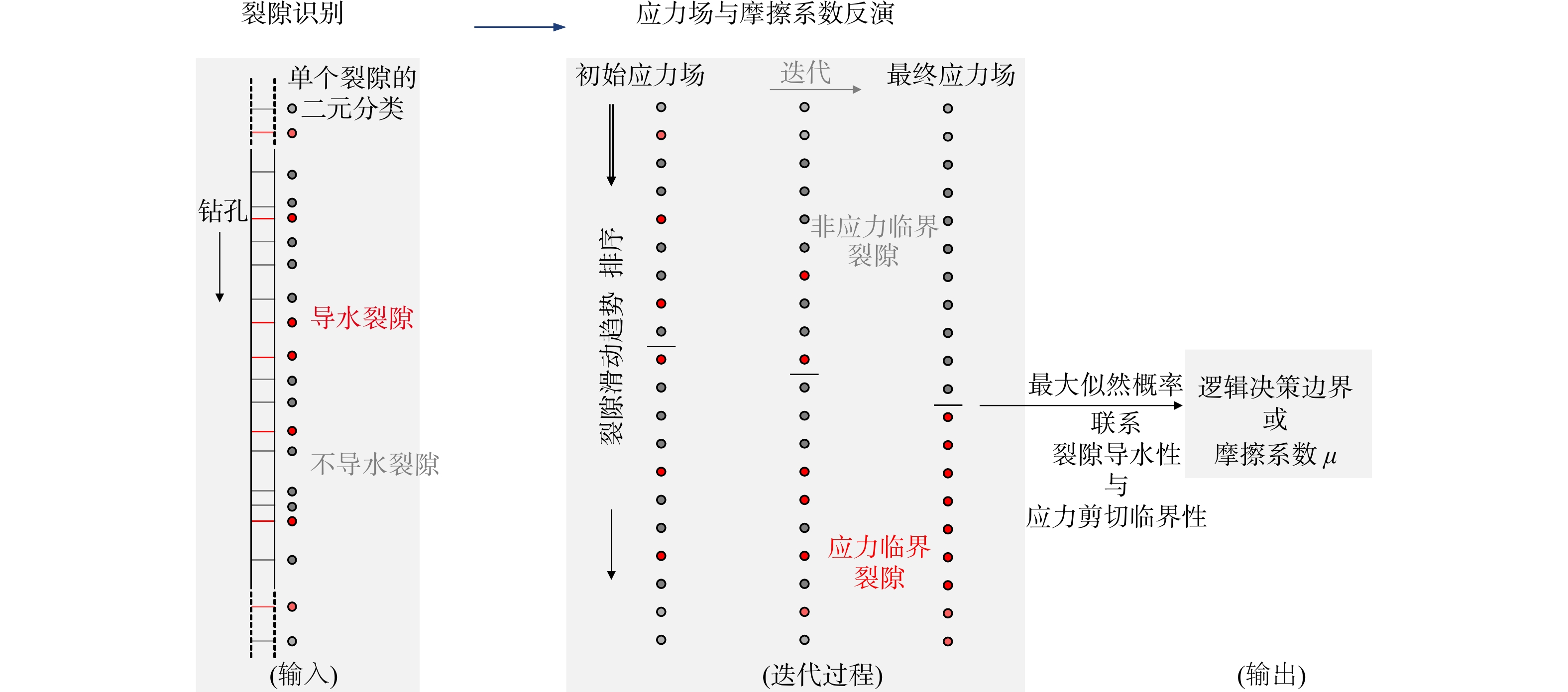
图 4 利用钻孔中天然裂隙导水性开展地壳应力场和岩体摩擦系数反演的示意图
将钻孔成像和温度测井识别并分类的导水/不导水裂隙,作为输入数据进行应力场和地壳岩体摩擦系数的反演,获得联系裂隙导水性和剪切应力临界性的最大似然概率
Figure 4. Illustration of the inversion of the crustal stress and rock mass frictional coefficient via natural fracture hydraulic conductivity
Natural fractures are identified and classified through borehole image logs and temperature logs; they serve as input for the inversion of in-situ stress and the crustal rock mass frictional coefficient, which attains maximum likelihood linking fracture hydraulic conductivity and shear stress criticality.
-
[1] AMADEI B, STEPHANSSON O, 1997. Rock stress and its measurement[M]. Dordrecht: Springer. [2] ASK M, PIERDOMINICI S, ROSBERG J E, 2024. Image analysis of acoustic data and interpretation of rock stress orientations for geothermal exploration in Gothenburg borehole GE-1, SW Sweden[J]. Geological Society, London, Special Publications, 546(1): 69-91. doi: 10.1144/SP546-2023-36 [3] BARREE R D D, MISKIMINS J L L, GILBERT J V V, 2015. Diagnostic fracture injection tests: common mistakes, misfires, and misdiagnoses[J]. SPE Production & Operations, 30(2): 84-98. [4] BARTON C A, ZOBACK M D, 1994. Stress perturbations associated with active faults penetrated by boreholes: possible evidence for near-complete stress drop and a new technique for stress magnitude measurement[J]. Journal of Geophysical Research: Solid Earth, 99(B5): 9373-9390. doi: 10.1029/93JB03359 [5] BARTON C A, ZOBACK M D, MOOS D, 1995. Fluid flow along potentially active faults in crystalline rock[J]. Geology, 23(8): 683-686. doi: 10.1130/0091-7613(1995)023<0683:FFAPAF>2.3.CO;2 [6] BELL J S, GOUGH D I, 1979. Northeast-southwest compressive stress in Alberta evidence from oil wells[J]. Earth and Planetary Science Letters, 45(2): 475-482. doi: 10.1016/0012-821X(79)90146-8 [7] BJØRLYKKE K, 2001. How faulting keeps the crust strong: comment and reply[J]. Geology, 29(2): 189-190. doi: 10.1130/0091-7613(2001)029<0189:HFKTCS>2.0.CO;2 [8] BONNET E, BOUR O, ODLING N E, et al., 2001. Scaling of fracture systems in geological media[J]. Reviews of Geophysics, 39(3): 347-383. doi: 10.1029/1999RG000074 [9] BRACE W F, KOHLSTEDT D L, 1980. Limits on lithospheric stress imposed by laboratory experiments[J]. Journal of Geophysical Research: Solid Earth, 85(B11): 6248-6252. doi: 10.1029/JB085iB11p06248 [10] BRÖKER K, MA X D, 2022. Estimating the least principal stress in a granitic rock mass: systematic mini-frac tests and elaborated pressure transient analysis[J]. Rock Mechanics and Rock Engineering, 55(4): 1931-1954. doi: 10.1007/s00603-021-02743-1 [11] BRÖKER K, MA X D, ZHANG S H, et al., 2024. Constraining the stress field and its variability at the BedrettoLab: elaborated hydraulic fracture trace analysis[J]. International Journal of Rock Mechanics and Mining Sciences, 178: 105739. doi: 10.1016/j.ijrmms.2024.105739 [12] BYERLEE J, 1978. Friction of rocks[J]. Pure and Applied Geophysics, 116: 615-626. doi: 10.1007/BF00876528 [13] CHANG C D, JO Y, 2015. Heterogeneous in situ stress magnitudes due to the presence of weak natural discontinuities in granitic rocks[J]. Tectonophysics, 664: 83-97. doi: 10.1016/j.tecto.2015.08.044 [14] CHEN Q C, SUN D S, CUI J J, et al., 2019. Hydraulic fracturing stress measurements in Xuefengshan deep borehole and its significance[J]. Journal of Geomechanics, 25(5): 853-865. (in Chinese with English abstract) [15] CHESTER F M, EVANS J P, BIEGEL R L, 1993. Internal structure and weakening mechanisms of the San Andreas fault[J]. Journal of Geophysical Research: Solid Earth, 98(B1): 771-786. doi: 10.1029/92JB01866 [16] CORNET F H, VALETTE B, 1984. In situ stress determination from hydraulic injection test data[J]. Journal of Geophysical Research: Solid Earth, 89(B13): 11527-11537. doi: 10.1029/JB089iB13p11527 [17] CORNET F H, BÉRARD T, BOUROUIS S, 2007. How close to failure is a granite rock mass at a 5 km depth?[J]. International Journal of Rock Mechanics and Mining Sciences, 44(1): 47-66. doi: 10.1016/j.ijrmms.2006.04.008 [18] CORNET F H, 2017. Vertical stress profiles and long-term rock mass rheology[R]. ARMA 17‐MTS lecture, San Francisco: American Rock Mechanics Association. [19] DAVATZES N C, HICKMAN S H, 2010. Stress, fracture, and fluid-flow analysis using acoustic and electrical image logs in hot fractured granites of the Coso geothermal field, California, U. S. A. [M]//PÖPPELREITER M, GARCÍA-CARBALLIDO C, KRAAIJVELD M. Dipmeter and borehole image log technology. Tulsa: American Association of Petroleum Geologists. [20] DAY‐LEWIS A, ZOBACK M, HICKMAN S, 2010. Scale‐invariant stress orientations and seismicity rates near the San Andreas Fault[J]. Geophysical Research Letters, 37(24): L24304. [21] DESROCHES J, KURKJIAN A L, 1999. Applications of wireline stress measurements[J]. SPE Reservoir Evaluation & Engineering, 2(5): 451-461. [22] DIAS L O, BOM C R, FARIA E L, et al., 2020. Automatic detection of fractures and breakouts patterns in acoustic borehole image logs using fast-region convolutional neural networks[J]. Journal of Petroleum Science and Engineering, 191: 107099. doi: 10.1016/j.petrol.2020.107099 [23] DU L, LU X M, LI H Z, 2023. Automatic fracture detection from the images of electrical image logs using Mask R-CNN[J]. Fuel, 351: 128992. doi: 10.1016/j.fuel.2023.128992 [24] ELLSWORTH W L, 2013. Injection-induced earthquakes[J]. Science, 341(6142): 1225942. doi: 10.1126/science.1225942 [25] ELSWORTH D, SPIERS C J, NIEMEIJER A R, 2016. Understanding induced seismicity: observational data sets provide a clearer picture of the causes of induced seismicity[J]. Science, 354(6318): 1380-1381. doi: 10.1126/science.aal2584 [26] FAN T Y, LÜ C X, LÜ G X, 2024. Analysis of crustal stress in tectonic ore-forming processes: research status and thought[J]. Geoscience, 38(4): 865-872. doi: 10.19657/j.geoscience.1000-8527.2024.086 [27] FENG C J, LI B, LI H, et al., 2022. Estimation of in-situ stress field surrounding the Namcha Barwa region and discussion on the tectonic stability[J]. Journal of Geomechanics, 28(6): 919-937. (in Chinese with English abstract) [28] GAO G Y, ZHANG M Y, WANG C H, et al., 2025. Fine division of recent tectonic stress field and stress profile construction in central Yunnan based on multi-source data[J]. Chinese Journal of Geophysics, 68(10): 3743-3765. (in Chinese with English abstract) [29] GUAN L N, JIANG G M, 2023. High-precision earthquake locations and deep fault characteristics beneath Xianyou Area, Fujian Province[J]. Geoscience, 37(1): 40-47. doi: 10.19657/j.geoscience.1000-8527.2022.071 [30] GUGLIELMI Y, CAPPA F, LANÇON H, et al., 2014. ISRM suggested method for step-rate injection method for fracture in-situ properties (SIMFIP): using a 3-components borehole deformation sensor[J]. Rock Mechanics and Rock Engineering, 47(1): 303-311. doi: 10.1007/s00603-013-0517-1 [31] GUGLIELMI Y, CAPPA F, AVOUAC J P, et al., 2015. Seismicity triggered by fluid injection–induced aseismic slip[J]. Science, 348(6240): 1224-1226. doi: 10.1126/science.aab0476 [32] HAIMSON B, FAIRHURST C, 1967. Initiation and extension of hydraulic fractures in rocks[J]. Society of Petroleum Engineers Journal, 7(3): 310-318. doi: 10.2118/1710-PA [33] HAIMSON B C, CORNET F H, 2003. ISRM suggested methods for rock stress estimation—part 3: hydraulic fracturing (HF) and/or hydraulic testing of pre-existing fractures (HTPF)[J]. International Journal of Rock Mechanics and Mining Sciences, 40(7-8): 1011-1020. doi: 10.1016/j.ijrmms.2003.08.002 [34] HARDEBECK J L, HAUKSSON E, 2001. Crustal stress field in southern California and its implications for fault mechanics[J]. Journal of Geophysical Research: Solid Earth, 106(B10): 21859-21882. doi: 10.1029/2001JB000292 [35] HEALY J H, RUBEY W W, GRIGGS D T, et al., 1968. The denver earthquakes[J]. Science, 161(3848): 1301-1310. doi: 10.1126/science.161.3848.1301 [36] HUBBERT M K, WILLIS D G, 1957. Mechanics of hydraulic fracturing[J]. Transactions of the AIME, 210(1): 153-168. doi: 10.2118/686-G [37] HUDSON J A, CORNET F H, CHRISTIANSSON R, 2003. ISRM Suggested Methods for rock stress estimation—Part 1: strategy for rock stress estimation[J]. International Journal of Rock Mechanics and Mining Sciences, 40(7-8): 991-998. doi: 10.1016/j.ijrmms.2003.07.011 [38] ITO T, ZOBACK M D, 2000. Fracture permeability and in situ stress to 7 km depth in the KTB scientific drillhole[J]. Geophysical Research Letters, 27(7): 1045-1048. doi: 10.1029/1999GL011068 [39] KIRSCH E G, 1898. Die Theorie der Elastizit t und die Bed rfnisse der Festigkeitslehre[J]. Zeitshrift des Vereines deutscher Ingenieure, 42: 797-807. [40] KONG W L, HUANG L Y, YAO R, et al., 2021. Review of stress field studies in Sichuan-Yunnan region[J]. Progress in Geophysics, 36(5): 1853-1864. (in Chinese with English abstract) [41] KRIETSCH H, GISCHIG V, EVANS K, et al., 2019. Stress measurements for an in situ stimulation experiment in crystalline rock: integration of induced seismicity, stress relief and hydraulic methods[J]. Rock Mechanics and Rock Engineering, 52(2): 517-542. doi: 10.1007/s00603-018-1597-8 [42] LEI X L, SU J R, WANG Z W, 2020. Growing seismicity in the Sichuan Basin and its association with industrial activities[J]. Science China Earth Sciences, 63(11): 1633-1660. doi: 10.1007/s11430-020-9646-x [43] LI B, XIE F R, HUANG J S, et al., 2022. In situ stress state and seismic hazard in the Dayi seismic gap of the Longmenshan thrust belt[J]. Science China Earth Sciences, 65(7): 1388-1398. doi: 10.1007/s11430-021-9915-4 [44] LISLE R J, SRIVASTAVA D C, 2004. Test of the frictional reactivation theory for faults and validity of fault-slip analysis[J]. Geology, 32(7): 569-572. doi: 10.1130/G20408.1 [45] LIU Z Y, WANG C H, XU X, et al., 2017. Slip tendency analysis of the mid-segment of Tan-Lu fault belt based on stress measurements[J]. Geoscience, 31(4): 869-876. (in Chinese with English abstract) [46] LOCKNER D A, MORROW C, MOORE D, et al., 2011. Low strength of deep San Andreas fault gouge from SAFOD core[J]. Nature, 472(7341): 82-85. doi: 10.1038/nature09927 [47] LUNDSTERN J E, ZOBACK M D, 2020. Multiscale variations of the crustal stress field throughout North America[J]. Nature Communications, 11(1): 1951. doi: 10.1038/s41467-020-15841-5 [48] MA X D, SAAR M O, FAN L S, 2020. Coulomb criterion-bounding crustal stress limit and intact rock failure: perspectives[J]. Powder Technology, 374: 106-110. doi: 10.1016/j.powtec.2020.07.044 [49] MA X D, HERTRICH M, AMANN F, et al., 2022a. Multi-disciplinary characterizations of the Bedretto Lab–a unique underground geoscience research facility[J]. Solid Earth Discussions, 2021: 1-40. [50] MA X D, ZHANG S H, ZHANG X W, et al., 2022b. Lithology-controlled stress variations of Longmaxi shale–Example of an appraisal wellbore in the Changning area[J]. Rock Mechanics Bulletin, 1(1): 100002. doi: 10.1016/j.rockmb.2022.100002 [51] MA X D, ZOBACK M D, 2020. Predicting lithology-controlled stress variations in the Woodford shale from well log data via viscoplastic relaxation[J]. SPE Journal, 25(5): 2534-2546. doi: 10.2118/201232-PA [52] MATTILA J, FOLLIN S, 2019. Does in situ state of stress affect fracture flow in crystalline settings?[J]. Journal of Geophysical Research: Solid Earth, 124(5): 5241-5253. doi: 10.1029/2018JB016791 [53] MCCLURE M, FOWLER G, PICONE M, 2022. Best practices in DFIT interpretation: comparative analysis of 62 DFITs from nine different shale plays[C]//Proceedings of SPE international hydraulic fracturing technology conference & exhibition. Muscat: SPE: D031S011R001. [54] MCGARR A, ZOBACK M D, HANKS T C, 1982. Implications of an elastic analysis of in situ stress measurements near the San Andreas fault[J]. Journal of Geophysical Research: Solid Earth, 87(B9): 7797-7806. doi: 10.1029/JB087iB09p07797 [55] MENG W, TIAN T, SUN D S, et al., 2022. Research on stress state in deep shale reservoirs based on in-situ stress measurement and rheological model[J]. Journal of Geomechanics, 28(4): 537-549. (in Chinese with English abstract) [56] MORRIS A, FERRILL D A, HENDERSON D B, 1996. Slip-tendency analysis and fault reactivation[J]. Geology, 24(3): 275-278. doi: 10.1130/0091-7613(1996)024<0275:STAAFR>2.3.CO;2 [57] NASIM M Q, MAITI T, MOSAVAT N, et al., 2025. Automated detection of geological features: leveraging deep learning for beddings and fractures identification in image logs[J]. SPE Journal, 30(4): 1569-1587. doi: 10.2118/223976-PA [58] OBARA Y, SUGAWARA K, 2003. Updating the use of the CCBO cell in Japan: overcoring case studies[J]. International Journal of Rock Mechanics and Mining Sciences, 40(7-8): 1189-1203. doi: 10.1016/j.ijrmms.2003.07.007 [59] OHANIAN J, 2016. In-situ Stress Rock Fracture Sensing with HD-FOS. Luna Innovations Incorporated. [60] PEŠKA P, ZOBACK M D, 1995. Compressive and tensile failure of inclined well bores and determination of in situ stress and rock strength[J]. Journal of Geophysical Research: Solid Earth, 100(B7): 12791-12811. doi: 10.1029/95JB00319 [61] PLUMB R A, HICKMAN S H, 1985. Stress‐induced borehole elongation: a comparison between the four‐arm dipmeter and the borehole televiewer in the Auburn geothermal well[J]. Journal of Geophysical Research: Solid Earth, 90(B7): 5513-5521. doi: 10.1029/JB090iB07p05513 [62] PROVOST A S, HOUSTON H, 2001. Orientation of the stress field surrounding the creeping section of the San Andreas Fault: evidence for a narrow mechanically weak fault zone[J]. Journal of Geophysical Research: Solid Earth, 106(B6): 11373-11386. doi: 10.1029/2001JB900007 [63] RAJABI M, ZIEGLER M, HEIDBACH O, et al., 2024. Contribution of mine borehole data toward high-resolution stress mapping: an example from northern Bowen Basin, Australia[J]. International Journal of Rock Mechanics and Mining Sciences, 173: 105630. doi: 10.1016/j.ijrmms.2023.105630 [64] RALEIGH C B, HEALY J H, BREDEHOEFT J D, 1976. An experiment in earthquake control at Rangely, Colorado[J]. Science, 191(4233): 1230-1237. doi: 10.1126/science.191.4233.1230 [65] ROSHAN H, LI D Q, CANBULAT I, et al., 2023. Borehole deformation based in situ stress estimation using televiewer data[J]. Journal of Rock Mechanics and Geotechnical Engineering, 15(9): 2475-2481. doi: 10.1016/j.jrmge.2022.12.016 [66] SCHAIBLE K E, SAFFER D M, 2025. State of stress across major faults in the Nankai subduction zone estimated from wellbore breakouts[J]. Journal of Geophysical Research: Solid Earth, 130(7): e2024JB030242. doi: 10.1029/2024JB030242 [67] SCHMITT D R, CURRIE C A, ZHANG L, 2012. Crustal stress determination from boreholes and rock cores: fundamental principles[J]. Tectonophysics, 580: 1-26. doi: 10.1016/j.tecto.2012.08.029 [68] SCHOENBALL M, DAVATZES N C, 2017. Quantifying the heterogeneity of the tectonic stress field using borehole data[J]. Journal of Geophysical Research: Solid Earth, 122(8): 6737-6756. doi: 10.1002/2017JB014370 [69] SHAMIR G, ZOBACK M D, 1992. Stress orientation profile to 3.5 km depth near the San Andreas fault at Cajon Pass, California[J]. Journal of Geophysical Research: Solid Earth, 97(B4): 5059-5080. doi: 10.1029/91JB02959 [70] SONE H, ZOBACK M D, 2014. Viscous relaxation model for predicting least principal stress magnitudes in sedimentary rocks[J]. Journal of Petroleum Science and Engineering, 124: 416-431. doi: 10.1016/j.petrol.2014.09.022 [71] TOWNEND J, ZOBACK M D, 2000. How faulting keeps the crust strong[J]. Geology, 28(5): 399-402. doi: 10.1130/0091-7613(2000)28<399:HFKTCS>2.0.CO;2 [72] TRZECIAK M, DABROWSKI M, JAROSIŃSKI M, 2020. Stress distribution models in layered, viscoelastic sedimentary basins under tectonic and glacial loads[J]. Geophysical Journal International, 220(2): 768-793. doi: 10.1093/gji/ggz469 [73] TRZECIAK M, SONE H, VOEGELI S, et al., 2022. Laboratory evaluation of the thermal breakout method for maximum horizontal stress measurement[J]. Rock Mechanics and Rock Engineering, 55(1): 51-69. doi: 10.1007/s00603-021-02617-6 [74] VALLEY B, EVANS K F, 2009. Stress orientation to 5 km depth in the basement below Basel (Switzerland) from borehole failure analysis[J]. Swiss Journal of Geosciences, 102(3): 467. [75] WANG C H, SONG C K, GUO Q L, et al., 2014. Stress build-up in the shallow crust before the Lushan Earthquake based on the in-situ stress measurements[J]. Chinese Journal of Geophysics, 57(1): 102-114. (in Chinese with English abstract) [76] WANG K L, 2021. On the strength of subduction megathrusts[J]. Chinese Journal of Geophysics, 64(10): 3452-3465. (in Chinese with English abstract) [77] WANG W, SCHMITT D R, 2020. Automated borehole breakout interpretation from ultrasonic imaging: application to a deep borehole drilled into the crystalline crust[C]//Proceedings of the 54th U. S. rock mechanics/geomechanics symposium. ARMA: ARMA-2020-1270. [78] XIE F R, CUI X F, ZHAO J T, et al., 2004. Regionalization of the recent tectonic stress field in China and adjacent regions[J]. Chinese Journal of Geophysics, 47(4): 745-754. doi: 10.1002/cjg2.3545 [79] XING P J, MCLENNAN J, MOORE J, 2022. Minimum in-situ stress measurement using temperature signatures[J]. Geothermics, 98: 102282. doi: 10.1016/j.geothermics.2021.102282 [80] YANG J, GOODFELLOW S D, HARRISON J P, 2020. Automated extraction of borehole breakout properties from acoustic televiewer (ATV) data[C]//Proceedings of the 56th U. S. rock mechanics/geomechanics symposium. Santa Fe: ARMA: ARMA-2022-0408. [81] YANG Y H, SUN D S, MA X D, et al., 2025. A total system stiffness approach for determining shut-in pressure in hydraulic fracturing stress measurements[J]. International Journal of Rock Mechanics and Mining Sciences, 192: 106160. doi: 10.1016/j.ijrmms.2025.106160 [82] YEOM J, KIM H, CHANG C D, et al., 2025. Automatic detection of borehole breakout for image logs using YOLO algorithm[J]. Geoenergy Science and Engineering, 252: 213925. doi: 10.1016/j.geoen.2025.213925 [83] ZHANG C Y, DU S H, HE M C, et al., 2022. Characteristics of in-situ stresses on the western margin of the eastern Himalayan syntaxis and its influence on stability of tunnel surrounding rock[J]. Chinese Journal of Rock Mechanics and Engineering, 41(5): 954-968. (in Chinese with English abstract) [84] ZHANG J, KUANG W H, ZHANG X, et al., 2021. Global review of induced earthquakes in oil and gas production fields[J]. Reviews of Geophysics and Planetary Physics, 52(3): 239-265. (in Chinese with English abstract) [85] ZHANG J, KUANG W H, ZHANG X, et al., 2021. Global review of induced earthquakes in oil and gas production fields[J]. Reviews of Geophysics and Planetary Physics, 52(3): 239-265. (in Chinese with English abstract) [86] ZHANG S H, MA X D, 2021b. How does in situ stress rotate within a fault zone? Insights from explicit modeling of the frictional, fractured rock mass[J]. Journal of Geophysical Research: Solid Earth, 126(11): e2021JB022348. doi: 10.1029/2021JB022348 [87] ZHANG S H, MA X D, BRÖKER K, et al., 2023a. Fault zone spatial stress variations in a granitic rock mass: revealed by breakouts within an array of boreholes[J]. Journal of Geophysical Research: Solid Earth, 128(8): e2023JB026477. doi: 10.1029/2023JB026477 [88] ZHANG S H, MA X D, ZOBACK M, 2023b. Determination of the crustal friction and state of stress in deep boreholes using hydrologic indicators[J]. Rock Mechanics Bulletin, 2(1): 100024. doi: 10.1016/j.rockmb.2022.100024 [89] ZHANG S H, MA X D, 2021. Global frictional equilibrium via stochastic, local Coulomb frictional slips[J]. Journal of Geophysical Research: Solid Earth, 126(7): e2020JB021404. doi: 10.1029/2020JB021404 [90] ZOBACK M D, MOOS D, MASTIN L, et al., 1985. Well bore breakouts and in situ stress[J]. Journal of Geophysical Research: Solid Earth, 90(B7): 5523-5530. doi: 10.1029/JB090iB07p05523 [91] ZOBACK M D, APEL R, BAUMGÄRTNER J, et al., 1993. Upper-crustal strength inferred from stress measurements to 6 km depth in the KTB borehole[J]. Nature, 365(6447): 633-635. doi: 10.1038/365633a0 [92] ZOBACK M D, TOWNEND J, 2001. Implications of hydrostatic pore pressures and high crustal strength for the deformation of intraplate lithosphere[J]. Tectonophysics, 336(1-4): 19-30. doi: 10.1016/S0040-1951(01)00091-9 [93] ZOBACK M D, BARTON C A, BRUDY M, et al., 2003. Determination of stress orientation and magnitude in deep wells[J]. International Journal of Rock Mechanics and Mining Sciences, 40(7-8): 1049-1076. doi: 10.1016/j.ijrmms.2003.07.001 [94] ZOBACK M D, 2010. Reservoir geomechanics[M]. Cambridge: Cambridge University Press. [95] ZOBACK M L, 1992. First‐and second‐order patterns of stress in the lithosphere: the World Stress Map Project[J]. Journal of Geophysical Research: Solid Earth, 97(B8): 11703-11728. doi: 10.1029/92JB00132 [96] 陈群策, 孙东生, 崔建军, 等, 2019. 雪峰山深孔水压致裂地应力测量及其意义[J]. 地质力学学报, 25(5): 853-865. [97] 丰成君, 李滨, 李惠, 等, 2022. 南迦巴瓦地区地应力场估算与构造稳定性探讨[J]. 地质力学学报, 28(6): 919-937. doi: 10.12090/j.issn.1006-6616.20222820 [98] 高桂云, 张梦云, 王成虎, 等, 2025. 基于多源数据的滇中现代构造应力场精细化分区及应力剖面构建[J]. 地球物理学报, 68(10): 3743-3765. [99] 孔维林, 黄禄渊, 姚瑞, 等, 2021. 川滇地区应力场研究进展[J]. 地球物理学进展, 36(5): 1853-1864. doi: 10.6038/pg2021FF0171 [100] 雷兴林, 苏金蓉, 王志伟, 2020. 四川盆地南部持续增长的地震活动及其与工业注水活动的关联[J]. 中国科学: 地球科学, 50(11): 1505-1532. [101] 李兵, 谢富仁, 黄金水, 等, 2022. 龙门山断裂带大邑地震空区地应力状态与地震危险性[J]. 中国科学: 地球科学, 52(7): 1409-1418. [102] 刘卓岩, 王成虎, 徐鑫, 等, 2017. 基于地应力实测数据分析郯庐断裂带中段滑动趋势[J]. 现代地质, 31(4): 869-876. doi: 10.3969/j.issn.1000-8527.2017.04.021 [103] 孟文, 田涛, 孙东生, 等, 2022. 基于原位地应力测试及流变模型的深部泥页岩储层地应力状态研究[J]. 地质力学学报, 28(4): 537-549. [104] 王成虎, 宋成科, 郭启良, 等, 2014. 利用原地应力实测资料分析芦山地震震前浅部地壳应力积累[J]. 地球物理学报, 57(1): 102-114. doi: 10.6038/cjg20140110 [105] 王克林, 2021. 俯冲带大断层的强度问题[J]. 地球物理学报, 64(10): 3452-3465. [106] 张重远, 杜世回, 何满潮, 等, 2022. 喜马拉雅东构造结西缘地应力特征及其对隧道围岩稳定性的影响[J]. 岩石力学与工程学报, 41(5): 954-968. [107] 张捷, 况文欢, 张雄, 等, 2021. 全球油气开采诱发地震的研究现状与对策[J]. 地球与行星物理论评, 52(3): 239-265. -

 下载:
下载:



计量
- 文章访问数: 1107
- HTML全文浏览量: 268
- PDF下载量: 232
- 被引次数: 0
