


Phase–field modelling of discontinuous structures in geomaterials
doi: 10.12090/j.issn.1006-6616.2025149
-
摘要: 文章建立了一种热力学一致的相场框架,用于描述地质材料在复杂应力条件下不连续结构的起裂与演化。模型基于体积−偏应变分解的裂纹驱动力,区分拉伸、压缩与剪切退化机制,并引入惯性效应以反映压实带形成中的波动扰动、颗粒破碎与摩擦重排。采用整体耦合算法,提高了计算的稳定性与收敛性。结果表明,该框架可依托Benzeggagh–Kenane准则准确再现拉伸、剪切及复合破坏模式,并在单轴压缩与V形缺口砂岩三轴压缩算例中成功预测裂纹起裂应力、局部化取向及能量耗散,与实验结果吻合良好。该框架可统一刻画地质材料在拉伸、压缩与剪切耦合作用下的局部化与破裂演化,为复杂加载条件下岩体破坏机理研究提供了稳健的理论与数值工具。Abstract:
Objective This study aims to develop a thermodynamically consistent phase–field framework for modeling the initiation and evolution of discontinuous structures in geomaterials. Methods Our model introduces crack driving forces derived from the volumetric–deviatoric strain decomposition strategy, incorporating distinct tension, compression, and shear degradation mechanisms. Inertia effects capture compaction-band formation driven by wave-like disturbances, grain crushing, and frictional rearrangement. A monolithic algorithm ensures numerical stability and rapid convergence. Results The framework reproduces tensile, shear, mixed tensile–shear, and compressive–shear failures using the Benzeggagh–Kenane criterion. Validation against benchmark simulations—including uniaxial compression of rock-like and triaxial compression of V-notched sandstone specimens—demonstrates accurate predictions of crack initiation stress, localization orientation, and energy dissipation. Conclusions The framework provides a unified and robust numerical tool for analyzing the spatiotemporal evolution of strain localization and fracture in geomaterials. Significance By linking microscale fracture dynamics with macroscale failure within a thermodynamically consistent scheme, this study advances predictive modeling of rock stability, slope failure, and subsurface energy systems, contributing to safer and more sustainable geotechnical practice. -
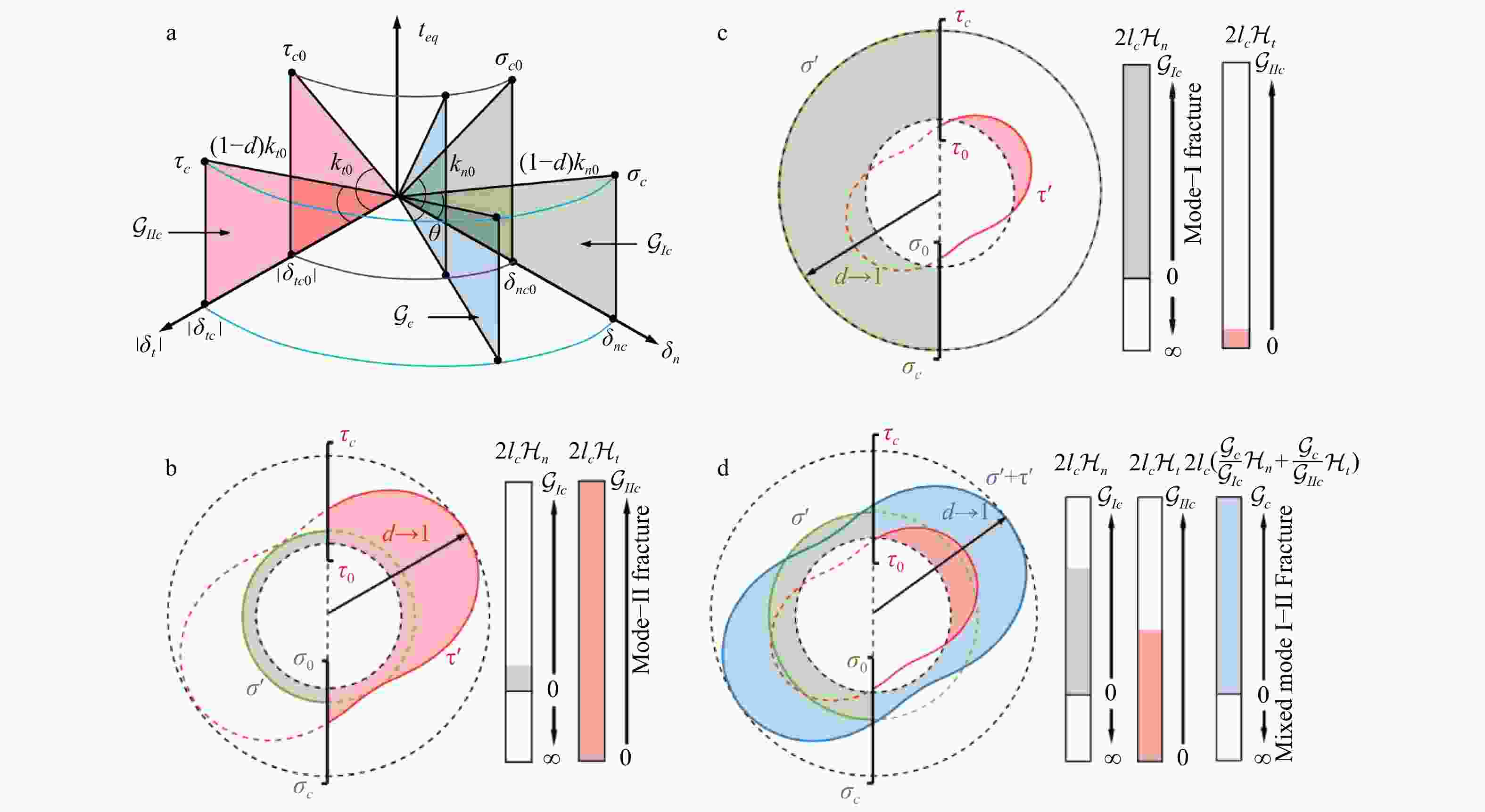
图 2 相场演化原理示意图
a—混合型断裂示意图;b—I 型断裂驱动力示意图;c—II 型断裂驱动力示意图;d—I–II 混合型断裂驱动力示意图
Figure 2. Schematics of the phase-field evolution principles (a) Mixed-mode fracture; (b) Mode-I fracture driving forces; (c) Mode-II fracture driving force; (d) Mixed mode I-II fracture driving forces
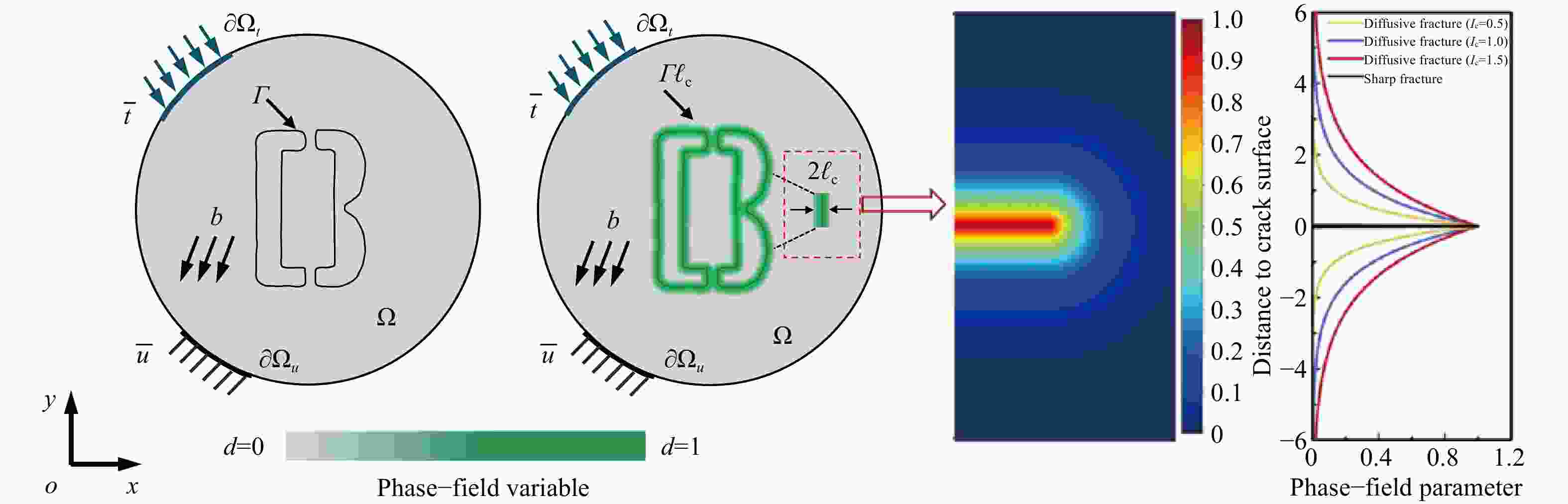
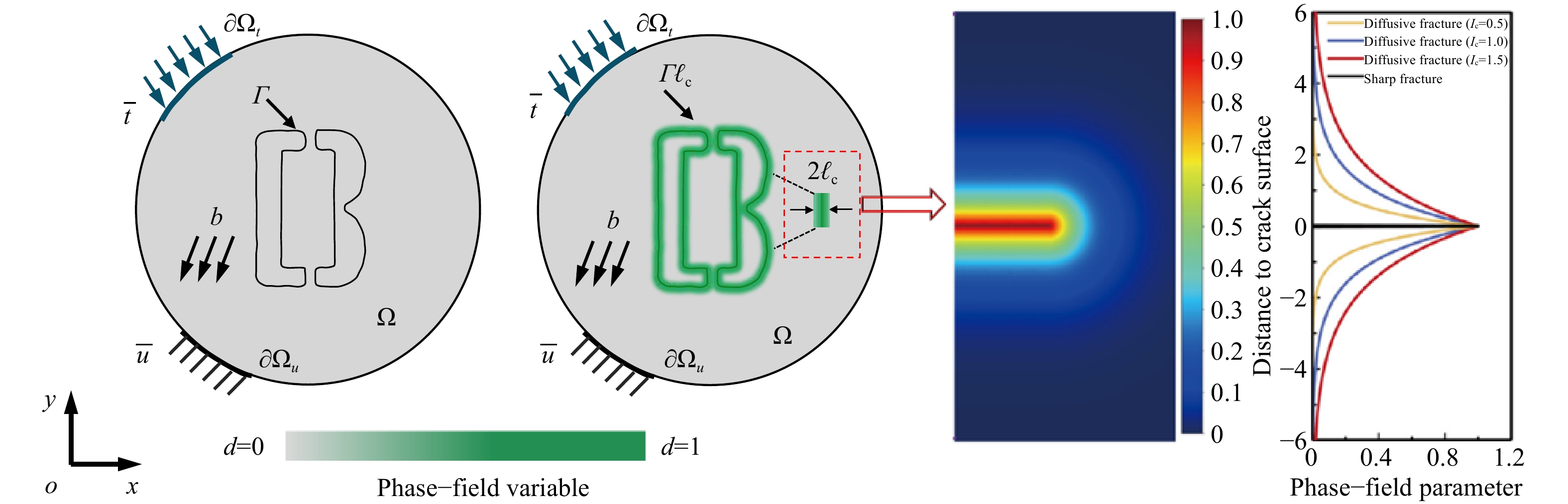
图 1 具有特征长度$ \ell _{c} $的弥散损伤区$ {\varGamma }_{\ell _{c}} $在相场法示意图
Figure 1. Schematic diagram of phase–field method for a diffuse damage zone with a characteristic length
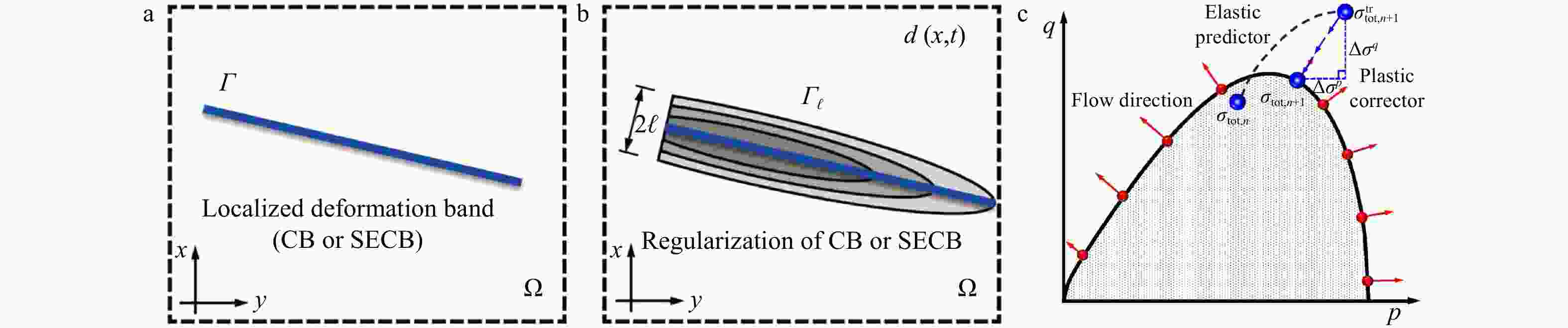
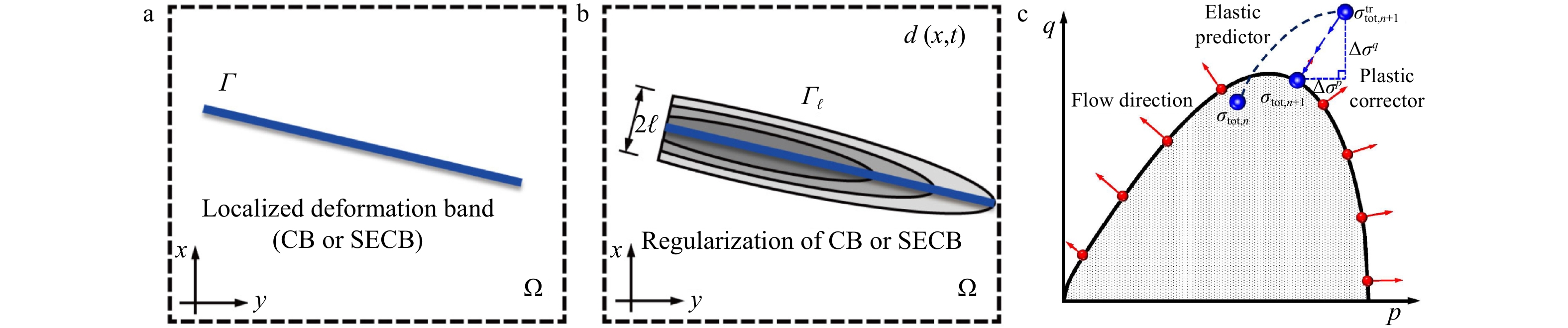
图 3 应变损伤局部化的相场示意图
a—局部化带的尖锐拓扑结构;b—相场正则化变形带;c—不同围压下的流动方向示意图及其广义回归映射几何解释
Figure 3. Phase–field schematics of strain localization
(a) Sharp topology of localization zones; (b) The relevant phase–field regularized deformation bands; (c) Schematics of flow directions at different confining pressures and the general return mapping geometric interpretation
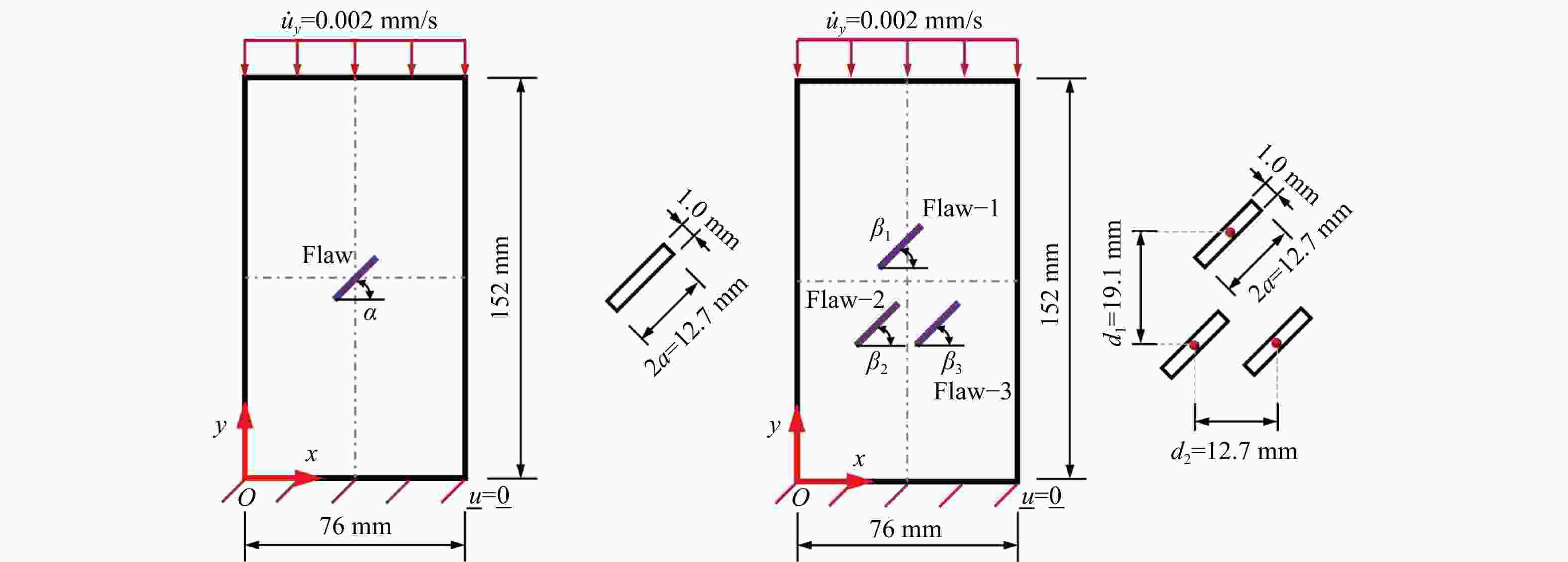
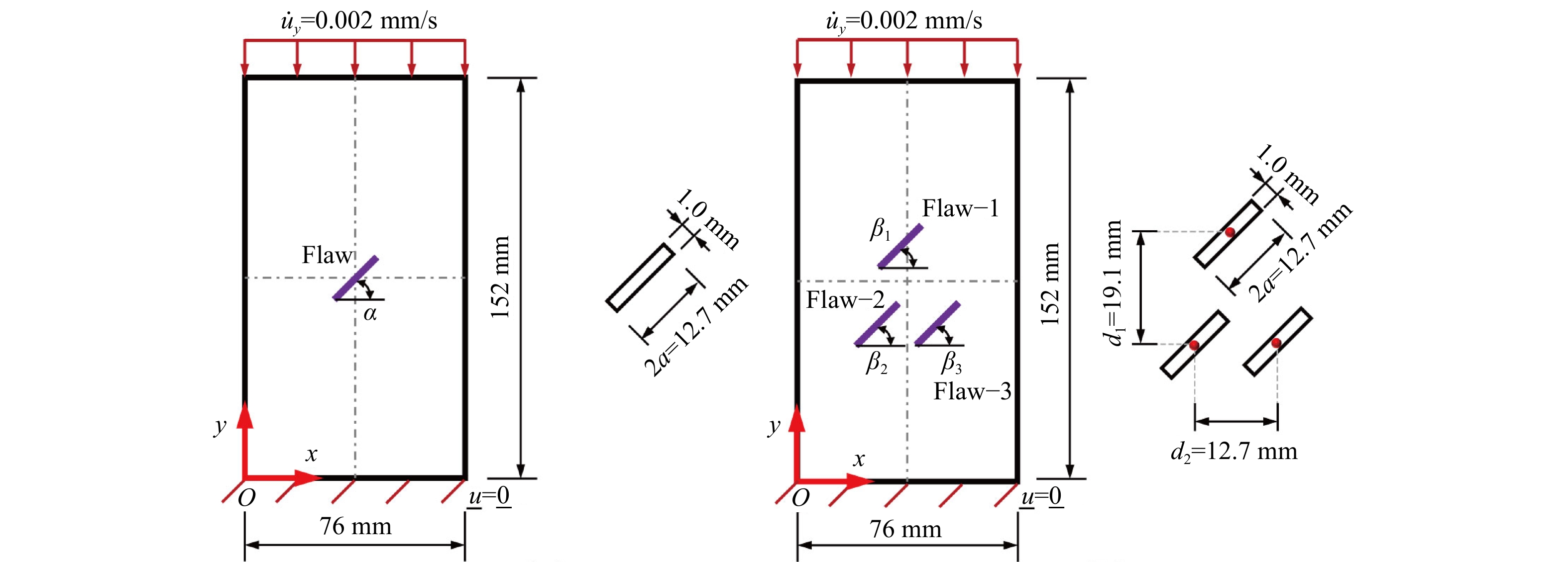
图 4 含单条预制裂隙和3条预制裂隙的类岩试样在单轴压缩试验中的几何形状及边界条件
Figure 4. Geometry and boundary conditions of fissured rock-like specimens in the uniaxial compression tests: a single preexisting fissure and three preexisting fissures
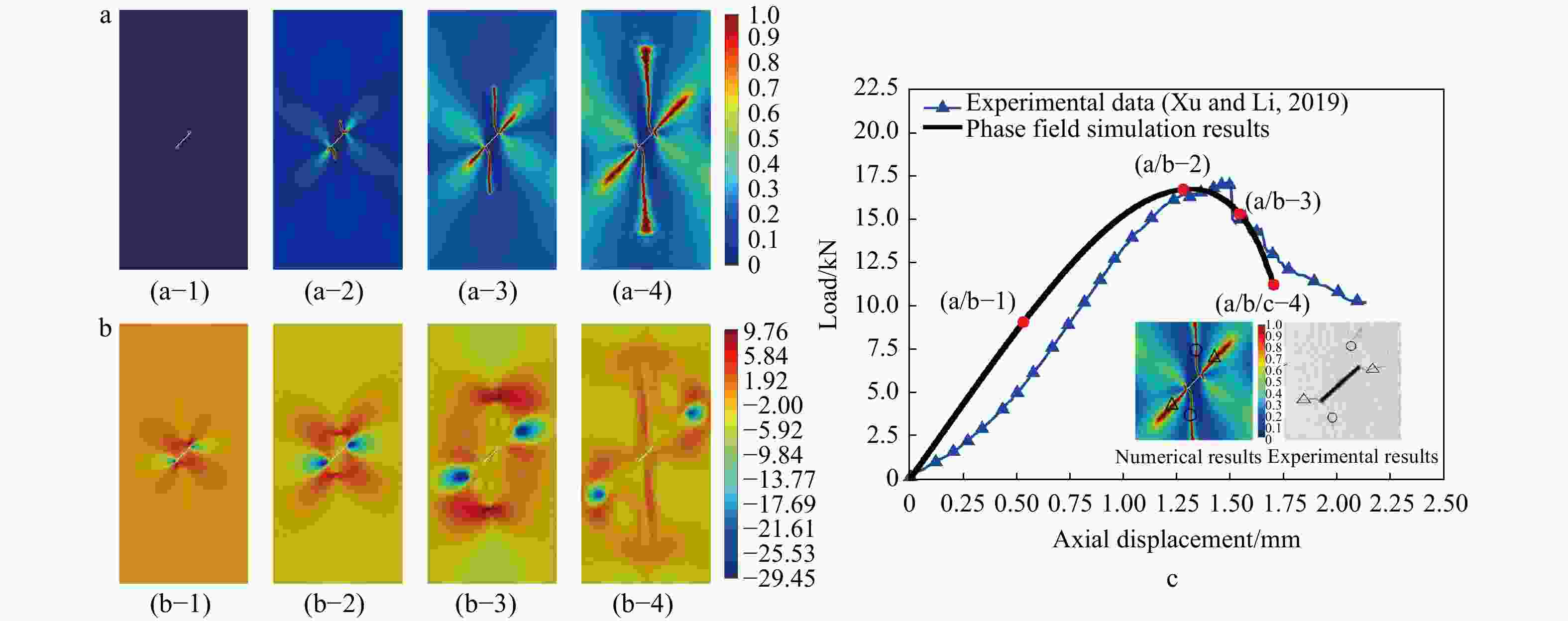
图 5 含单条裂隙的类岩试样在单轴压缩试验中的渐进破坏过程
a—裂纹扩展路径;b—最大主应力分布;c—与实验结果的对比(Xu and Li, 2019)
Figure 5. Progressive failure process of a fissured rock-like sample consisting of a single fissure in the uniaxial compression test
(a) Crack growth paths; (b) Maximum principal stress; (c) Compression with laboratory experiments (Xu and Li, 2019)
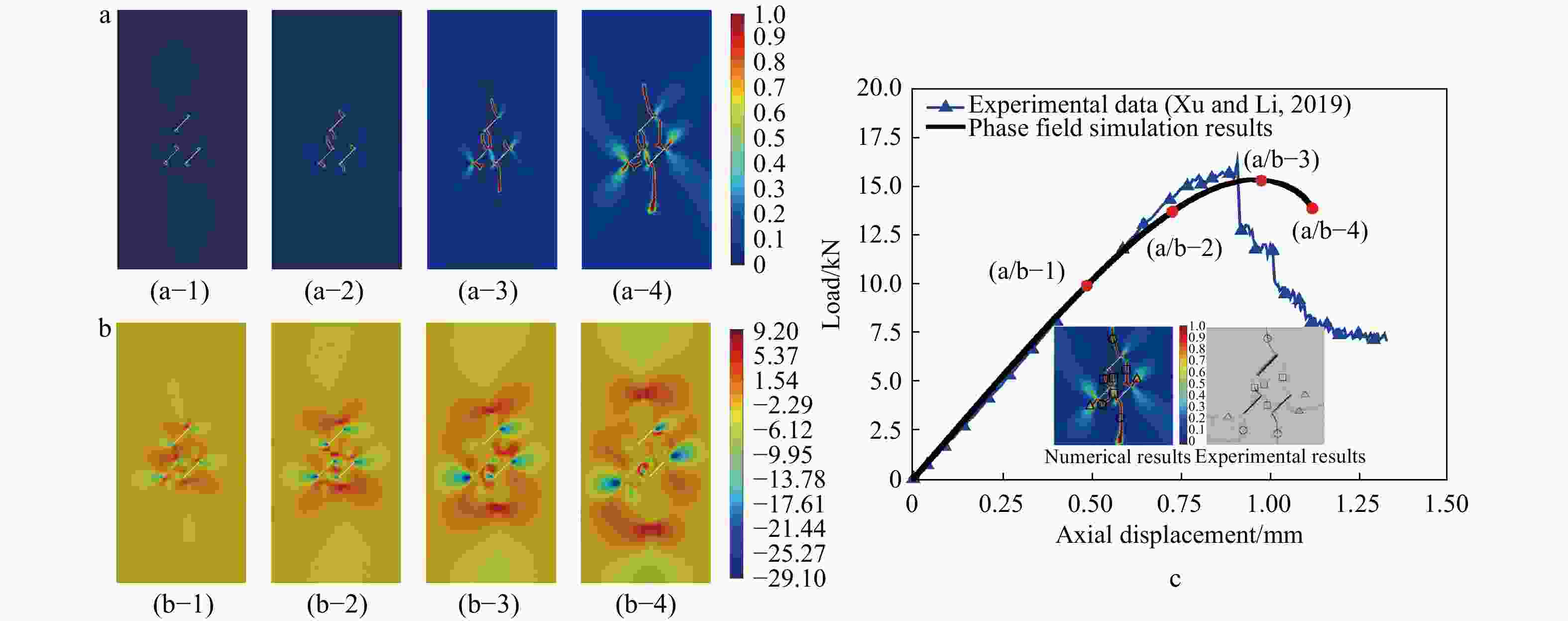
图 6 含3条裂隙的类岩试样在单轴压缩试验中的渐进破坏过程
a—裂纹扩展路径;b—最大主应力分布;c—与实验结果的对比(Xu and Li,2019)
Figure 6. Progressive failure process of a fissured rock-like sample containing three pre-existing fissures in the uniaxial compression test
(a) Crack growth paths; (b) Maximum principal stress; (c) Compression with laboratory experiments (Xu and Li, 2019)
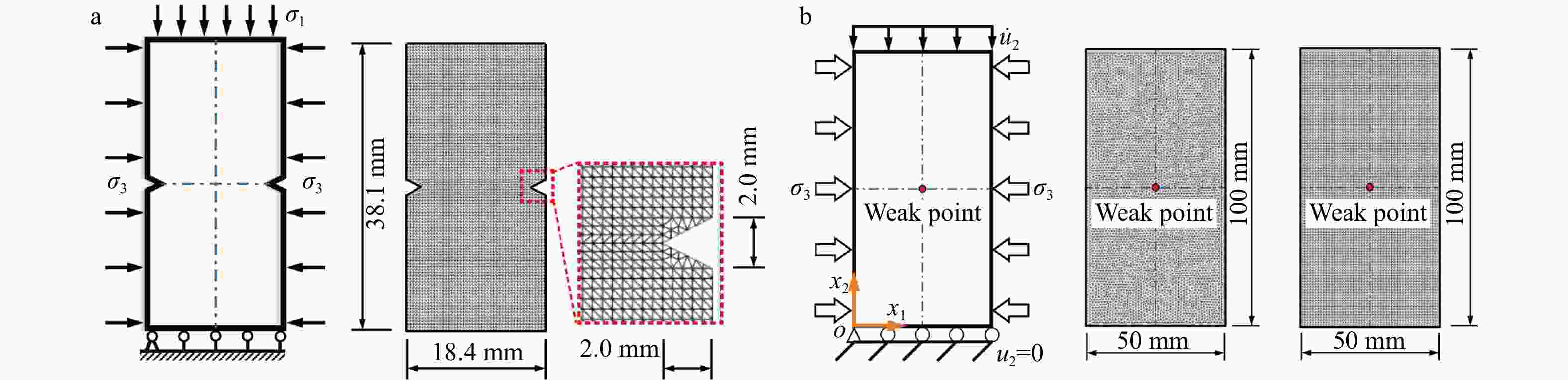
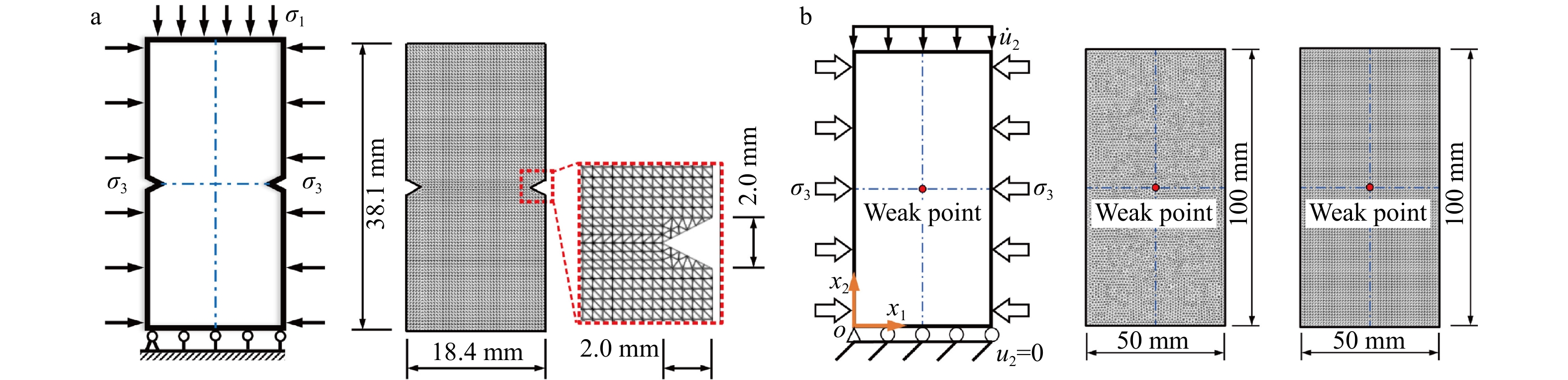
图 7 砂岩试样的几何形状与边界条件
a—V形缺口高孔隙砂岩试样;b—在三轴压缩试验中含有中心弱点的完整高孔隙砂岩试样的几何形状与边界条件
Figure 7. Geometric and boundary conditions of sandstone samples
(a) V-shaped notched high-porosity sandstone sample; (b) Intact high-porosity sandstone sample containing one centered weak point in triaxial compression tests
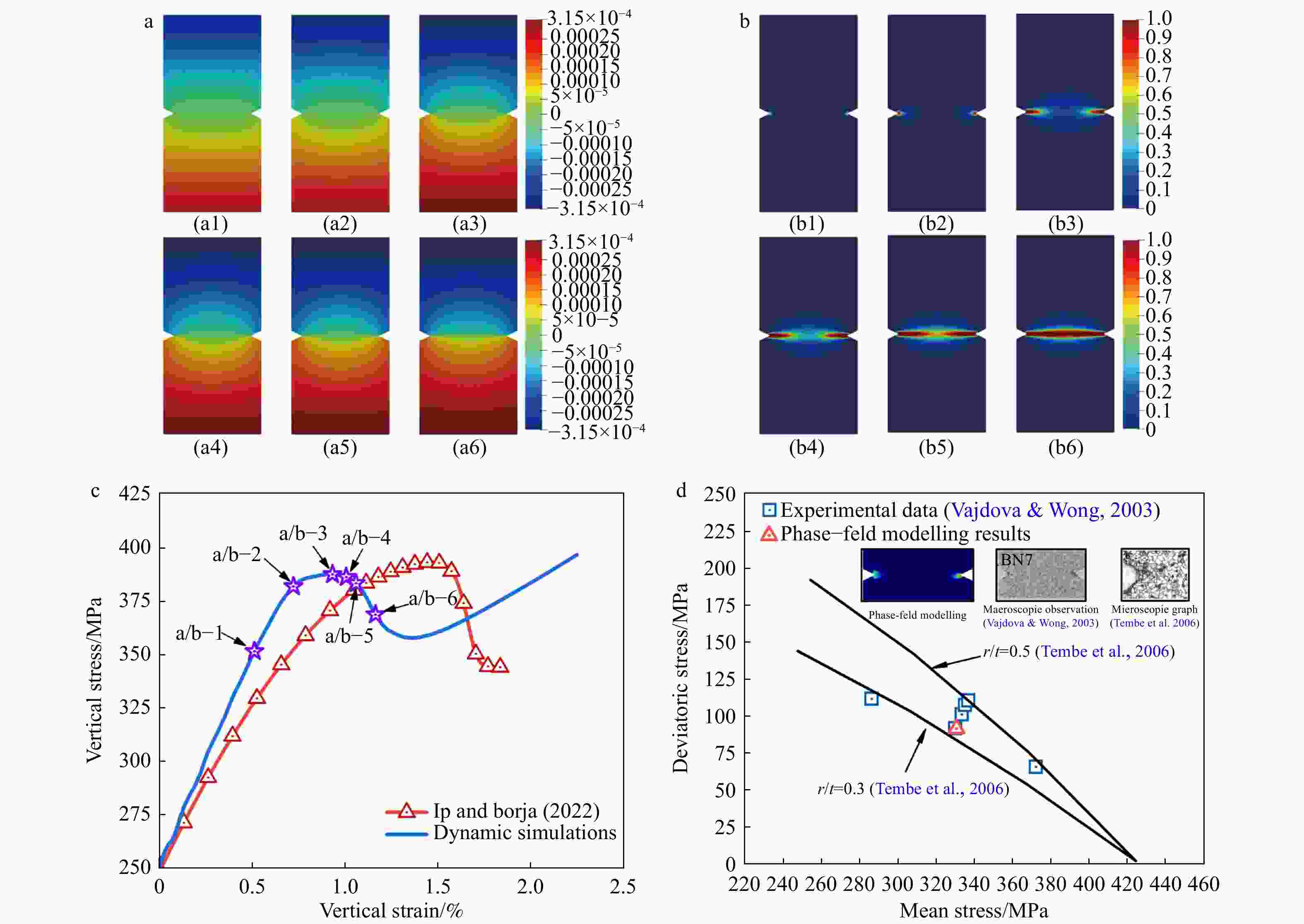
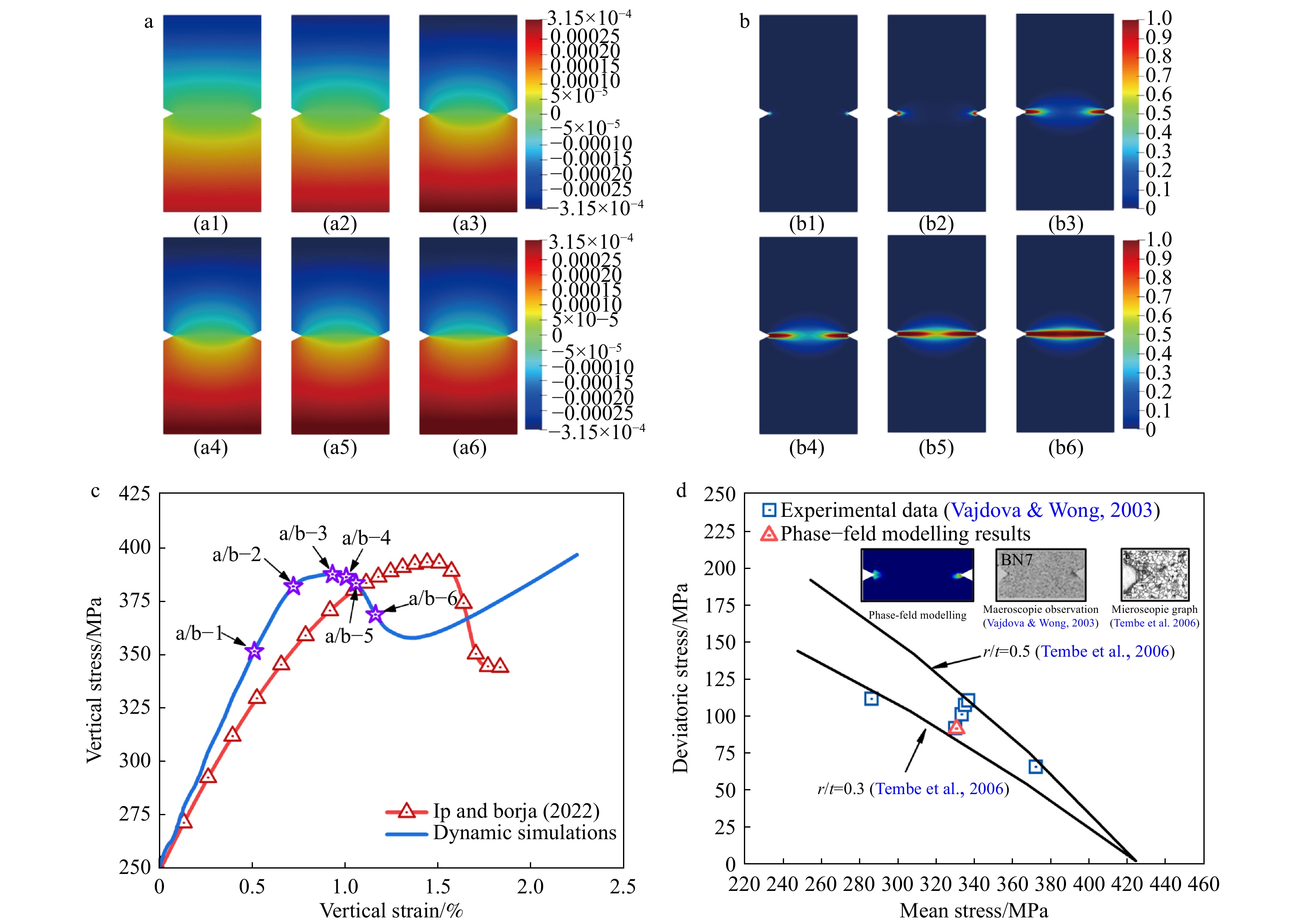
图 8 缺口砂岩试样中压实带形成的数值结果
a—竖向位移场;b—压实带形成;c—模拟应力–应变曲线与 Ip and Borja(2022)的结果对比;d—相场模拟、实验(Vajdova and Wong,2003)及 LEFM 理论分析(Tembe et al.,2006)得到的初始屈服应力
Figure 8. Numerical results of compaction bands formation
(a) Vertical displacement field (unit: m); (b) Compaction band formation; (c) Comparison of the simulated stress–strain response with the simulation result of Ip and Borja (2022); (d) Initial yield stress for the notched Bentheim sandstone samples obtained from the phase–field simulation, laboratory tests (Vajdova and Wong, 2003) and LEFM theoretical analysis (Tembe et al., 2006)
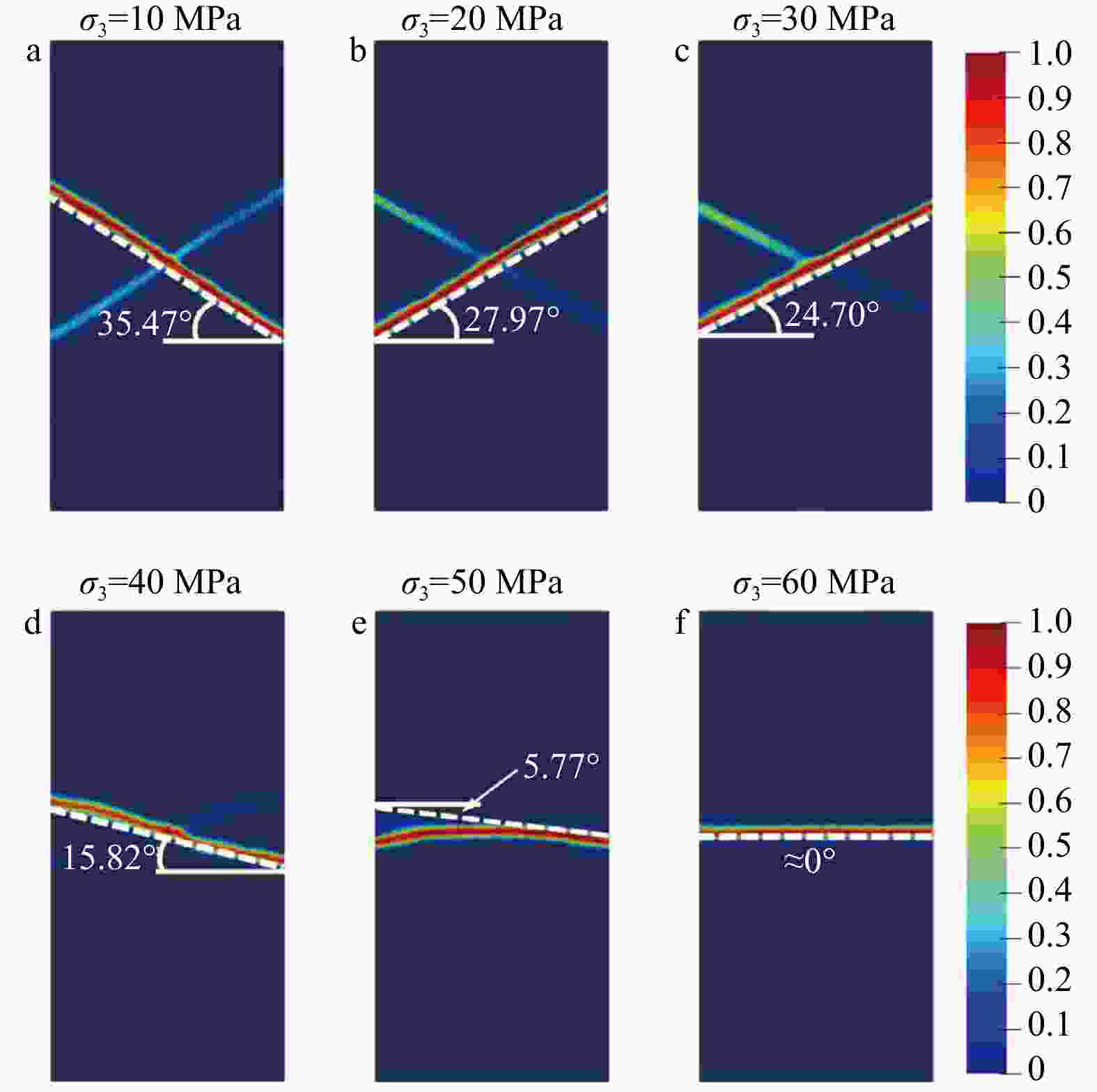
图 9 平面应变压缩试验中侧向应力 σ3 对局部变形带形态的影响
Figure 9. Effect of $ {\sigma }_{3} $ on the localized deformation band patterns in the plane strain compression tests
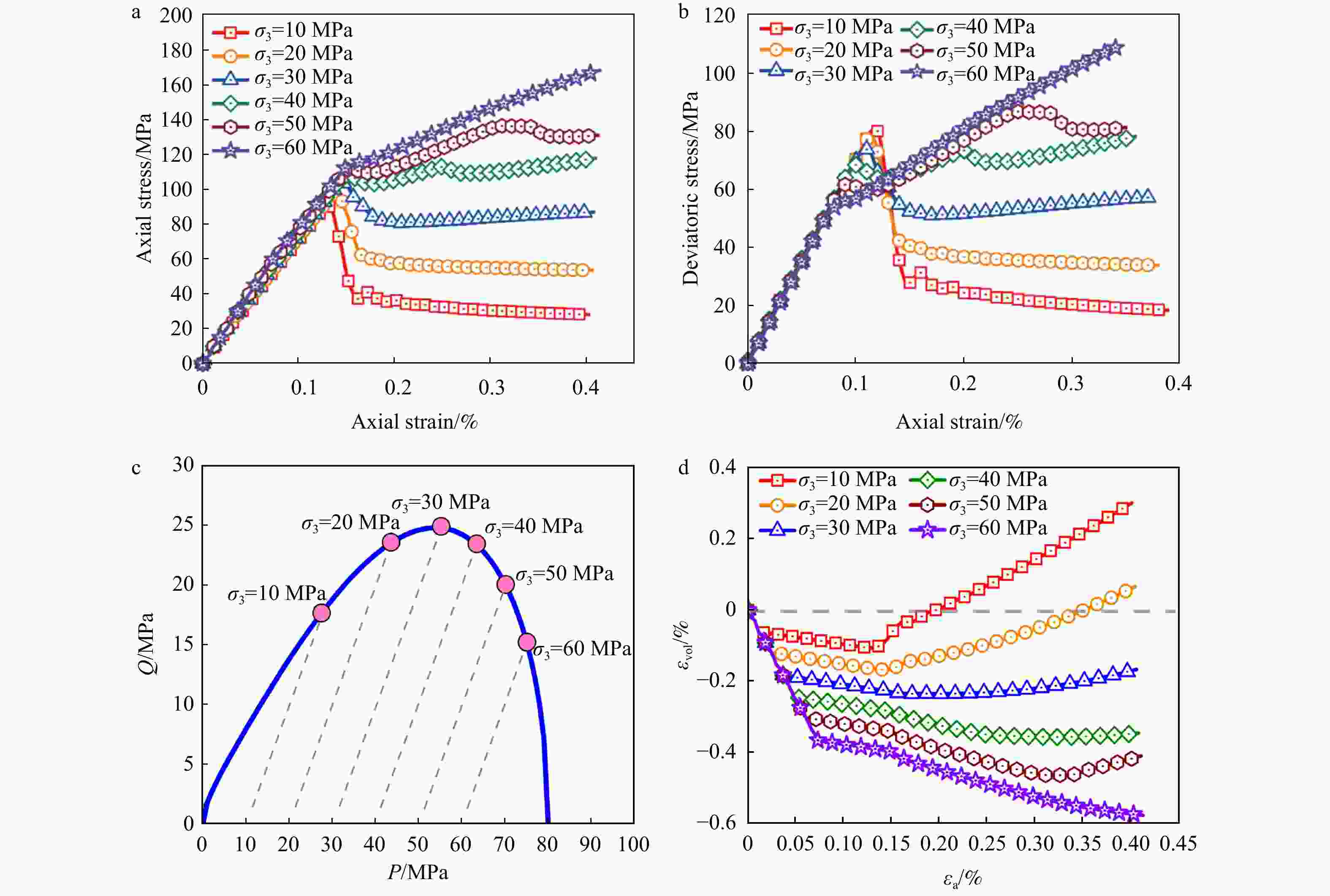
图 10 围压对力学响应的影响
a—$ \sigma_1 - \varepsilon_1 $ 曲线;b—$ \mathcal{Q}-{\varepsilon }_{1} $ 曲线;c—应力路径与初始屈服面关系;d—$ {\varepsilon }_{\mathrm{v}\mathrm{o}\mathrm{l}}{-}{\varepsilon }_{1} $曲线
Figure 10. Effect of $ {\sigma }_{3} $ on mechanical behavior
(a) $ \sigma_1\text{–}\varepsilon_1 $ curves; (b) $ \mathcal{Q}\text{–}\varepsilon_1 $ curves; (c) Relations between loading stress paths and the initial yield surface; (d) $ \varepsilon_{\mathrm{v}\mathrm{o}\mathrm{l}}-\varepsilon_1 $ curves
表 1 Material parameters for the triaxial compression simulation
Table 1. Material parameters for the triaxial compression simulation
Parameter Symbol Value Unit Mass density $ \rho $ 2540 kg/m3 Young’s modulus $ E $ 19.2 GPa Poisson’s ratio $ \nu $ 0.268 – Critical fracture energy release rate $ {\mathcal{G}}_{c} $ 1.0 J/m2 Viscosity coefficient ratio $ \zeta $ 0.1 – Plastic viscosity $ \eta $ 5.0×10⁻³ Pa−1 Plastic compressibility $ \mathrm{\mathit{\Lambda}}_c $ 1.5×10⁻³ – Crushing potential $ \theta $ 0.1 –  下载: 导出CSV
-
ABDALLAH Y, SULEM J, BORNERT M, et al., 2021. Compaction banding in high‐porosity carbonate rocks: 1. Experimental observations[J]. Journal of Geophysical Research: Solid Earth, 126(1): e2020JB020538. doi: 10.1029/2020JB020538 AMOR H, MARIGO J J, MAURINI C, 2009. Regularized formulation of the variational brittle fracture with unilateral contact: numerical experiments[J]. Journal of the Mechanics and Physics of Solids, 57(8): 1209-1229. doi: 10.1016/j.jmps.2009.04.011 BAUD P, KLEIN E, WONG T F, 2004. Compaction localization in porous sandstones: spatial evolution of damage and acoustic emission activity[J]. Journal of Structural Geology, 26(4): 603-624. doi: 10.1016/j.jsg.2003.09.002 BAUD P, SCHUBNEL A, HEAP M, et al., 2017. Inelastic compaction in high‐porosity limestone monitored using acoustic emissions[J]. Journal of Geophysical Research: Solid Earth, 122(12): 9989-10008. doi: 10.1002/2017JB014627 BENZEGGAGH M L, KENANE M, 1996. Measurement of mixed-mode delamination fracture toughness of unidirectional glass/epoxy composites with mixed-mode bending apparatus[J]. Composites Science and Technology, 56(4): 439-449. doi: 10.1016/0266-3538(96)00005-X BERTRAND D, NICOT F, GOTTELAND P, et al., 2008. Discrete element method (DEM) numerical modeling of double-twisted hexagonal mesh[J]. Canadian Geotechnical Journal, 45(8): 1104-1117. doi: 10.1139/T08-036 BOURDIN B, FRANCFORT G A, MARIGO J J, 2000. Numerical experiments in revisited brittle fracture[J]. Journal of the Mechanics and Physics of Solids, 48(4): 797-826. doi: 10.1016/S0022-5096(99)00028-9 BRAATHEN A, PETRIE E, NYSTUEN T, et al., 2020. Interaction of deformation bands and fractures during progressive strain in monocline-San Rafael Swell, Central Utah, USA[J]. Journal of Structural Geology, 141: 104219. doi: 10.1016/j.jsg.2020.104219 CAO Y J, WANG W, SHEN W Q, et al., 2022. A new hybrid phase-field model for modeling mixed-mode cracking process in anisotropic plastic rock-like materials[J]. International Journal of Plasticity, 157: 103395. doi: 10.1016/j.ijplas.2022.103395 CHENG Y, WONG L N Y. (2018). Microscopic characterization of tensile and shear fracturing in progressive failure in marble[J]. Journal of Geophysical Research: Solid Earth, 123(1): 204-225. COLLINS I F, HOULSBY G T, 1997. Application of thermomechanical principles to the modelling of geotechnical materials[J]. Proceedings of the Royal Society A: Mathematical, Physical and Engineering Sciences, 453(1964): 1975-2001. doi: 10.1098/rspa.1997.0107 CRUZ F, ROEHL D, DO AMARAL VARGAS JR E, 2018. An XFEM element to model intersections between hydraulic and natural fractures in porous rocks[J]. International Journal of Rock Mechanics and Mining Sciences, 112: 385-397. doi: 10.1016/j.ijrmms.2018.10.001 DARVE F, SERVANT G, LAOUAFA F, et al., 2004. Failure in geomaterials: continuous and discrete analyses[J]. Computer Methods in Applied Mechanics and Engineering, 193(27-29): 3057-3085. doi: 10.1016/j.cma.2003.11.011 DESRUES J, CHAMBON R, 2002. Shear band analysis and shear moduli calibration[J]. International Journal of Solids and Structures, 39(13-14): 3757-3776. doi: 10.1016/S0020-7683(02)00177-4 FEI F, CHOO J, 2021. Double-phase-field formulation for mixed-mode fracture in rocks[J]. Computer Methods in Applied Mechanics and Engineering, 376: 113655. doi: 10.1016/j.cma.2020.113655 FENG X T, XU H, QIU S L, et al., 2018. In situ observation of rock spalling in the deep tunnels of the China Jinping underground laboratory (2400 m depth)[J]. Rock Mechanics and Rock Engineering, 51(4): 1193-1213. doi: 10.1007/s00603-017-1387-8 FOSSEN H, BALE A, 2007. Deformation bands and their influence on fluid flow[J]. AAPG Bulletin, 91(12): 1685-1700. doi: 10.1306/07300706146 FOSSEN H, SCHULTZ R A, TORABI A, 2011. Conditions and implications for compaction band formation in the Navajo Sandstone, Utah[J]. Journal of Structural Geology, 33(10): 1477-1490. doi: 10.1016/j.jsg.2011.08.001 FRANCFORT G A, MARIGO J J, 1998. Revisiting brittle fracture as an energy minimization problem[J]. Journal of the Mechanics and Physics of Solids, 46(8): 1319-1342. doi: 10.1016/S0022-5096(98)00034-9 GUDEHUS G, KARCHER C, 2024. Hydraulic breakthrough of clay smears due to technical and natural actions[J]. Acta Geotechnica, 19(6): 3283-3298. doi: 10.1007/s11440-024-02261-8 HEIDER Y, 2021. A review on phase-field modeling of hydraulic fracturing[J]. Engineering Fracture Mechanics, 253: 107881. doi: 10.1016/j.engfracmech.2021.107881 HOEK E, 1968. Brittle fracture of rock[M]//STAGG K G, ZIENKIEWICZ O C. Rock mechanics in engineering practice. New York, John Wiley & Sons: 9-124. HOLTZMAN B K, PATÉ A, PAISLEY J, et al., 2018. Machine learning reveals cyclic changes in seismic source spectra in geysers geothermal field[J]. Science Advances, 4(5): eaao2929. doi: 10.1126/sciadv.aao2929 HONG Y, ZHANG J F, ZHAO Y C, et al., 2024. Coupled hydro-mechanical XFEM analysis for multi-fracturing through an excavation driven by an underlying aquifer: a forensic case study[J]. Acta Geotechnica, 19(6): 3707-3727. doi: 10.1007/s11440-023-02132-8 HUANG L C, BAUD P, CORDONNIER B, et al., 2019. Synchrotron X-ray imaging in 4D: multiscale failure and compaction localization in triaxially compressed porous limestone[J]. Earth and Planetary Science Letters, 528: 115831. doi: 10.1016/j.jpgl.2019.115831 HUG L, POTTEN M, STOCKINGER G, et al., 2022. A three-field phase-field model for mixed-mode fracture in rock based on experimental determination of the mode II fracture toughness[J]. Engineering with Computers, 38(6): 5563-5581. doi: 10.1007/s00366-022-01684-9 INGRAFFEA A R, HEUZE F E, 1980. Finite element models for rock fracture mechanics[J]. International Journal for Numerical and Analytical Methods in Geomechanics, 4(1): 25-43. doi: 10.1002/nag.1610040103 IP S C Y, BORJA R I, 2022. A phase‐field approach for compaction band formation due to grain crushing[J]. International Journal for Numerical and Analytical Methods in Geomechanics, 46(16): 2965-2987. doi: 10.1002/nag.3436 IP S C Y, BORJA R I, 2023. Modeling heterogeneity and permeability evolution in a compaction band using a phase-field approach[J]. Journal of the Mechanics and Physics of Solids, 181: 105441. doi: 10.1016/j.jmps.2023.105441 KUHN C, SCHLÜTER A, MÜLLER R, 2015. On degradation functions in phase field fracture models[J]. Computational Materials Science, 108: 374-384. doi: 10.1016/j.commatsci.2015.05.034 LEE S, REBER J E, HAYMAN N W, et al., 2016. Investigation of wing crack formation with a combined phase‐field and experimental approach[J]. Geophysical Research Letters, 43(15): 7946-7952. doi: 10.1002/2016GL069979 LEUTHOLD J, GEROLYMATOU E, VERGARA M R, et al., 2021. Effect of compaction banding on the hydraulic properties of porous rock: part I—experimental investigation[J]. Rock Mechanics and Rock Engineering, 54(6): 2671-2683. doi: 10.1007/s00603-021-02427-w LIU S J, WANG Y T, PENG C, et al., 2022. A thermodynamically consistent phase field model for mixed-mode fracture in rock-like materials[J]. Computer Methods in Applied Mechanics and Engineering, 392: 114642. doi: 10.1016/j.cma.2022.114642 LIU S J, WANG Y T, 2025. A thermodynamically consistent phase-field model for frictional fracture in rocks[J]. International Journal of Plasticity, 185: 104220. doi: 10.1016/j.ijplas.2024.104220 MIEHE C, HOFACKER M, WELSCHINGER F, 2010. A phase field model for rate-independent crack propagation: robust algorithmic implementation based on operator splits[J]. Computer Methods in Applied Mechanics and Engineering, 199(45-48): 2765-2778. doi: 10.1016/j.cma.2010.04.011 MOËS N, DOLBOW J, BELYTSCHKO T, 1999. A finite element method for crack growth without remeshing[J]. International Journal for Numerical Methods in Engineering, 46(1): 131-150. doi: 10.1002/(SICI)1097-0207(19990910)46:1<131::AID-NME726>3.0.CO;2-J MOËS N, BELYTSCHKO T, 2002. Extended finite element method for cohesive crack growth[J]. Engineering Fracture Mechanics, 69(7): 813-833. doi: 10.1016/S0013-7944(01)00128-X MOVAHED Z, 2022. Fracture classification on geological image logs[EB/OL]. https://alzare.com/online-course-detail-page/fracture-classification-on-geological-image-logs. NINKHLAI A, 2011. Dreamstime[EB/OL]. https://www.dreamstime.com/stock-photo-contraction-desiccation-cracks-dry-earth-lack-water-soil-image93520801. POTYONDY D O, CUNDALL P A, 2004. A bonded-particle model for rock[J]. International Journal of Rock Mechanics and Mining Sciences, 41(8): 1329-1364. doi: 10.1016/j.ijrmms.2004.09.011 RECHBERGER C, FEY C, ZANGERL C, 2021. Structural characterisation, internal deformation, and kinematics of an active deep-seated rock slide in a valley glacier retreat area[J]. Engineering Geology, 286: 106048. doi: 10.1016/j.enggeo.2021.106048 RUDNICKI J W, RICE J R, 1975. Conditions for the localization of deformation in pressure-sensitive dilatant materials[J]. Journal of the Mechanics and Physics of Solids, 23(6): 371-394. doi: 10.1016/0022-5096(75)90001-0 SELVADURAI A P S, YU Q, 2005. Mechanics of a discontinuity in a geomaterial[J]. Computers and Geotechnics, 32(2): 92-106. doi: 10.1016/j.compgeo.2004.11.007 SILLING S A, 2000. Reformulation of elasticity theory for discontinuities and long-range forces[J]. Journal of the Mechanics and Physics of Solids, 48(1): 175-209. doi: 10.1016/S0022-5096(99)00029-0 SILLING S A, ASKARI E, 2005. A meshfree method based on the peridynamic model of solid mechanics[J]. Computers & Structures, 83(17-18): 1526-1535. SILLING S A, EPTON M, WECKNER O, et al., 2007. Peridynamic states and constitutive modeling[J]. Journal of Elasticity, 88(2): 151-184. doi: 10.1007/s10659-007-9125-1 TEMBE S, VAJDOVA V, WONG T F, et al., 2006. Initiation and propagation of strain localization in circumferentially notched samples of two porous sandstones[J]. Journal of Geophysical Research: Solid Earth, 111(B2): B02409. TEMBE S, BAUD P, WONG T F, 2008. Stress conditions for the propagation of discrete compaction bands in porous sandstone[J]. Journal of Geophysical Research: Solid Earth, 113(B9): B09409. VAJDOVA V, WONG T F, 2003. Incremental propagation of discrete compaction bands: acoustic emission and microstructural observations on circumferentially notched samples of Bentheim[J]. Geophysical Research Letters, 30(14): 1775. VANNUCCHI P, 2025. From compaction to scaly fabric: the spectrum of deformation bands in geological media. Horizon Europe Marie Skłodowska-Curie Actions Staff Exchanges project LOC3G, 1st Doctoral School, Vienna, Austria. VARDOULAKIS I, 1980. Shear band inclination and shear modulus of sand in biaxial tests[J]. International Journal for Numerical and Analytical Methods in Geomechanics, 4(2): 103-119. doi: 10.1002/nag.1610040202 WANG Q, FENG Y T, ZHOU W, et al., 2020. A phase-field model for mixed-mode fracture based on a unified tensile fracture criterion[J]. Computer Methods in Applied Mechanics and Engineering, 370: 113270. doi: 10.1016/j.cma.2020.113270 WANG T, WAUTIER A, TANG C S, et al., 2024a. 3D DEM simulations of cyclic loading-induced densification and critical state convergence in granular soils[J]. Computers and Geotechnics, 173: 106559. doi: 10.1016/j.compgeo.2024.106559 WANG Y T, ZHOU X P, XU X, 2016. Numerical simulation of propagation and coalescence of flaws in rock materials under compressive loads using the extended non-ordinary state-based peridynamics[J]. Engineering Fracture Mechanics, 163: 248-273. doi: 10.1016/j.engfracmech.2016.06.013 WANG Y T, WU W, 2023. A bond-level energy-based peridynamics for mixed-mode fracture in rocks[J]. Computer Methods in Applied Mechanics and Engineering, 414: 116169. doi: 10.1016/j.cma.2023.116169 WANG Y T, BORJA R I, WU W, 2023. Dynamic strain localization into a compaction band via a phase-field approach[J]. Journal of the Mechanics and Physics of Solids, 173: 105228. doi: 10.1016/j.jmps.2023.105228 WANG Y T, WANG S, SORANZO E, et al. , 2024b. Phase-field modeling of brittle failure in rockslides[M]//WU W, WANG Y T. Recent geotechnical research at BOKU. Cham: Springer: 241-264. WAUTIER A, BONELLI S, NICOT F, 2019. DEM investigations of internal erosion: grain transport in the light of micromechanics[J]. International Journal for Numerical and Analytical Methods in Geomechanics, 43(1): 339-352. doi: 10.1002/nag.2866 WENG H H, AMPUERO J P, 2020. Continuum of earthquake rupture speeds enabled by oblique slip[J]. Nature Geoscience, 13(12): 817-821. doi: 10.1038/s41561-020-00654-4 WU J Y, 2017. A unified phase-field theory for the mechanics of damage and quasi-brittle failure[J]. Journal of the Mechanics and Physics of Solids, 103: 72-99. doi: 10.1016/j.jmps.2017.03.015 XU J, LI Z X, 2019. Crack propagation and coalescence of step-path failure in rocks[J]. Rock Mechanics and Rock Engineering, 52(4): 965-979. doi: 10.1007/s00603-018-1661-4 ZHANG X, SLOAN S W, VIGNES C, et al., 2017. A modification of the phase-field model for mixed mode crack propagation in rock-like materials[J]. Computer Methods in Applied Mechanics and Engineering, 322: 123-136. doi: 10.1016/j.cma.2017.04.028 ZHANG J Z, ZHOU X P, 2022. Fracture process zone (FPZ) in quasi-brittle materials: Review and new insights from flawed granite subjected to uniaxial stress[J]. Engineering Fracture Mechanics, 274: 108795. doi: 10.1016/j.engfracmech.2022.108795 ZHOU X P, WANG Y T, 2021. State-of-the-art review on the progressive failure characteristics of geomaterials in peridynamic theory[J]. Journal of Engineering Mechanics, 147(1): 03120001. doi: 10.1061/(ASCE)EM.1943-7889.0001876 ZIEGLER H, 2012. An introduction to thermomechanics (Vol. 21)[M]. 2nd ed. Amsterdam: Elsevier -
 2025149资源附件.docx

-

 下载:
下载:




计量
- 文章访问数: 3411
- HTML全文浏览量: 446
- PDF下载量: 94
- 被引次数: 0
