


Mechanical property prediction and 3D modeling via statistical regression and prestack inversion: a case study from the Bonan Sag
-
摘要: 目前在非常规油气开发中存在着储层结构复杂、岩石力学特性不明确等问题。在水平井的井轨迹及压裂方案设计过程中,通常需要依靠岩石力学模型进行段簇划分与设计,从而增大改造体积,降低套变风险,实现非常规油气高效开发。岩石力学模型在井轨迹靶区能够同时在纵向及横向上以较高分辨率体现力学参数的连续变化,因此面向模型需求,提供了一种基于统计回归和叠前反演的力学参数预测及建模方法。首先,基于岩芯试验数据及测井资料,建立弹性参数与岩石力学参数的定量关系并加以分析。其次,利用钻井资料及地震资料开展三维叠前反演,获取精确的纵波速度、密度、泊松比和杨氏模量等弹性参数。最后,根据定量关系计算出单轴抗压强度数据体,并利用测井数据及时间域平滑速度场构建深度域构造模型,提取相关属性后进一步建立目的区块的三维力学参数模型。模型和实际数据表明研究成果表征了岩石力学参数的三维空间变化特征,可为该区后续的油气勘探开发提供可信的基础数据与理论依据,具有较强的理论创新与实际应用价值。Abstract:
Objective Unconventional oil and gas development is frequently hindered by complex reservoir structures and unquantified rock mechanical properties. To optimize horizontal well trajectories and hydraulic fracturing designs—thereby expanding the stimulated reservoir volume, mitigating casing deformation risks, and ensuring efficient production—high-resolution rock mechanical models are essential. This study proposes an integrated workflow combining statistical regression and 3D prestack seismic inversion to accurately characterize the vertical and lateral variations of rock mechanical parameters in target zones. Methods Using core test results and well log data, quantitative empirical relationships were established between elastic attributes and rock mechanical properties. A 3D prestack seismic inversion was subsequently performed using integrated drilling and seismic datasets to extract precise elastic parameters, including compressive wave velocity, bulk density, Poisson's ratio, and Young's modulus. Results The workflow was applied to tight glutenite reservoirs in the Bonan Sag, yielding three key findings: (1) Young's modulus demonstrated a strong correlation (e.g., R2 > 0.75) with Uniaxial Compressive Strength (UCS) . In these low-porosity glutenites, rock mechanics are primarily governed by lithology and gravel content rather than burial depth, justifying a unified prediction model. (2) By integrating well logging and a time-depth velocity field, a depth-domain structural framework was established. Attribute extraction and property modeling generated a continuous 3D volume of rock mechanical parameters, bridging the spatial gaps inherent in discrete log and core measurements. (3) The resulting 3D mechanical volume provides critical input for hydraulic fracturing optimization. It enables precise profiling along horizontal wellbores, rational stage and cluster spacing, pumping parameter optimization, and improved fracture conductivity, thereby maximizing single-well productivity. Conclusions Integrating prestack seismic inversion with statistical regression offers a robust approach for 3D geomechanical characterization in heterogeneous tight glutenites. This methodology successfully bridges the gap between petrophysics and seismic geophysics, resolving key uncertainties in complex unconventional plays. Significance This study provides a practical and scalable framework for predicting 3D rock mechanical properties. The findings offer a reliable data foundation for defining mechanical boundaries and optimizing stimulation treatments in heterogeneous unconventional reservoirs. -
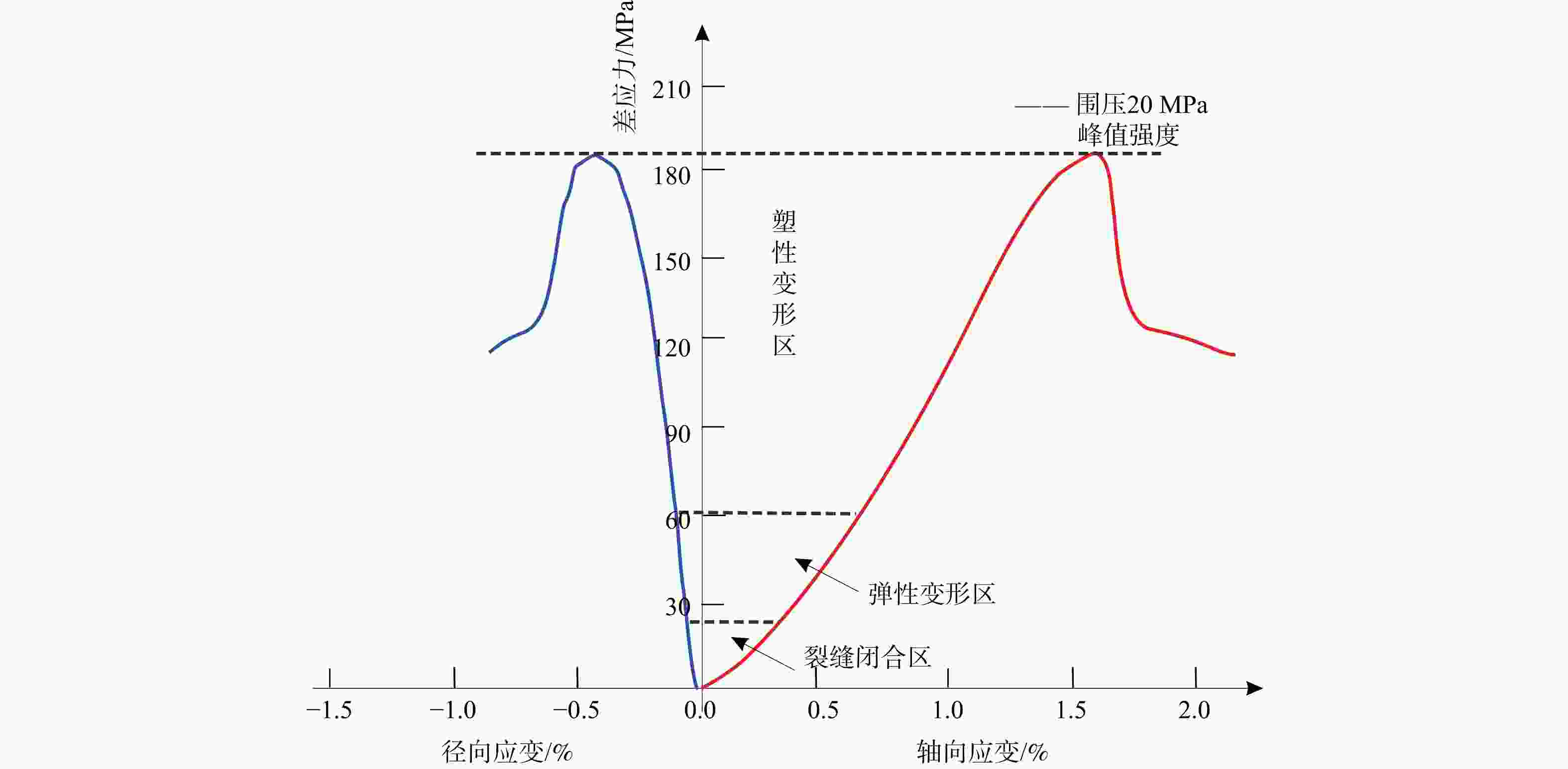
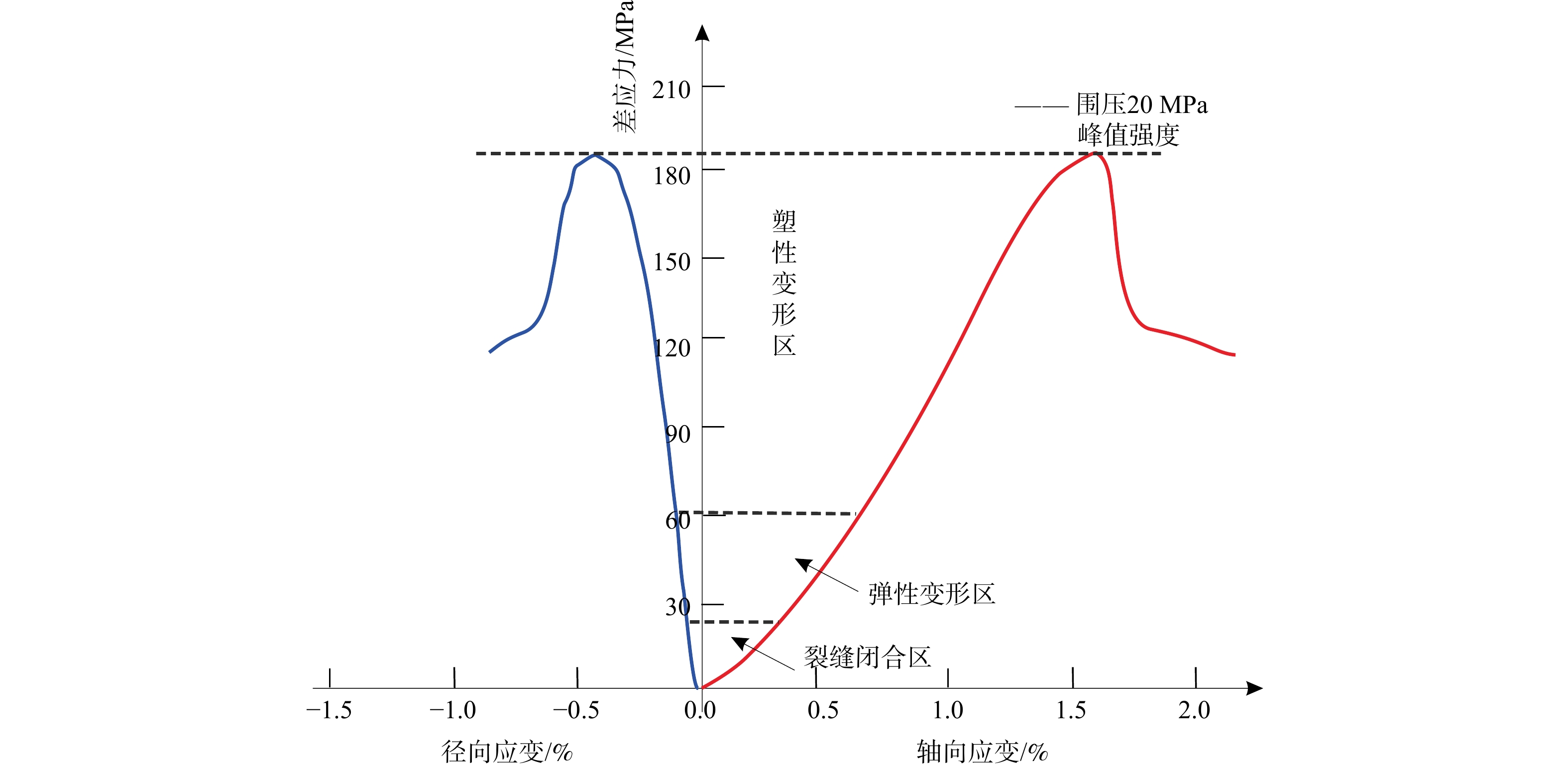
图 2 单轴压缩试验所得应力−应变全曲线
Figure 2. Complete stress–strain curves from uniaxial compression tests
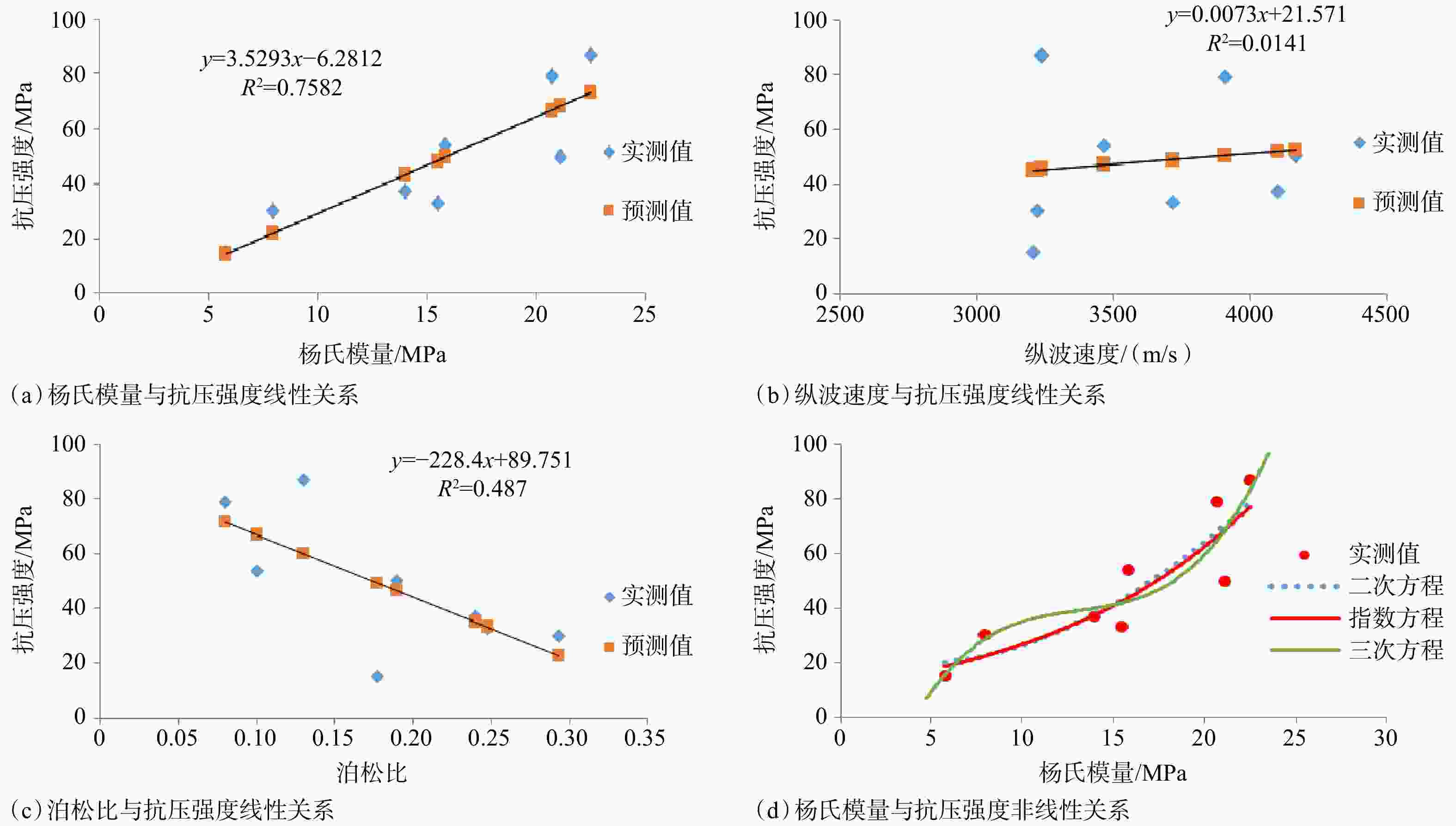
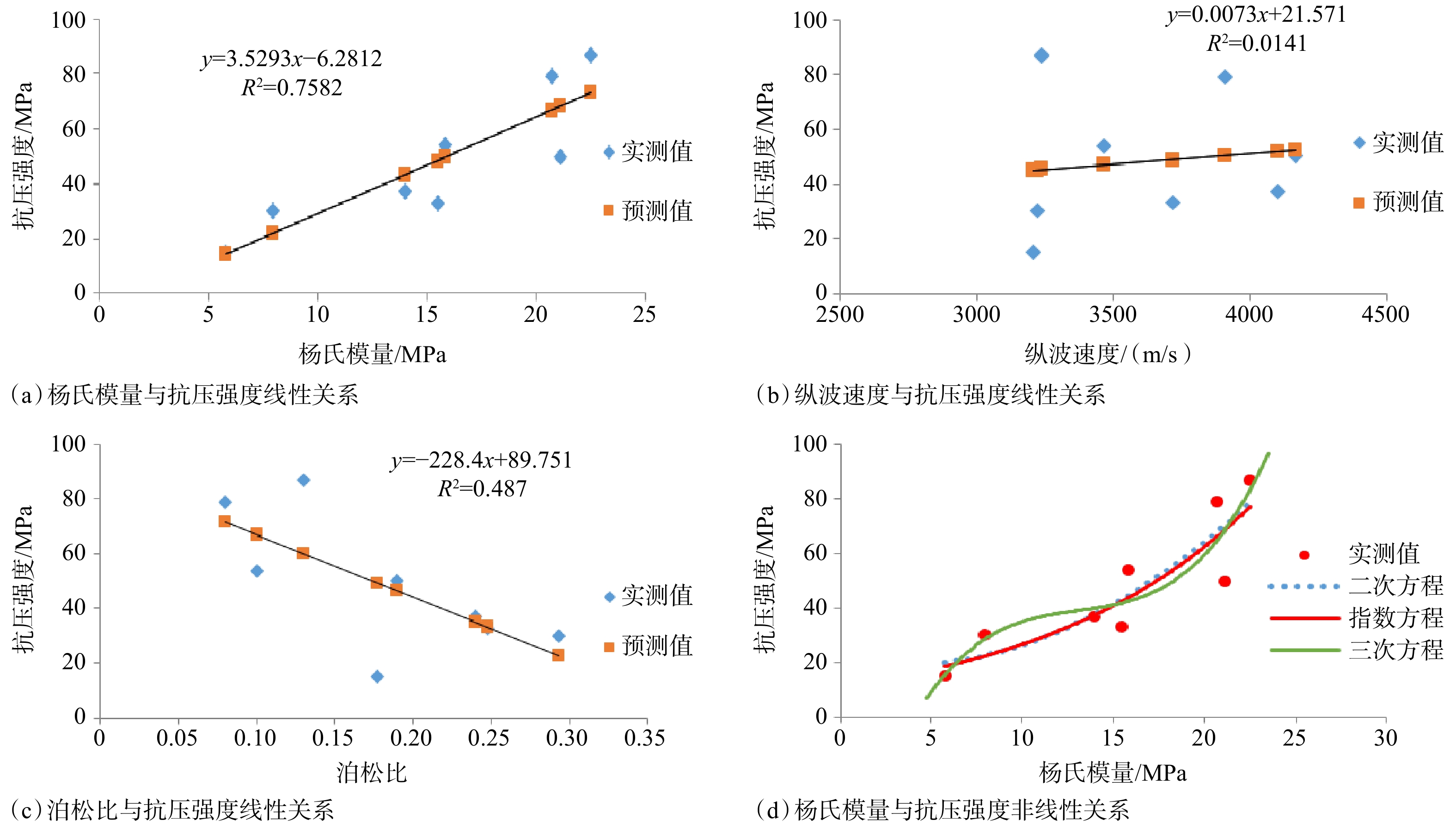
图 3 抗压强度与杨氏模量、纵波速度及泊松比的相关性
Figure 3. Correlations between uniaxial compressive strength (UCS) and elastic parameters
(a) Linear relationship with Young's modulus; (b) Linear relationship with P-wave velocity; (c) Linear relationship with Poisson's ratio; (d) Nonlinear relationship with Young's modulus
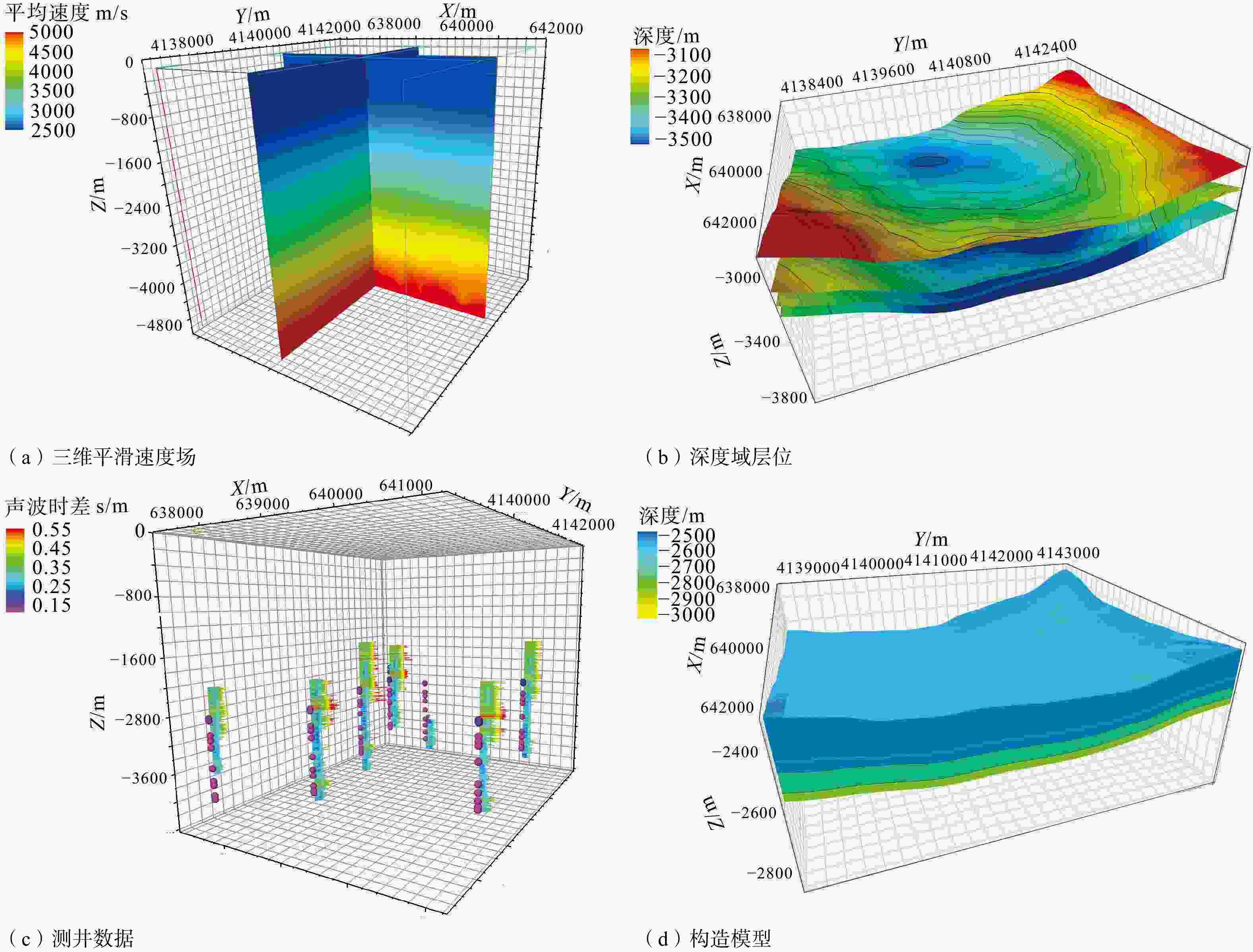
图 6 深度域构造模型
X、Y—大地坐标系,X指示南北方向,Y指示东西方向;Z—垂直埋深,负号指以地表为基准面的向下埋深
Figure 6. Depth-domain structural framework model
(a) Smoothed 3D velocity field; (b) Depth domain stratigraphic horizons; (c) Well log dataset; (d) Structural model X-axis and Y-axis represent geodetic coordinate system, theX-axis indicates the north-south direction, the Y-axis indicates the east-west direction. Z-axis represents sub-surface depth below ground level in meters, where negative values denote depth beneath the surface datum.
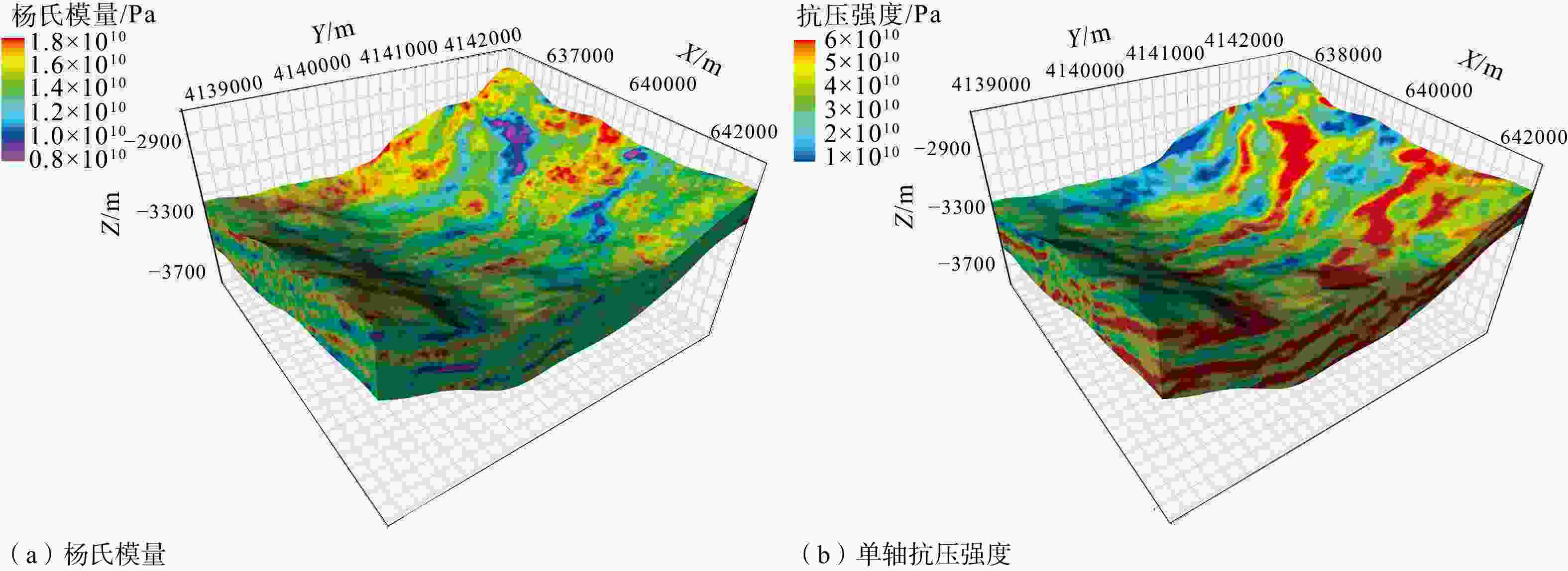
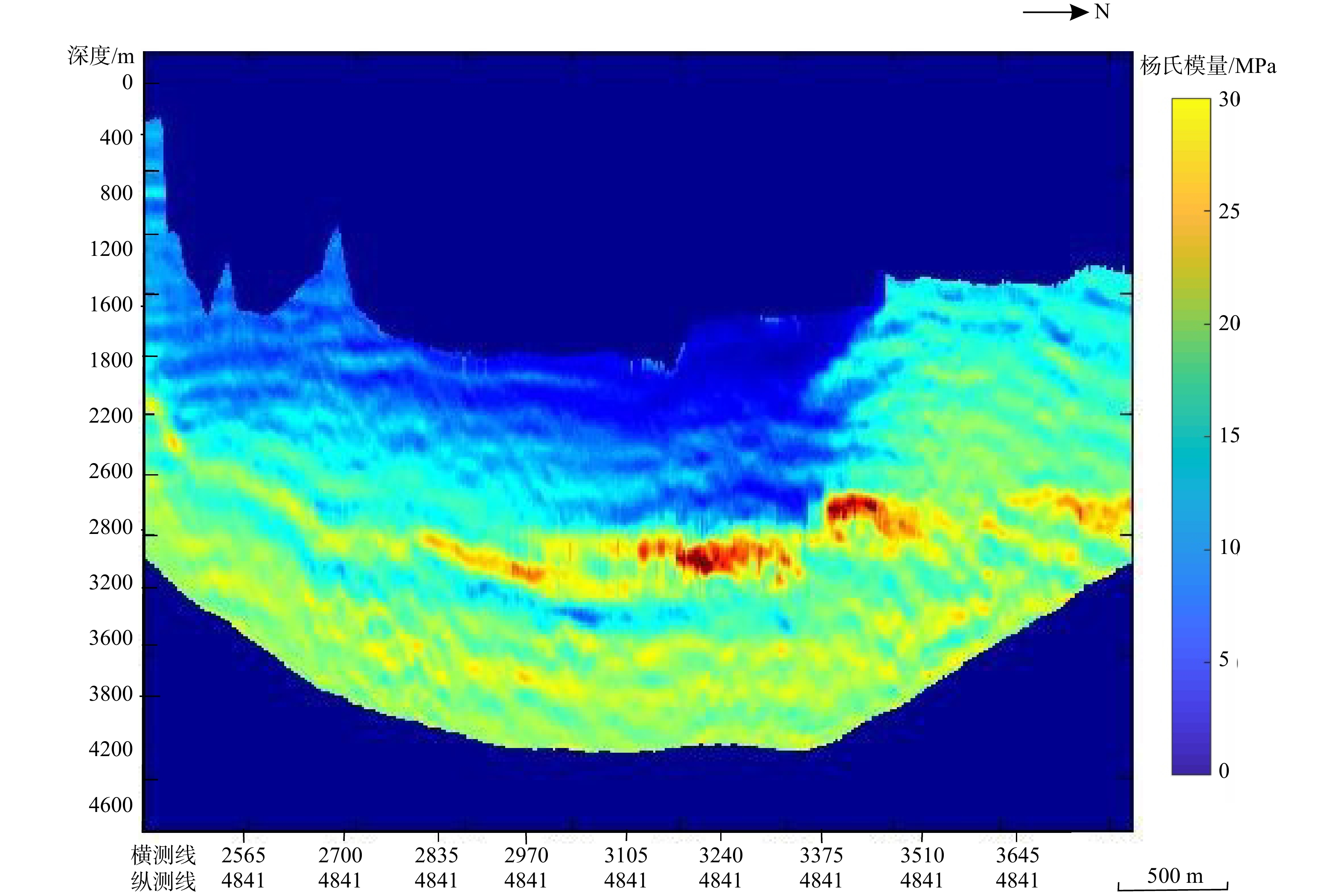
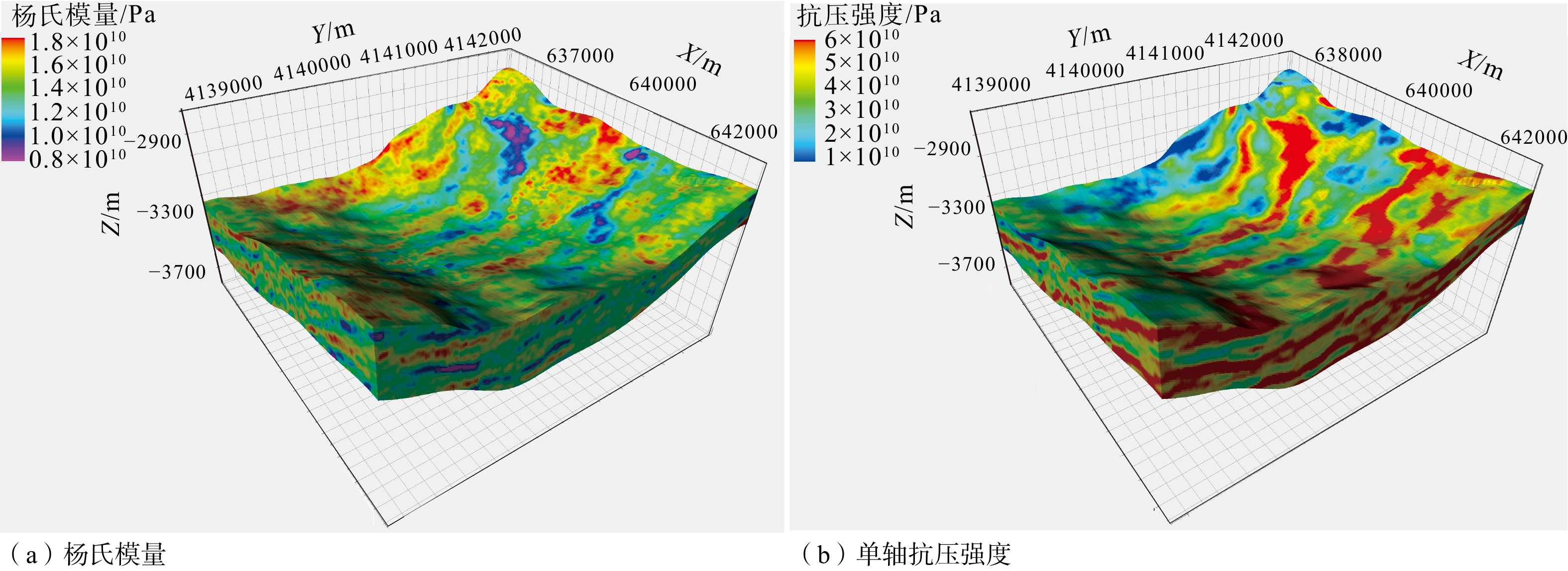
图 7 力学参数属性模型
X、Y—大地坐标系,X指示南北方向,Y指示东西方向;Z—垂直埋深,负号指以地表为基准面的向下埋深
Figure 7. 3D rock mechanical property models
(a) Young's modulus; (b) Uniaxial compressive strength
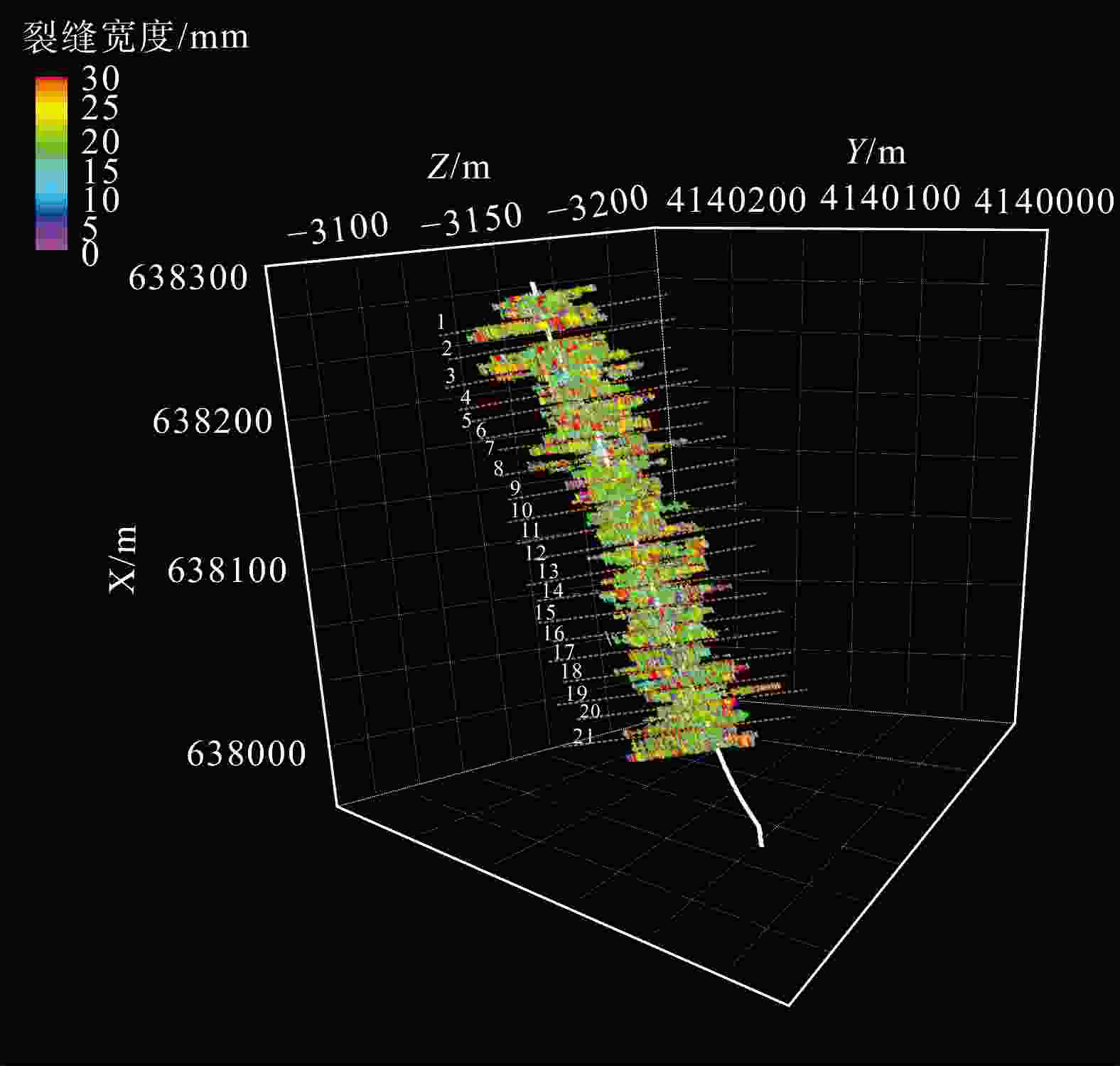
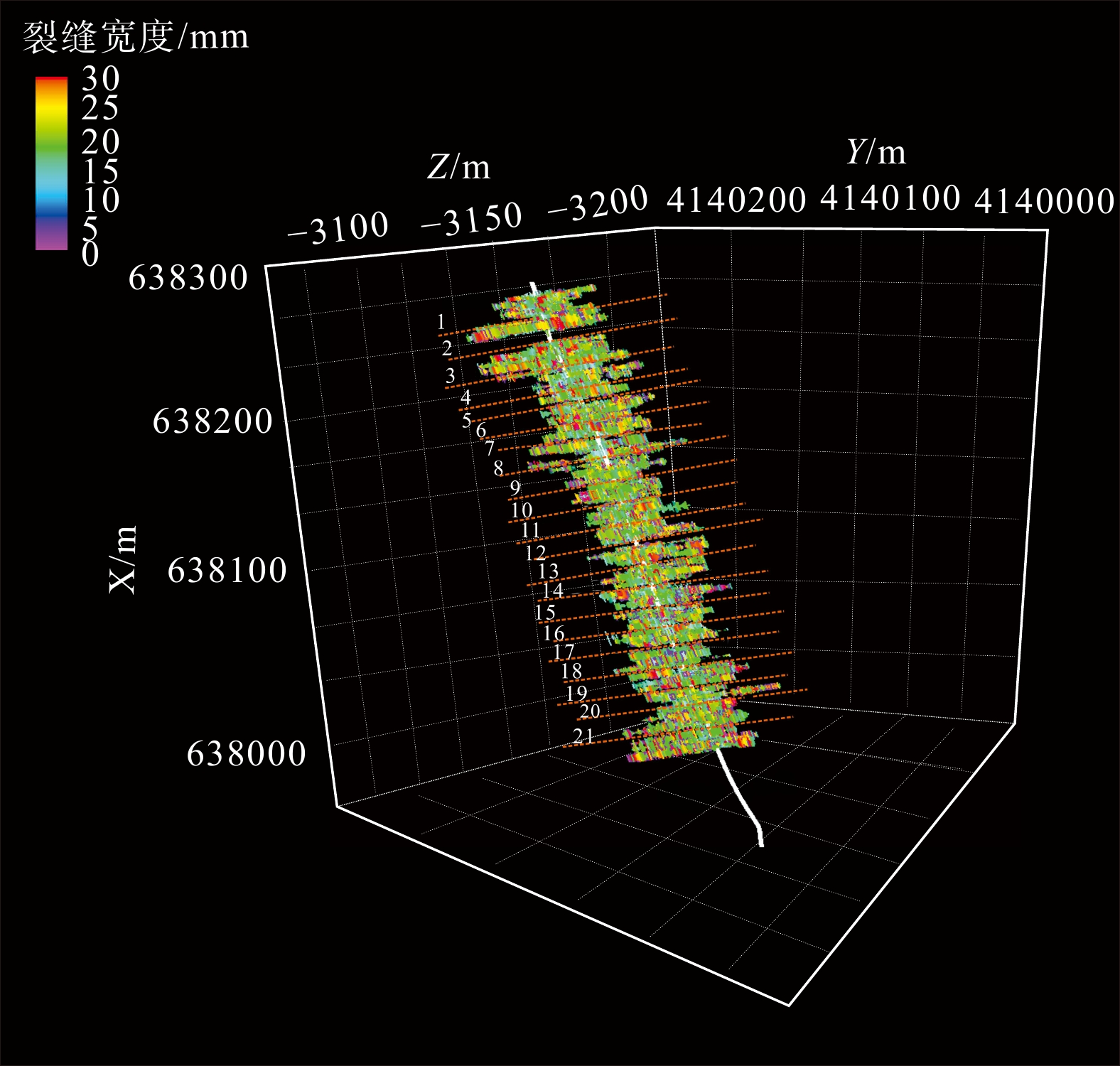
图 8 水力裂缝模拟效果图
图中的数字1~21为裂缝模拟结果的段簇划分编号;X、Y—大地坐标系,X指示南北方向,Y指示东西方向;Z—垂直埋深,负号指以地表为基准面的向下埋深
Figure 8. Simulation results of hydraulic fractures
Numbers 1 through 21 denote the designated fracture stage and cluster identifiers.
表 1 部分岩芯试验数据
Table 1. Representative core test data
岩芯
序号深度/m 抗压强
度/MPa密度/
(g/cm3)泊松比 杨氏模
量/MPa纵波速
度/(m/s)3 4612.3 79 2.43 0.080 20.687 3912.225 1 3784.9 33 2.35 0.248 15.480 3718.661 5 3797.1 30 2.45 0.293 7.962 3223.363 8 3788.8 15 2.5 0.177 25.253 3207.832 9 3370.0 54 2.53 0.100 15.800 3464.137 18 3378.1 50 2.55 0.190 21.100 4167.546 13 3374.0 37 2.58 0.240 14.000 4100.432 19 3381.0 87 2.42 0.130 22.500 3236.335  下载: 导出CSV
表 2 回归统计及方差分析表
Table 2. Regression statistics and analysis of variance
评价指标 杨氏模量与
抗压强度纵波速度与
抗压强度泊松比与
抗压强度$ R $ 0.870754 0.118560 0.697835 $ {R}^{2} $ 0.758213 0.014056 0.486973 $ {R_{\text{a}}}^{2} $ 0.717915 −0.150267 0.401469 标准误差 13.134310 26.522633 19.132003 SSR 3245.814349 60.174543 2084.673812 MSR 463.687764 8.596363 292.667687 F-统计量 18.815212 0.085542 5.695308 P值 0.655199 0.821027 0.003008
下载: 导出CSV
-
[1] AKI K, RICHARDS P G, 1980. Quantitative seismology: theory and methods[M]. San Francisco: W. H. Freeman: 801. [2] BAKHORJI A M, SCHMITT D R, 2009. Laboratory measurements of static and dynamic bulk moduli in carbonate[C]//SEG technical program expanded abstracts 2009. Tulsa: Society of Exploration Geophysicists: 2040-2044. [3] BHUIYAN M H, HOLT R M, LARSEN I, et al., 2013. Static and dynamic behaviour of compacted sand and clay: comparison between measurements in Triaxial and Oedometric test systems[J]. Geophysical Prospecting, 61(2): 329-340. doi: 10.1111/1365-2478.12029 [4] BIAN H Y, WANG F, ZHANG Y H, et al., 2015. Experimental study of dynamic and static elastic parameters of tight sandstones under reservoir conditions[J]. Chinese Journal of Rock Mechanics and Engineering, 34(S1): 3045-3054. (in Chinese with English abstract) [5] BROTONS V, TOMÁS R, IVORRA S, et al., 2014. Relationship between static and dynamic elastic modulus of calcarenite heated at different temperatures: the San Julián's stone[J]. Bulletin of Engineering Geology and the Environment, 73(3): 791-799. doi: 10.1007/s10064-014-0583-y [6] CAO Z L, ZHENG H J, GOU Y C, et al., 2009. Method of prediction and application on stochastical simulating 3D parameter field of rock mechanics[J]. Geoscience, 23(6): 1126-1130. (in Chinese with English abstract) [7] CHEN M, 2004. Review of study on rock mechanics at great depth and its applications to petroleum engineering of China[J]. Chinese Journal of Rock Mechanics and Engineering, 23(14): 2455-2462. (in Chinese with English abstract) [8] CUI Q H, SHANG X M, ZHAO S T, et al., 2023. Dual-parameter scanning static correction method based on shallow reflected waves in desert area[J]. Geophysical Prospecting for Petroleum, 62(5): 866-877. (in Chinese with English abstract) [9] GE H K, HUANG R Z, ZHUANG J J, et al., 1994. Experimental study on dynamic and static elastic parameters of water-saturated sands under triaxial stresses[J]. Journal of the University of Petroleum, China, 18(3): 41-47. (in Chinese with English abstract) [10] GUI R, WAN Y P, 2012. Rock mechanics parameter calculation based on conventional logging data: a case study of upper Paleozoic in ordos basin[J]. Journal of Geomechanics, 18(4): 418-424. (in Chinese with English abstract) [11] JIANG J, SUN J Z, QIAO Y H, et al., 2007. Comparison between static and dynamic parameters of grand buddha rockmass specimens in west jinyang mountain in taiyuan[J]. Chinese Journal of Rock Mechanics and Engineering, 26(S1): 3452-3460. (in Chinese with English abstract) [12] LI K, RAN C, SHAO M J, et al., 2016. Study on rock mechanics and dynamic-static parameter transformation models in the second member of xujiahe formation in west Sichuan basin[J]. Science Technology and Engineering, 16(6): 17-22. (in Chinese with English abstract) [13] LI Q, HE J J, CHEN J, 2017. Simultaneous ultrasonic experiment of dynamic and static elastic parameters of coal under formation pressure conditions in Qinshui Basin[J]. Chinese Journal of Geophysics, 60(7): 2897-2903. (in Chinese with English abstract) [14] LIAO Z Y, ZHU J B, TANG C A, 2016. Dynamic behavior and response of rock and underground openings subjected to high initial stresses[J]. Chinese Journal of Geotechnical Engineering, 38(S2): 260-265. (in Chinese with English abstract) [15] LIU J W, ZHANG Y Y, ZENG L B, et al., 2016. Geophysical prediction of stress and stress desserts in unconventional reservoirs: an example in Bonan area[J]. Oil Geophysical Prospecting, 51(4): 792-800. (in Chinese with English abstract) [16] LOGANATHAN A, SUMITHRA P, DENESHKUMAR V, 2022. Estimation of air quality index using multiple linear regression[J]. Applied Ecology and Environmental Sciences, 10(12): 717-722. doi: 10.12691/aees-10-12-3 [17] LU Y H, JIN Y, XIA Y, et al., 2023. Dynamic analysis model of wellbore instability in deep tight sandstone: effect of intrinsic frequency and high stress[J]. Mechanics in Engineering, 45(5): 1033-1043. (in Chinese with English abstract) [18] MENG F B, 2020. Interpretation method of high density 3D seismic depth domain data in coal mining districts[J]. Coal Geology & Exploration, 48(6): 80-86. (in Chinese with English abstract) [19] OLSEN C, CHRISTENSEN H F, FABRICIUS I L, 2008. Static and dynamic Young's moduli of chalk from the North Sea[J]. Geophysics, 73(2): E41-E50. doi: 10.1190/1.2821819 [20] SHAKERI J, PEPE G, SHIRANI FARADONBEH R, et al., 2024. Intelligent approaches for predicting the intact rock mechanical parameters and crack stress thresholds[J]. Rock Mechanics and Rock Engineering, 57(10): 8499-8528. doi: 10.1007/s00603-024-03959-7 [21] SHAN Y M, LIU W G, 2000. Experimental study of dynamic and static mechanics parameters of rocks under formation conditions[J]. Journal of Chengdu University Of Technology, 27(3): 249-254. (in Chinese with English abstract) [22] SHEN G Q, TANG J, WANG Y M, et al., 2014. Application of pre-stack and post-stack joint inversion in reservoir detailed description-a casestudy in Yong 3 area of Dongying depression[J]. Petroleum Geology and Recovery Efficiency, 21(2): 87-90. (in Chinese) [23] State Administration for Market Regulation, Standardization Administration of China. Methods for determining the physical and mechanical properties of coal and rock — Part 7: Methods for determining uniaxial compressive strength and softening coefficient: GB/T 23561.7—2009[S]. Beijing: Standards-Press of China, 2009. (in Chinese). [24] WANG G W, ZHANG S T, YAN C H, et al., 2021. Resource-environmental joint forecasting in the Luanchuan mining district, China through big data mining and 3D/4D modeling[J]. Earth Science Frontiers, 28(3): 139-155. (in Chinese with English abstract) doi: 10.21285/2686-9993-2021-44-3-219-242 [25] WANG L M, CHEN Y, YANG N, 2008. Applied regression analysis[M]. Shanghai: Fudan University Press. (in Chinese) [26] WANG S H, 2011. On static fracturing parameters prediction with multipole array acoustic log data[J]. Well Logging Technology, 35(3): 270-274. (in Chinese with English abstract) [27] WANG Y H, DING W M, LIU X, et al., 2019. Lithofacies and causal mechanism of organic matter enrichment in the lower submember of the 3rd member of Shahejie Formation, Bonan Sag, Bohai Bay Basin[J]. Oil & Gas Geology, 40(5): 1106-1114. (in Chinese with English abstract) [28] WU H M, ZHANG N, LOU Y S, et al., 2024. Optimization of fracturing technology for unconventional dense oil reservoirs based on rock brittleness index[J]. Scientific Reports, 14(1): 15214. doi: 10.1038/s41598-024-66114-w [29] WU Z C, GUO F S, ZHANG W L, et al., 2020. 3D geological modeling based on multi-source data merging of Xiangshan volcanic basin in Le’an of Jiangxi[J]. Journal of Guilin University of Technology, 40(2): 310-322. (in Chinese with English abstract) [30] XIONG L K, WANG S, XU F L, et al., 2016. Dynamic and static elastic modulus conversion for shale in the Jiaoshiba block, Fuling area[J]. Petroleum Drilling Techniques, 44(5): 40-44. (in Chinese with English abstract) [31] YAO H, XU H, 2022. Total variation regularized full waveform inversion based on gradient projection method[J]. Geophysical and Geochemical Exploration, 46(4): 977-981. (in Chinese with English abstract) [32] YE D Y, LIU G N, ZOU X, et al., 2022. A dual fractal approach to thermal–hydrological–mechanical interactions of unconventional reservoir[J]. Rock Mechanics and Rock Engineering, 55(11): 7081-7101. doi: 10.1007/s00603-022-02984-8 [33] ZHANG C, ZHU D P, YANG C Q, et al., 2024. Applicability of statistical damage simulation method of deformation process for rock deformation process considering strain rate variation[J]. Chinese Journal of Applied Mechanics, 41(6): 1385-1393, doi: 10.11776/j.issn.1000-4939.2024.06.019 [34] ZHANG G Z, CHEN H Z, YIN X Y, et al. , 2012. Method of fracture elastic parameter inversion based on anisotropic AVO[J]. Journal of Jilin University (Earth Science Edition), 42(3): 845-851, 871. (in Chinese with English abstract) [35] ZHENG Y, JIAN J, 2024. Spatial interpolation methods for 3D geological modeling of complex strata structures[J]. Urban Geology, 19(1): 121-128. (in Chinese with English abstract) [36] ZONG Z Y, YIN X Y, WU G C, 2013. Elastic impedance parameterization and inversion with Young's modulus and Poisson's ratio[J]. Geophysics, 78(6): N35-N42. doi: 10.1190/geo2012-0529.1 [37] ZOU Y H, HUANG W, YANG K D, et al., 2017. 3D geological implicit modelling based on spatial interpolation by Yang Chizhong estimation method[J]. Journal of Geology, 41(3): 384-393. (in Chinese with English abstract) [38] 边会媛, 王飞, 张永浩, 等, 2015. 储层条件下致密砂岩动静态弹性力学参数实验研究[J]. 岩石力学与工程学报, 34(S1): 3045-3054. doi: 10.13722/j.cnki.jrme.2014.1109 [39] 曹正林, 郑红军, 苟迎春, 等, 2009. 三维岩石力学参数场随机模拟预测方法及应用[J]. 现代地质, 23(6): 1126-1130. doi: 10.3969/j.issn.1000-8527.2009.06.018 [40] 陈勉, 2004. 我国深层岩石力学研究及在石油工程中的应用[J]. 岩石力学与工程学报, 23(14): 2455-2462. [41] 崔庆辉, 尚新民, 赵胜天, 等, 2023. 沙漠区基于浅层反射波的双参数扫描静校正方法[J]. 石油物探, 62(5): 866-877. doi: 10.12431/issn.1000-1441.2023.62.05.006 [42] 葛洪魁, 黄荣樽, 庄锦江, 等, 1994. 三轴应力下饱和水砂岩动静态弹性参数的试验研究[J]. 石油大学学报(自然科学版), 18(3): 41-47. [43] 归榕, 万永平, 2012. 基于常规测井数据计算储层岩石力学参数: 以鄂尔多斯盆地上古生界为例[J]. 地质力学学报, 18(4): 418-424. doi: 10.3969/j.issn.1006-6616.2012.04.007 [44] 国家市场监督管理总局, 中国国家标准化管理委员会. 煤和岩石物理力学性质测定方法—第7部分: 单轴抗压强度测定及软化系数计算方法: GB/T 23561.7—2009[S]. 北京: 中国标准出版社, 2009. [45] 江进, 孙进忠, 乔艳红, 等, 2007. 太原晋阳西山大佛岩石动静力学参数的对比研究[J]. 岩石力学与工程学报, 26(S1): 3452-3460. doi: 10.3321/j.issn:1000-6915.2007.z1.131 [46] 李凯, 冉超, 邵孟璟, 等, 2016. 川西须二段岩石力学及动静参数转换模型研究[J]. 科学技术与工程, 16(6): 17-22. doi: 10.3969/j.issn.1671-1815.2016.06.003 [47] 李琼, 何建军, 陈杰, 2017. 地层压力条件下沁水盆地煤岩动静态弹性参数同步超声实验研究[J]. 地球物理学报, 60(7): 2897-2903. doi: 10.6038/cjg20170733 [48] 廖志毅, 朱建波, 唐春安, 2016. 高地应力作用下岩石和地下硐室的动态力学行为和响应[J]. 岩土工程学报, 38(S2): 260-265. doi: 10.11779/CJGE2016S2043 [49] 刘建伟, 张云银, 曾联波, 等, 2016. 非常规油藏地应力和应力甜点地球物理预测: 渤南地区沙三下亚段页岩油藏勘探实例[J]. 石油地球物理勘探, 51(4): 792-800. doi: 10.13810/j.cnki.issn.1000-7210.2016.04.022 [50] 卢运虎, 金衍, 夏阳, 等, 2023. 超深硬岩地层井壁失稳的动力学分析模型: 本征频率和高应力的影响[J]. 力学与实践, 45(5): 1033-1043. doi: 10.6052/1000-0879-23-359 [51] 孟凡彬, 2020. 煤矿采区高密度三维地震深度域资料解释方法[J]. 煤田地质与勘探, 48(6): 80-86. doi: 10.3969/j.issn.1001-1986.2020.06.011 [52] 单钰铭, 刘维国, 2000. 地层条件下岩石动静力学参数的实验研究[J]. 成都理工学院学报, 27(3): 249-254. doi: 10.3969/j.issn.1671-9727.2000.03.007 [53] 慎国强, 汤婕, 王玉梅, 等, 2014. 叠前叠后联合反演技术在油气藏精细描述中的应用: 以东营凹陷永安镇油田永3井区为例[J]. 油气地质与采收率, 21(2): 87-90. doi: 10.3969/j.issn.1009-9603.2014.02.022 [54] 王功文, 张寿庭, 燕长海, 等, 2021. 栾川矿集区地学大数据挖掘和三维/四维建模的资源-环境联合预测与定量评价[J]. 地学前缘, 28(3): 139-155. doi: 10.13745/j.esf.sf.2021.1.1 [55] 王黎明, 陈颖, 杨楠, 2008. 应用回归分析[M]. 上海: 复旦大学出版社. [56] 王少鹤, 2011. 利用阵列声波测井资料预测静态压裂参数[J]. 测井技术, 35(3): 270-274. doi: 10.3969/j.issn.1004-1338.2011.03.017 [57] 王雨菡, 丁伟铭, 刘璇, 等, 2019. 渤海湾盆地渤南洼陷沙河街组三段下亚段岩相特征及有机质富集成因[J]. 石油与天然气地质, 40(5): 1106-1114. doi: 10.11743/ogg20190516 [58] 吴志春, 郭福生, 张万良, 等, 2020. 江西乐安相山火山盆地多源数据融合三维地质建模[J]. 桂林理工大学学报, 40(2): 310-322. doi: 10.3969/j.issn.1674-9057.2020.02.008 [59] 熊力坤, 王升, 徐烽淋, 等, 2016. 涪陵焦石坝区块页岩动静态弹性模量转换关系研究[J]. 石油钻探技术, 44(5): 40-44. doi: 10.11911/syztjs.201605007 [60] 姚含, 徐海, 2022. 基于梯度投影法的全变差正则化全波形反演[J]. 物探与化探, 46(4): 977-981. doi: 10.11720/wtyht.2022.1320 [61] 张超, 朱东平, 杨楚卿, 等, 2024. 考虑应变率变化的岩石变形统计损伤模拟适用性分析[J]. 应用力学学报, 41(6): 1385-1393, doi: 10.11776/j.issn.1000-4939.2024.06.019 [62] 张广智, 陈怀震, 印兴耀, 等, 2012. 基于各向异性AVO的裂缝弹性参数叠前反演方法[J]. 吉林大学学报(地球科学版), 42(3): 845-851, 871. doi: 10.3969/j.issn.1671-5888.2012.03.031 [63] 郑杨, 简季, 2024. 复杂地层结构三维地质建模空间插值方法研究[J]. 城市地质, 19(1): 121-128. doi: 10.3969/J.ISSN.2097-3764.2024.01.016 [64] 邹艳红, 黄望, 阳宽达, 等, 2017. 基于杨赤中推估法空间插值的三维地质隐式建模[J]. 地质学刊, 41(3): 384-393. doi: 10.3969/issn.1674-3636.2017.03.004 -

 下载:
下载:


计量
- 文章访问数: 430
- HTML全文浏览量: 90
- PDF下载量: 391
- 被引次数: 0
