


Insights into the statistical relationship between focal mechanisms and stress from synthetic experiments
-
摘要: 文章依据应力与断层滑动的关系设计合成实验,系统研究了在同一应力体系下的不同断层上发生地震,这组震源机制的断层节面或P轴、B轴和T轴的空间分布形式能否反映出应力信息的问题。应力信息包括3个主应力的空间方位以及应力形因子(R)。实验结果表明,在大多数情况下,震源机制的2个节面在空间中的分布范围很广,不能有效地反映出主应力的方向信息,而P轴、B轴和T轴的空间分布可以很好地反映主应力的方向和R值的信息,具体为:受断层破裂条件和本身应力R值的影响,P轴、B轴和T轴的分布可能不是同时丛集或离散的,但不论哪个轴丛集分布,都会分别丛集于主应力σ1轴、σ2轴和σ3轴的周围;若T轴呈现环形分布,可以说明应力的R值较大;P轴和T轴不会出现无规律混乱分布的现象,若实际数据中观察到这种现象,预示着这些数据不适于同一应力背景。研究成果可以用来评估反演应力所使用的震源机制数据是否属于同一应力体系,以及根据P轴、B轴和T轴的分布预测应力结果,对基于震源机制反演应力的方法和应用研究都具有重要的参考意义。Abstract:
Objective The extent to which the spatial distribution patterns (particularly the clustering characteristics) of fault nodal planes or the P, B, and T axes of a set of focal mechanism data can provide information about background stress causing earthquakes has long been a controversial academic topic. Methods This study systematically investigates this issue through synthetic experiments designed on the basis of the stress–fault slip relationship, with stress parameters including the orientations of the three principal stresses and the stress shape ratio (R). Results The experimental results demonstrate that the spatial distribution patterns of both fault nodal planes and PBT axes are jointly controlled by the stress shape ratio and the fault failure conditions. In most cases, the two nodal planes exhibit widely scattered spatial distributions. Only when the shape ratio is close to 0.5 and the contact area between the Mohr-Coulomb failure envelope and Mohr’s circle is minimized do the distributions of both the actual and the auxiliary planes become relatively concentrated. Under these specific conditions, the fault nodal planes (their normals) gain statistical significance for estimating stress orientations. Identifying the actual fault plane among the two nodal planes in focal mechanisms would enhance the determination of principal stress directions. Notably, the spatial distribution of PBT axes effectively captures both the principal stress orientations and the shape ratio. Key findings include: (1) Due to the influence of fault failure conditions and the shape ratio, the P, B, and T axes may not cluster or disperse simultaneously. However, when clustering occurs, they converge near the $ {\sigma }_{1} $, $ {\sigma }_{2} $, or $ {\sigma }_{3} $ axes, respectively. (2) A ring-shaped (toroidal) distribution of T axes indicates a high R-value. (3) P and T axes never exhibit fully random scattering; if such disorder is observed in real data, it suggests that the focal mechanisms may not share a common stress regime. Conclusion This study provides critical constraints for evaluating whether focal mechanism data used in stress inversion belong to a unified stress regime and for predicting stress parameters from the distribution of PBT axes. [ Significance ] These results offer significant implications for developing and applying stress inversion methodology using focal mechanisms. -
Key words:
- focal mechanism /
- fault nodal planes /
- PBT axes /
- stress tensor
-
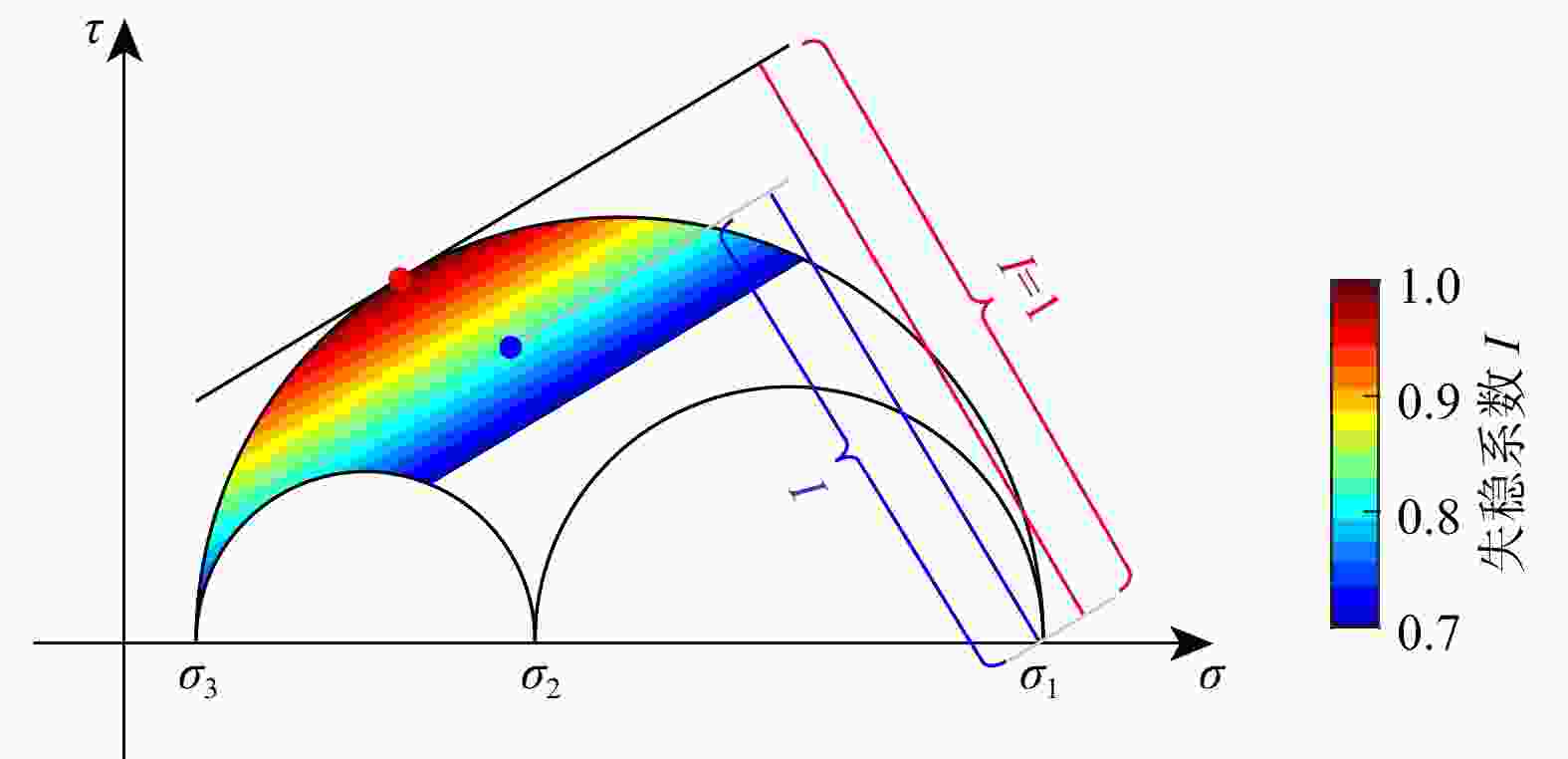
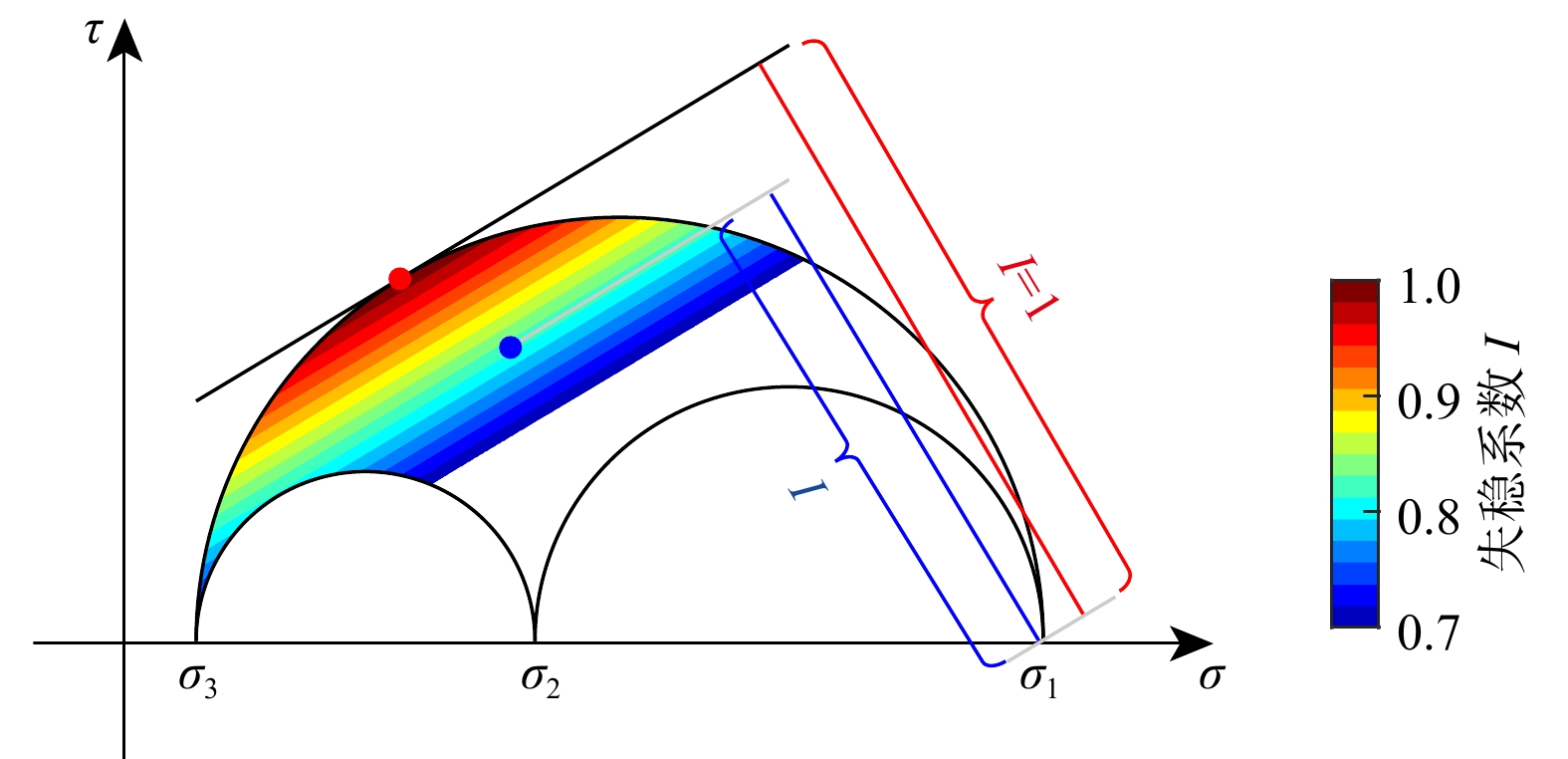
图 1 失稳系数的定义以及不同失稳系数的断层在摩尔圆中的位置
横纵坐标分别为正应力和剪应力的大小,单位Pa;图中红色圆点为最易失稳的断层;蓝色圆点代表任意断层在摩尔圆中的投影位置;蓝色线段的长度代表了其失稳的难易程度;用蓝色线段与红色线段长度之比计算失稳性归一化,定义为失稳系数(I);σ1、σ2和σ3分别表示最大、中间、最小主应力,下图同
Figure 1. Definition of the instability coefficient and positions of faults with different instability coefficients on the Mohr's circle
The horizontal and vertical axes represent the magnitudes of normal stress and shear stress, respectively(Pa). In the diagram, the red dot represents the most unstable fault, and the blue dot indicates the projected position of an arbitrary fault on the Mohr circle. The length of the blue line segment reflects the difficulty of failure, and instability is normalised by its ratio to the length of the red line segment, which is defined as the instability coefficient (I). σ1,σ2 and σ3 indicate the magnitudes of three principal stresses, respectively, same as the figure below.
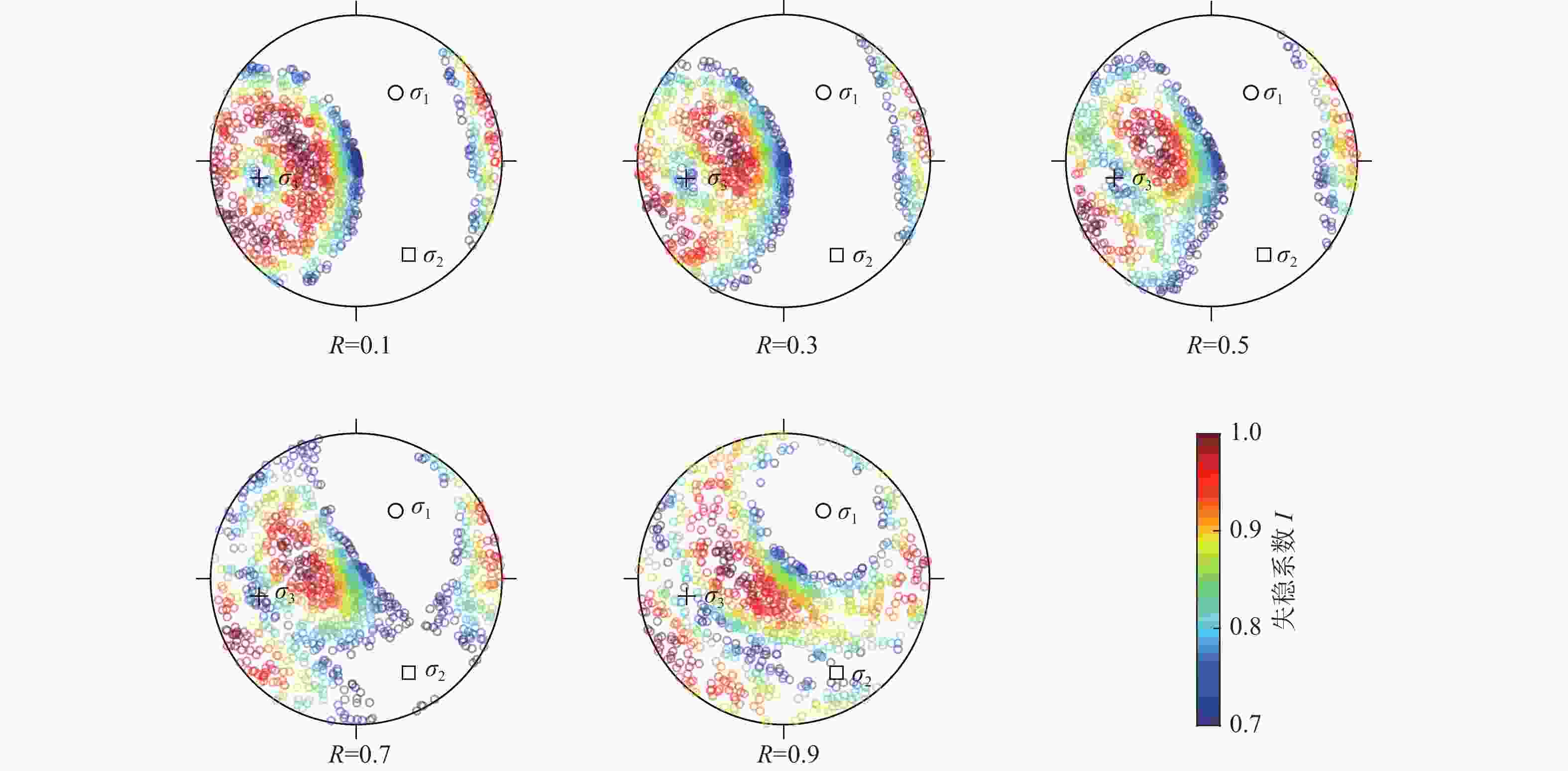
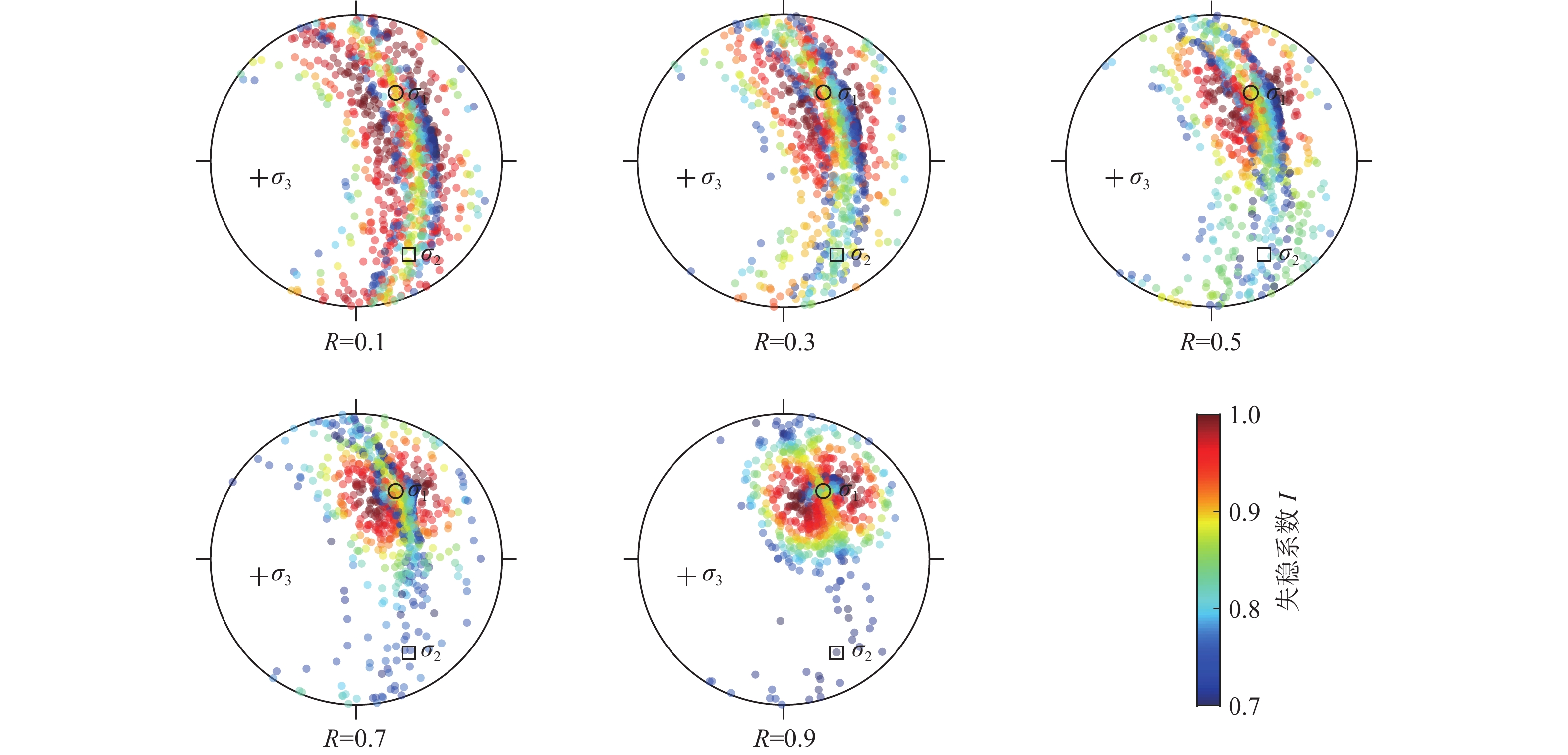
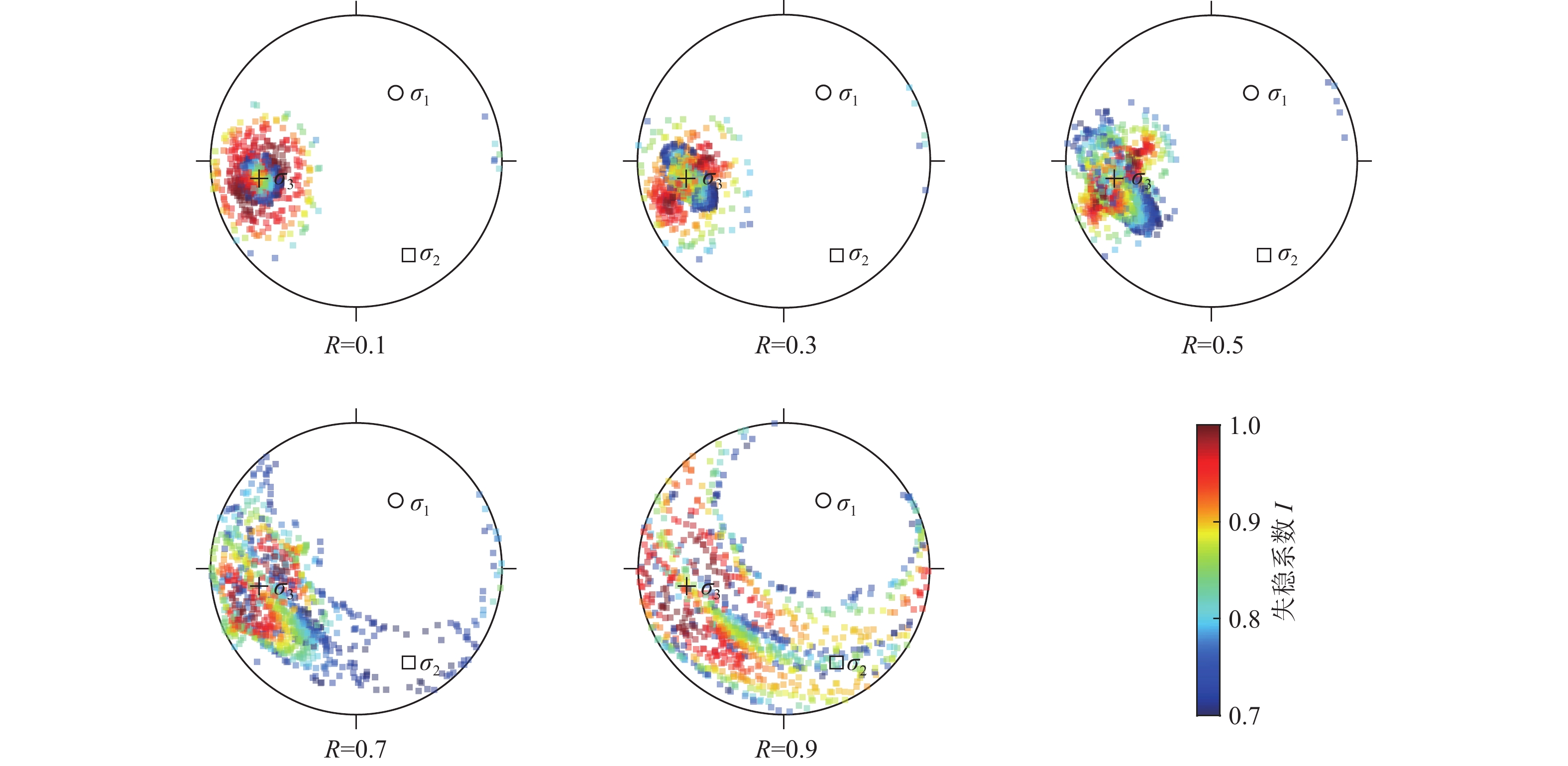
图 2 不同的应力形因子(R)下模拟的发震断层面法向的分布
圆圈的颜色代表了断层的失稳性大小
Figure 2. Distributions of simulated fault-plane normals under different shape ratios (R), with circle colors indicating fault instability.
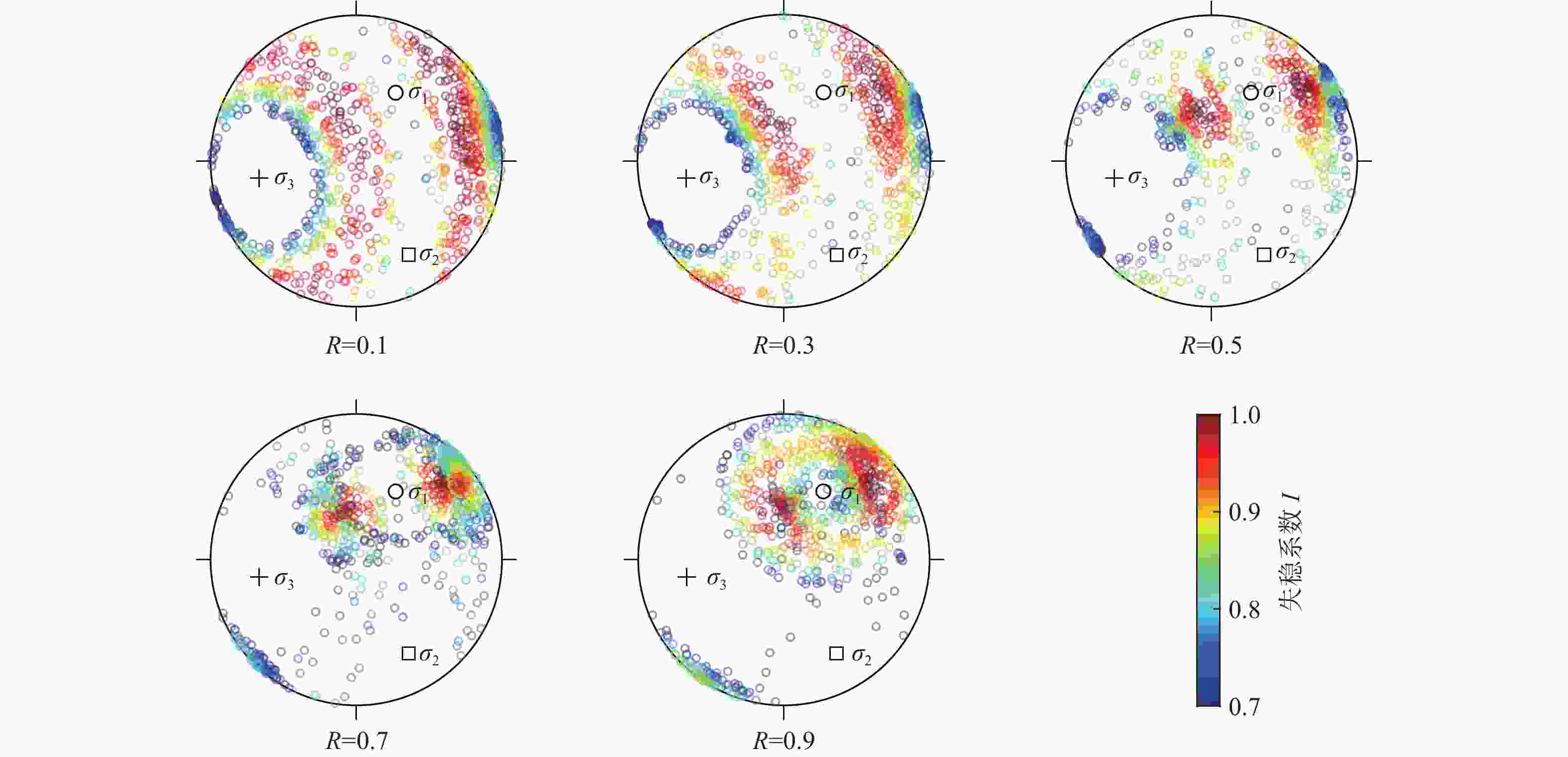
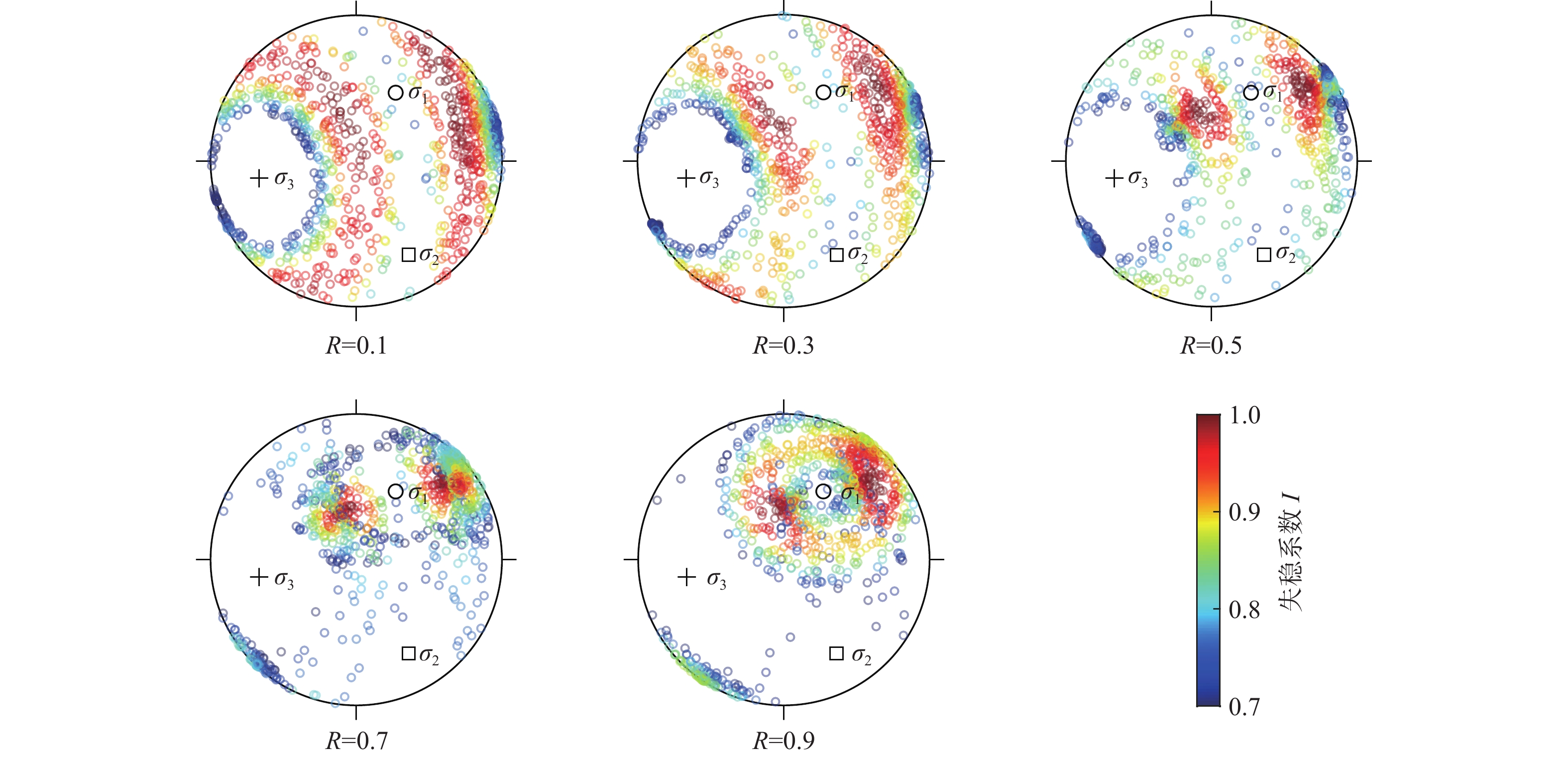
图 3 不同的应力形因子(R)下模拟的辅助断层面法向的分布
圆圈的颜色代表了相应发震断层的失稳性大小
Figure 3. Distributions of simulated auxiliary fault-plane normals under different shape ratios (R), with circle colors indicating the instability of the corresponding seismogenic faults
The subplots are significant in the same way as in Fig. 2. The only difference is that the colour of each normal is plotted according to the instability of the seismogenic fault plane.
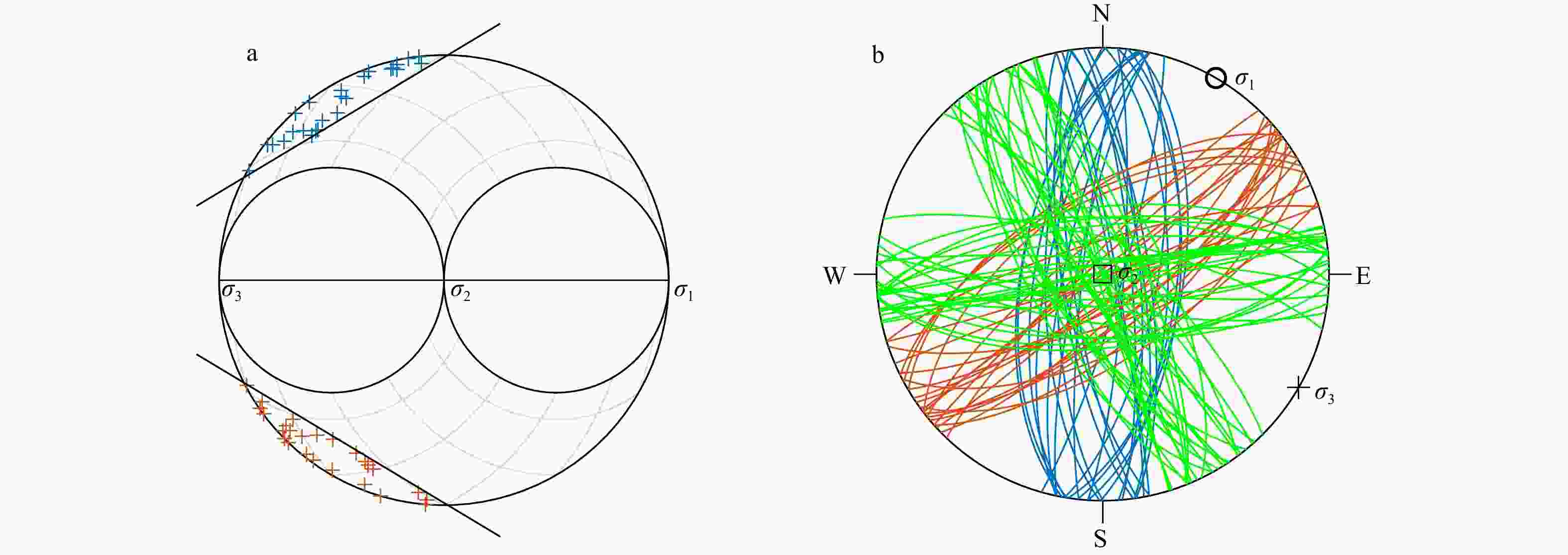
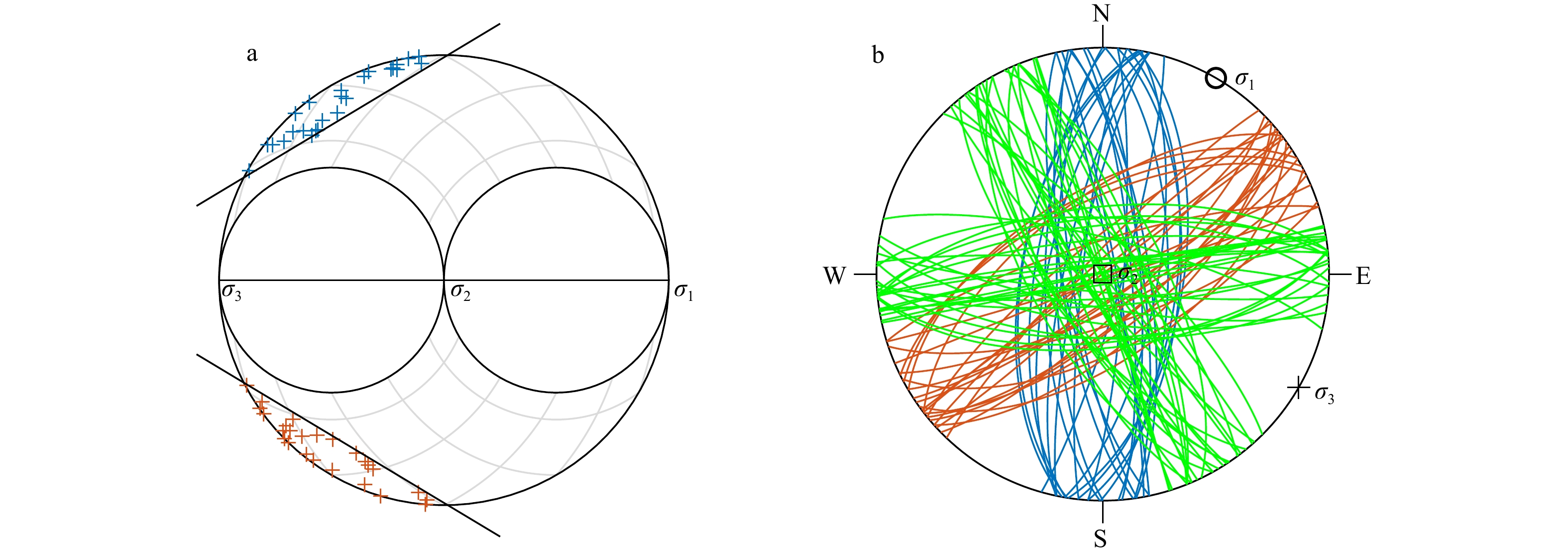
图 4 走滑型应力体系下的震源机制断层节面
实验的应力模型中 $ {\sigma }_{1} $ 轴的走向/倾角为30°/0°;$ {\sigma }_{3} $ 轴的走向/倾角为120°/0°; R=0.5,临界失稳系数为0.9a—2组满足失稳条件的断层在摩尔圆中的位置(红色和蓝色区域为 $ {\sigma }_{1} $ 轴两侧的2组断层面);b—2组真实断层面(红色、蓝色)以及相应的辅助断层面(绿色)
Figure 4. Fault nodal planes of focal mechanisms under a strike-slip stress regime
The stress model employed in this experiment is characterized by a $ {\sigma }_{1} $ axis oriented at 30° (trend) / 0° (plunge), a $ {\sigma }_{3} $ axis at 120° (trend) / 0° (plunge), an R value of 0.5, and a critical instability coefficient of 0.9. (a) Positions of two fault sets satisfying the instability criterion on the Mohr circle (Colors in the upper and lower semicircles distinguish sets on opposite sides of the $ {\sigma }_{1} $ axis); (b) The two actual fault sets (red and blue) and their corresponding auxiliary fault planes (green).
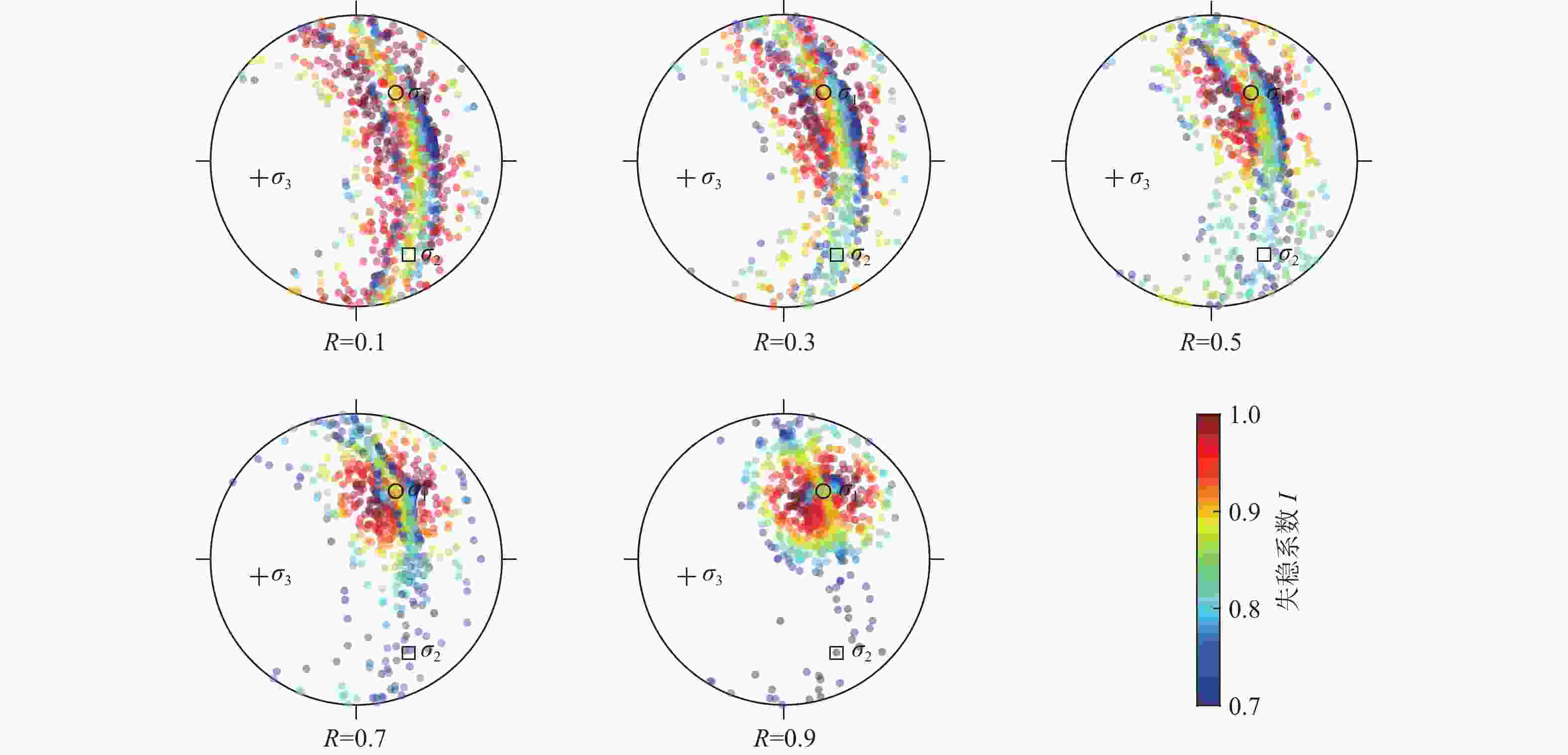
图 5 不同应力形因子(R)的情况下震源机制P轴的空间分布
Figure 5. Spatial distributions of P axes for focal mechanisms under different shape ratios (R)
-
[1] BEAUCÉ E, VAN DER HILST R D, CAMPILLO M, 2022. An iterative linear method with variable shear stress magnitudes for estimating the stress tensor from earthquake focal mechanism data: method and examples[J]. Bulletin of the Seismological Society of America, 112(3): 1224-1239. doi: 10.1785/0120210319 [2] BEELER N M, SIMPSON R W, HICKMAN S H, et al., 2000. Pore fluid pressure, apparent friction, and Coulomb failure[J]. Journal of Geophysical Research: Solid Earth, 105(B11): 25533-25542. doi: 10.1029/2000JB900119 [3] BOTT M H P, 1959. The mechanics of oblique slip faulting[J]. Geological Magazine, 96(2): 109-117. doi: 10.1017/S0016756800059987 [4] CHEN J, LI J, XIN C J, et al., 2023. Analysis of focal mechanism and regional characteristics of medium and small earthquakes in Yunnan region[J]. Journal of Yunnan University: Natural Sciences Edition, 45(S1): 316-323. (in Chinese with English abstract) [5] CHEN Y T, GU H D, 2023. Fundamentals of the theory of seismic sources[M]. Beijing: Science Press. (in Chinese) [6] CUI H W, WAN Y G, HUANG J C, et al., 2019. Inversion for the tectonic stress field and the characteristic of the stress shape factor of the detachment slab in the Pamir-Hindu Kush area[J]. Chinese Journal of Geophysics, 62(5): 1633-1649. (in Chinese with English abstract) [7] DONG C L, GUO W F, DING D Y, et al., 2025. Analysis of stress field characteristics in Changzhi area of Shanxi Province based on focal mechanism solutions[J]. Journal of Geodesy and Geodynamics, 45(5): 456-463. (in Chinese with English abstract) [8] GAO Y, WU J, FUKAO Y, et al., 2011. Shear wave splitting in the crust in North China: stress, faults and tectonic implications[J]. Geophysical Journal International, 187(2): 642-654. doi: 10.1111/j.1365-246X.2011.05200.x [9] GEPHART J W, 1990. FMSI: a Fortran program for inverting fault/slickenside and earthquake focal mechanism data to obtain the regional stress tensor[J]. Computers & Geosciences, 16(7): 953-989. [10] GEPHART J W, FORSYTH D W, 1984. An improved method for determining the regional stress tensor using earthquake focal mechanism data: application to the San Fernando Earthquake Sequence[J]. Journal of Geophysical Research: Solid Earth, 89(B11): 9305-9320. doi: 10.1029/JB089iB11p09305 [11] GUAN L N, JIANG G M, 2023. High-precision earthquake locations and deep fault characteristics beneath Xianyou area, Fujian Province[J]. Geoscience, 37(1): 40-47, doi: 10.19657/j.geoscience.1000-8527.2022.071 [12] JAEGER J C, COOK N G W, ZIMMERMAN R W, 2007. Fundamentals of rock mechanics[M]. 4th ed. Malden: Blackwell Publishing. [13] JIA S Q, EATON D W, WONG R C K, 2018. Stress inversion of shear-tensile focal mechanisms with application to hydraulic fracture monitoring[J]. Geophysical Journal International, 215(1): 546-563. doi: 10.1093/gji/ggy290 [14] LEI X L, SU J R, WANG Z W, 2020. Growing seismicity in the Sichuan Basin and its association with industrial activities[J]. Science China Earth Sciences, 63(11): 1633-1660. doi: 10.1007/s11430-020-9646-x [15] LI Z Y, WAN Y G, HU X H, et al., 2020. A genetic algorithm for stress tensor inversion and its application to the northeast margin of the Tibetan Plateau[J]. Chinese Journal of Geophysics, 63(2): 562-572. (in Chinese with English abstract) [16] LI Z Y, WAN Y G, LIU R F, et al., 2023. Fault stability analysis and its application in stress inversion quality assessment[J]. Environmental Earth Sciences, 82(24): 609. doi: 10.1007/s12665-023-11304-4 [17] LI Z Y, WAN Y G, GUO X Y, et al., 2024. Significance of accurate selection of the seismogenic faults from the earthquake focal mechanisms for stress field reconstruction[J]. Chinese Journal of Geophysics, 67(7): 2612-2624. (in Chinese with English abstract) [18] LI Z Y, WAN Y G, LIU R F, et al., 2025. Can the azimuth of the horizontal principal stress indicate the azimuth of the three-dimensional principal stress?[J]. Pure and Applied Geophysics, 182(5): 2039-2053. doi: 10.1007/s00024-025-03704-3 [19] MENG J, ZHANG P, WANG J M, et al., 2024. Study on regional stress background and prevention of the rock burst accident on October 20th, 2018 in the Longyun Coal Industry area, Shandong, China[J]. Journal of Geomechanics, 30(3): 473-486. (in Chinese with English abstract) [20] MICHAEL A J, 1987. Use of focal mechanisms to determine stress: a control study[J]. Journal of Geophysical Research: Solid Earth, 92(B1): 357-368. doi: 10.1029/JB092iB01p00357 [21] SIBSON R H, 1982. Fault zone models, heat flow, and the depth distribution of earthquakes in the continental crust of the United States[J]. Bulletin of the Seismological Society of America, 72(1): 151-163. [22] STEIN S, WYSESSION M, 2003. An introduction to seismology, earthquakes, and earth structure[M]. Malden: Blackwell Publishing. [23] VAVRYČUK V, 2014. Iterative joint inversion for stress and fault orientations from focal mechanisms[J]. Geophysical Journal International, 199(1): 69-77. doi: 10.1093/gji/ggu224 [24] VAVRYČUK V, 2015. Earthquake mechanisms and stress field[M]//BEER M, KOUGIOUMTZOGLOU I A, PATELLI E, et al. Encyclopedia of earthquake engineering. Berlin Heidelberg: Springer: 1-21. [25] WALLACE R E, 1951. Geometry of shearing stress and relation to faulting[J]. The Journal of Geology, 59(2): 118-130. doi: 10.1086/625831 [26] WAN Y G, 2016. Introduction to seismology[M]. Beijing: Science Press. (in Chinese) [27] WAN Y G, SHENG S Z, HUANG J C, et al., 2016. The grid search algorithm of tectonic stress tensor based on focal mechanism data and its application in the boundary zone of China, Vietnam and Laos[J]. Journal of Earth Science, 27(5): 777-785. doi: 10.1007/s12583-015-0649-1 [28] XU Z H, WANG S Y, HUANG Y R, et al., 1992. Tectonic stress field of China inferred from a large number of small earthquakes[J]. Journal of Geophysical Research: Solid Earth, 97(B8): 11867-11877. doi: 10.1029/91JB00355 [29] XUE L, YAO D X, LU H F, et al. , 2018. Focal mechanism solution inversion regional tectonic stress field features in Huainan and Huaibei mining areas[J]. Coal Geology of China, 30(2): 14-17, 79. (in Chinese with English abstract) [30] ZHANG B, SUN Y, MA X M, et al., 2023. Analysis of in-situ stress field characteristics and tectonic stability in the Motuo key area of the eastern Himalayan syntaxis[J]. Journal of Geomechanics, 29(3): 388-401. (in Chinese with English abstract) [31] ZHAO Y F, SHI W, ZHANG Y, 2023. Study on the reconstruction of the paleo-tectonic stress field and its evolution in the Jinchuan mining district, Gansu Province, China[J]. Journal of Geomechanics, 29(6): 770-785. (in Chinese with English abstract) [32] ZOBACK M D, HEALY J H, 1992. In situ stress measurements to 3.5 km depth in the Cajon Pass Scientific Research Borehole: implications for the mechanics of crustal faulting[J]. Journal of Geophysical Research: Solid Earth, 97(B4): 5039-5057. doi: 10.1029/91JB02175 [33] ZOBACK M L, 1992. First- and second-order patterns of stress in the lithosphere: the World Stress Map Project[J]. Journal of Geophysical Research: Solid Earth, 97(B8): 11703-11728. doi: 10.1029/92JB00132 [34] 陈佳, 李见, 辛灿锦, 等, 2023. 云南地区中小地震震源机制解及分区特征分析[J]. 云南大学学报(自然科学版), 45(S1): 316-323. [35] 陈运泰, 顾浩鼎, 2023. 震源理论基础[M]. 北京: 科学出版社. [36] 崔华伟, 万永革, 黄骥超, 等, 2019. 帕米尔—兴都库什地区构造应力场反演及拆离板片应力形因子特征研究[J]. 地球物理学报, 62(5): 1633-1649. doi: 10.6038/cjg2019M0202 [37] 董春丽, 郭文峰, 丁大业, 等, 2025. 基于震源机制解分析山西长治地区应力场特征[J]. 大地测量与地球动力学, 45(5): 456-463. doi: 10.14075/j.jgg.2024.06.267 [38] 关露凝, 江国明, 2023. 福建仙游地区高精度地震震源定位及深部断裂特征[J]. 现代地质, 37(1): 40-47, doi: 10.19657/j.geoscience.1000-8527.2022.071. [39] 李振月, 万永革, 胡晓辉, 等, 2020. 应力张量反演的遗传算法及其在青藏高原东北缘的应用[J]. 地球物理学报, 63(2): 562-572. doi: 10.6038/cjg2020N0047 [40] 李振月, 万永革, 郭祥云, 等, 2024. 从震源机制中准确识别发震断层面对重构应力场的意义[J]. 地球物理学报, 67(7): 2612-2624. doi: 10.6038/cjg2023R0193 [41] 孟静, 张鹏, 王继明, 等, 2024. 山东龙郓煤业10·20冲击地压事故区域应力背景与防控研究[J]. 地质力学学报, 30(3): 473-486. [42] 万永革, 2016. 地震学导论[M]. 北京: 科学出版社. [43] 薛凉, 姚多喜, 鲁海峰, 等, 2018. 两淮矿区震源机制解反演区域构造应力场特征[J]. 中国煤炭地质, 30(2): 14-17, 79. doi: 10.3969/j.issn.1674-1803.2018.02.03 [44] 张斌, 孙尧, 马秀敏, 等, 2023. 东构造结墨脱关键区域地应力场特征及其构造稳定性分析[J]. 地质力学学报, 29(3): 388-401. doi: 10.12090/j.issn.1006-6616.20232908 [45] 赵远方, 施炜, 张宇, 2023. 甘肃金川矿区古构造应力场恢复及演化研究[J]. 地质力学学报, 29(6): 770-785. doi: 10.12090/j.issn.1006-6616.2023161 -

 下载:
下载:


计量
- 文章访问数: 880
- HTML全文浏览量: 198
- PDF下载量: 164
- 被引次数: 0
