


Major advances and prospects in in-situ stress measurement and estimation methods over the past 10 years (2014–2025)
-
摘要: 地应力场特征是重大战略地下工程建设、深地资源能源开发及地质灾害防控的关键基础参数。近10年地应力测试与估算方法具有诸多进展和突破。文章系统梳理了2014—2025年地应力测试与估算方法的主要进展,按照技术领域可分为4大类:基于岩芯的方法、基于钻孔的方法、基于地球物理的方法以及基于数据驱动的估算新方法。基于岩芯的测试方法通过改进理论提高地应力量值的准确率,通过设备精度提升优化地应力方向的确定精度,弥补了低强度岩石地应力无法测量的缺陷。基于钻孔的测试方法实现了传感设备材料耐高温、高压、抗腐蚀性能,可完成深孔成像、方向识别和地应力测量,通过修正得到地应力量值的准确解析解。基于地球物理的方法实现了(0.5~1.0级)微小震震源机制解对地应力场的反演,获取了大量岩体应力信息;声波、成像和地层倾角测井技术的设备也发展为无接触式、高精度、高灵敏度化,更加适用于深孔和油田开发领域。随着大数据人工智能发展,新兴的数据驱动测试方法按照模型预测方式分为机器学习、智能神经网络预测和智能反分析3种方法,将地应力从离散“点测量”推进至全域“场重构”。通过对比传统方法,当前地应力测试正朝着“深部化、智能化、系统化”方向发展,未来研究需以智能预测模型与智能化测试装备双驱动,应对深部复杂地质环境的挑战。Abstract:
Objective The characteristics of the in-situ stress field are fundamental to major strategic underground engineering projects, deep earth resource and energy development, and geohazard prevention and control. Over the past decade, significant progress and breakthroughs have been made in in-situ stress measurement and estimation methods. Method This article systematically reviews the main advances in in-situ stress measurement and estimation methods from 2014 to 2025. These advances can be categorized into four technical fields: core-based methods, borehole-based methods, geophysics-based methods, and emerging data-driven estimation methods. Results Core-based testing methods have improved the accuracy of in-situ stress magnitude measurements through theoretical refinements and enhanced the precision of stress direction determination through equipment upgrades, addressing the previous inability to measure in-situ stress in low-strength rocks. Borehole-based testing methods have been further developed and now use sensors with high temperature and pressure resistance, as well as corrosion resistance, enabling deep borehole imaging, direction identification, and in-situ stress measurement. Accurate analytical solutions for in-situ stress magnitudes have been obtained through corrections. Geophysics-based methods have enabled the inversion of the in-situ stress field using focal mechanism solutions of minor earthquakes (magnitude 0.5–1.0), providing extensive rock mass stress information. Acoustic, imaging, and dipmeter logging technologies have also evolved to utilize non-contact, high-precision, and high-sensitivity equipment, making them more suitable for deep boreholes and oilfield development. Advancements in big data and artificial intelligence have given rise to data-driven testing methods that can be divided into three categories based on prediction approaches: machine learning, intelligent neural network prediction, and intelligent back-analysis. These methods have advanced in-situ stress measurement from discrete "point measurements" to full-field "field reconstruction." Conclusion Compared to traditional methods, current in-situ stress testing is moving toward "deepening, intelligentization, and systematization." Significance Future research should focus on the dual drivers of intelligent prediction models and intelligent testing equipment to address the challenges of complex deep geological environments. -
Key words:
- in-situ stress /
- testing methods /
- advances /
- data-driven /
- stress models
-
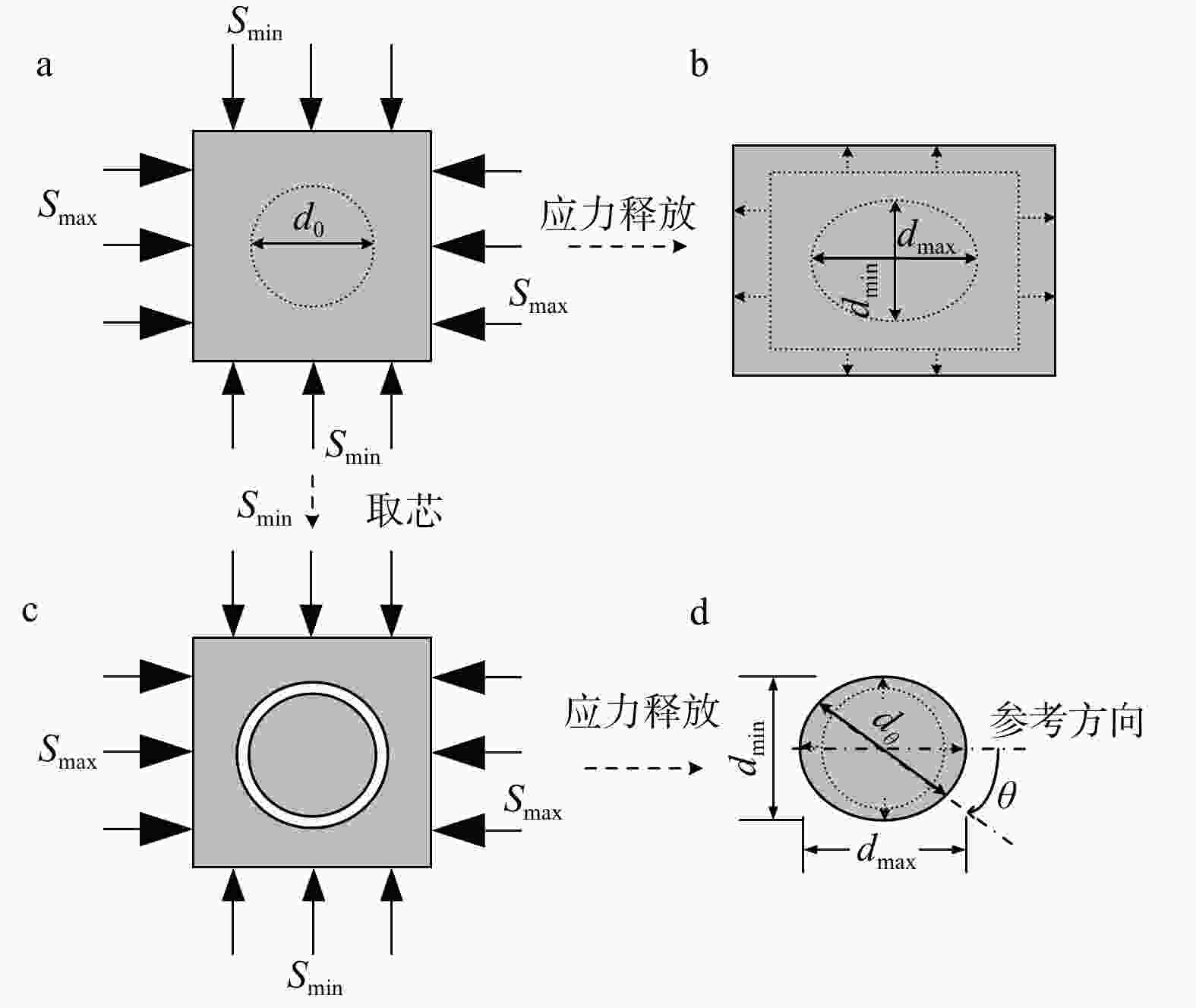
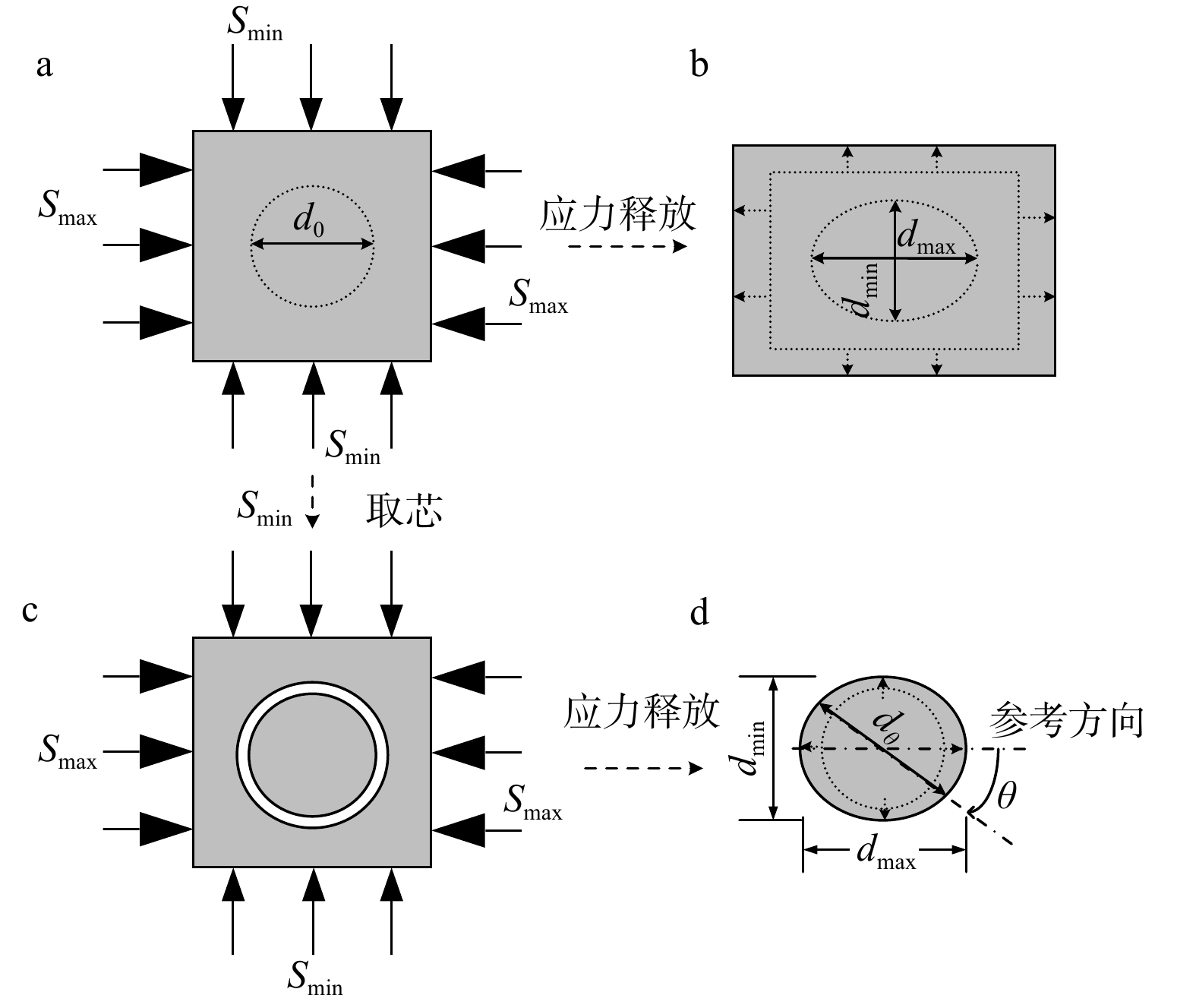
图 1 钻孔应力释放引起岩芯膨胀示意图
Smax—水平最大主应力;Smin—水平最小主应力;d0—变形前钻孔直径;dmax—钻孔变形后长轴直径;dmin—钻孔变形后短轴直径;dθ—参考方向直径;θ—参考方向角度a—取芯前直径;b—取芯后钻孔直径;c—取芯过程;d—取芯后岩芯直径
Figure 1. Schematic diagram of core expansion caused by drilling stress release
(a) Diameter before coring; (b) Diameter after coring (borehole); (c) Coring process; (d) Diameter after coring (core)Smax–Maximum horizontal principal stress; Smin–Minimum horizontal principal stress; d0–initial diameter of the borehole before deformation; dmax–long-axis diameter of the borehole after deformation; dmin–short-axis diameter of the borehole after deformation; dθ–diameter in the reference direction; θ–angle of the reference direction
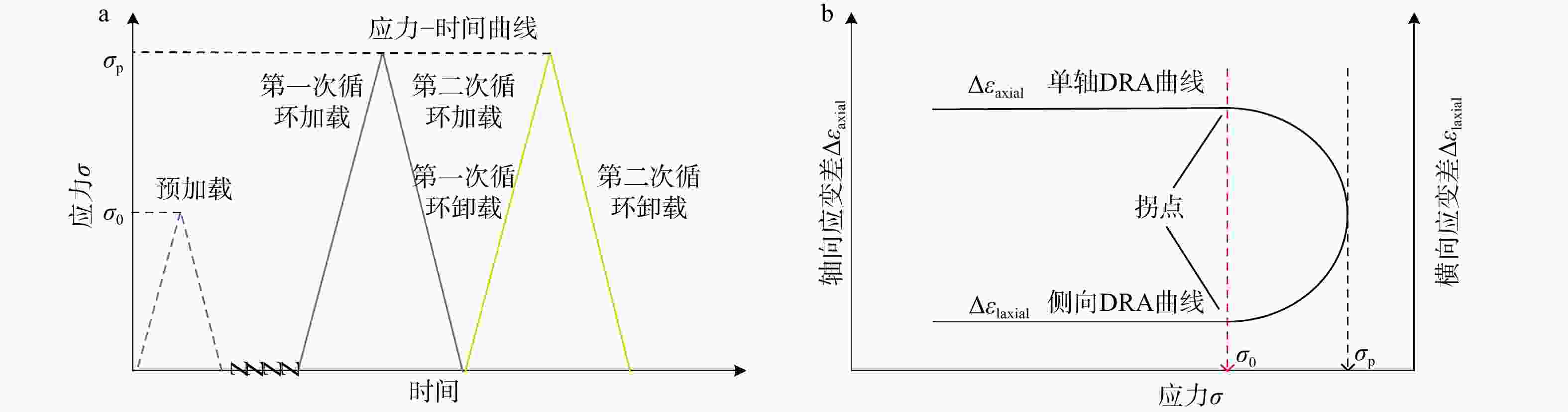
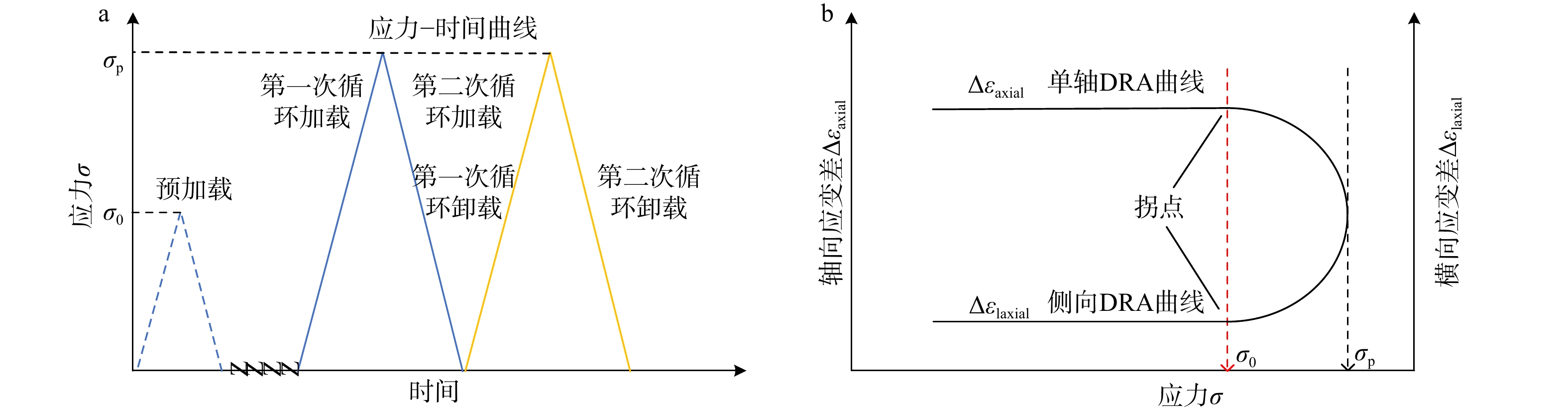
图 2 变形速率分析法示意图
σp—峰值轴向应力;σ0—历史最大主应力;∆εaxial—轴向应变差;∆εlateral—横向应变差a—应力−时间曲线;b—应力−应变曲线
Figure 2. Schematic diagram for deformation rate analysis
(a) Stress–time curve; (b) Stress–strain curveσp–Peak axial stress; σ0–Historical maximum principal stress; ∆εaxial–Axial strain difference; ∆εlateral–Lateral strain difference
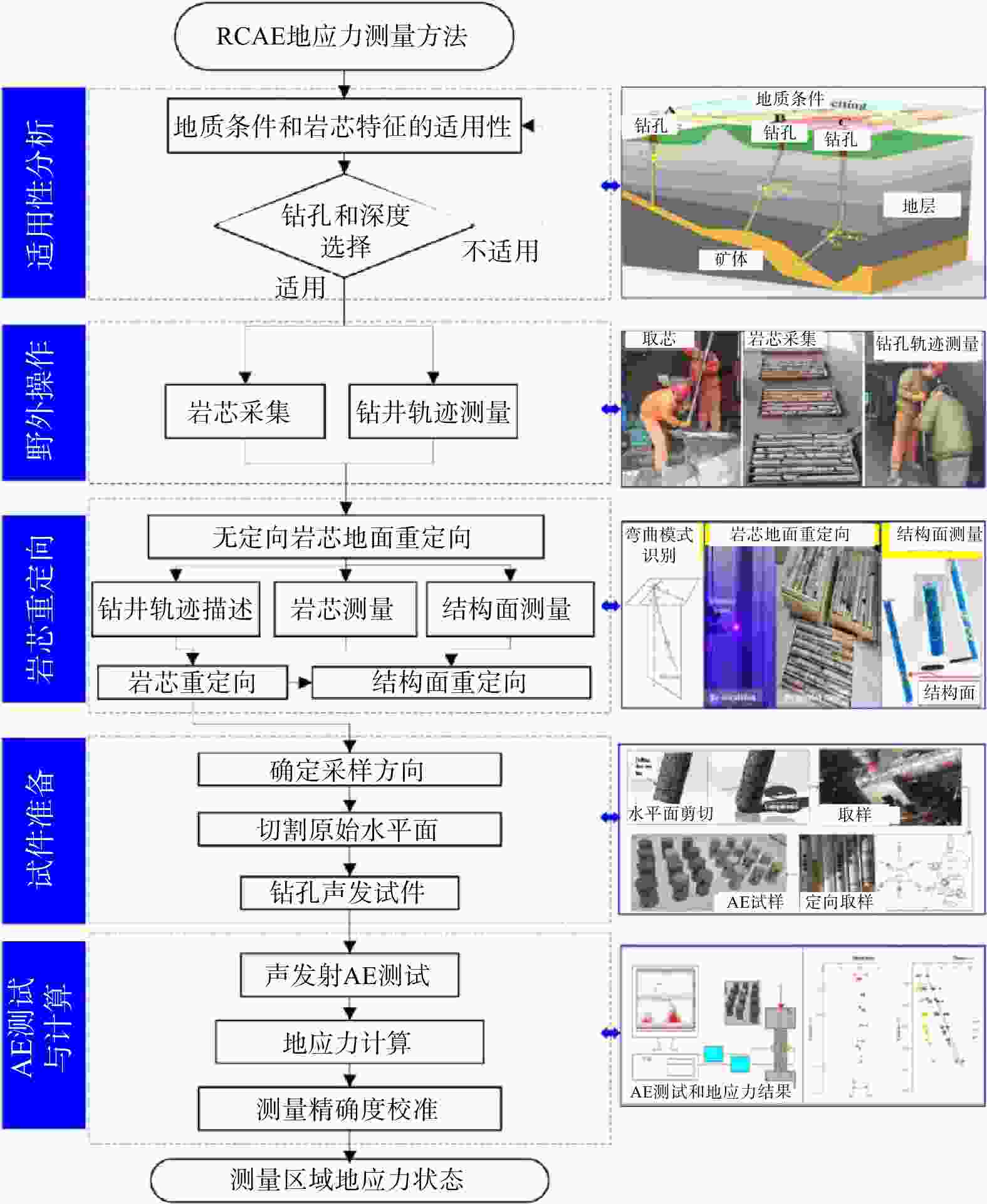
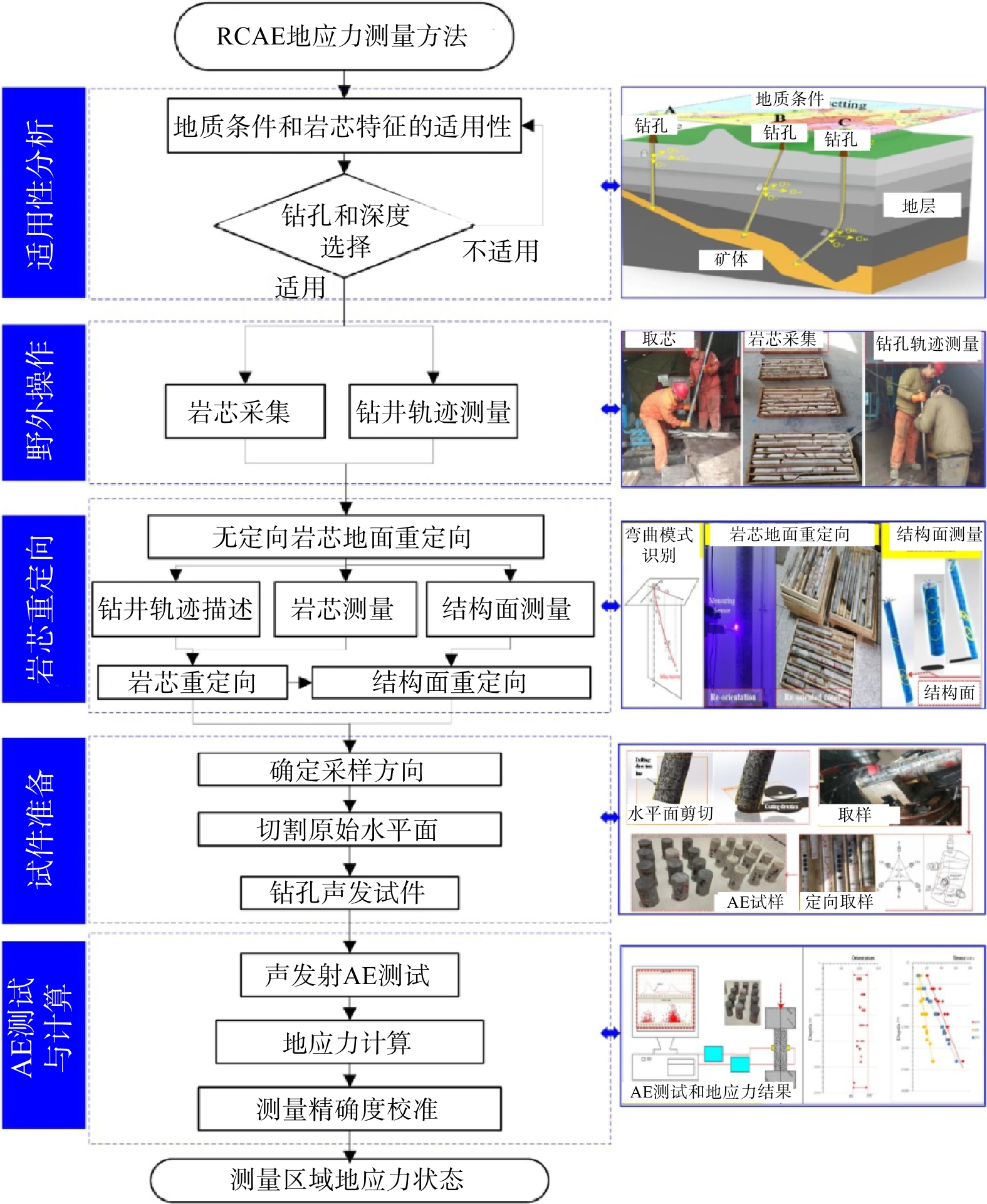
图 3 RCAE法测量步骤(Ma et al.,2020,2022a)
Figure 3. Measurement procedure of the RCAE method (Ma et al., 2020, 2022a)

图 4 饼化的岩芯分类(闫绍坤等,2024)
a—破碎状岩饼;b—薄饼状岩饼;c—厚饼状岩饼;d—短柱状岩饼
Figure 4. Classification of core discing (Yan et al., 2024)
(a) Fragmented rock disk; (b) Thin rock disk; (c) Thick rock disk; (d) Short cylindrical rock disk
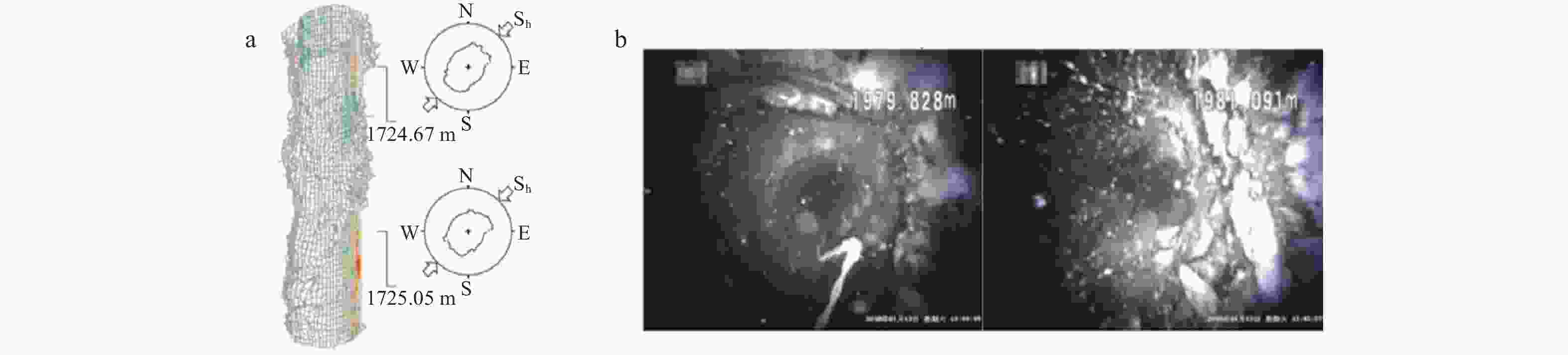
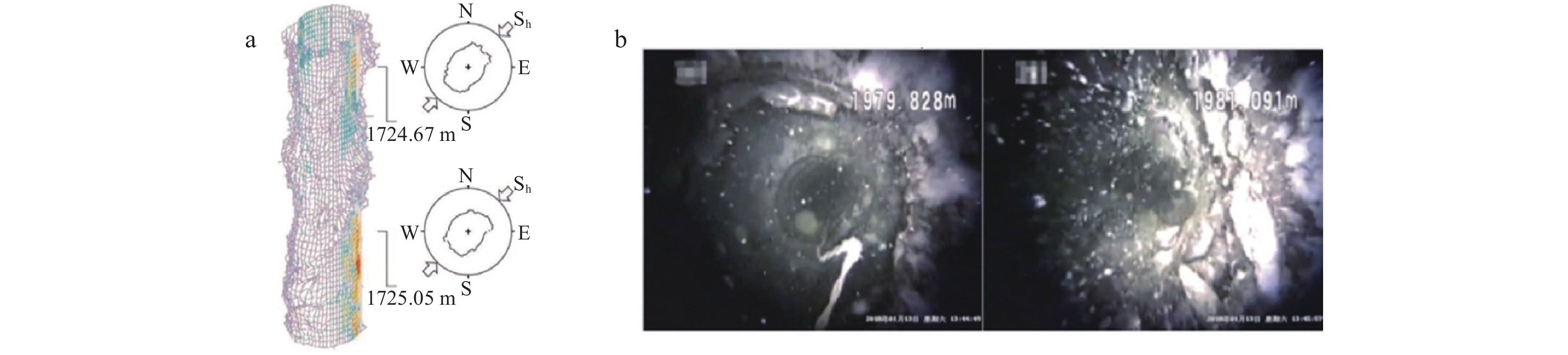
图 5 使用各种成像设备拍摄的深孔不规则特征图像
a—德国KTB钻孔孔壁形态;b—不规则钻孔形态
Figure 5. Images of the irregular features of a deep borehole, acquired with various imaging equipment
(a) German KTB borehole wall morphology; (b) Irregular borehole morphology

图 6 深钻孔中4种典型的不规则钻孔
红色虚线代表完美圆形的钻孔形态,蓝色实线代表圆形钻孔变形后的形式a—粗糙;b—冲蚀;c—键槽;d—崩落
Figure 6. Four typical irregular cross sections of a deep borehole
(a) Roughness; (b) Washout; (c)Key seat; (d) BreakoutThe red dashed line represents the perfectly circular borehole shape, while the blue solid line represents the deformed shape of the circular borehole.
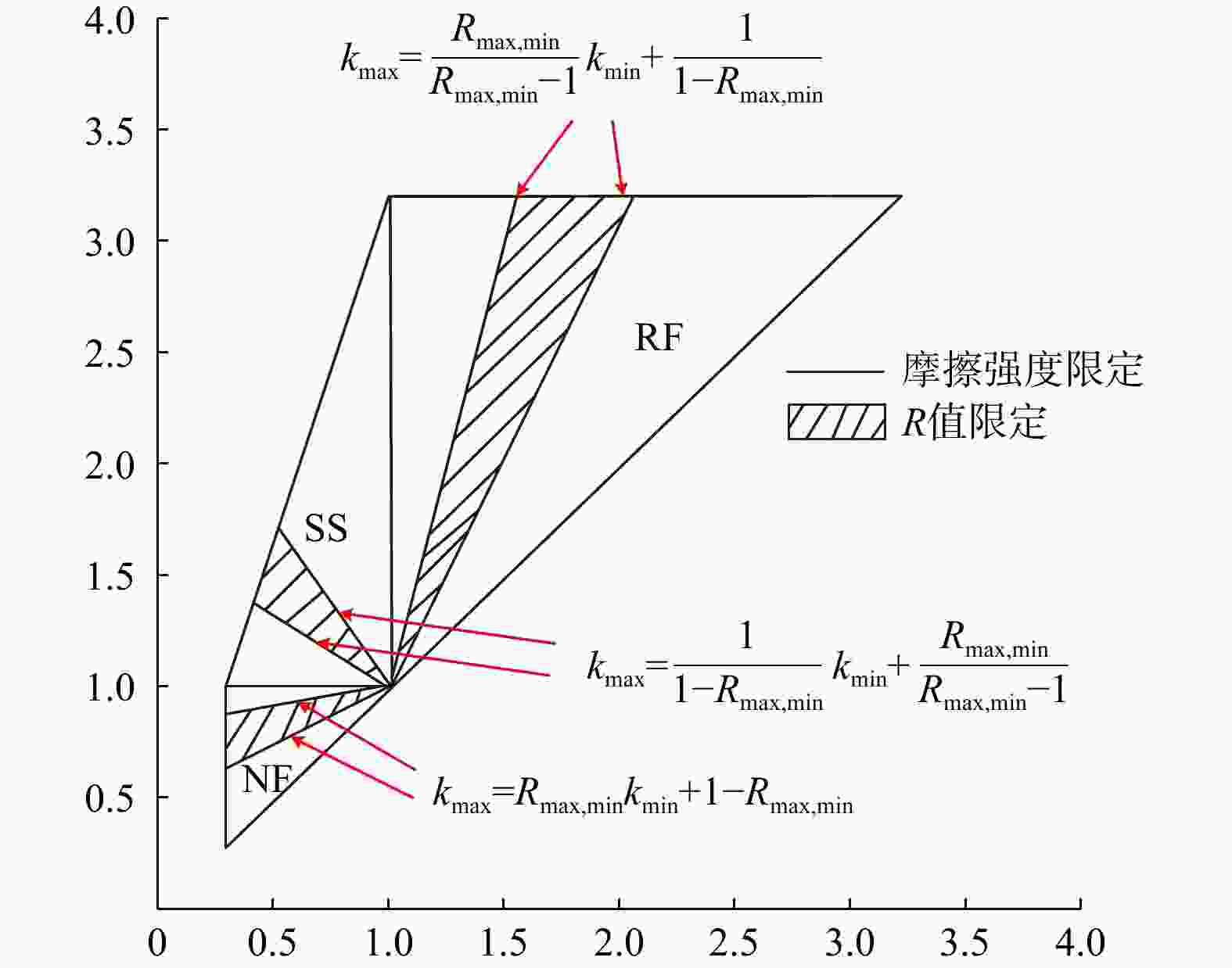
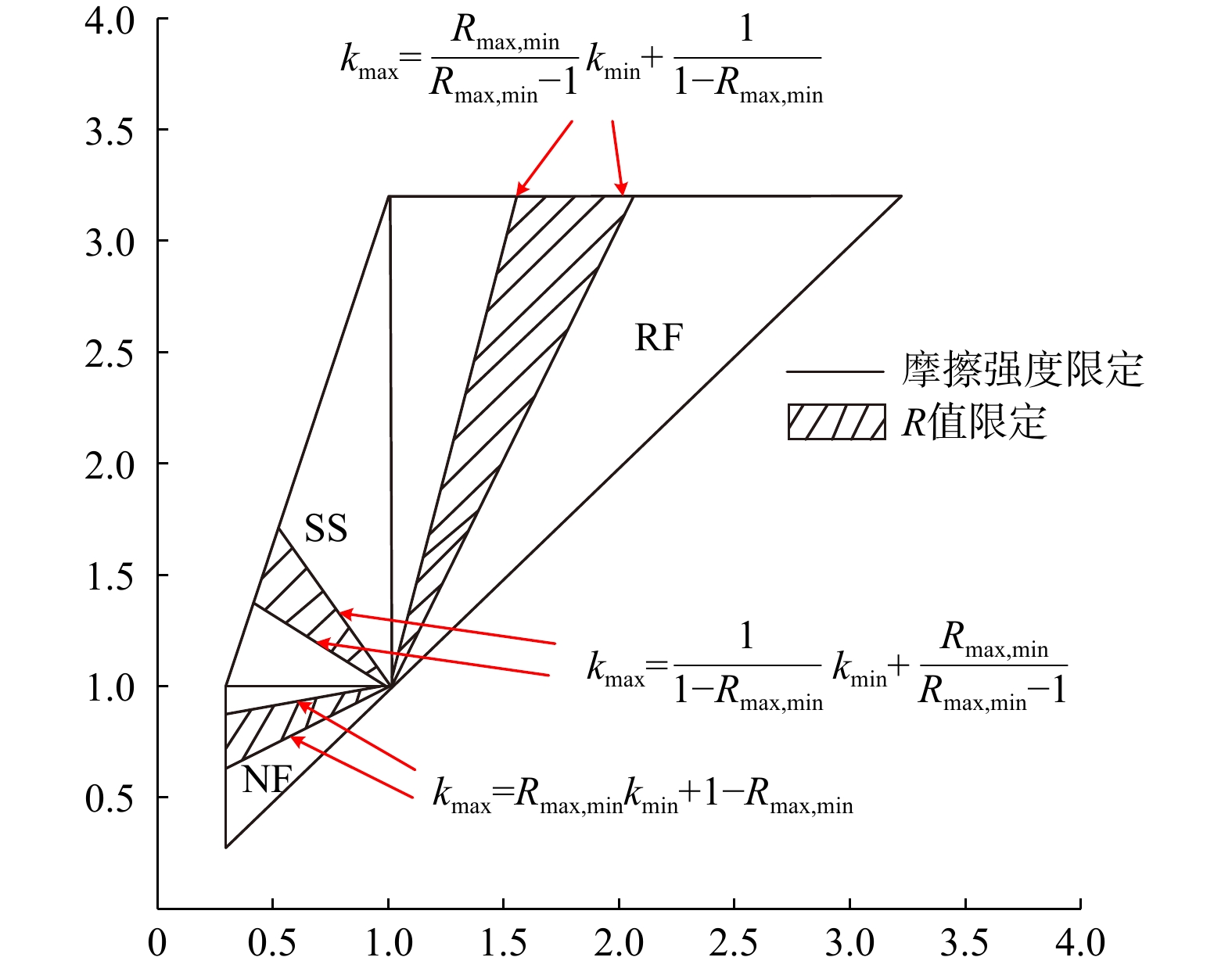
图 7 微小震震源机制解联合应力多边形反演地应力场
NF—正断层;SS—走滑断层;RF—逆断层;kmax和kmin—最大水平侧压力系数、最小水平侧压力系数;Rmax,min—最大、最小差应力比
Figure 7. Inversion of the in-situ stress field from focal mechanism solutions of micro-earthquakes combined with stress polygons
NF–normal fault; SS–strike-slip fault; RF–reverse fault; kmax and kmin–maximum and minimum horizontal pressure coefficients; Rmax, min–maximum and minimum differential stress ratios
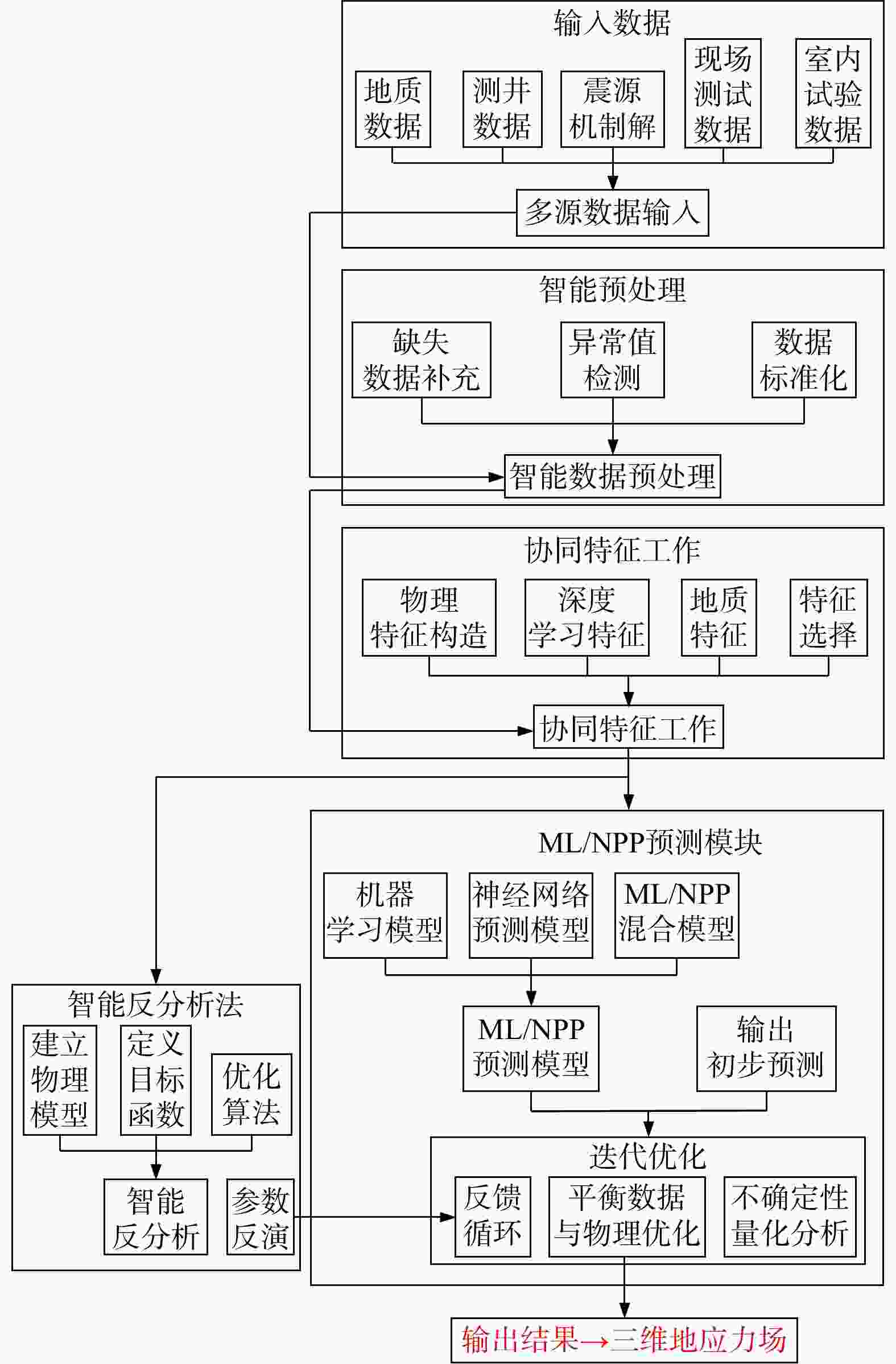
图 8 基于数据驱动的人工智能方法(ML/NNP/Intelligent Anti-Analysis)工作原理图
Figure 8. Working principle flow chart of the data-driven artificial intelligence method (ML/NNP/Intelligent Anti-Analysis)
表 1 2014—2025年地应力测试方法主要创新
Table 1. Major innovations in in-situ stress testing methods over the past decade (2014–2025)
方法类别 方法名称 应力信息 适用范围 近19年进展 优点 缺点 适用行业或工程建议 基于岩芯的方法 非弹性应变恢复(ASR)法 应力大小、方向 破碎、深孔、软岩地层 钻孔现场ASR法地应力测试系统、ASR柔度修正 对于深孔经济有效 应力与ASR柔度关系尚存缺陷;取芯后须尽快测试 深部采矿、软岩大变形工程、干热岩等 岩芯直径变形分析 (DCDA) 应力大小、方向 深孔、硬脆性岩石 高分辨率数字图像相关(DIC)技术应用 非破坏性、成本低 仅获相对应力,依赖岩芯完整性 矿业、土木(隧道、洞室、大坝)、能源(油气、地热)和核废料处置 线性三轴变形速率分析法 三维应力张量 深孔、硬脆性岩石 弥补了无法测量低强度岩石缺点 非破坏性、成本低 仅获相对应力,依赖岩芯完整性和时间性 深部采矿(软岩/高应力)、深埋隧道(挤压围岩)、盐岩相关工程(油气钻井、储气库)、高温地热储层 重定向声发射(RAE) 应力大小、方向 广泛 将重定向技术融合进声发射 准确量化方向 设备依赖性 深地工程(>1000m)(采矿、储气库、水电站)和区域地质灾害防控 饼状岩芯估算法 应力大小、方向 高应力地区、硬岩 公式量化 快速估算垂向应力 仍具有一定误差性 高地应力深部采矿、隧道及地下洞室工程补充方法 基于钻孔的方法 水压致技术 应力大小、方向 广泛、深孔 提升钻杆系统耐高压、密闭性 设备简便、操作简单 最大主应力量值误差大 较成熟、广泛,与地球物理测井、数值模拟组成系统 修正原生裂隙水压致裂(HTPF)法 三维应力张量 有限的条件 实现三位应力张量反演 设备简便、操作简单 依赖天然裂隙产状精度 裂隙较为发育的岩体工程 改进套芯应力解除 空心包体应变计 应力大小、方向 广泛、完整岩石 获得套孔偏心岩芯弹性模量 浅部快速勘探、完整岩体、高精度短期测试 安装工艺复杂 浅部矿山、水利水电岩体工程 澳大利亚联邦科学与工业研究组织CSIRO应变计 应力大小、方向 广泛、完整岩石 引入瞬时采集、断电续采数字化技术 深部工程(>500m)、高裂隙岩体、长期监测 点测量、适用性有限 浅部矿山、水利水电隧道等裂隙较为发育的岩体工程 压磁应力解除 应力大小、方向 广泛 智能信号处理,实现深孔测量 设备简便、操作简单 适用性有限 矿山隧道、油气钻井、地质灾害监测 光栅光纤传感技术 应力大小、方向 广泛 光导纤维为载体,通过在光导纤维内部刻入光栅,测量和传输传递信号 设备简便、操作简单、耐高温高压、抗腐蚀 安装工艺复杂 核废料处置等高地温地下工程 钻孔壁/径/底变形测量法 应力大小、方向 浅孔 实现变形感知、显微成像和方位识别 设备简便、操作简单 仅点测量、代表性有限 水利水电、隧道工程复核等 改进钻孔崩落法 应力大小、方向 深孔、软岩 改进失效准则、拓展至热致裂 直观可视化 仅获方向信息,不适用于软岩 川藏铁路隧道工程等高地应力破碎带地区 改进钻孔变形法 应力大小、方向 深孔、软岩 实现无接触探测 利用深孔获得信息 计算依赖本构关系准确性 软岩大变形工程 不规则钻孔变形估算法 应力大小、方向 广泛 引入复变函数得到精确解析解 解决复杂几何边界问题,应力量值结果更加精确 计算模型依赖本构关系准确性 对基于钻孔方法测试的修正补充方法,结果更加精确 基于地球
物理的方法微震震源机制解 应力方向、三向应力比值 构造应力场分析 实现0.5~1.0级微小震地应力反演 获得大体量的岩体应力信息 空间分辨率较低 基于震源信息对不同尺度区域应力场进行反演,适用范围广泛 声波测井技术 应力诱导各向异性 油田开发 提升精度、准确率 获得大体量的岩体应力信息 需岩石物理模型标定 主要对于油田开发超深钻井进行测试 基于数据驱动的新方法 机器学习模型 (ML) 区域应力场分布 区域应力场预测分析 人工智能方法预测 高效处理大数据 依赖训练数据质量 基于既有地应力数据通过人工智能方法对不同尺度、不同时空地应力场动态变化规律进行预测,属于较为先进、低成本的方法,适用范围较为广泛 智能神经网络预测 (ANN) 高分辨率应力场分布 区域应力场预测分析 人工智能方法预测 非线性关系捕捉能力强 黑箱模型、工程应用风险 智能反分析法 复杂地质体应力场 区域应力场预测分析 将智能方法综合应用 解决多解性问题 计算资源消耗大 数据支撑−公共应力模型 区域尺度应力场 区域应力场预测分析 实现应力场约束 开放共享,覆盖密度大 局部细节不足 为区域构造应力场的构建预测提供数据支撑 数据支撑−世界和中国应力图 中国、世界尺度应力场 区域应力场预测分析 实现大尺度应力场数据统一表达 提供全面大尺度数据 更新周期长 (5~10年) 为中国乃至世界的应力场构建预测提供数据支撑  下载: 导出CSV
-
[1] AMADEI B, STEPHANSSON O, 1997. Rock stress and its measurement[M]. Dordrecht: Springer. [2] ANIKIEV D, BIRNIE C, WAHEED U B, et al., 2023. Machine learning in microseismic monitoring[J]. Earth-Science Reviews, 239: 104371. doi: 10.1016/j.earscirev.2023.104371 [3] BAHRANI N, VALLEY B, KAISER P K, 2015. Numerical simulation of drilling-induced core damage and its influence on mechanical properties of rocks under unconfined condition[J]. International Journal of Rock Mechanics and Mining Sciences, 80: 40-50. doi: 10.1016/j.ijrmms.2015.09.002 [4] BAI X, ZHANG D M, WANG H, et al., 2018. A novel in situ stress measurement method based on acoustic emission Kaiser effect: a theoretical and experimental study[J]. Royal Society Open Science, 5(10): 181263. doi: 10.1098/rsos.181263 [5] BAN Y X, XIE Q, TANG J H, et al., 2024. Influence of stress level on the determination of in situ stress by DRA method[J]. Buildings, 14(12): 3828. doi: 10.3390/buildings14123828 [6] BAOUCHE R, SEN S, RADWAN A E, et al., 2023. In situ stress determination based on acoustic image logs and borehole measurements in the in-Adaoui and Bourarhat hydrocarbon fields, eastern Algeria[J]. Energies, 16(10): 4079. doi: 10.3390/en16104079 [7] BREKKE H, MACEACHERN J A, ROENITZ T, et al., 2017. The use of microresistivity image logs for facies interpretations: an example in point-bar deposits of the McMurray formation, Alberta, Canada[J]. AAPG Bulletin, 101(5): 655-682. doi: 10.1306/08241616014 [8] CHANG F Q, LIANG X Y, HUANG Z Y, et al., 2024. New type of double pipe hydraulic fracturing method in-situ stress testing device and its application[J]. Journal of Huaqiao University (Natural Science), 45(6): 706-711. (in Chinese with English abstract) [9] CHEN N, WANG C H, CHEN P Z, et al., 2021. Re-analyzing the in-situ stress field in the right bank of the Baihetan hydroelectric power plant using the borehole breakout data[J]. Journal of Geomechanics, 27(3): 430-440. (in Chinese with English abstract) [10] CHEN Q C, SUN D S, CUI J J, et al., 2019. Hydraulic fracturing stress measurements in Xuefengshan deep borehole and its significance[J]. Journal of Geomechanics, 25(5): 853-865. (in Chinese with English abstract) [11] CORNET F H, VALETTE B, 1984. In situ stress determination from hydraulic injection test data[J]. Journal of Geophysical Research: Solid Earth, 89(B13): 11527-11537. doi: 10.1029/JB089iB13p11527 [12] DARGAHIZARANDI A, MASOUMI H, HASHEMI A, et al., 2025. Determination of 3D stress state using a novel integrated diametrical core deformation and ultrasonic analysis[J]. Rock Mechanics and Rock Engineering, 58(4): 4377-4401. doi: 10.1007/s00603-025-04427-6 [13] DUAN Y X, YAN Y N, SUN Q F, et al., 2018. Automated detection of dip angle based on LWD azimuthal gamma-ray logging[J]. Well Logging Technology, 42(5): 514-520. (in Chinese with English abstract) [14] FANG X X, FENG H, WANG Y H, et al., 2022. Prediction method and distribution characteristics of in situ stress based on borehole deformation—a case study of coal measure stratum in Shizhuang block, Qinshui Basin[J]. Frontiers in Earth Science, 10: 961311. doi: 10.3389/feart.2022.961311 [15] FENG C J, CHEN Q C, WU M L, et al., 2012. Analysis of hydraulic fracturing stress measurement data—discussion of methods frequently used to determine instantaneous shut-in pressure[J]. Rock and Soil Mechanics, 33(7): 2149-2159. (in Chinese with English abstract) [16] FENG P, LI S, TANG D Z, et al., 2022. Application of support vector machine in prediction of coal seam stress[J]. Geoscience, 36(5): 1333-1340. (in Chinese with English abstract) [17] FRASER D, GHOLAMI R, SARMADIVALEH M, 2021. Deformation rate analysis: how to determine in-situ stresses in unconventional gas reservoirs[J]. International Journal of Rock Mechanics and Mining Sciences, 146: 104892. doi: 10.1016/j.ijrmms.2021.104892 [18] FUNATO A, ITO T, 2017. A new method of diametrical core deformation analysis for in-situ stress measurements[J]. International Journal of Rock Mechanics and Mining Sciences, 91: 112-118. doi: 10.1016/j.ijrmms.2016.11.002 [19] GAO G Y, WANG C H, LIU J K, et al., 2024. Determination of the three-dimensional in situ stress tensor in inclined boreholes and its application[J]. Chinese Journal of Rock Mechanics and Engineering, 43(S2): 3700-3709. (in Chinese with English abstract) [20] GAO L, LIN W R, SUN D S, et al., 2014. Experimental anelastic strain recovery compliance of three typical rocks[J]. Rock Mechanics and Rock Engineering, 47(6): 1987-1995. doi: 10.1007/s00603-013-0526-0 [21] GARAVAND A, HADAVIMOGHADDAM F, 2023. In situ stress assessment based on plastic behavior of borehole breakouts and machine learning[J]. International Journal for Numerical and Analytical Methods in Geomechanics, 47(2): 241-260. doi: 10.1002/nag.3467 [22] GE X R, HOU M X, 2011. A new 3D in-situ rock stress measuring method: borehole wall stress relief method (BWSRM) and development of geostress measuring instrument based on BWSRM and its primary applications to engineering[J]. Chinese Journal of Rock Mechanics and Engineering, 30(11): 2161-2180. (in Chinese with English abstract) [23] HAN H X, YIN S D, 2018. Determination of in-situ stress and geomechanical properties from borehole deformation[J]. Energies, 11(1): 131. doi: 10.3390/en11010131 [24] HAN H X, YIN S D, CHEN Z H, et al., 2021. Estimate of in-situ stress and geomechanical parameters for Duvernay Formation based on borehole deformation data[J]. Journal of Petroleum Science and Engineering, 196: 107994. doi: 10.1016/j.petrol.2020.107994 [25] HAN Z Q, LI M H, WANG C, et al., 2023a. Application and discussion of the borehole radial deformation method in deep borehole geostress measurement[J]. Frontiers in Earth Science, 11: 1102276. doi: 10.3389/feart.2023.1102276 [26] HAN Z Q, WANG C, WANG C Y, et al., 2023b. Determination of geo-stress in deep strata incorporating borehole diametral deformation measurement and overcoring[J]. Measurement, 218: 113217. doi: 10.1016/j.measurement.2023.113217 [27] HEIDBACH O, RAJABI M, CUI X F, et al., 2018. The World Stress Map database release 2016: crustal stress pattern across scales[J]. Tectonophysics, 744: 484-498. doi: 10.1016/j.tecto.2018.07.007 [28] HU X P, ZANG A, HEIDBACH O, et al., 2017. Crustal stress pattern in China and its adjacent areas[J]. Journal of Asian Earth Sciences, 149: 20-28. doi: 10.1016/j.jseaes.2017.07.005 [29] IBRAHIM A F, GOWIDA A, ALI A, et al., 2021. Machine learning application to predict in-situ stresses from logging data[J]. Scientific Reports, 11(1): 23445. doi: 10.1038/s41598-021-02959-9 [30] JO Y, CHANG C D, JI S H, et al., 2019. In situ stress states at KURT, an underground research laboratory in South Korea for the study of high-level radioactive waste disposal[J]. Engineering Geology, 259: 105198. doi: 10.1016/j.enggeo.2019.105198 [31] JU Y, REN Z Y, ZHENG J T, et al., 2022. Transparentized solutions and interpretation for the effects of discontinuous structures and multiphysics on rock failure[J]. Journal of China Coal Society, 47(1): 210-232. (in Chinese with English abstract) [32] KOPTEV A I, ERSHOV A V, MALOVICHKO E A, 2013. The stress state of the earth’s lithosphere: results of statistical processing of the world stress-map data[J]. Moscow University Geology Bulletin, 68(1): 17-25. doi: 10.3103/S0145875213010067 [33] LAI J, WANG G W, WANG S, et al., 2018. A review on the applications of image logs in structural analysis and sedimentary characterization[J]. Marine and Petroleum Geology, 95: 139-166. doi: 10.1016/j.marpetgeo.2018.04.020 [34] LAI J, BAO M, LIU S C, et al., 2021. Prediction of high quality deep and ultra-deep dolostones reservoirs in Tarim Basin by well logs[J]. Journal of Palaeogeography, 23(6): 1225-1242. (in Chinese with English abstract) [35] LI B, ZHANG W, WEN R, 2022. Study on the hydraulic fracturing in-situ stress measurement in super-long highway tunnels in southern Shaanxi: engineering geological significance[J]. Journal of Geomechanics, 28(2): 191-202. (in Chinese with English abstract) [36] LI F, GAO M Z, YE S Q, et al., 2023. Formation mechanism of core discing during drilling under deep in-situ stress environment: numerical simulation and laboratory testing[J]. Journal of Central South University, 30(10): 3303-3321. doi: 10.1007/s11771-023-5465-7 [37] LI S J, ZHENG M Z, 2024. Development and engineering application of three-dimensional disturbed stress measurement system for deep hard rock engineering based on fiber bragg grating[J]. Chinese Journal of Rock Mechanics and Engineering, 43(2): 261-274. (in Chinese with English abstract) [38] LI S J, ZHENG M Z, QU D J, et al., 2021. Development and testing analysis of in-situ stress measurement technology based on borehole deformation method[J]. Chinese Journal of Rock Mechanics and Engineering, 40(S1): 2841-2850. (in Chinese with English abstract) [39] LI X B, CHEN J Z, MA C D, et al., 2022. A novel in-situ stress measurement method incorporating non-oriented core ground re-orientation and acoustic emission: a case study of a deep borehole[J]. International Journal of Rock Mechanics and Mining Sciences, 152: 105079. doi: 10.1016/j.ijrmms.2022.105079 [40] LI Y, WANG Z, QIAO L, et al., 2017. Development of CSIRO cell with the compromised application of instantaneous data-logging, no-power data-connection and twin temperature compensation techniques[J]. Chinese Journal of Rock Mechanics and Engineering, 36(6): 1479-1487. (in Chinese with English abstract) [41] LI Y, LIU Z B, QIAO L, et al., 2018. Stress monitoring techniques based on the twin temperature compensation method of digital CSIRO[J]. Advanced Engineering Sciences, 50(5): 18-26. (in Chinese with English abstract) [42] LI Y, FU S S, QIAO L, et al., 2019. Development of twin temperature compensation and high-level biaxial pressurization calibration techniques for CSIRO in-situ stress measurement in depth[J]. Rock Mechanics and Rock Engineering, 52(4): 1115-1131. doi: 10.1007/s00603-018-1618-7 [43] LI Y Z, MITRI H S, 2023. Methodology for the estimation of mining face stresses using rock core diametrical deformation[J]. International Journal of Rock Mechanics and Mining Sciences, 161: 105300. doi: 10.1016/j.ijrmms.2022.105300 [44] LIANG M F, FANG X Q, SONG Y, et al., 2022. Research on three-dimensional stress monitoring method of surrounding rock based on FBG sensing technology[J]. Sensors, 22(7): 2624. doi: 10.3390/s22072624 [45] LIM S S, MARTIN C D, 2010. Core disking and its relationship with stress magnitude for Lac du Bonnet granite[J]. International Journal of Rock Mechanics and Mining Sciences, 47(2): 254-264. doi: 10.1016/j.ijrmms.2009.11.007 [46] LIN H, KANG W H, OH J, et al., 2020. Estimation of in-situ maximum horizontal principal stress magnitudes from borehole breakout data using machine learning[J]. International Journal of Rock Mechanics and Mining Sciences, 126: 104199. doi: 10.1016/j.ijrmms.2019.104199 [47] LIN H S, KUMAR SINGH S, XIANG Z Z, et al., 2022. An investigation of machine learning techniques to estimate minimum horizontal stress magnitude from borehole breakout[J]. International Journal of Mining Science and Technology, 32(5): 1021-1029. doi: 10.1016/j.ijmst.2022.06.005 [48] LIN W, SAKAI Y, KAMIYA N, et al. , 2024. A review of the anelastic strain recovery (ASR) technique for in-situ stress measurements: a suggested test protocol and further challenges[C]//58th U. S. rock mechanics/geomechanics symposium. Golden: ARMA: ARMA-2024-0161. [49] LIU G Q, EHLIG-ECONOMIDES C, 2018. Practical considerations for diagnostic fracture injection test (DFIT) analysis[J]. Journal of Petroleum Science and Engineering, 171: 1133-1140. doi: 10.1016/j.petrol.2018.08.035 [50] LIU H, WU Y Y, HE H J, et al., 2023. Application of new processing technology of array acoustic logging in carbonate reservoir evaluation[J]. Progress in Geophysics, 38(1): 220-228. (in Chinese with English abstract) [51] LIU L Y, LI K Z, WANG N W, et al., 2023. In-situ stress characteristics and rockburst tendency of surrounding rocks in the Shuiwangzhuang gold deposit, Zhaoyuan, Shandong province[J]. Journal of Geomechanics, 29(3): 417-429. (in Chinese with English abstract) [52] LIU Q S, WANG D, ZHU Y G, et al., 2020. Application of support vector regression algorithm in inversion of geostress field[J]. Rock and Soil Mechanics, 41(S1): 319-328. (in Chinese with English abstract) [53] LU W, 2024. Research on application and development trend of intelligent technology in mining engineering[J]. China Mining Magazine, 33(S1): 199-202. (in Chinese with English abstract) [54] LUO J, ZHAO C P, ZHOU L Q, 2015. Focal mechanisms and stress field of the Shangri-La Deqen, Yunnan Province—Derong, Sichuan Province MS5.9 earthquake sequence in August, 2013[J]. Chinese Journal of Geophysics, 58(2): 424-435. (in Chinese with English abstract) [55] LYU F, LIU J P, CHEN L, et al., 2024. 3D in-situ stress prediction for shale reservoirs based on the CapsNet-BiLSTM hybrid model[J]. International Journal of Rock Mechanics and Mining Sciences, 183: 105937. doi: 10.1016/j.ijrmms.2024.105937 [56] MA C D, LI X B, CHEN J Z, et al., 2020. Geological core ground reorientation technology application on in situ stress measurement of an over-kilometer-deep shaft[J]. Advances in Civil Engineering, 2020(1): 8830593. doi: 10.1155/2020/8830593 [57] MA C D, TAN G S, LI X B, et al., 2022a. Core orientation technology based on drilling trajectory projection and its application in in situ stress measurement of the deepest shaft in China[J]. Minerals, 12(5): 521. doi: 10.3390/min12050521 [58] MA T S, XIANG G F, SHI Y F, et al., 2022b. Horizontal in situ stresses prediction using a CNN-BiLSTM-attention hybrid neural network[J]. Geomechanics and Geophysics for Geo-Energy and Geo-Resources, 8(5): 152. doi: 10.1007/s40948-022-00467-2 [59] MA T S, XIANG G F, SHI Y F, et al., 2022. Horizontal in-situ stress prediction method based on the bidirectional long short-term memory neural network[J]. Petroleum Science Bulletin, 7(4): 487-504. (in Chinese with English abstract) [60] MA T S, CHEN J, LIU Y, et al. , 2024a. Inversion method of deep horizontal in-situ stress based on borehole deformation[J/OL]. Journal of Southwest Petroleum University (Science & Technology Edition), 1-11. https://link.cnki.net/urlid/51.1718.TE.20240710.0853.006. (in Chinese with English abstract) [61] MA T S, XIANG G F, GUI J C, et al., 2024b. Physics-constrained distributed neural network model for 3D in-situ stress prediction[J]. Chinese Journal of Geophysics, 67(8): 3211-3228. (in Chinese with English abstract) [62] MAFAKHERI BASHMAGH N, LIN W R, MURATA S, et al., 2022. Magnitudes and orientations of present-day in-situ stresses in the Kurdistan region of Iraq: insights into combined strike-slip and reverse faulting stress regimes[J]. Journal of Asian Earth Sciences, 239: 105398. doi: 10.1016/j.jseaes.2022.105398 [63] MALIVA R G, CLAYTON E A, MISSIMER T M, 2009. Application of advanced borehole geophysical logging to managed aquifer recharge investigations[J]. Hydrogeology Journal, 17(6): 1547-1556. doi: 10.1007/s10040-009-0437-z [64] MENG Q S, SHANG Y J, CHI J J, et al., 2025. Evaluation of the diametrical core deformation analysis (DCDA) and fracture surface morphology for in-situ stress estimation[J]. Rock Mechanics and Rock Engineering, 58(7): 7363-7376. doi: 10.1007/s00603-025-04512-w [65] MENG W, TIAN T, SUN D S, et al., 2022. Research on stress state in deep shale reservoirs based on in-situ stress measurement and rheological model[J]. Journal of Geomechanics, 28(4): 537-549. (in Chinese with English abstract) [66] MORAWIETZ S, HEIDBACH O, REITER K, et al., 2020. An open-access stress magnitude database for Germany and adjacent regions[J]. Geothermal Energy, 8(1): 25. doi: 10.1186/s40517-020-00178-5 [67] MOREAU J, JOUBERT J B, 2016. Glacial sedimentology interpretation from borehole image log: example from the Late Ordovician deposits, Murzuq Basin (Libya)[J]. Interpretation, 4(2): B1-B16. doi: 10.1190/INT-2015-0161.1 [68] PEI Q T, WU C, DING X L, et al., 2023. A weight factor-based backward method for estimating ground stress distribution from the point measurements[J]. Bulletin of Engineering Geology and the Environment, 82(9): 365. doi: 10.1007/s10064-023-03353-7 [69] PHAM C, CHANG C D, JANG Y, et al., 2020. Effect of faults and rock physical properties on in situ stress within highly heterogeneous carbonate reservoirs[J]. Journal of Petroleum Science and Engineering, 185: 106601. doi: 10.1016/j.petrol.2019.106601 [70] PU Y Y, APEL D B, PRUSEK S, et al., 2021. Back-analysis for initial ground stress field at a diamond mine using machine learning approaches[J]. Natural Hazards, 105(1): 191-203. doi: 10.1007/s11069-020-04304-1 [71] QIAO L, ZHANG Y H, LI Y, et al., 2019. A non-linear elastic model and high-level biaxial loading and unloading test for CSIRO in-situ stress measurement in deep granite[J]. Chinese Journal of Rock Mechanics and Engineering, 38(1): 40-48. (in Chinese with English abstract) [72] QIN B H, 2019. Application of rock Kaiser effect in deep in-situ stress test[C]//2018 international conference on civil, architecture and disaster prevention. America. IOP: 012119. [73] QIN Y Q, TANG H, WU Z J, et al., 2023. The stress relief correction method considering irregular borehole shapes[J]. Computers and Geotechnics, 159: 105417. doi: 10.1016/j.compgeo.2023.105417 [74] RAJABI M, HEIDBACH O, TINGAY M, et al., 2017. Prediction of the present-day stress field in the Australian continental crust using 3D geomechanical–numerical models[J]. Australian Journal of Earth Sciences, 64(4): 435-454. doi: 10.1080/08120099.2017.1294109 [75] ROSHAN H, LI D Q, CANBULAT I, et al., 2023. Borehole deformation based in situ stress estimation using televiewer data[J]. Journal of Rock Mechanics and Geotechnical Engineering, 15(9): 2475-2481. doi: 10.1016/j.jrmge.2022.12.016 [76] SHAO Z G, MENG X G, FENG X Y, et al., 2003. Hole deviation -a problem not to be ignore in overcoring crustal stress measurement[J]. Geology and Exploration, 39(5): 91-94. (in Chinese with English abstract) [77] SONG I, CHANG C D, 2017. In situ stress conditions at IODP Site C0002 reflecting the tectonic evolution of the sedimentary system near the seaward edge of the Kumano basin, offshore from SW Japan[J]. Journal of Geophysical Research: Solid Earth, 122(5): 4033-4052. doi: 10.1002/2016JB013440 [78] SUN D S, LIN W R, CUI J W, et al., 2014. Three-dimensional in situ stress determination by anelastic strain recovery and its application at the Wenchuan Earthquake Fault Scientific Drilling Hole-1 (WFSD-1)[J]. Science China Earth Sciences, 57(6): 1212-1220. doi: 10.1007/s11430-013-4739-6 [79] SUN D S, SONE H, LIN W R, et al., 2017. Stress state measured at ~7 km depth in the Tarim Basin, NW China[J]. Scientific Reports, 7(1): 4503. doi: 10.1038/s41598-017-04516-9 [80] TANG H, LIANG D C, WU Z J, et al., 2023. Preliminary study on the phenomenon and mechanism of granite core discing in laboratory drilling test[J]. Applied Sciences, 13(1): 291. [81] TIAN J H, LUO Y, ZHAO L, 2019. Regional stress field in Yunnan revealed by the focal mechanisms of moderate and small earthquakes[J]. Earth and Planetary Physics, 3(3): 243-252. doi: 10.26464/epp2019024 [82] TRZECIAK M, SONE H, VOEGELI S, et al., 2022. Laboratory evaluation of the thermal breakout method for maximum horizontal stress measurement[J]. Rock Mechanics and Rock Engineering, 55(1): 51-69. doi: 10.1007/s00603-021-02617-6 [83] TRZECIAK M, SONE H, 2024. Polyaxial failure criteria for in situ stress analysis using borehole breakouts: review of existing methods and development of an empirical alternative[J]. International Journal of Rock Mechanics and Mining Sciences, 182: 105864. doi: 10.1016/j.ijrmms.2024.105864 [84] VAVRYČUK V, 2014. Iterative joint inversion for stress and fault orientations from focal mechanisms[J]. Geophysical Journal International, 199(1): 69-77. doi: 10.1093/gji/ggu224 [85] WANG B, SUN D S, LI A W, et al., 2024. In situ stress state of deep basement in the Songliao Basin: evidence from in situ stress measurement in SK-2 borehole[J]. Earth Science Frontiers, 31(2): 377-390. (in Chinese with English abstract) [86] WANG C, WANG P, 2020. Theoretical and practical progress on the new constraint method of deep rock stresses based on a modified stress polygon and focal mechanism solution[C]//54th U. S. rock mechanics/geomechanics symposium. America. ARMA: ARMA-2020-1268. [87] WANG C, WANG Y T, HAN Z Q, et al., 2022. In-situ stress measurement technology for vertical hole based on stress relief method and its application[J]. Rock and Soil Mechanics, 43(5): 1412-1421. (in Chinese with English abstract) [88] WANG C, HAN Z Q, WANG Y T, et al., 2023. Rapid in-situ stress measurement in vertical borehole based on borehole diametrical deformation analysis[J]. Rock Mechanics and Rock Engineering, 56(11): 8289-8303. doi: 10.1007/s00603-023-03472-3 [89] WANG C H, 2014. Brief review and outlook of main estimate and measurement methods for in-situ stresses in rock mass[J]. Geological Review, 60(5): 971-995. (in Chinese with English abstract) [90] WANG C H, WANG R T, WANG C Q, 2017. Development of multiple-diameter core hydraulic fracturing machine to test tensile strength of rocks[J]. Chinese Journal of Rock Mechanics and Engineering, 36(S1): 3321-3331. (in Chinese with English abstract) [91] WANG C H, XING B R, 2017. A new theory and application progress of the modified hydraulic test on pre-existing fracture to determine in-situ stresses[J]. Rock and Soil Mechanics, 38(5): 1289-1297. (in Chinese with English abstract) [92] WANG C H, LIU Y M, HUANG L Y, et al. , 2018-12-21. Double-loop mounting rod for minimal diameter rock mass hydrofracturing test: CN, 201810905692.2[P]. (in Chinese with English abstract) [93] WANG C H, GAO G Y, WANG H, et al., 2020. Integrated determination of principal stress and tensile strength of rock based on the laboratory and field hydraulic fracturing tests[J]. Journal of Geomechanics, 26(2): 167-174. (in Chinese with English abstract) [94] WANG C Y, WANG Y T, HAN Z Q, et al., 2019. An in-situ stress measurement method based on borehole shape analysis[J]. Rock and Soil Mechanics, 40(S1): 549-556. (in Chinese with English abstract) [95] WANG H Y, DYSKIN A, PASTERNAK E, et al., 2024. Triaxial deformation rate analysis (DRA)[J]. Rock Mechanics and Rock Engineering, 57(3): 1939-1962. doi: 10.1007/s00603-023-03658-9 [96] WANG J C, WANG C Y, HUANG J F, et al., 2022. In situ stress measurement method of deep borehole based on multi-array ultrasonic scanning technology[J]. Frontiers in Earth Science, 10: 933286. doi: 10.3389/feart.2022.933286 [97] WANG Q W, JU N P, DU L L, et al., 2018. Three dimensional inverse analysis of geostress field in the Sangri-Jiacha section of Lasa-Linzhi railway[J]. Rock and Soil Mechanics, 39(4): 1450-1462. (in Chinese with English abstract) [98] WANG R Y, WAN Y K, GUAN Z X, et al., 2025. Static stress triggering of Morocco M 6.9 earthquake on 9 September 2023[J]. Journal of Geomechanics, 31(2): 223-234. (in Chinese with English abstract) [99] WU A Q, HAN X Y, YIN J M, et al., 2018. A new hydraulic fracturing method for rock stress measurement based on double pressure tubes internally installed in the wire-line core drilling pipes and its application[J]. Chinese Journal of Rock Mechanics and Engineering, 37(5): 1126-1133. (in Chinese with English abstract) [100] WU M L, ZHANG C Y, 2016. New-type piezomagnetic overcoring measurement system and its test analysis[J]. Chinese Journal of Rock Mechanics and Engineering, 35(S1): 3119-3126. (in Chinese with English abstract) [101] WU P N, ZHANG Q, LI Y P, et al., 2024. An analytical elastic modulus solution for an eccentric hollow rock core in in-situ stress measurement with stress relief method[J]. Chinese Journal of Rock Mechanics and Engineering, 43(12): 2956-2967. (in Chinese with English abstract) [102] WU S C, WU H Y, KEMENY J, 2018. Three-dimensional discrete element method simulation of core disking[J]. Acta Geophysica, 66(3): 267-282. doi: 10.1007/s11600-018-0136-z [103] WU X G, JI F L, LI D C, 2016. Application status and research progress of dipole acoustic well logging[J]. Progress in Geophysics, 31(1): 380-389. (in Chinese with English abstract) [104] XIANG Y, 2024. Application of downhole television imaging technology in reservoir engineering investigation[J]. Ground Water, 46(4): 184-185. (in Chinese) [105] XIANG Z Z, KANG W H, JI Y L, et al., 2025. Estimation of in-situ horizontal stresses based on multiscale borehole breakout data via machine learning: model development, validation and application[J]. Geophysical Journal International, 242(1): ggaf144. doi: 10.1093/gji/ggaf144 [106] XIE F R, CHEN Q C, CUI X F, et al., 2007. Fundamental database of crustal stress environment in continental China[J]. Progress in Geophysics, 22(1): 131-136. (in Chinese with English abstract) [107] XU J D, ZHANG C Y, ZHANG H, et al., 2024. In-situ stress measurements in hot dry rock, Qinghai Gonghe Basin and simulation analysis of reservoir fracture modification[J]. Earth Science Frontiers, 31(6): 130-144. (in Chinese with English abstract) [108] YAMAMOTO K, KUWAHARA Y, KATO N, et al., 1990. Deformation rate analysis: a new method for in situ stress estimation from inelastic deformation of rock samples under uni-axial compression[J]. Tohoku Geophysical Journal, 33(2): 127-147. [109] YAN S K, WANG C H, GAO G Y, et al., 2024. Exploration and application of in-situ stress estimation method based on core disking phenomenon of boreholes[J]. Journal of Geomechanics, 30(6): 865-877. (in Chinese with English abstract) [110] YAN Y F, SHAO B, XU J G, et al., 2016. Finite element optimised back analysis of in situ stress field and stability analysis of shaft wall in the underground gas storage[J]. Mathematical Problems in Engineering, 2016: 4052483. [111] YANG Y H, LIANG C T, FANG L H, et al., 2018. A comprehensive analysis on the stress field and seismic anisotropy in eastern Tibet[J]. Tectonics, 37(6): 1648-1657. doi: 10.1029/2018TC005011 [112] YANG Y H, SUN D S, ZHENG X H, et al., 2019. A method of diametrical core deformation analysis and its application on stress investigation in SK2 Well[J]. Journal of Central South University (Science and Technology), 50(12): 3106-3113. (in Chinese with English abstract) [113] YANG Y H, SUN D S, QIN X H, et al., 2024. Error analysis and discussion of determining the maximum horizontal principal stress by hydraulic fracturing based on the compliance analysis of testing system[J]. Chinese Journal of Rock Mechanics and Engineering, 43(S1): 3385-3396. (in Chinese with English abstract) [114] YANG Y H, SUN D S, MA X D, et al., 2025. A total system stiffness approach for determining shut-in pressure in hydraulic fracturing stress measurements[J]. International Journal of Rock Mechanics and Mining Sciences, 192: 106160. doi: 10.1016/j.ijrmms.2025.106160 [115] YU Z C, XU Q C, QIU R Y, et al., 2023. Status and prospect of borehole panoramic imaging while drilling based on acoustic wave[J]. Drilling & Production Technology, 46(3): 171-175. (in Chinese with English abstract) [116] YUAN D, WU C, LU Y H, et al., 2021. Three-dimensional prediction of in-situ stress in oil and gas field based on intelligence algorithms[J]. Journal of Southwest Petroleum University (Science & Technology Edition), 43(2): 84-92. (in Chinese with English abstract) [117] YUE W Z, TIAN B, 2022. High-resolution reflection acoustic logging imaging method for deep reservoir around a well[J]. Geophysical Prospecting for Petroleum, 61(6): 1077-1089. (in Chinese with English abstract) [118] ZANG A, STEPHANSSON O, TIAN J, et al. , 2013. Arno ZANG, ove STEPHANSSON, translated by Jiayong tian, Chenghu wang into Chinese (2013), stress field of the earth's crust, seismological press. Beijing, China. [119] ZHANG B, SUN Y, MA X M, et al., 2023. Analysis of in-situ stress field characteristics and tectonic stability in the Motuo key area of the eastern Himalayan syntaxis[J]. Journal of Geomechanics, 29(3): 388-401. (in Chinese with English abstract) [120] ZHANG S R, HU A K, WANG C, 2016. Three-dimensional inversion analysis of an in situ stress field based on a two-stage optimization algorithm[J]. Journal of Zhejiang University-SCIENCE A, 17(10): 782-802. doi: 10.1631/jzus.A1600014 [121] ZHANG Y H, QIAO L, LI Y, 2019. In-situ stress measurement technique based on non-linear elastic CSIRO and its application[J]. Journal of Harbin Institute of Technology, 51(8): 136-142. (in Chinese with English abstract) [122] ZHAO R J, YAO R B, ZHANG T, et al., 2024. Estimation of tunnel in-situ stress magnitude and direction using measurement while drilling data and acoustic wave information[J]. Tunnelling and Underground Space Technology, 152: 105905. doi: 10.1016/j.tust.2024.105905 [123] ZHAO S K, GAO G Y, WANG C H, et al., 2021. Experimental study on the stress relief method of small-diameter compact conical-ended borehole overcoring technique[J]. Journal of China Coal Society, 46(S1): 74-83. (in Chinese with English abstract) [124] ZHAO S L, DENG W J, GUO C, et al., 2023. Practice of in-situ stress measurement technique with aperture deformation method under elastic parameter variation[J]. Journal of Yangtze River Scientific Research Institute, 40(12): 154-161. (in Chinese with English abstract) [125] ZHAO Y, FENG S J, 2023. Integrated analysis of in situ stress for tunneling underneath a municipal solid waste landfill[J]. Bulletin of Engineering Geology and the Environment, 82(11): 424. doi: 10.1007/s10064-023-03447-2 [126] ZHANG Y J, LI Q, CAI Y D, et al., 2025. Evaluation of Coal Macrolithotypes Based on Machine Learning Logging Inversion: A Case Study of the No. 8 Coal Seam in the Benxi Formation, Jiaxian Block, Ordos Basin[J]. Geoscience, 39(5): 1427-1436. (in Chinese with English abstract) [127] ZHUANG L, ZANG A, 2021. Laboratory hydraulic fracturing experiments on crystalline rock for geothermal purposes[J]. Earth-Science Reviews, 216: 103580. doi: 10.1016/j.earscirev.2021.103580 [128] ZIEGLER M, VALLEY B, 2021. Evaluation of the diametrical core deformation and discing analyses for in-situ stress estimation and application to the 4.9 km deep rock core from the Basel geothermal borehole, Switzerland[J]. Rock Mechanics and Rock Engineering, 54(12): 6511-6532. doi: 10.1007/s00603-021-02631-8 [129] 常方强, 梁潇洋, 黄梓焰, 等, 2024. 新型双管水压致裂法地应力测试装置及其应用[J]. 华侨大学学报(自然科学版), 45(6): 706-711. doi: 10.11830/ISSN.1000-5013.202403036 [130] 陈念, 王成虎, 陈平志, 等, 2021. 利用钻孔崩落数据再认识白鹤滩右岸地应力场特征[J]. 地质力学学报, 27(3): 430-440. doi: 10.12090/j.issn.1006-6616.2021.27.03.039 [131] 陈群策, 孙东生, 崔建军, 等, 2019. 雪峰山深孔水压致裂地应力测量及其意义[J]. 地质力学学报, 25(5): 853-865. doi: 10.12090/j.issn.1006-6616.2019.25.05.070 [132] 段友祥, 闫亚男, 孙歧峰, 等, 2018. 基于随钻方位伽马测井的地层倾角自动识别[J]. 测井技术, 42(5): 514-520. doi: 10.16489/j.issn.1004-1338.2018.05.005 [133] 丰成君, 陈群策, 吴满路, 等, 2012. 水压致裂应力测量数据分析: 对瞬时关闭压力ps的常用判读方法讨论[J]. 岩土力学, 33(7): 2149-2159. doi: 10.3969/j.issn.1000-7598.2012.07.035 [134] 冯鹏, 李松, 汤达祯, 等, 2022. 支持向量机在煤层地应力预测中的应用[J]. 现代地质, 36(5): 1333-1340. doi: 10.19657/j.geoscience.1000-8527.2020.093. [135] 高桂云, 王成虎, 刘冀昆, 等, 2024. 倾斜钻孔三维地应力张量反演方法及其应用研究[J]. 岩石力学与工程学报, 43(S2): 3700-3709. doi: 10.13722/j.cnki.jrme.2023.0900 [136] 葛修润, 侯明勋, 2011. 三维地应力BWSRM测量新方法及其测井机器人在重大工程中的应用[J]. 岩石力学与工程学报, 30(11): 2161-2180. [137] 鞠杨, 任张瑜, 郑江韬, 等, 2022. 岩石灾变非连续结构与多物理场效应的透明解析与透明推演[J]. 煤炭学报, 47(1): 210-232. doi: 10.13225/j.cnki.jccs.YG21.2067 [138] 赖锦, 包萌, 刘士琛, 等, 2021. 塔里木盆地深层、超深层白云岩优质储集层测井预测[J]. 古地理学报, 23(6): 1225-1242. doi: 10.7605/gdlxb.2021.06.078 [139] 李彬, 张文, 文冉, 2022. 陕南特长公路隧道水压致裂法地应力测量结果及工程地质意义分析[J]. 地质力学学报, 28(2): 191-202. doi: 10.12090/j.issn.1006-6616.2021053 [140] 李邵军, 郑民总, 瞿定军, 等, 2021. 基于钻孔变形法的无线地应力测量系统及测试分析[J]. 岩石力学与工程学报, 40(S1): 2841-2850. doi: 10.13722/j.cnki.jrme.2019.1123 [141] 李邵军, 郑民总, 2024. 基于光纤光栅的深部硬岩隧洞三维扰动应力测试系统研制及工程应用[J]. 岩石力学与工程学报, 43(2): 261-274. doi: 10.13722/j.cnki.jrme.2022.1182 [142] 李远, 王卓, 乔兰, 等, 2017. 基于双温度补偿的瞬接续采型空心包体地应力测试技术研究[J]. 岩石力学与工程学报, 36(6): 1479-1487. doi: 10.13722/j.cnki.jrme.2016.1348 [143] 李远, 刘子斌, 乔兰, 等, 2018. 基于数字化CSIRO双温补偿方法的岩体扰动应力长期监测系统的研发与应用[J]. 工程科学与技术, 50(5): 18-26. doi: 10.15961/j.jsuese.201800291 [144] 刘航, 吴煜宇, 贺洪举, 等, 2023. 阵列声波测井处理新技术在碳酸盐岩储层评价方面的应用[J]. 地球物理学进展, 38(1): 220-228. doi: 10.6038/pg2023FF0220 [145] 柳禄湧, 李凯舟, 王能伟, 等, 2023. 山东招远水旺庄金矿深部地应力特征及其岩爆倾向性分析[J]. 地质力学学报, 29(3): 417-429. doi: 10.12090/j.issn.1006-6616.20232910 [146] 刘泉声, 王栋, 朱元广, 等, 2020. 支持向量回归算法在地应力场反演中的应用[J]. 岩土力学, 41(S1): 319-328. doi: 10.16285/j.rsm.2019.0860 [147] 鲁伟, 2024. 采矿工程中的智能化技术应用与发展趋势研究[J]. 中国矿业, 33(S1): 199-202. [148] 罗钧, 赵翠萍, 周连庆, 2015. 2013年8月香格里拉德钦—得荣MS5.9地震序列震源机制与应力场特征[J]. 地球物理学报, 58(2): 424-435. doi: 10.6038/cjg20150207 [149] 马天寿, 向国富, 石榆帆, 等, 2022. 基于双向长短期记忆神经网络的水平地应力预测方法[J]. 石油科学通报, 7(4): 487-504. doi: 10.3969/j.issn.2096-1693.2022.04.042 [150] 马天寿, 陈杰, 刘阳, 等, 2024a. 基于钻孔变形的深层水平地应力反演方法[J/OL]. 西南石油大学学报(自然科学版), 1-11. https: //link.cnki.net/urlid/51.1718.TE.20240710.0853.006. [151] 马天寿, 向国富, 桂俊川, 等, 2024b. 基于物理约束的分布式神经网络三维地应力预测模型[J]. 地球物理学报, 67(8): 3211-3228. doi: 10.6038/cjg2023R0132 [152] 孟文, 田涛, 孙东生, 等, 2022. 基于原位地应力测试及流变模型的深部泥页岩储层地应力状态研究[J]. 地质力学学报, 28(4): 537-549. doi: 10.12090/j.issn.1006-6616.2022041 [153] 乔兰, 张亦海, 李远, 等, 2019. 深部花岗岩CSIRO地应力测量中高压双轴加卸载试验及非线弹性分析模型[J]. 岩石力学与工程学报, 38(1): 40-48. doi: 10.13722/j.cnki.jrme.2018.0735 [154] 邵兆刚, 孟宪刚, 冯向阳, 等, 2003. 钻孔偏心—套芯法地应力测量中的一个不可忽视的问题[J]. 地质与勘探, 39(5): 91-94. doi: 10.3969/j.issn.0495-5331.2003.05.021 [155] 王斌, 孙东生, 李阿伟, 等, 2024. 松辽盆地深部基底地应力状态: 来自松科2井地应力实测数据的证据[J]. 地学前缘, 31(2): 377-390. doi: 10.13745/j.esf.sf.2023.11.38 [156] 王超, 王益腾, 韩增强, 等, 2022. 垂直孔应力解除法地应力测试技术及工程应用[J]. 岩土力学, 43(5): 1412-1421. doi: 10.16285/j.rsm.2021.1232 [157] 王成虎, 2014. 地应力主要测试和估算方法回顾与展望[J]. 地质论评, 60(5): 971-995. doi: 10.16509/j.georeview.2014.05.005 [158] 王成虎, 王仁涛, 王春权, 2017. 多直径岩芯液压致裂岩石抗拉强度快速试验机研发[J]. 岩石力学与工程学报, 36(S1): 3321-3331. doi: 10.13722/j.cnki.jrme.2016.0130 [159] 王成虎, 邢博瑞, 2017. 原生裂隙水压致裂原地应力测量的理论与实践新进展[J]. 岩土力学, 38(5): 1289-1297. doi: 10.16285/j.rsm.2017.05.008 [160] 王成虎, 刘一民, 黄禄渊, 等, 2018-12-21. 极小直径岩体水压致裂测试双回路安装杆: 中国, 201810905692.2[P]. [161] 王成虎, 高桂云, 王洪, 等, 2020. 利用室内和现场水压致裂试验联合确定地应力与岩石抗拉强度[J]. 地质力学学报, 26(2): 167-174. [162] 王川婴, 王益腾, 韩增强, 等, 2019. 基于钻孔形态分析的地应力测量方法研究[J]. 岩土力学, 40(S1): 549-556. [163] 王庆武, 巨能攀, 杜玲丽, 等, 2018. 拉林铁路桑日至加查段三维地应力场反演分析[J]. 岩土力学, 39(4): 1450-1462. doi: 10.16285/j.rsm.2016.1001 [164] 王润妍, 万永魁, 关兆萱, 等, 2025. 2023年9月9日摩洛哥M 6.9地震静态应力触发研究[J]. 地质力学学报, 31(2): 223-234. doi: 10.12090/j.issn.1006-6616.2024039 [165] 邬爱清, 韩晓玉, 尹健民, 等, 2018. 一种新型绳索取芯钻杆内置式双管水压致裂地应力测试方法及其应用[J]. 岩石力学与工程学报, 37(5): 1126-1133. doi: 10.13722/j.cnki.jrme.2017.1213 [166] 吴满路, 张重远, 2016. 新型压磁应力解除测量系统及其测试分析[J]. 岩石力学与工程学报, 35(S1): 3119-3126. doi: 10.13722/j.cnki.jrme.2015.0280 [167] 吴培楠, 张强, 李亚鹏, 等, 2024. 应力解除法地应力测量中偏心岩芯弹性模量率定解析[J]. 岩石力学与工程学报, 43(12): 2956-2967. doi: 10.13722/j.cnki.jrme.2024.0355 [168] 吴晓光, 季凤玲, 李德才, 2016. 偶极声波测井技术应用现状及研究进展[J]. 地球物理学进展, 31(1): 380-389. doi: 10.6038/pg20160144 [169] 向英, 2024. 井下电视成像技术在水库工程勘察中的应用[J]. 地下水, 46(4): 184-185. doi: 10.19807/j.cnki.DXS.2024-04-056 [170] 谢富仁, 陈群策, 崔效锋, 等, 2007. 中国大陆地壳应力环境基础数据库[J]. 地球物理学进展, 22(1): 131-136. doi: 10.3321/j.issn:1000-6915.2004.23.031 [171] 许家鼎, 张重远, 张浩, 等, 2024. 青海共和盆地干热岩地应力测量及其储层压裂改造意义分析[J]. 地学前缘, 31(6): 130-144. doi: 10.13745/j.esf.sf.2024.7.14 [172] 闫绍坤, 王成虎, 高桂云, 等, 2024. 基于钻孔岩芯饼化现象的地应力估算方法探究及应用[J]. 地质力学学报, 30(6): 865-877. doi: 10.12090/j.issn.1006-6616.2023196 [173] 杨跃辉, 孙东生, 郑秀华, 等, 2019. 岩芯直径变形分析法及其在松科2井深部地应力调查中的应用[J]. 中南大学学报(自然科学版), 50(12): 3106-3113. doi: 10.11817/j.issn.1672-7207.2019.12.020 [174] 杨跃辉, 孙东生, 秦向辉, 等, 2024. 基于测试系统柔度分析的水压致裂法确定最大水平主应力误差分析与讨论[J]. 岩石力学与工程学报, 43(S1): 3385-3396. doi: 10.13722/j.cnki.jrme.2022.1273 [175] 喻著成, 许期聪, 邱儒义, 等, 2023. 随钻声波井下全景成像技术现状及展望[J]. 钻采工艺, 46(3): 171-175. doi: 10.3969/J.ISSN.1006-768X.2023.03.29 [176] 袁多, 吴超, 卢运虎, 等, 2021. 基于智能算法的油气田地应力三维预测[J]. 西南石油大学学报(自然科学版), 43(2): 84-92. doi: 10.11885/j.issn.1674-5086.2019.03.27.03 [177] 岳文正, 田斌, 2022. 高分辨率井周储层深探测反射声波测井成像方法[J]. 石油物探, 61(6): 1077-1089. doi: 10.3969/j.issn.1000-1441.2022.06.013 [178] 张斌, 孙尧, 马秀敏, 等, 2023. 东构造结墨脱关键区域地应力场特征及其构造稳定性分析[J]. 地质力学学报, 29(3): 388-401. doi: 10.12090/j.issn.1006-6616.20232908 [179] 张文东, 吕扇扇, 张兴森, 等, 2018. 融合多模型深层地应力预测方法[J]. 计算机与数字工程, 2018(4): 717-720, 738. [180] 张云骥, 李倩, 蔡益栋, 等, 2025. 基于机器学习测井反演的宏观煤岩类型评价——以鄂尔多斯盆地佳县区块本溪组8号煤为例[J]. 现代地质, 39(5): 1427-1436. [181] 张亦海, 乔兰, 李远, 2019. 基于非线弹性CSIRO地应力测量技术及应用[J]. 哈尔滨工业大学学报, 51(8): 136-142. doi: 10.11918/j.issn.0367-6234.201805065 [182] 赵善坤, 高桂云, 王成虎, 等, 2021. 小孔径圆锥式孔底套芯应力解除法及试验研究[J]. 煤炭学报, 46(S1): 74-83. doi: 10.13225/j.cnki.jccs.2020.0127 [183] 赵顺利, 邓伟杰, 郭冲, 等, 2023. 弹性参数变异下孔径变形法地应力测试实践[J]. 长江科学院院报, 40(12): 154-161. doi: 10.11988/ckyyb.20220744 -

 下载:
下载:




计量
- 文章访问数: 1976
- HTML全文浏览量: 745
- PDF下载量: 297
- 被引次数: 0
